Town coverage
Trimming, Planting and Storm Work for Katy Shade Trees
Katy sits west along I-10 on land that was wide-open prairie, so most of its trees went in with the houses. We trim, check and plant them, and the phone is answered 24/7.
Phone answered 24/7 · office in Spring, TX
 Katy
Short answer
Katy was wide-open prairie farmed in rice, peanuts and cotton in the early 1900s. Few big native trees came with the land. Most Katy shade trees were planted with the subdivisions. The work here is mostly crown thinning on maturing yard trees, checks after flooding, and replacing trees lost to storms.
Local conditions
Prairie ground, reservoirs and planted shade in Katy
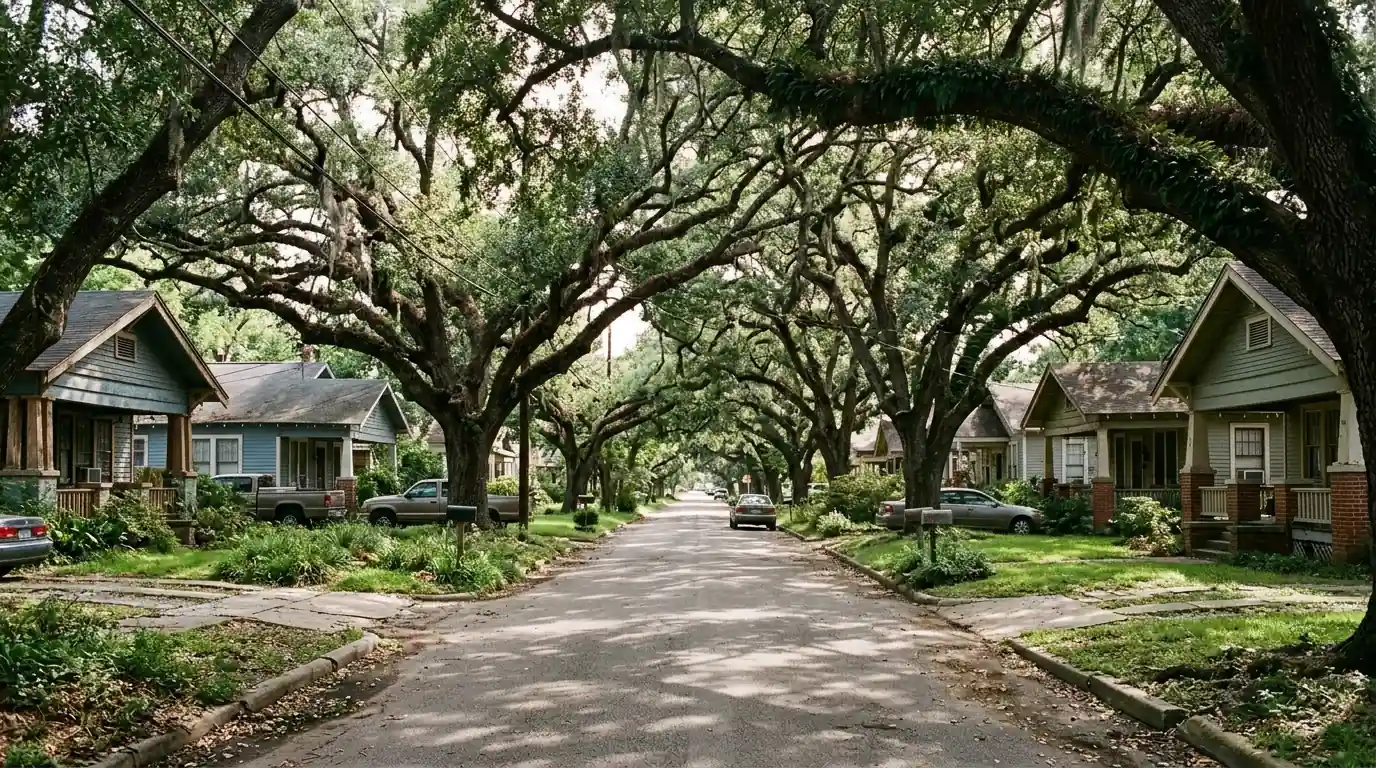
The earliest settlement here was Cane Island, named for a creek through the area, and the name Katy may come from the Missouri-Kansas-Texas Railway. The city incorporated in 1945 and now spans Harris, Fort Bend and Waller counties. Open prairie never grew a forest, so the trees in most Katy yards are planted ones, about the same age as the house.
Planted trees on open lots grow differently from forest trees. They get full sun and full wind and spread wide. Many sit in small beds near driveways and slabs. As they mature, thinning and raising the crown keeps limbs off roofs and lets wind through, and the species chosen during planting after a loss matters more than it would in the woods.
Water is the other Katy story. Barker Reservoir exists to keep Buffalo Bayou from flooding downstream. During Harvey in 2017, thousands of homes flooded around the Addicks and Barker reservoirs in Katy, Cypress and Houston. All 721 homes in Canyon Gate were affected. Trees that stood in floodwater can decline slowly, and a root and trunk check tells you whether one is recovering.
Sources: fox26houston.com, communityimpact.com, en.wikipedia.org
Most called-for work
Tree work that fits a Katy yard
- Tree trimmingKaty shade trees were planted on open prairie lots, and they spread wide in full sun until limbs crowd roofs and driveways.
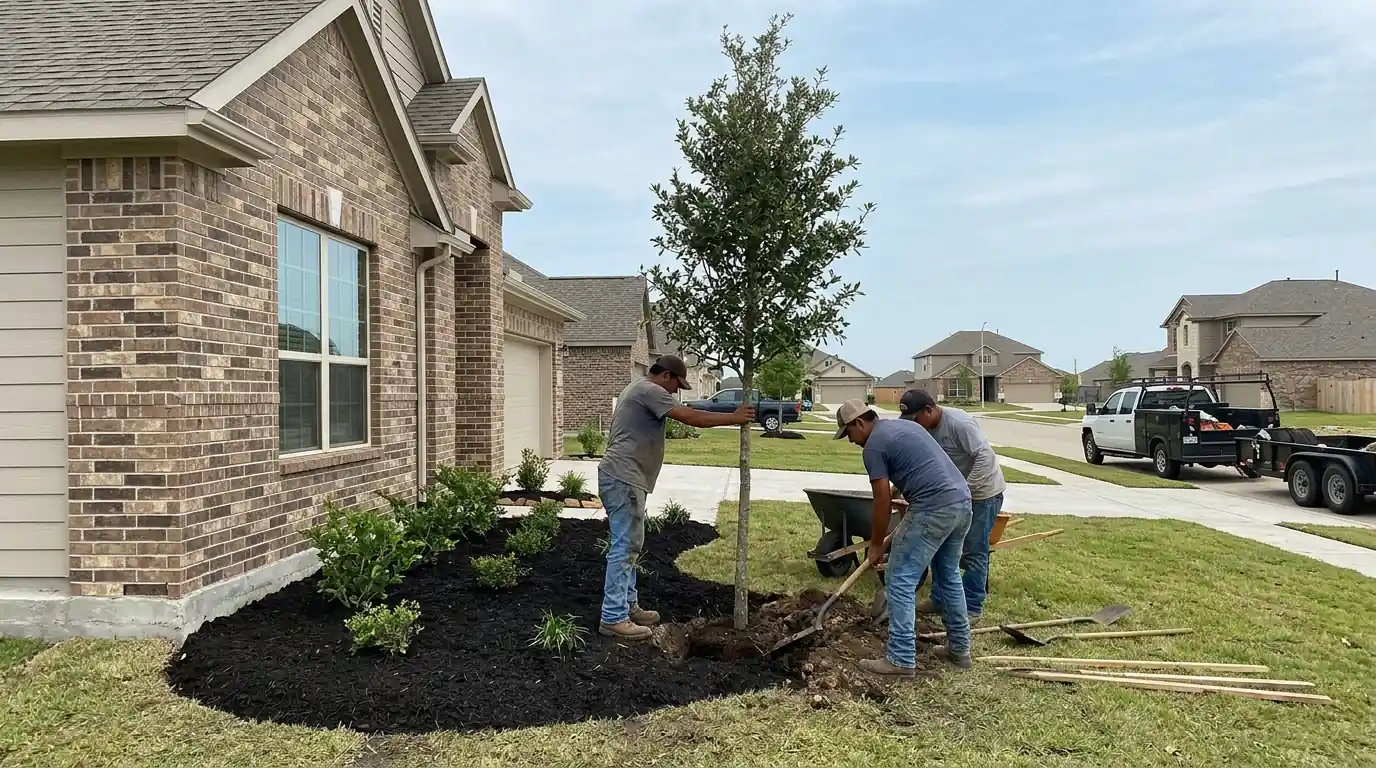
- Replanting after a removalLittle native forest stood on former Katy farmland, so replacing a lost shade tree means choosing a species that fits the bed.
- Is my tree safeYards that sat in Harvey floodwater around the Katy reservoirs can hide root decay, so a trunk and root check comes first.
- Storm cleanup in north HoustonOpen Katy lots take wind from every side, and after a storm we clear split limbs from fences, pools and roofs.
- Root pruning by the foundationPlanted trees in small Katy beds often grow close to slabs and driveways, where a root barrier protects the paving.
Close by, see tree care around Cypress, crews working in Waller County and tree care around Jersey Village, or the whole coverage map.
Katy grew on wide-open prairie farmed in rice, peanuts and cotton. Little native forest stood there to begin with. Most yard trees were planted with the subdivisions and are about as old as the houses around them.
It is possible. Roots that sat underwater for days can die back slowly, and decline can show years later as thin crowns, dead limbs or mushrooms at the base. We check the root flare and trunk and tell you what we find.
Species with strong wood and a wide root spread, such as live oak and cedar elm, usually handle open wind better than fast, brittle trees. The right pick depends on bed size, distance to the slab and how wet the spot stays.
Farther than most people plant. Roots reach well past the edge of the crown, so give a future shade tree generous room from the slab, driveway and pool. If a tree is already close, a root barrier can protect the paving.
Ring us about a Katy tree
Tell us what the tree is doing and whether the yard took water. A crew lead answers 24/7 and plans the next step with you.