Answered 24/7 for storm calls
Storm cleanup for north Houston yards
The phone is answered 24/7. Tell us what broke and what is blocked, and we sort hazards from the haul-off.
Phone answered 24/7 · office in Spring, TX
- Hangers cut first
- Brush chipped
Updated October 2026
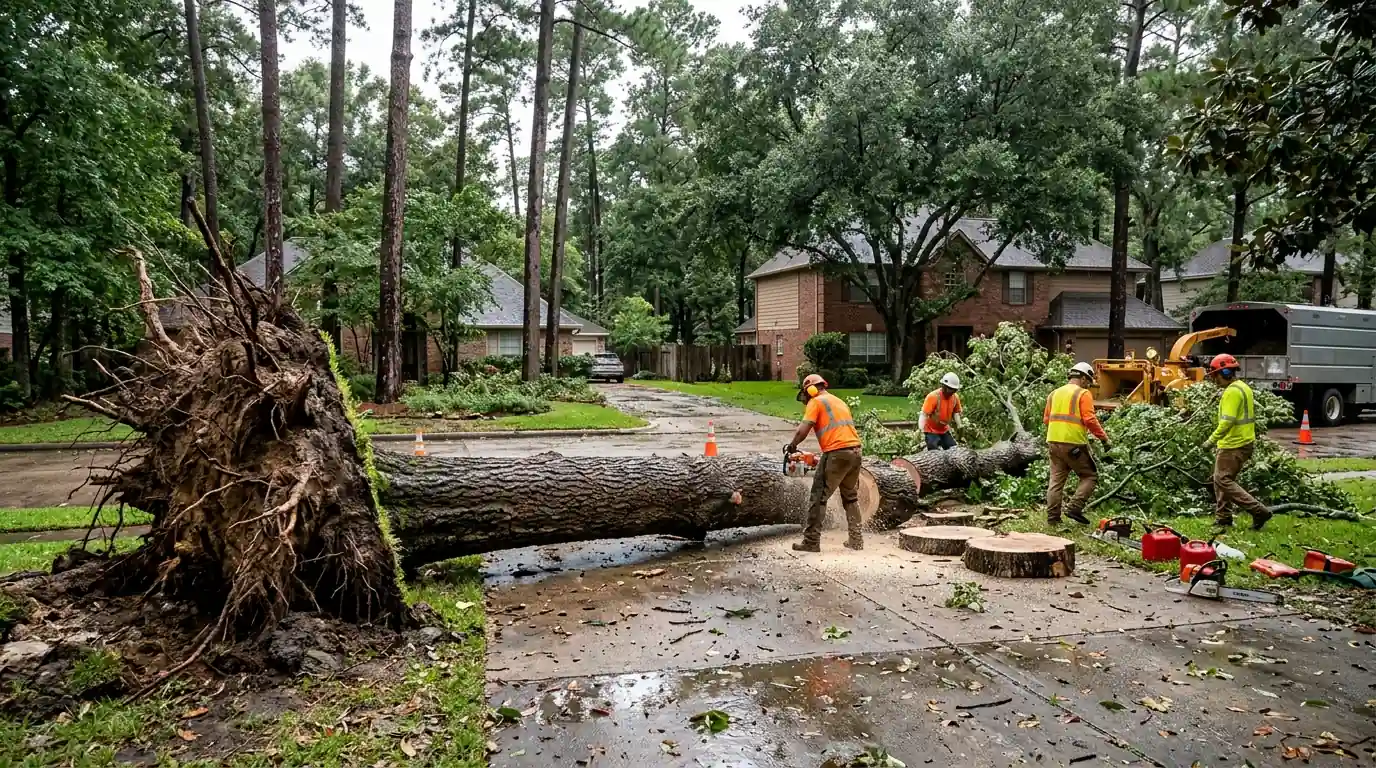 Storm & Emergency
Short answer
For storm damage cleanup in Houston, the average tree debris job comes to about $148 in Angi's figures. Pile size and dump trips set the bill, but broken limbs still hanging overhead come down first. Then brush is chipped, wood cut into rounds, and everything hauled.
The job
Overhead first, ground second
After a storm, the lawn shows half the job. Limbs on the ground are easy. The dangerous wood is what broke and stayed up: hangers caught in the crown, torn tops held by a bark strip, cracked limbs waiting for the next gust.
A cleanup starts with a climber clearing hung limbs, then the ground crew works the pile. Brush is chipped, logs bucked into rounds and the lawn raked. A standing tree too damaged to keep becomes a planned removal.
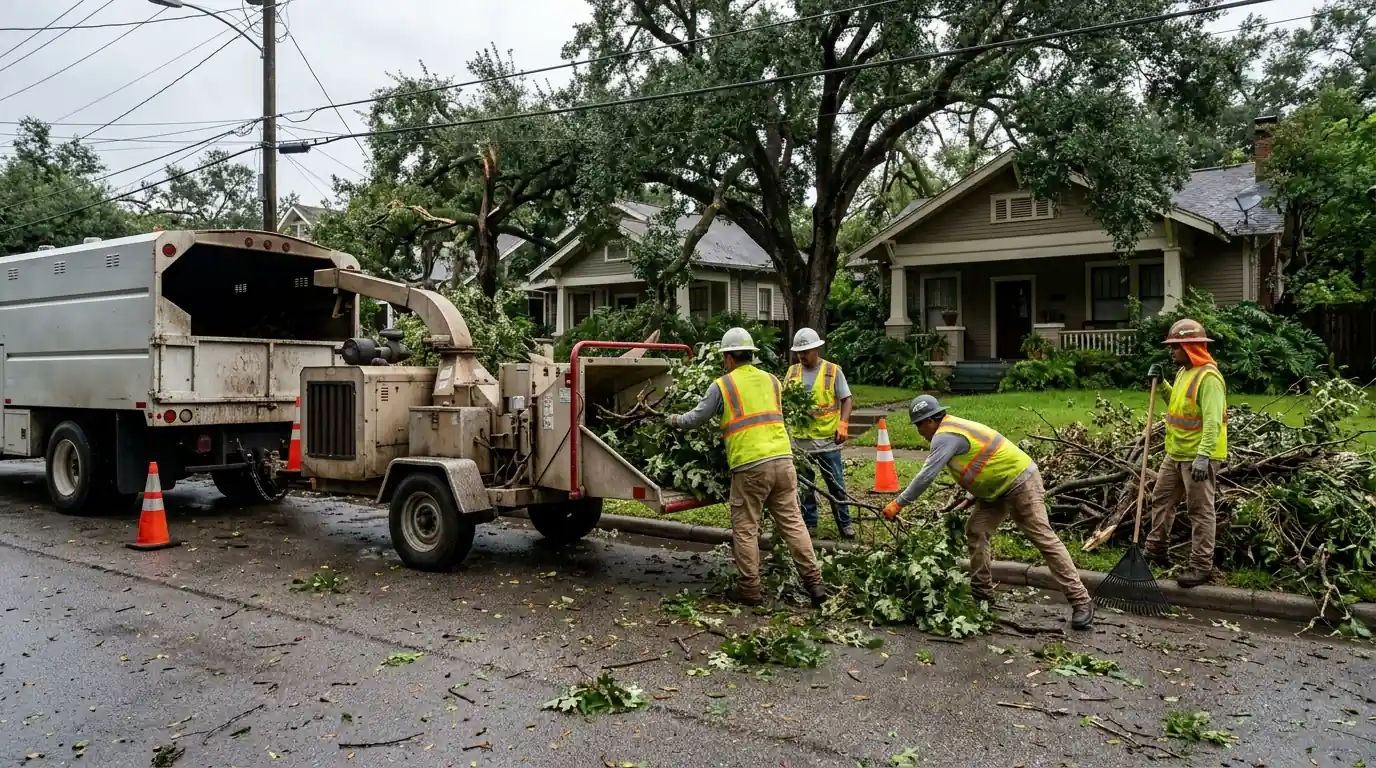
Broken limbs across the yard
Scattered limbs look simple until you lift one and the pile shifts. Branches lying across each other can be bent and loaded, so the ground crew cuts from the top of the pile down. Brush goes to the chipper; wood too thick to chip is bucked into rounds and stacked. Angi's 2026 Houston figures put branch removal at $75 to $250. Soaked lawns rut under heavy loads, so the chipper stays on the drive and brush is carried to it.
Split trees and torn tops
Wind snaps loblolly pines partway up the stem and tears whole leaders out of oaks, leaving a jagged stub or a long wound down the trunk. The broken top is cleanup work; the standing part is a decision. On a hardwood, we cut the tear back to a clean collar so wound wood can close over it. A pine that lost its top rarely rebuilds a crown, and the stressed stem draws bark beetles, so most become a pine removal.
Debris piles and haul-off
Maybe you dragged it to the curb, or a tangled pile is growing by the fence. Either way the job is volume, and the bill tracks loads and trips. Angi's Houston figures list haul-away at about $70 and chipping at about $95. Stack brush with the cut ends facing one way and it feeds the chipper faster. Keep fence boards and shingles out of it, because nails and grit dull chipper knives. Chips can stay as mulch if you like.
Clearing access for other trades
Roofers cannot tarp around a limb lying in the valley, and an electrician cannot rebuild a torn service mast with branches across it. This visit clears a working zone for them first: wood off the roof and gutters, limbs over the eaves cut back, a clear path for ladders, lifts and trucks. If falling wood pulled the mast loose, an electrician usually repairs it before CenterPoint reconnects, so that path matters. Tell us which trade is waiting, and when they arrive.
Questions about your tree? Talk to a crew lead.
Call (704) 839-2139Timing
What stretches a cleanup
Volume and reach decide it. Scattered limbs on open lawn go quickly. A whole oak crown across a backyard, with no gate wide enough for a wheelbarrow, means hand-carrying every branch to a chipper on the street. Hangers add a climb before ground work starts. After a citywide storm, the order matters more than speed: hazards over doors, drives and wires come before brush piles.
Local conditions
Storm Damage Cleanup in north Houston: what local conditions change
More than 900,000 Houston-area customers lost power in the May 2024 derecho. Then came Beryl, and in Houston Heights residents spoke of dozens of century-old trees on the ground and called Heights Boulevard a war zone. The cleanup that follows is mostly volume: one century-old oak can bury a driveway, so we plan the chipper spot and loads before the first cut.
Sources: radio.kttz.org, theleadernews.com
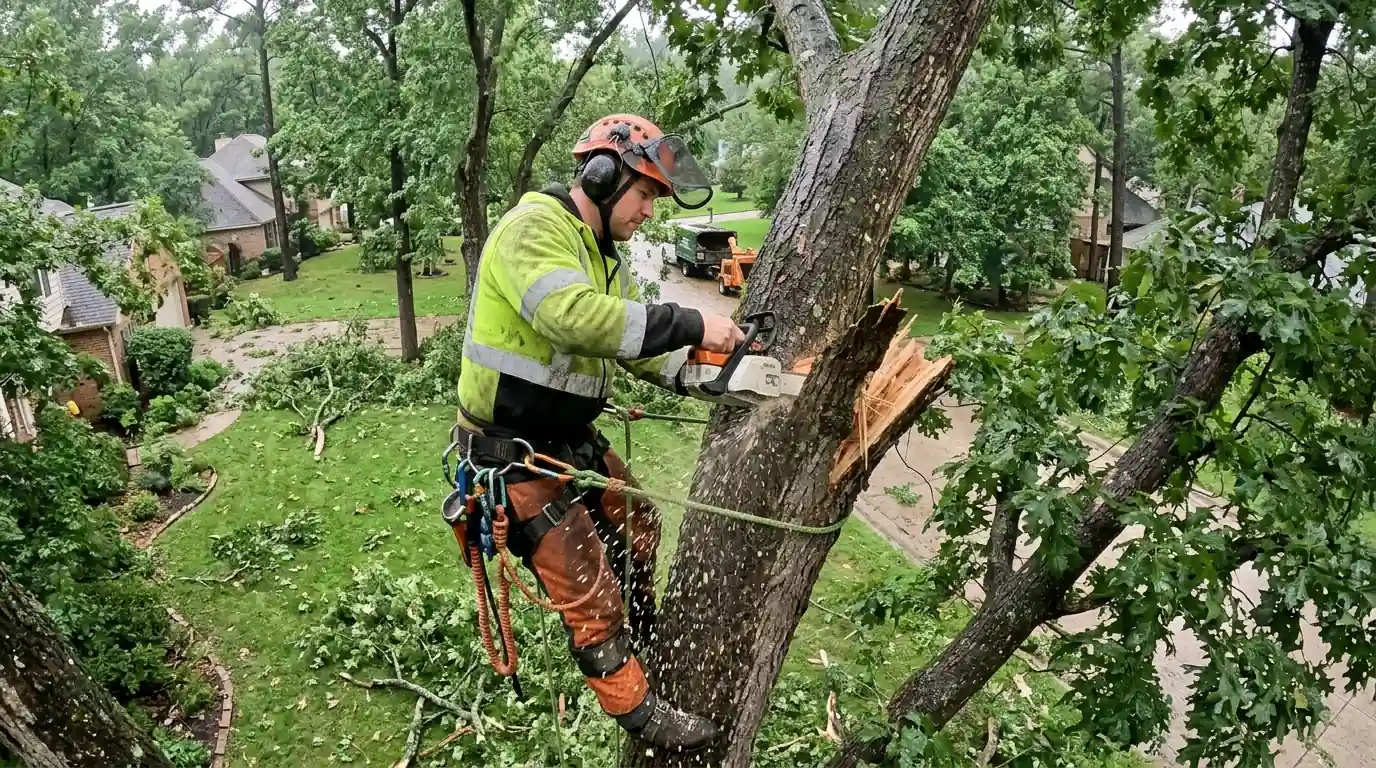
Do it yourself?
Who clears what
Fine to handle yourself
- Gather sticks lying flat on open lawn.
- Photograph the damage before anything is moved.
- Clear leaves off drains so water escapes.
Leave to a crew
- Hangers overhead can drop while you work.
- Pinned limbs: released tension whips the saw.
- Wood on any wire; cable can touch power.
Step by step
How a cleanup runs
Yard walk
We mark hangers, cracked limbs and wood on roofs or wires.
Clear overhead
A climber takes down hung wood before anyone works below.
Sort brush
Brush is chipped; logs too thick are cut into rounds.
Haul off
Chips and wood are hauled, or chips stay as mulch.
Final rake
Lawn and beds are raked; damaged standing trees get flagged.
In the scope
What cleanup covers
- Hangers and broken limbs cut from crowns
- Brush chipped from the drive or street
- Logs bucked into rounds, hauled or stacked
- Torn stubs pruned back to clean collars
- Lawns, beds and gutters cleared of twigs
- Standing trees checked, problems flagged for you
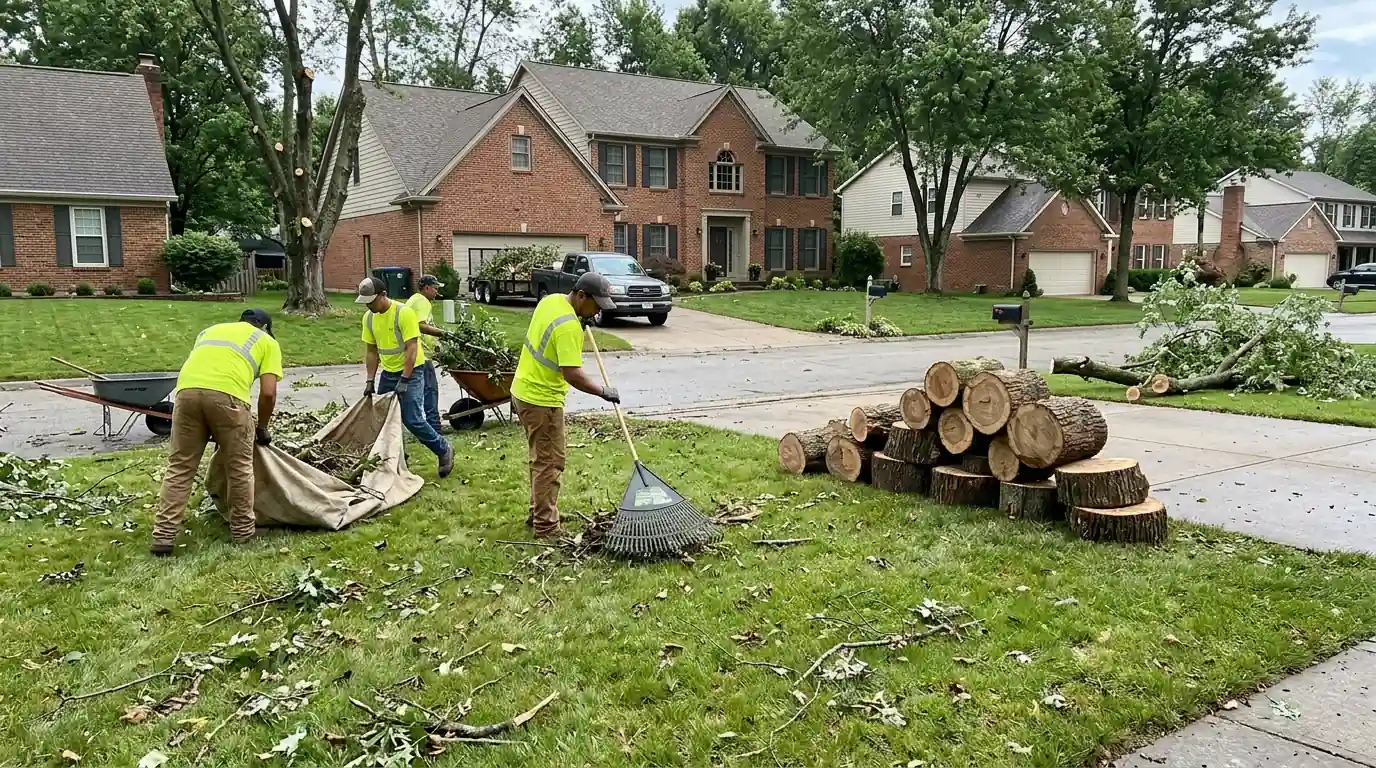
What moves the price
What a cleanup bill tracks
Cleanup prices on volume, reach and access. Angi's Houston figures run $75 to $250 per dump trip, so oak crowns cost more than scattered limbs.
Hangers overhead
Limbs still in the crown need a climber before ground work starts.
Wood volume
A fallen crown means more chipping and more loads than scattered branches.
Chipper access
A chipper parked near the pile saves dragging brush across the yard.
Wet ground
Soaked lawns force smaller loads and hand carrying to avoid deep ruts.
Yes. A stacked pile is plain haul-off: brush chipped, logs loaded, spot raked. Tell us roughly how big it is and where a truck can reach.
Not for hazards. Photograph everything, then ask your insurer about timing. Hangers over doors and limbs on wires cannot wait; a pile on the lawn usually can.
Yes. Say so before we start; hardwood gets cut into rounds and stacked where you want. Pine and tallow burn poorly, so most let those go.
It depends on the tree's health and each owner's policy, so call your insurer. We clear it either way; our neighbor-tree guide covers the usual Texas approach.
Hazards now, piles later. Hangers and wood on roofs come down first, and wires go to CenterPoint. Brush on the lawn can wait, though it smothers grass.
Yes, if no wire touches the wood. Saws and the chipper run on fuel, not house power, and downed lines stay with CenterPoint until they are cleared.
Related work