Land & Property on the north side
Lot and Acreage Clearing, North Houston
Building pad, fence line, driveway cut or wooded acres: we clear what must go and leave the trees worth keeping.
Phone answered 24/7 · office in Spring, TX
- Keepers flagged
- Stumps ground or pulled
Updated October 2026
 Land & Property
Short answer
Land clearing in north Houston is priced by area and density, not per tree, and Angi's Houston figures put each debris dump trip at $75 to $250. What happens to stumps decides the rest: ground below grade for lawns and fences, pulled for slabs and drives.
The job
Clearing With a Purpose
Every clearing job starts with what the ground is for. A house pad needs every stump and major root out so the fill compacts evenly. A fence line needs a straight strip with no stumps in the post line. Acreage usually needs the opposite: thin brush and weak trees and keep the best pines and oaks standing.
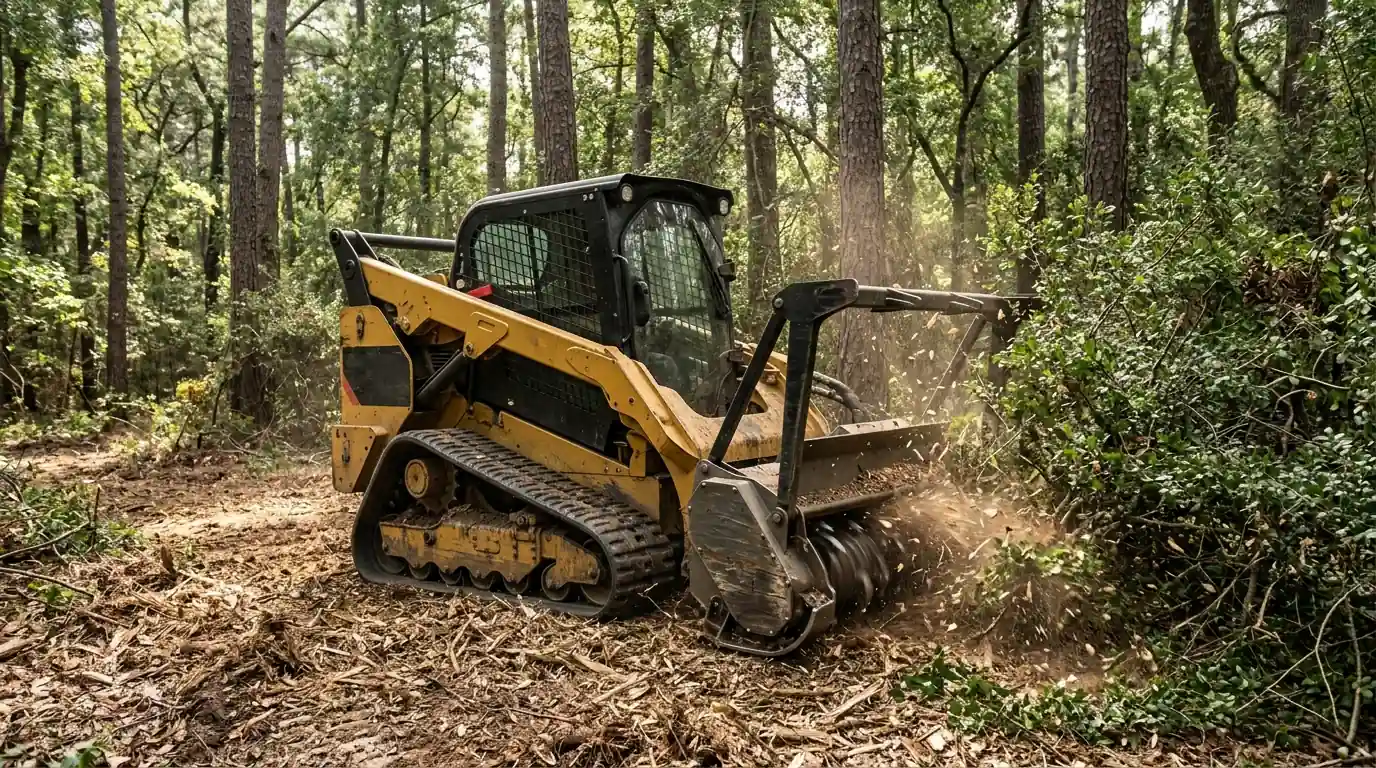
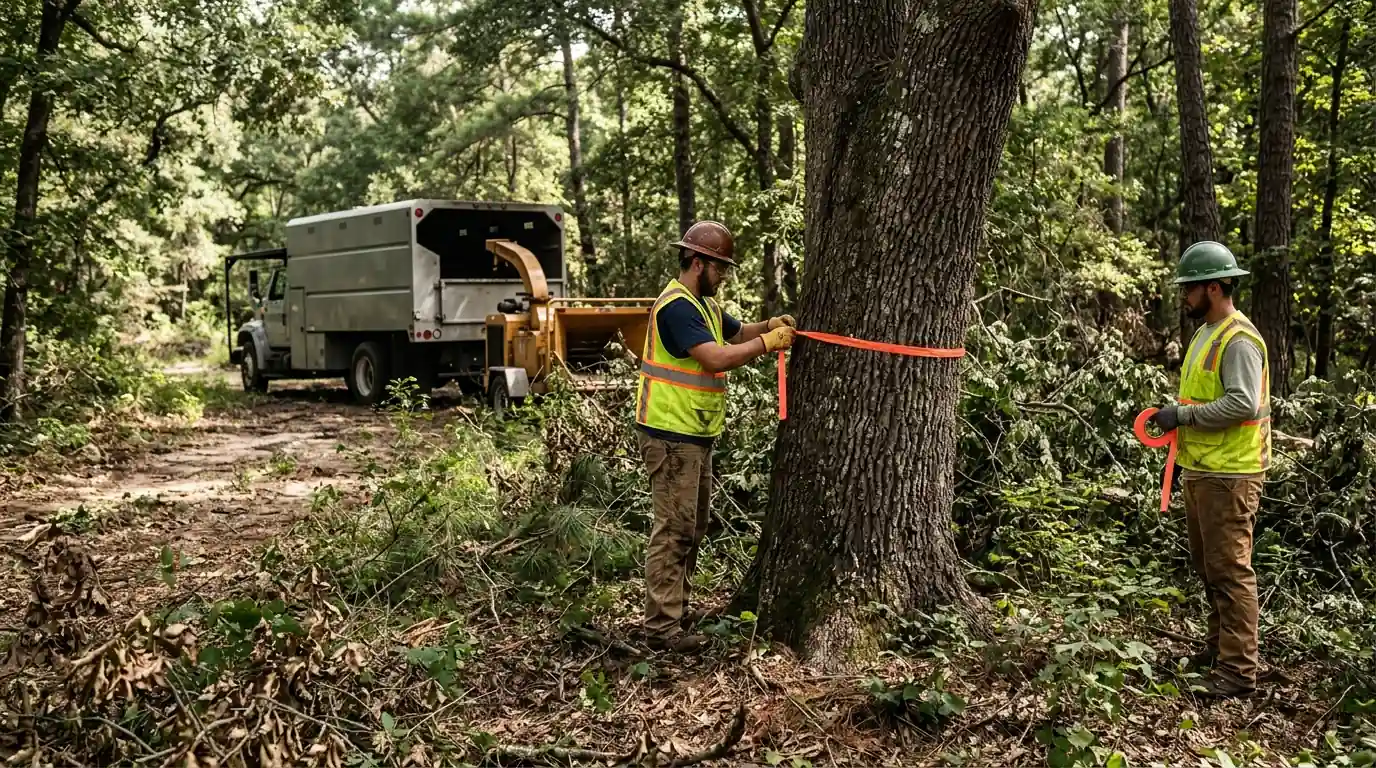
We flag keepers before any saw starts. Brush gets chipped, hauled or ground in place with forestry mulching, and stumps get ground or pulled to match the use.
What moves the price
Pricing Land Clearing
Clearing is priced by area, density and what leaves the site. Angi's Houston figures put tree debris removal at about $148 on average, for planning.
Brush density
A yaupon thicket takes longer per acre than open woods with saplings.
Stump handling
Pulled stumps and backfill cost more than grinding below grade for lawns.
Debris plan
Hauling everything means dump trips; mulching or chipping on site avoids them.
Keeper trees
Working around many flagged keepers is slower than clearing a lot bare.
Cost data: angi.com, angi.com, angi.com
Read the City of Houston permit guideYour options
Clearing Methods Compared
| Method | Best for | Tradeoff |
|---|---|---|
| Cut, chip and haul | Small lots, house pads | Clean finish; dump trips cost |
| Mulch in place | Brushy acreage, trails | No haul-off; leaves mulch |
| Pull and grub | Slabs, drives and pools | Firm base; most disturbance, cost |
Building Pad Clearing
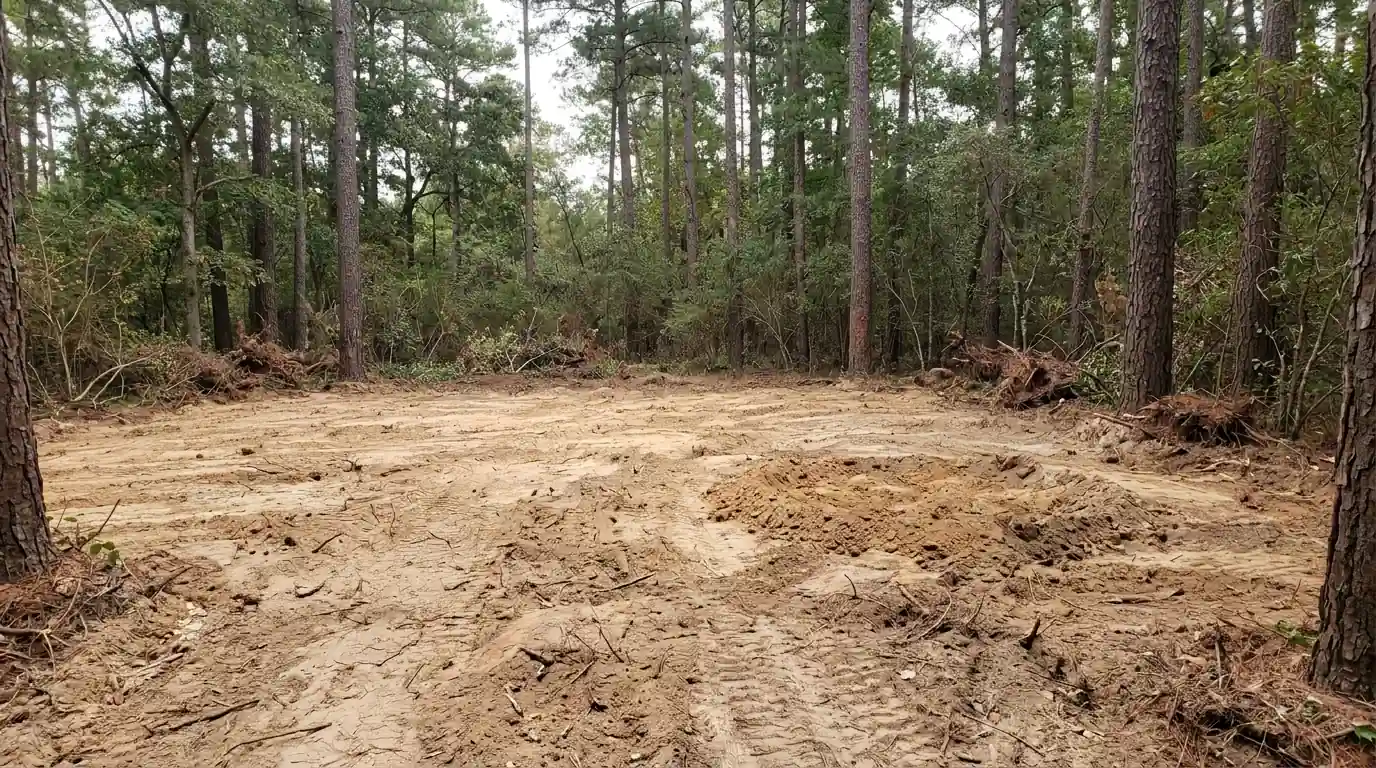
For a slab, the pad and a working margin around it come clean: trees down, stumps and root balls pulled, roots raked out. Buried wood rots and settles, and under a slab that settling shows up as cracks. Holes get backfilled and tamped so the builder starts on firm ground. Edge trees lose roots to the dig, so we flag only the ones likely to survive it. For planning, Angi's Houston figures put an average stump removal at about $381.
Fence Line Clearing
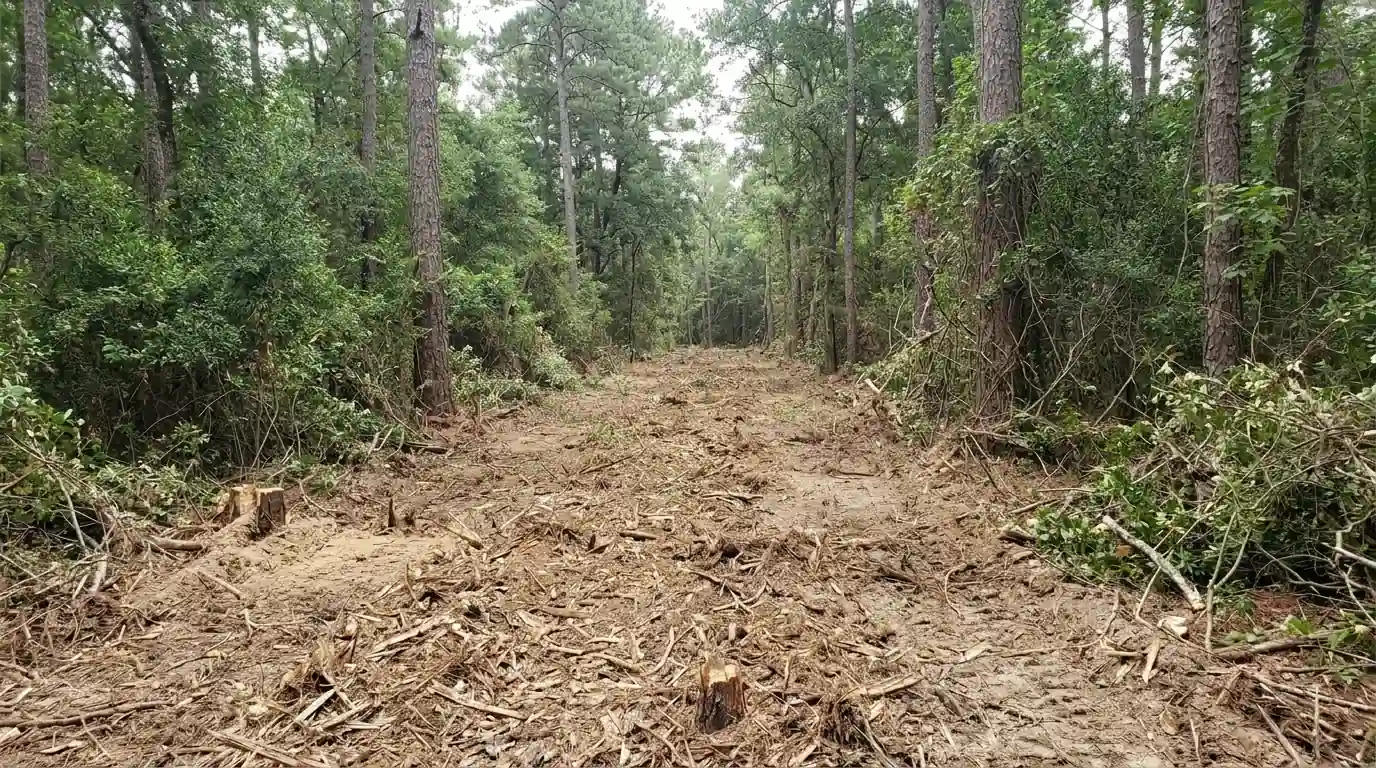
A new fence or survey line through woods needs a clear strip: saplings and brush cut flush, vines pulled off, overhanging limbs raised so they cannot rub the wire or drop on panels. Stumps in the post line get ground low so the auger can pass. We keep the cut narrow along a neighbor's side and leave their trees alone unless they agree. Brush can be chipped onto the strip as a mulch path, or hauled if you want bare ground.
Acreage Clearing
On wooded acreage, clearing usually means selective work: underbrush, yaupon, tallow and dead trees out, the best pines and hardwoods left with room to grow. We walk the property with you first and ribbon every keeper. Machines stay off keeper root zones, since compaction kills trees slowly. Heavy brush is often mulched in place rather than hauled, which saves dump trips. The tradeoff: clearing everything is faster per acre, but a selectively cleared lot keeps its shade, privacy and value.
Trail and Driveway Cuts
A driveway through trees is routed around the big ones, not through them. The curve adds length but saves the oak. We stake the line with you, then clear its width plus a margin and raise limbs high enough for trucks and vans. Stumps in a drive path come out or get ground deep, since a stump under gravel or concrete settles into a dip. Walking trails are lighter work: brush cut, roots left, so the path holds in the rain.
Questions about your tree? Talk to a crew lead.
Call (704) 839-2139In the scope
Clearing Scope
- Keepers flagged with you, not by the operator.
- Limbs overhanging the cleared strip raised or removed.
- Stumps ground or pulled to match the use.
- Pulled-stump holes backfilled and tamped, not left open.
- Vines and brush cleared off keeper trunks, too.
- Brush disposal agreed up front: chipped, mulched, hauled.
Local conditions
Why land clearing looks different on Houston's north side
Our office sits on Plum Creek Drive in Spring, where lots average well over an acre of wooded ground north of Spring Creek in Montgomery County. Lots like that rarely need everything cleared. They usually need a pad, a drive and a fence line opened, with the pines and hardwoods around them left standing and the brush ground, chipped or hauled.
Sources: redfin.com
Timing
Timing the Work
Duration depends on density more than acreage. An open lot with scattered pines moves quickly; a yaupon and tallow thicket takes longer. Stump work adds the most time, especially when stumps come out for a pad. Weather matters on clay: after heavy rain, machines wait until the ground firms. Haul-off adds trips; mulching in place saves them. We give you a realistic window after the walk.
Step by step
Clearing, in Order
Walk and flag
We walk the lot with you and ribbon every keeper.
Call in locates
Utility lines are marked before stumps come out or soil moves.
Cut and drop
Trees come down away from keepers, fences and the house.
Stumps, brush
Stumps ground or pulled; brush chipped, mulched in place or hauled.
Final pass
Holes backfilled, ruts smoothed and the street side swept clean.
It depends on the lot. Deed restrictions, a township or HOA, city right-of-way trees and floodplain rules can all apply, so we check them before cutting.
You choose: chipped and hauled, ground in place with a mulcher, or chipped onto the site as mulch. Hauling usually costs the most because of dump trips.
Yes, and we recommend it. We ribbon keepers with you before work starts and keep equipment outside their driplines where possible. Torn roots kill trees slowly.
Ground for lawns, fences and gardens; pulled for anything carrying weight, like a slab, drive or pool. Pulling costs more and leaves a hole to backfill.
Yes, carefully. Machines stay off the tank and drain field, since their weight crushes lines. We mark the system with you and clear around it by hand.
Tallows come out with the brush, but they resprout from stumps and roots. Pulling small ones and grinding bigger stumps helps; plan a follow-up pass for sprouts.
Related work