Answered 24/7 for storm calls
Fallen tree on your north Houston house
Calls are answered 24/7. With a tree on the roof, clear everyone from the rooms beneath it, then ring us.
Phone answered 24/7 · office in Spring, TX
- Staged lifts
- Crane or ropes
Updated October 2026
 Storm & Emergency
Short answer
Tree on house removal in Houston works in stages; when a crane is needed, Angi's figures put the add-on at about $500 including truck and extra staff. Each section is cut, rigged and lifted clear, never dragged, so the roof carries less weight with each cut.
The job
Piece by piece
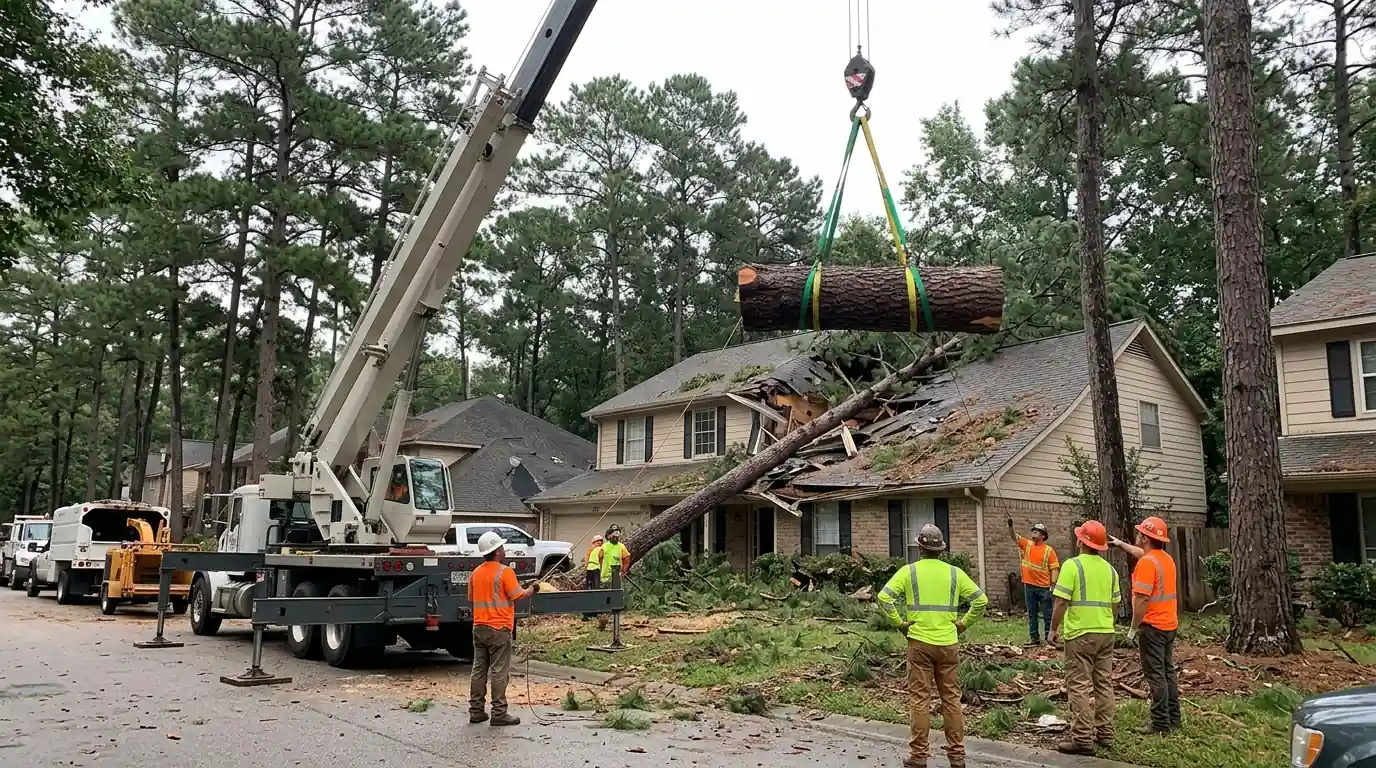
A tree on a roof is often holding itself up on the house. The trunk may rest on a rafter while the root plate still grips the yard, so the structure is part of the tree's support. Cut wrong, and the load drops onto weaker framing.
We work from the free end toward the house. Each piece's weight goes on a line or the crane hook before the cut. Roof decking is the last thing touched, and a roofer follows once cleanup clears the surface.
Tree on the roof
Inside, you may see the ceiling bow, a crack along the drywall tape, or water where a limb punched the decking. Outside, the question is where the trunk bears: on a rafter, the ridge or only on shingles. We take the crown weight first, rigging from a sound neighboring tree or the crane hook, and lift sections up and away rather than sliding them across the roof. Wood that pierced the decking comes out last, once a tarp is ready.
Tree on car or garage
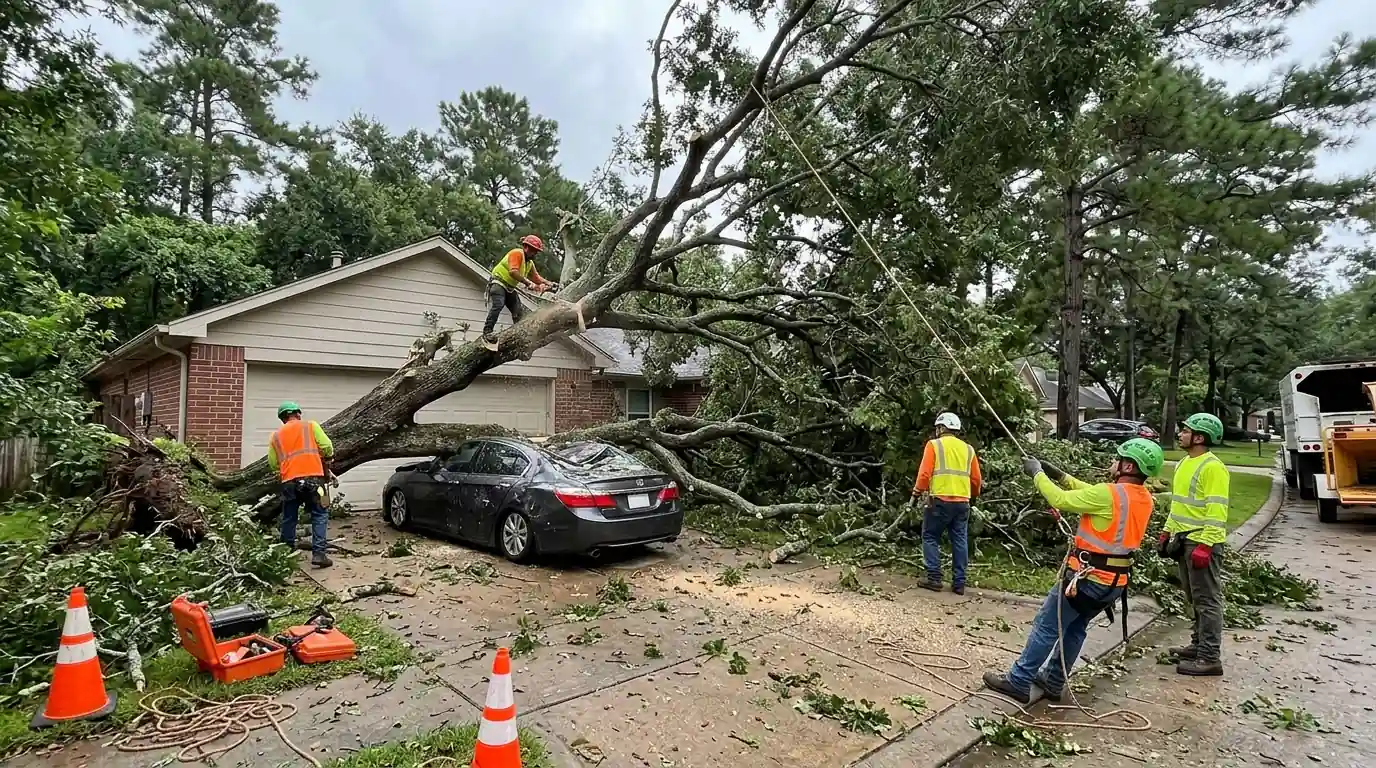
A crushed car roof or a garage door bowed off its track looks worst, but the trunk resting there may also be loaded with tension. Do not try to drive out from under it. We take the load off in short pieces, each held on a line, so nothing drops or rolls when the weight comes off. A detached garage gets the same staged lift as the house. Car damage is often an auto-policy claim, so call that insurer too.
Tree through a fence line
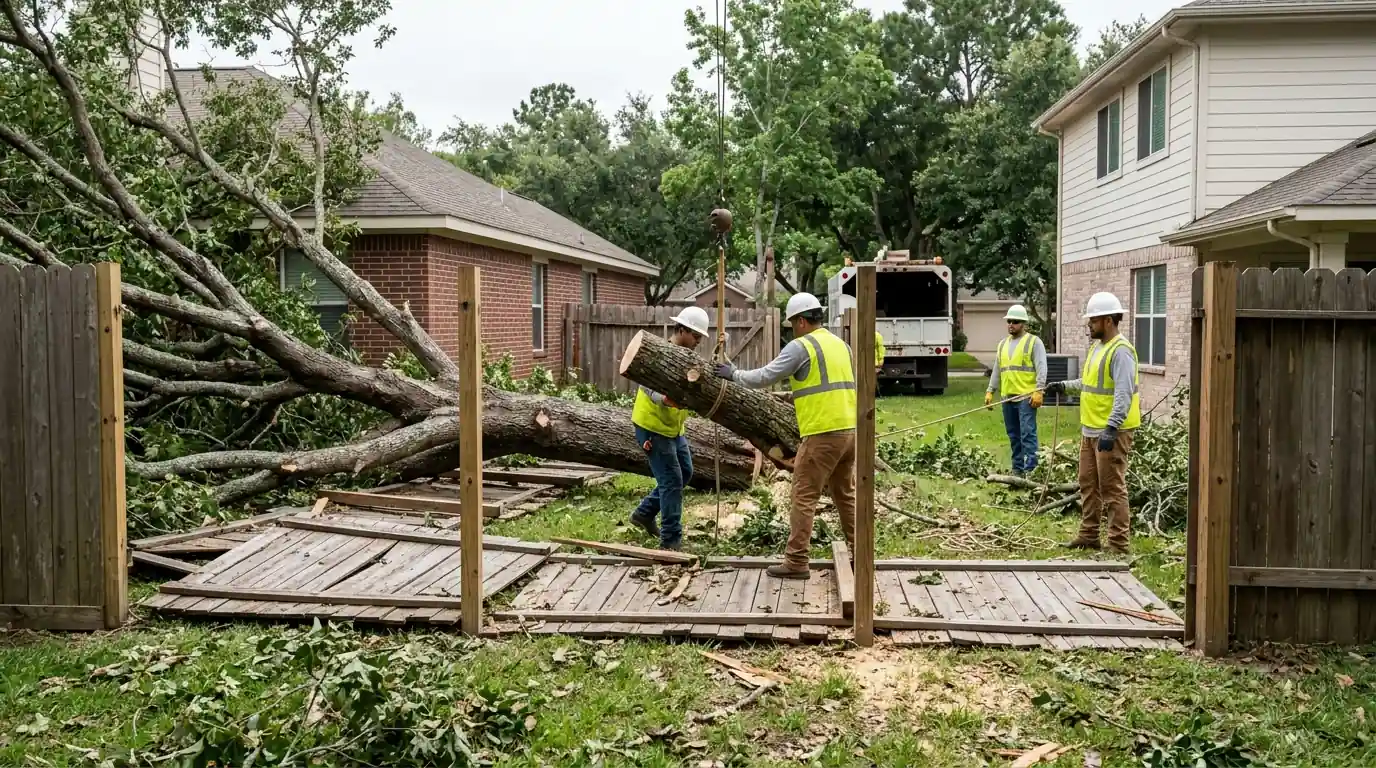
Flattened panels and snapped posts usually mean the trunk lies across two lots. Both owners need to know, and the crew needs access from one side. We cut wood free of pickets without tearing more loose, lower sections on whichever side has room, and leave sound posts standing for the fence builder. If dogs use that yard, plan a barrier. Who pays turns on whose tree it was and its health; our guide on neighbor trees that fall covers it.
Photos for the insurance claim
Adjusters usually want wide shots of the tree on the structure, close views where it contacts the roof or walls, and the base, since a rotten root plate or hollow trunk can change how a claim is read. We photograph before the first cut, at each stage, and after the weight is off, then send you the files. Keep a cut round showing any decay. What your policy covers is between you and your insurer; read it before agreeing to repairs.
Questions about your tree? Talk to a crew lead.
Call (704) 839-2139Timing
Time on the roof
Three things set the pace: where the trunk bears, whether a crane can reach, and the weather. A pine lying across shingles with a clear yard can come off in one visit. An oak with its crown through the roof and no crane access means a climber rigging piece by piece. At night the crew often stops once the framing is unloaded, finishing in daylight.
Local conditions
What Houston's storms, trees and soil mean for tree on house removal
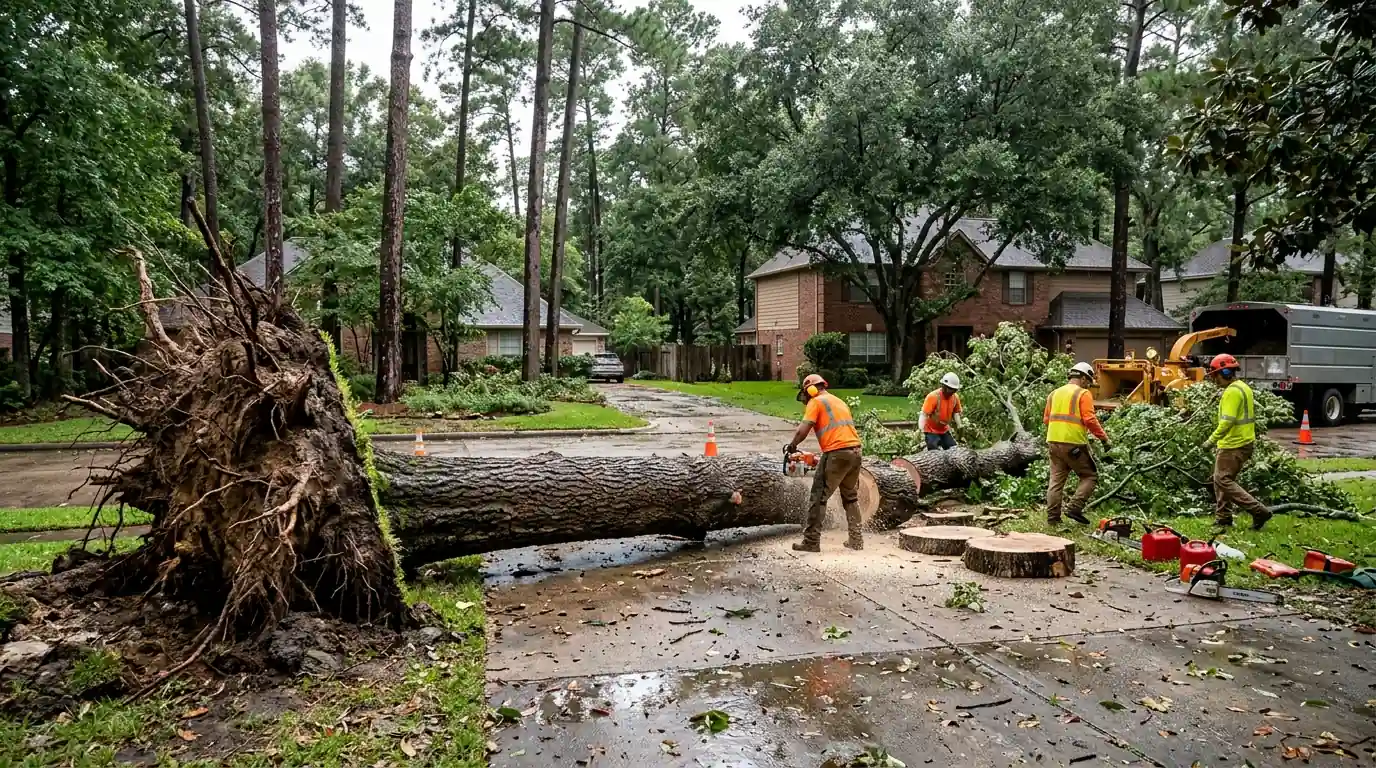
In Kingwood, the community called The Livable Forest, seventy-foot pines came out of the soil in Beryl's 80 mph gusts and landed on cars and roofs. When a pine that tall lands on a house, the crown and upper stem rest on the roof while the root plate stays in the yard, so the house holds up one end of a long lever.
Sources: texasmonthly.com
Step by step
Order of the lifts
Empty rooms
Rooms under the contact points are emptied before any cut.
Read loads
We find where the trunk bears and what holds it.
Crown first
Branches come off first, the farthest and lightest pieces leading.
Trunk sections
Stem sections are rigged, cut and lifted clear in turn.
Roof handoff
The roof is cleared so the roofer can tarp it.
In the scope
Roof job scope
- Photos before, during and after the lifts
- Crown and trunk removed in rigged sections
- Debris cleared from shingles, gutters and valleys
- Brush chipped, wood hauled from the yard
- Trunk base cut low and left safe
- A clear roof so repairs can start
Your options
Crane, rigging or both
| Method | Fits when | Tradeoff |
|---|---|---|
| Crane pick | Firm ground within reach | Setup time, added charge |
| Rigging only | A sound tree nearby can anchor the line | Slower, many more cuts |
| Both together | Crown needs a climber, trunk is too heavy | Two setups, least roof strain |
What moves the price
Pricing a roof removal
Angi's Houston figures put a 30 to 60 foot removal at $450 to $1,200 before a crane. On a house, rigging moves price more than height.
Bearing point
A trunk on rafters needs more staged lifts than one on shingles.
Crane setup
Cranes need firm ground near the house; soft clay adds setup work.
Wood weight
Dense oak means smaller sections than a pine of the same height.
Roof weather
Rain and wind slow lifts and can pause work on the roof.
Cost data: angi.com
Read the neighbor-tree guideClear the rooms under the contact points and keep them empty. If framing cracked or ceilings sag anywhere, leave the house until the weight is off.
It can, briefly. A trunk often plugs the hole it made, so water enters once it lifts. Have a tarp or roofer ready at the end.
Not if the tree loads the roof; call us, because weight keeps doing damage. Then call them. Photos from before the first cut help the adjuster.
Not safely if it bears on framing. Wet wood weakens, wind shifts the load, and every gust works the contact points. A make-safe tonight is safer.
Light rain, carefully. Lightning or strong gusts stop the lifts, and nobody walks wet shingles. Pieces can still come off by crane or rope in drizzle.
Usually only to look. The crew lead may check the attic under the contact points to see what the trunk bears on, then works from outside.
Related work