Tree Removal on the north side
Planned tree removal for north Houston yards
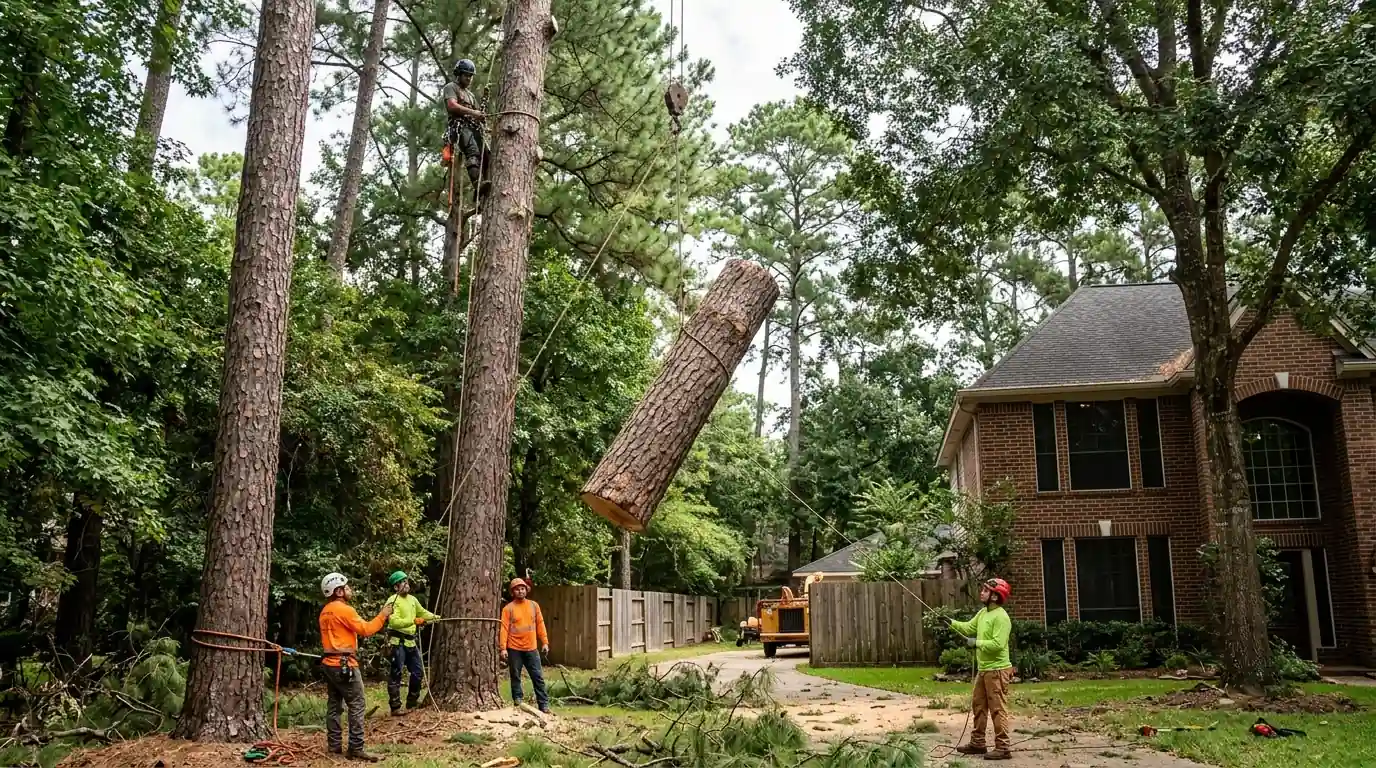
Removals go two ways: felled whole where the yard has room, or taken apart from the top where it does not.
Phone answered 24/7 · office in Spring, TX
- Felled or sectioned
- Chipped and hauled
Updated October 2026
 Tree Removal
Short answer
Tree removal in Houston averages about $800 in Angi's 2026 figures, with most projects between $197 and $1,972. Height, access and what sits under the tree set where a job lands in that range. Open ground means notching and felling; a house alongside it means climbing and sectioning.
The job
Felling versus sectioning
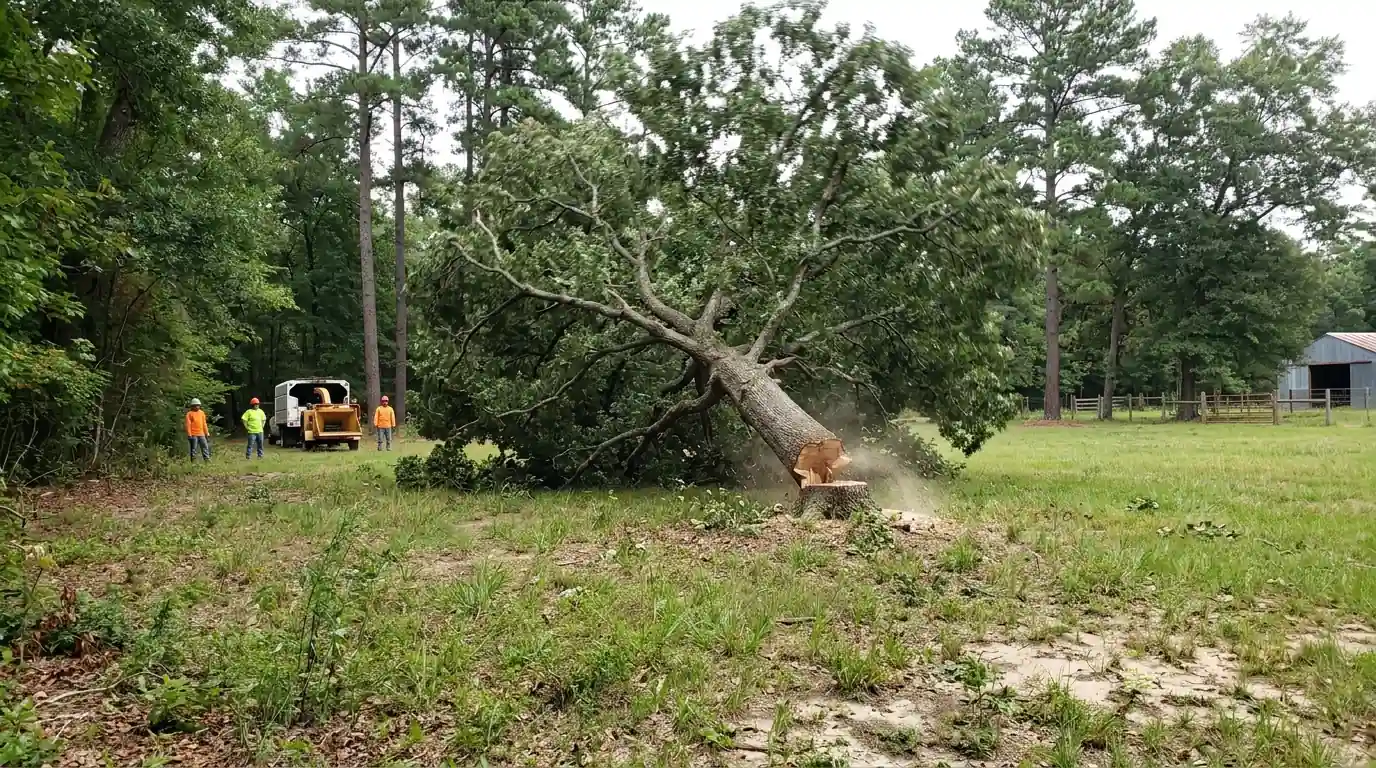
Felling is the fast way: a notch on the side the tree should fall, a back cut that leaves a hinge, and the hinge steers it down. It needs a clear lane longer than the tree is tall, which many backyards lack.
Sectioning is the careful way. A climber removes limbs, then cuts the trunk into pieces lowered on a rope through a rigging block, with a friction device on the ground controlling the descent. Brush is then chipped, wood hauled, and the stump ground if you want.
What moves the price
What moves a removal price
Angi's Houston size bands run $450 to $1,200 for 30 to 60 feet and $800 to $1,500 for 60 to 80. Access and targets move a tree within its band.
Tree size
A taller or wider tree means more cuts, more rigging and more wood.
Yard access
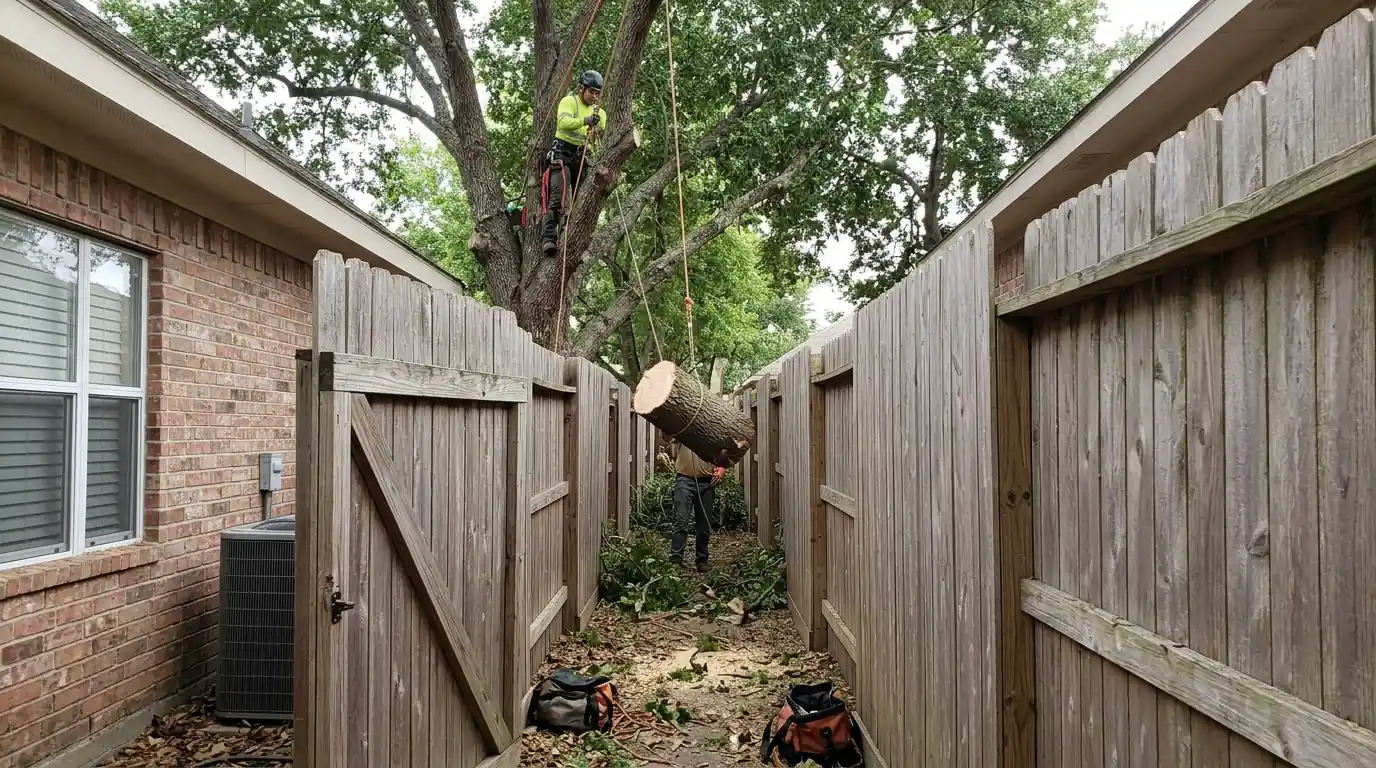
A narrow gate means hand-carrying; a drive to the tree lets equipment in.
Targets below
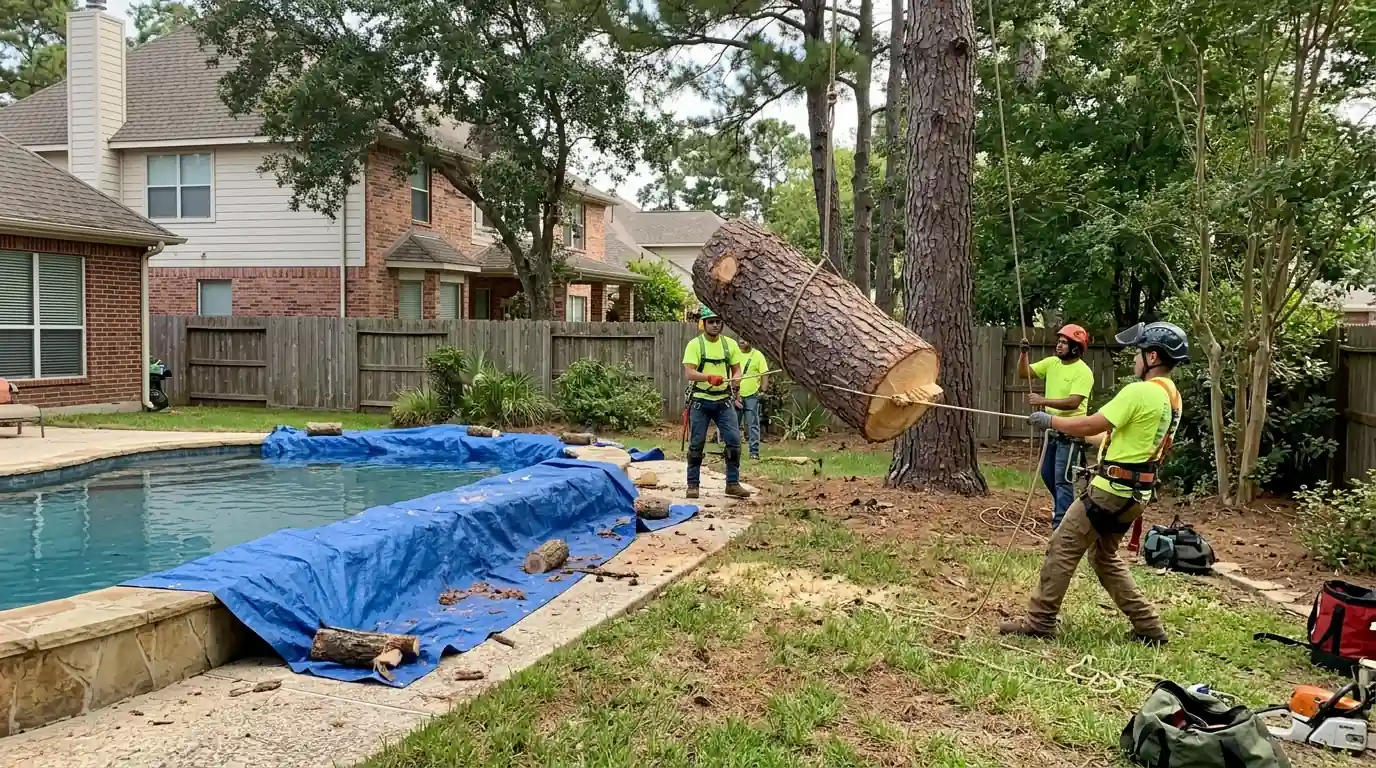
Roofs, pools and fences below turn a felling into a sectioning job.
Wood and stump
Angi lists haul-away at about $70, chipping at about $95 and stump removal at about $381.
Your options
Choosing how it comes down
| Method | Fits when | Tradeoff |
|---|---|---|
| Felled whole | A clear lane longer than the tree | Fastest, needs the most room |
| Sectioned on ropes | Houses, fences or pools sit in the fall zone | More climbing time, tight control |
| Crane assisted | Too weak to climb or too big to rig | Crane charge and setup room |
Backyard removals with tight access
Plenty of north side trees stand behind a narrow side gate. Nothing big goes in or out, so the climber takes the tree apart in pieces small enough to carry, and the ground crew walks brush to a chipper at the street. Sometimes removing a fence panel saves hours of hand-carrying; we ask first. Tight access adds labor, not risk, as long as each piece is lowered rather than dropped. Measure the gate width; it decides whether a stump grinder fits through.
Large hardwood removals
Live oaks, water oaks and pecans spread wide and grow dense, heavy wood. Long laterals come off in pieces, with the climber setting a rigging block in the crown and the ground crew letting pieces run on a friction device. Over open lawn, a speedline can carry limbs to a drop zone. Angi's Houston figures put oak removal at $200 to $2,000; size and what the limbs hang over decide where a tree lands in that range. The biggest may justify a crane.
Trees near pools and fences
Over a pool, every piece is lowered on a line and steered with a tag line, because one dropped limb can crack coping or tile. Sawdust and leaves blow into water easily, so we cut with the wind in mind and cover the skimmer. Along a fence, the trunk is notched to fall away from the line or brought down in short rounds. Roots that lifted a deck or slab are a separate decision; root pruning and barriers can follow the removal.
Several trees in one visit
A row of pines along the back fence or a cluster of Chinese tallows can come out in one visit. The order matters: the tree with open ground goes first so it clears a landing zone, then the tighter ones are sectioned into that space. One setup, one chipper run and one haul-off spread across several trees, which usually lowers the cost of each. Grinding all the stumps at the end keeps the yard torn up once rather than several times.
Questions about your tree? Talk to a crew lead.
Call (704) 839-2139In the scope
What a removal includes
- Tree felled or sectioned, stump cut low
- Brush chipped, then hauled or left as mulch
- Trunk wood hauled or cut into firewood rounds
- Lawn and beds raked clear of sawdust
- Stump ready for grinding if you want it gone
- A final walkthrough before the crew leaves
Local conditions
Tree Removal in north Houston: what local conditions change
Before any removal, check who owns the tree and who must approve it. The Woodlands covenants call for an application before a living tree over six inches across comes down, and an inspector looks at how losing it changes surface drainage before approving. Inside Houston, Urban Forestry handles only city property and sends owners of private trees to a professional tree service.
Step by step
Planned removal, start to finish
Tree walk
We check lean, decay, targets and access, then choose fell or section.
Clear zone
Cars, furniture and people are cleared; the drop zone is marked.
Limbing climb
The climber removes limbs and the top, rigging anything over structures.
Trunk down
The stem is felled into its lane or lowered in rounds.
Cleanup pass
Brush is chipped, wood hauled or stacked, and the yard raked.
It can dent soft ground after rain. We fell onto the driest open area, sometimes onto a brush bed laid first, and cut it where it lands.
They stay and rot slowly unless the stump is ground or pulled. Grinding takes the stump and surface roots below grade; finer roots break down later.
Yes, in any season. Winter often goes faster on hardwoods: bare limbs mean less brush to chip and a clearer view of every limb from below.
Not automatically. On Houston clay a big tree can dry the soil near a slab, but distance alone decides nothing. If you see cracks, ask a foundation engineer.
Then access is agreed first. Pieces over the neighbor's side are rigged and lowered back to your yard where possible, and anything landing next door needs their okay.
Not every minute. Be there for the walkthrough, when the crew lead confirms what goes, what stays and where wood lands, and for a final look.
Related work