Trimming & Pruning on the north side
Young tree pruning for north Houston yards
We prune young trees for structure, one leader and spaced limbs, and remove stakes and ties before they girdle the trunk.
Phone answered 24/7 · office in Spring, TX
- Small cuts
- Ties removed
Updated October 2026
 Trimming & Pruning
Short answer
Young tree pruning in Houston shapes the trees replacing storm losses, such as the reforestation The Woodlands began after losing about 7,000 trees. Early on, setting one leader and spacing limbs takes cuts small enough for hand pruners; later, the same fixes mean big wounds.
The job
Small cuts now, not big cuts later
Many structural flaws in big Houston trees started as small choices nobody made in time. Two equal leaders grow into codominant stems with included bark, the fork that splits in a storm. Low limbs that will block the drive get heavy before anyone cuts them.
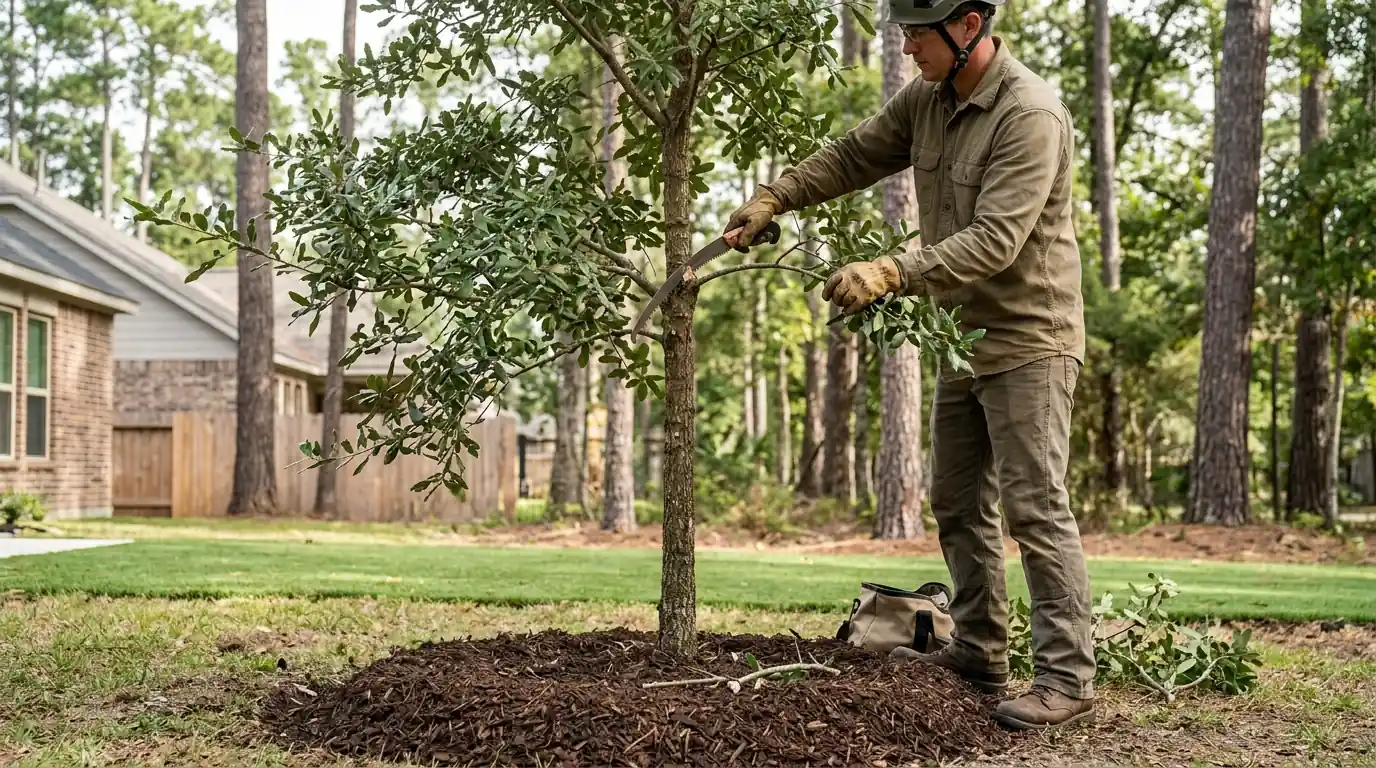
Young tree pruning fixes those early. We pick one leader, shorten its rival, space the main limbs up the trunk, and take off stakes and ties that have done their job. Skipping this often means cabling or a heavy reduction later.
In the scope
Inside a young tree visit
- One leader chosen and any rival top shortened.
- Stakes, wire and straps removed, trunk checked beneath.
- Crossing and rubbing limbs taken out while small.
- Main limbs spaced around and up the trunk.
- Vines and suckers cleared from the stem and flare.
- Notes on what to fix on the next visit.
Fixing a double leader
Look up a young oak or elm: if two tops are racing each other at the same height, that fork can trap included bark within a few years. The fix is a reduction cut on the weaker leader, back to an outward side branch, so it slows down and the other takes over. We rarely remove the rival outright on a young tree, since that one cut can take too much of the crown. Some trees need a second visit.
Removing stakes and ties
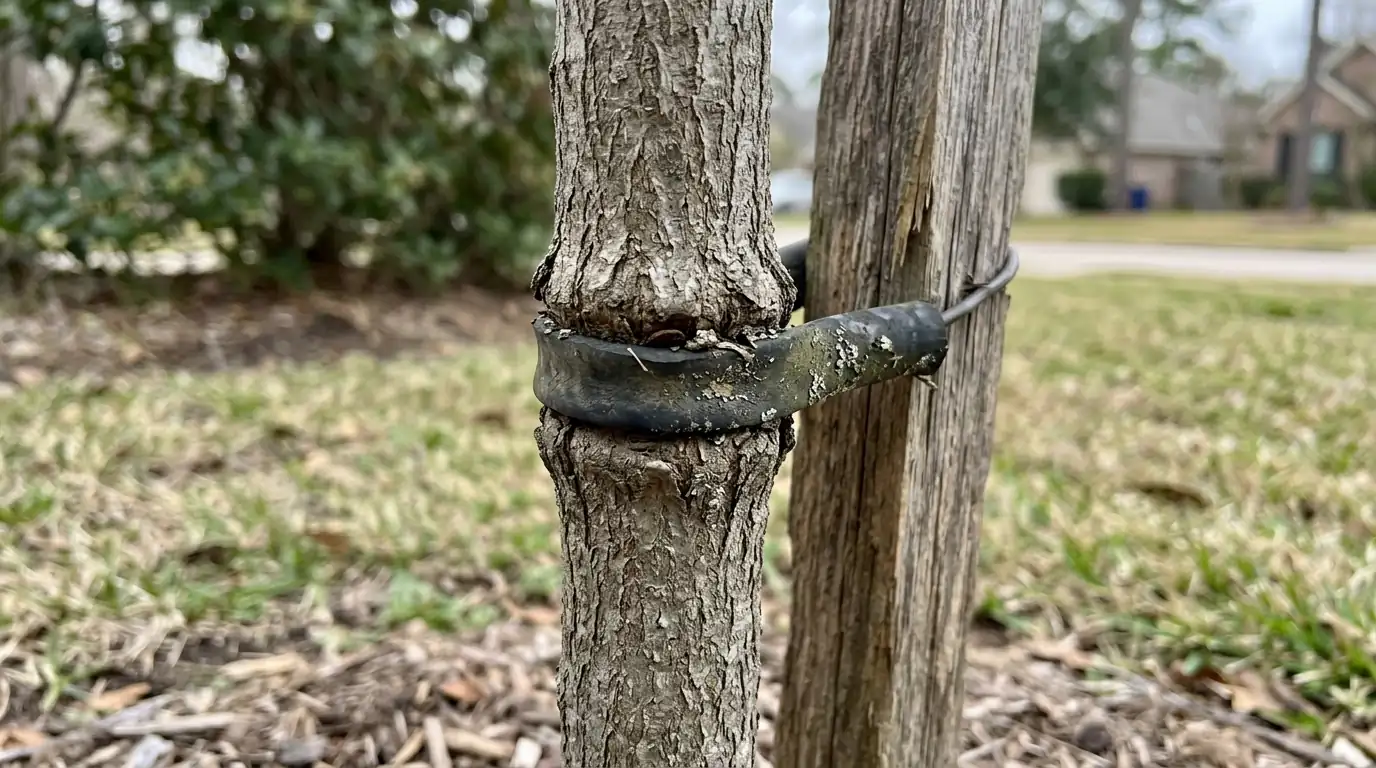
A wire half-buried in swollen bark is the giveaway. Nursery stakes, wire through garden hose and rubber straps are meant to come off once the roots hold the tree up. Left on, they cut into the bark as the trunk thickens, and the tree can snap at that girdled ring. We remove the hardware, check the trunk for wounds, and test whether the tree stands without help. If it still rocks in the soil, we reset one loose, low tie for another season.
Training a central leader
Shade trees like oaks, elms and bald cypress are strongest with one dominant trunk up through the crown. When side limbs start competing, the tree turns into a bush of equal stems. We shorten the competitors, keep the leader clear, and space future main limbs around and up the trunk. Each visit removes only a modest share of live wood, because a young tree needs its leaves to build roots. Multi-trunk ornamentals like crape myrtles follow different rules, keeping several trunks on purpose.
Planning clearance early
Picture the tree at full size: which limbs will hang over the driveway, the roof or the sidewalk? We raise the crown gradually, removing the lowest limbs over several visits rather than all at once, since those low limbs feed the trunk while it thickens. Limbs aimed at the house get shortened early so they never need a big cut. This is also when we flag trees planted too close to the slab or under a power line, before they become a problem.
Questions about your tree? Talk to a crew lead.
Call (704) 839-2139Local conditions
Why young tree pruning looks different on Houston's north side
In Kingwood, Trees for Kingwood has put close to 2,000 trees in the ground since 2022 while battling the air potato vines smothering the forest edge. Young plantings like those set the shape of the next canopy, and a vine climbing a young trunk shades and bends it. We clear vines from the stem and train the leader in the same visit.
Sources: communityimpact.com
Do it yourself?
Young tree care you can handle
Fine to handle yourself
- Check stake ties each spring and loosen any biting bark.
- Keep a wide mulch ring, pulled back from the flare.
- Water deeply in dry spells for the first few summers.
Leave to a crew
- Choosing which leader stays, a cut that shapes decades.
- Cuts on limbs too thick for hand pruners.
- Raising the crown in stages so the trunk keeps thickening.
Step by step
Trunk to tips, in order
Structure check
We find the leader, rival tops, crossing limbs and stake damage.
Trunk freed
Stakes, wire and straps come off, and the bark is checked.
Leader chosen
One top stays, and any rival is shortened to a side branch.
Limbs spaced
Crowded limbs are thinned so main limbs spread up the trunk.
Next visit
We note what to fix next, since training spans several seasons.
What moves the price
Pricing young tree work
Each young tree is a short job, so the bill for a visit mostly tracks how many trees you have and how much correction each needs.
Tree count
Training a whole planting at once spreads the setup across every tree.
Correction needed
A double leader or girdled trunk takes longer than routine spacing cuts.
Height reached
Trees grown past ladder height need a climber or careful pole work.
Old hardware
Buried wire and embedded straps take careful cutting to free the bark.
After it has put on a season of growth. Broken or crossing limbs can come off at planting, but structural cuts wait until the tree is growing well.
As soon as the tree stands firm, often after one growing season. Push the trunk: if the root ball stays put, the stakes can go. Left longer, they weaken it.
Light structural pruning barely slows a young tree and sends its growth into the leader you want. Heavy cuts do set it back, so each visit stays light.
Every few years in its early life, more often for fast growers like water oak and sweetgum. The goal is a mature tree that needs little structural work.
Live oaks spread low and wide by nature, so we pick a leader early and shorten long, low limbs headed for the street while the cuts are still small.
Yes. Air potato and greenbriar shade the leaves, bend the leader and can girdle a thin trunk. We cut them at the base and peel them off.
Related work