Trimming & Pruning on the north side
Trimming live and water oaks in north Houston
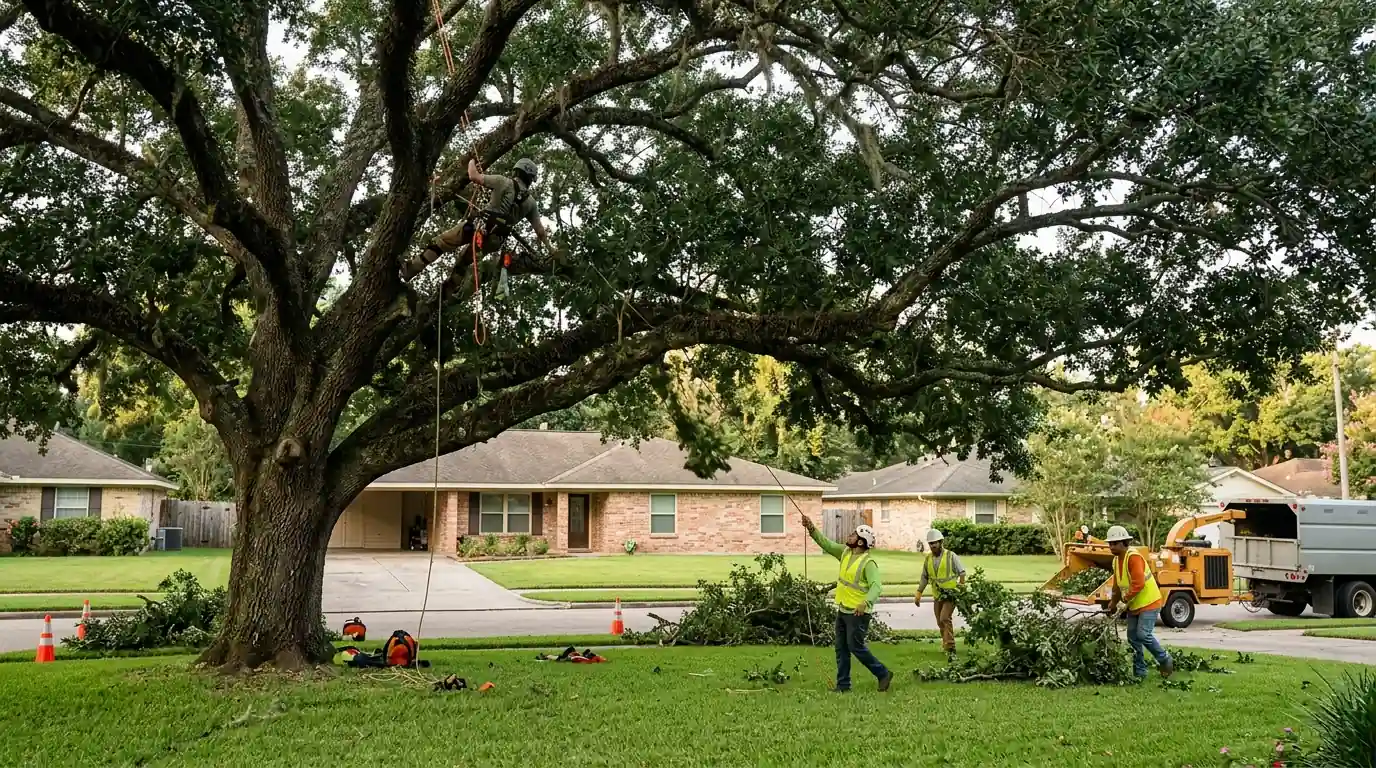
Heavy lateral limbs lightened, deadwood and ball moss out, street clearance cut, with fresh oak wounds painted as Texas guidance advises.
Phone answered 24/7 · office in Spring, TX
- Fresh oak cuts painted
- End weight reduced
Updated October 2026
 Trimming & Pruning
Short answer
Oak tree trimming in Houston is safest outside spring, roughly February through June, when Texas oak wilt guidance says fresh wounds draw the sap beetles that carry the fungus. Every oak cut gets painted right away, and long limbs are lightened at the tips, not stripped inside.
The job
Why oaks need their own rules
Live oaks grow long, heavy lateral limbs that reach far past the trunk, and the weight sits at the ends. Good oak work shortens or thins those ends with reduction cuts so each limb carries less leverage in wind.
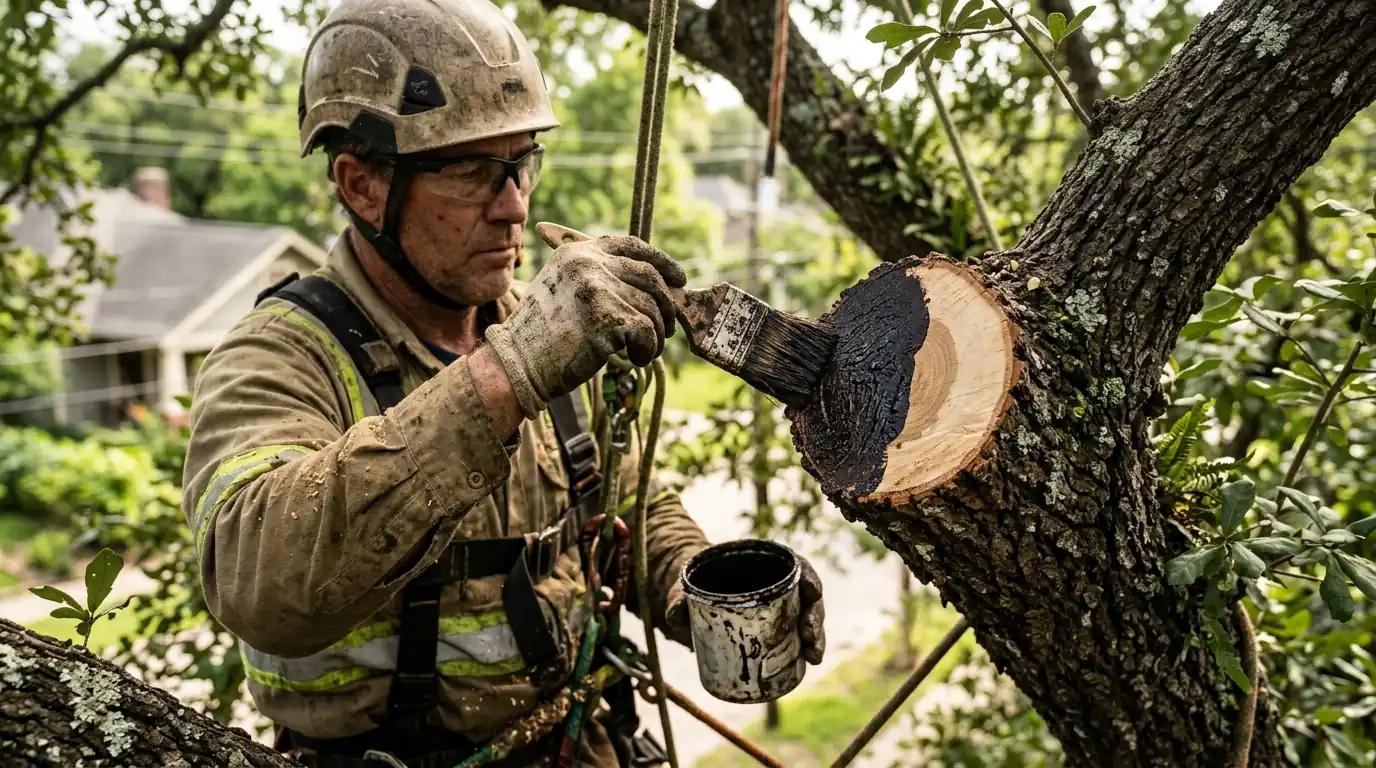
Oak wilt is the other reason. Above ground, the fungus moves on sap beetles drawn to fresh wounds, so Texas guidance is to avoid wounding oaks in spring and to paint every cut. A split union may call for cabling and bracing instead of more cuts.
In the scope
What oak trimming includes
- Every fresh cut painted right away, in any month.
- End-weight reduction on long laterals, back to sound side branches.
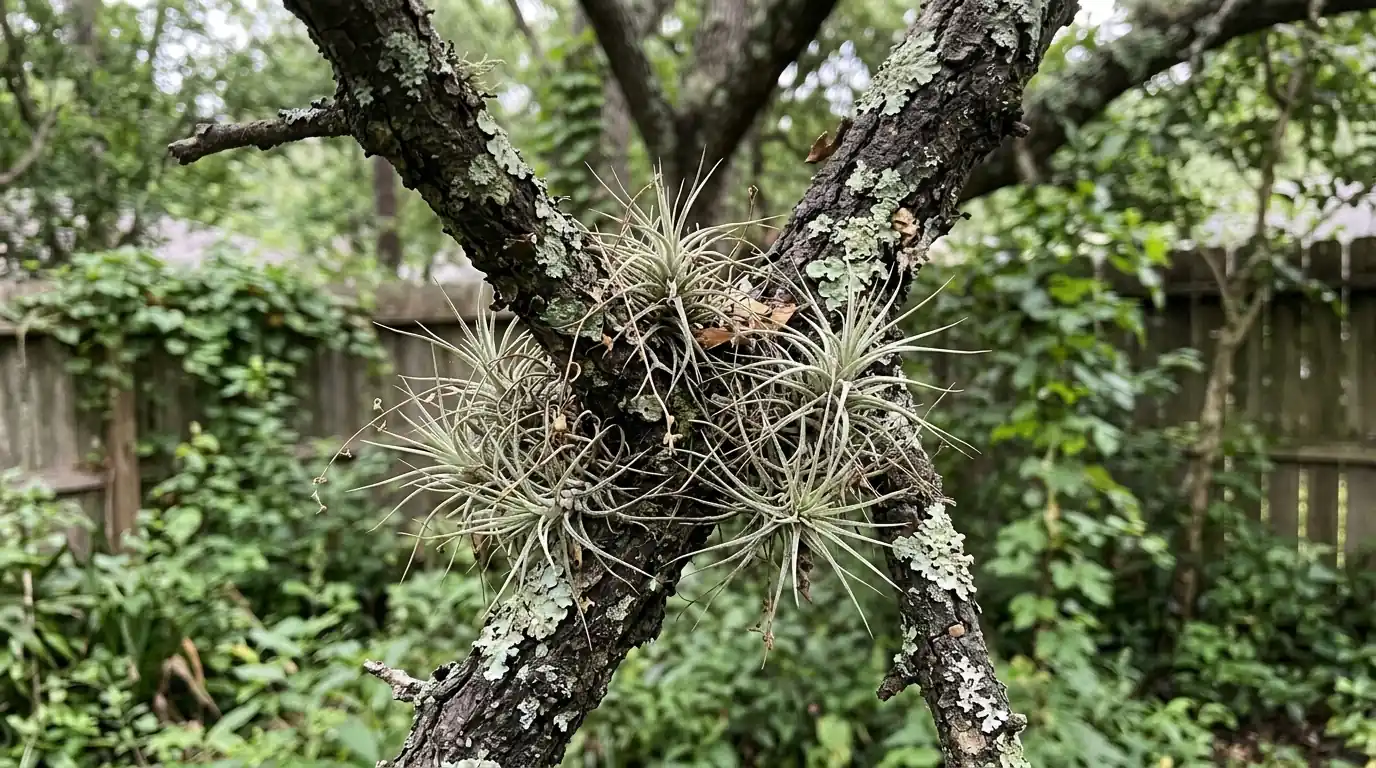
- Deadwood and ball moss cleared from the interior by hand.
- Mistletoe-infected small limbs cut out below the clump.
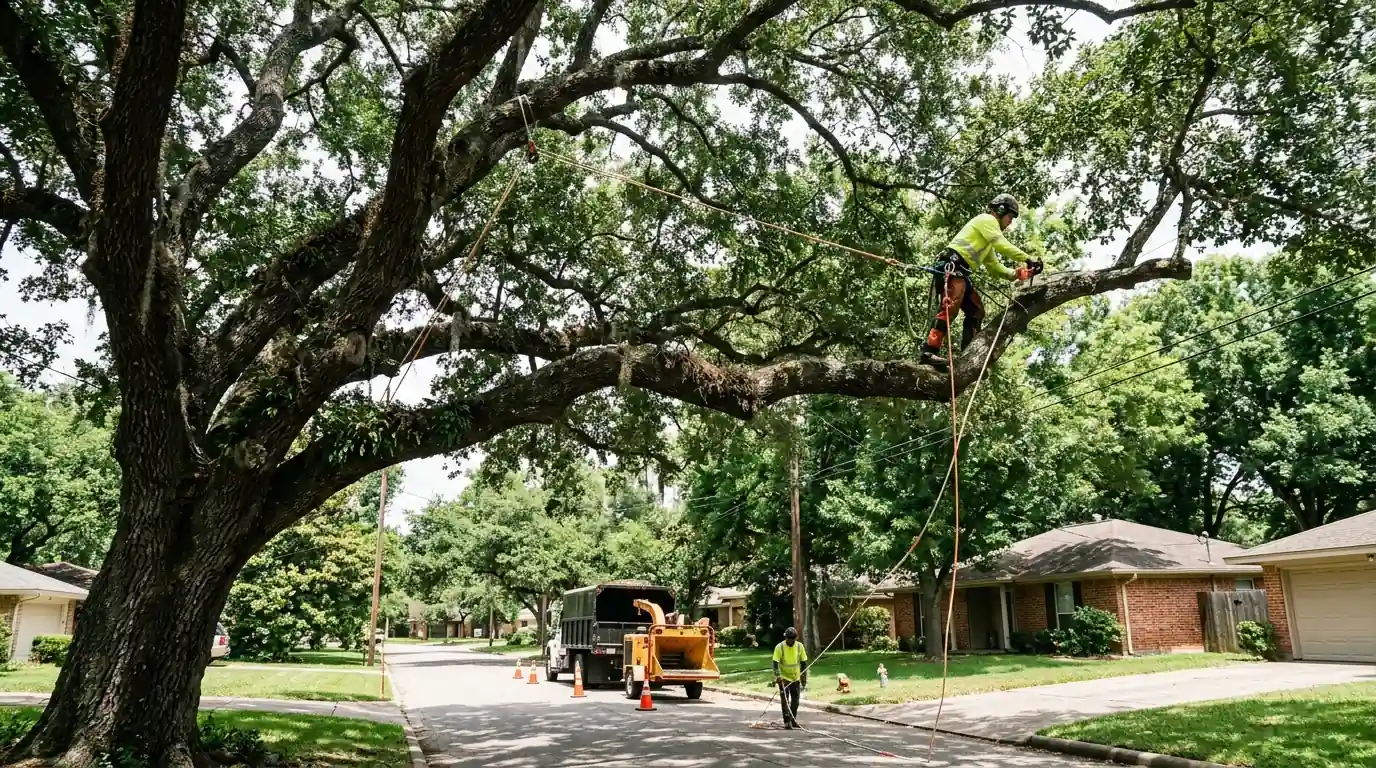
- Heavy limbs lowered on ropes over roofs, fences and cars.
- Brush chipped and hauled, with walks and beds raked.
Live oaks
A live oak that has gone years without pruning usually shows it in two places: limbs drooping toward the lawn or roof, and a dense interior full of dead twigs and ball moss. The work is end-weight reduction on the longest laterals, cutting back to healthy side branches, plus deadwood out of the center. Stripping the interior to look tidy only shifts more weight to the tips. Live oak limbs come down on ropes in pieces, over beds and fences.
Water oaks
Water oaks grow fast and are shorter-lived than live oaks, and in older Houston neighborhoods many are reaching the age where decay shows. Deadwood in the crown, fungal conks on the trunk and hollow spots at old pruning wounds are the usual signs. Trimming a water oak means clearing that deadwood and lightening limbs over the house, while the climber checks for rot at each union. When decay runs deep, we say so, because no pruning fixes a hollow trunk.
Ball moss and mistletoe
Ball moss is the gray tufts on interior twigs; it is an air plant, not a parasite, and it gathers where shade has already killed the inner branches. Removing it by hand during a thinning, along with that dead wood, is enough. Mistletoe is a parasite, and the green clumps that show each winter on bare water oaks root into the limb itself. Snapping off the clump only slows it, so infected small limbs are cut out below the attachment.
Street and sidewalk clearance
Oak limbs that sag over a street or sidewalk get hit by trucks, school buses and passersby, and a scraped limb tears bark back toward the trunk. Clearance work raises those limbs with proper cuts and reduces the ones that cannot be raised without losing too much crown. When the oak stands in the City of Houston right of way, the city permit comes before any cut. Limbs over the street come down on ropes while a flagger holds traffic.
Questions about your tree? Talk to a crew lead.
Call (704) 839-2139Warning signs
Signs your oak is due
Limbs sagging lower
Long laterals dropping each year carry too much end weight.
Dead interior twigs
Bare gray twigs inside the crown mean shade killed them.
Ball moss thickening
Gray tufts spreading through the shaded, dying inner branches.
Winter mistletoe
Green clumps on a bare water oak feed on that limb.
Roof contact
Branches on shingles scrape granules and give squirrels a bridge.
Cracked limb union
A split where a big limb meets the trunk needs checking.
Local conditions
Why oak tree trimming looks different on Houston's north side
After Beryl, Houston Heights residents described dozens of downed 100-year-old trees, and Heights Boulevard looked like a war zone. Trees that old are where weight reduction and clearance pruning matter most. If the oak stands on city property, a street right of way or median included, trimming it takes a City of Houston permit, posted 20 days before the work starts.
Sources: theleadernews.com, houstonpermittingcenter.org
Step by step
How an oak trim runs
Timing
Work goes outside spring when possible, with paint for every cut.
Walk through
We check end weight, unions and what lies beneath each limb.
Rig
The climber ties in high and sets lines over roofs.
Cut, paint
Reduction and deadwood cuts land at sound laterals, then get painted.
Lower, haul
Limbs come down on rope, then get chipped and hauled.
What moves the price
What sets oak trimming costs
Oak trimming is quoted per tree after a look at the crown. On live oaks, spread outweighs height: each long lateral is a separate rigging job.
Spread
Wide live oaks need more climbing moves and rope work than tall ones.
Targets
Roofs, cars and streets under long limbs mean lowering nearly every piece.
Interior
A crown full of dead twigs and ball moss takes longer to clean.
Street work
Right-of-way trees need a city permit, and road limbs need a flagger.
Yes. Texas guidance names long hot spells in mid to late summer, along with midwinter cold, as the safer windows; spring is the riskier stretch for oaks.
Storm damage gets cleaned up when it happens, in any season. The torn limb is cut back to a clean collar and the wound painted right away.
No. Ball moss takes nothing from the tree and grows on shaded, often dead twigs. Heavy moss means the crown needs thinning, not a spray program.
Not without harm: big cuts on old limbs decay and push dense sprouts. Gradual reduction over several visits, back to strong side branches, keeps it in bounds.
It depends on decay. Sound water oaks get deadwood and weight cuts; one with conks or hollow unions near the house is often safer removed than pruned.
Tip weight pulls wide laterals down over time. Reducing the ends lets the limb rise a little; cutting it at the trunk leaves a big wound.
Related work