Tree Removal on the north side
Dead and unwanted palms removed in north Houston
Freeze-killed queens, fan palms over the roof, a palm where the pool goes: we lower the crown and clear the root ball.
Phone answered 24/7 · office in Spring, TX
- Crown roped down
- Stump ground or dug
Updated October 2026
 Tree Removal
Short answer
Palm tree removal in Houston typically runs $650 to $1,500 by Angi's 2026 Houston figures, with height and access setting the price. The crown comes off first, the trunk follows in rounds, and the stump is ground or dug out to suit what goes there next.
The job
Why palms come down differently
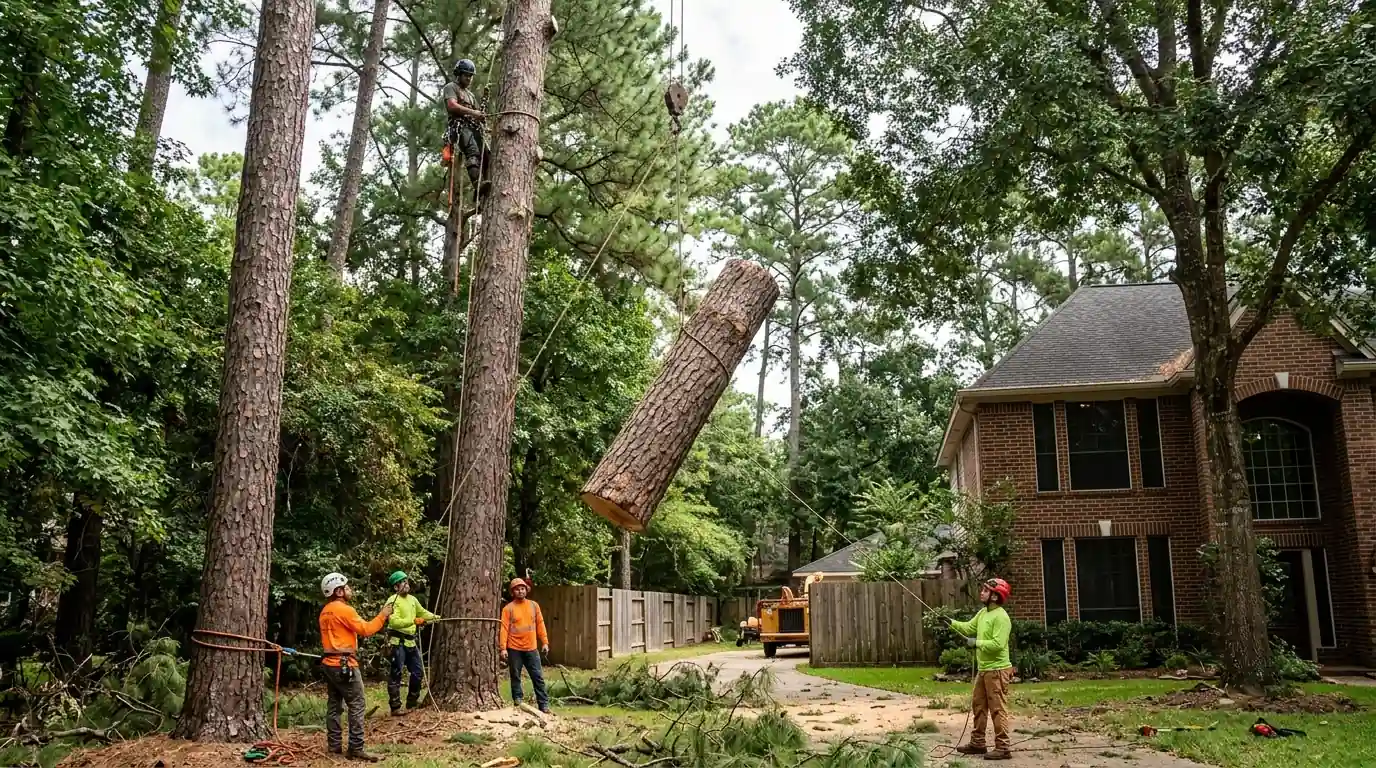
A palm trunk is a bundle of tough fibers, not wood with growth rings. It is heavy, wet and stringy, and it wraps a chipper rotor instead of chipping. The trunk is cut into rounds and hauled, and the fronds leave as bulk debris.
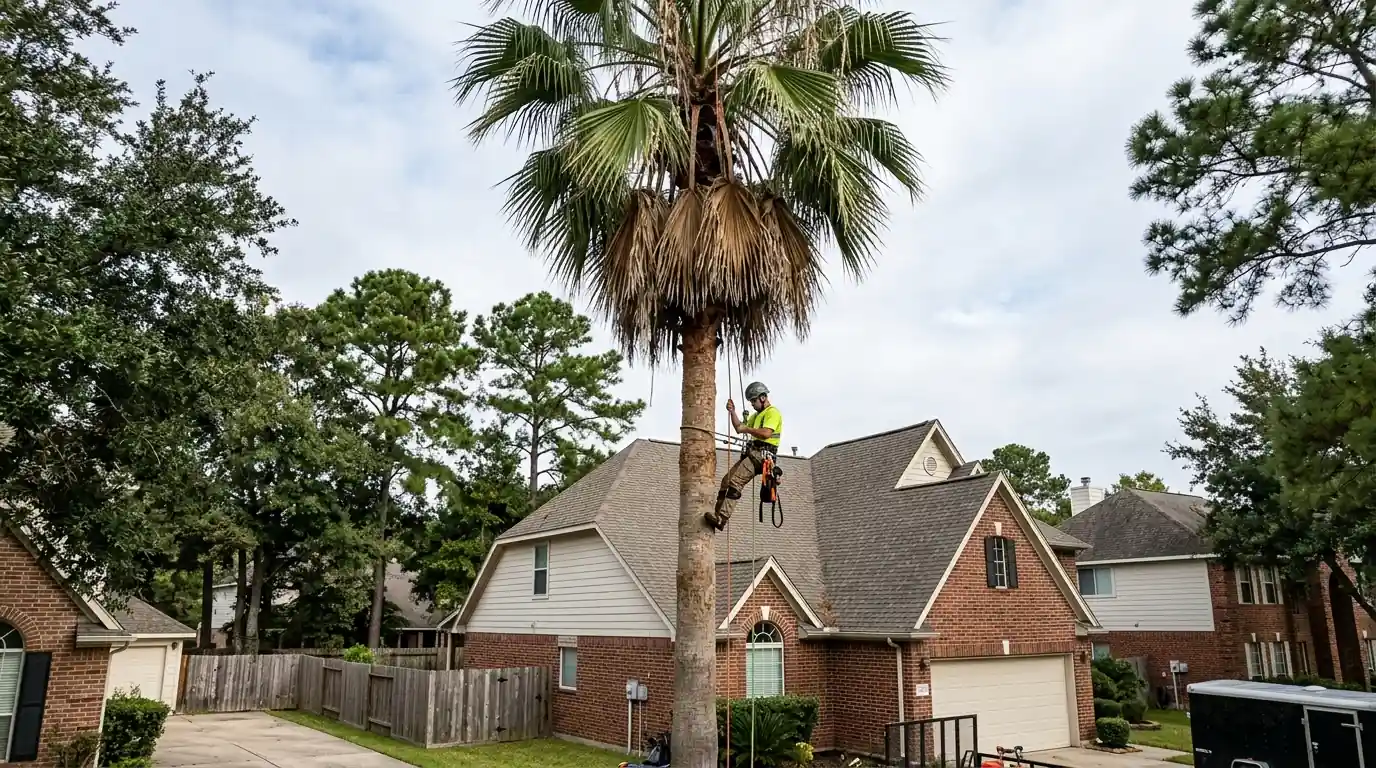
With no limbs to tie into, the climber anchors to the trunk below the head, and that head of fronds and boots comes off in one controlled piece. After the trunk is down, grinding the stump or pulling the root ball finishes the job.
What moves the price
What moves a palm price
Angi's 2026 Houston figures put palm removal at $650 to $1,500, a planning range, not a quote. Height and the root ball usually decide where yours lands.
Height
Tall fan palms need a climber; short ones are cut from the ground.
Drop zone
Roofs, pools and wires under the crown mean lowering pieces, not dropping them.
Haul-off
Fronds, boots and trunk rounds leave as bulk loads rather than as chips.
Stump plan
Grinding below grade costs less than digging out the root ball and refilling.
Your options
Felled, lowered or a mix
| Method | Fits when | Tradeoff |
|---|---|---|
| Felled whole | Open lawn, clear fall line | Quickest, needs open ground |
| Head lowered, trunk felled | Crown over a roof, open below | Protects the roof, still quick |
| Lowered in rounds | Pools, fences or wires below | Most rope work, nothing dropped |
Freeze-killed palms
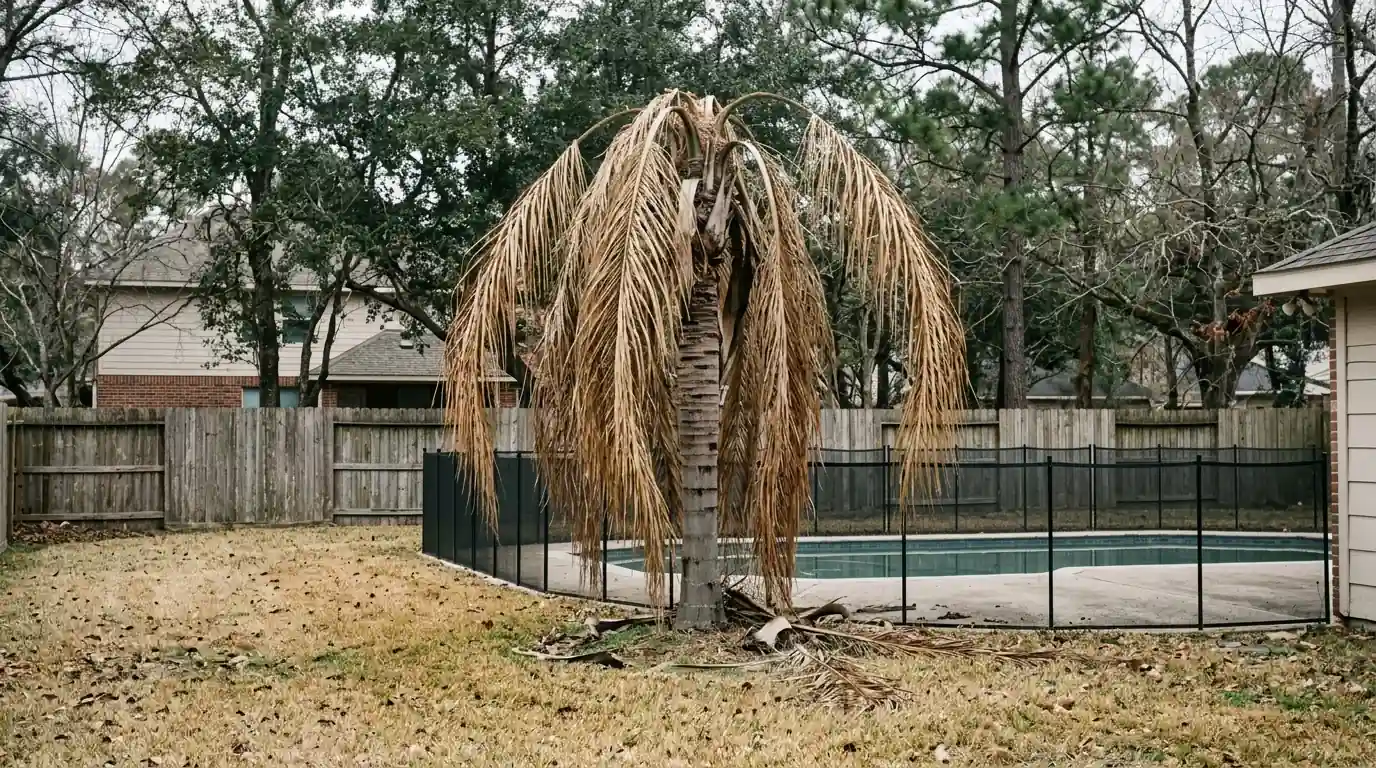
After a hard freeze, a palm can look dead for months and still push a new spear. The test is the bud: if the newest center spear pulls out and smells of rot, the growing point is gone and the palm will not recover. We usually advise waiting for warm weather to show new growth before cutting a palm that is only browned. Once the bud has rotted, the crown can drop on its own, so removal should not wait.
Queen palm removal
Queen palms are cold-tender and often the first palms to brown after a Houston freeze. Healthy ones drop heavy clusters of fruit that rot on drives and pool decks. The trunk is smooth and slender, with no old leaf bases to climb past, so the head usually comes off in one piece and the trunk follows in a few rounds. Fruit, fronds and stalk debris get raked out of beds and gravel, which is where queen palm cleanup takes longest.
Tall fan palms
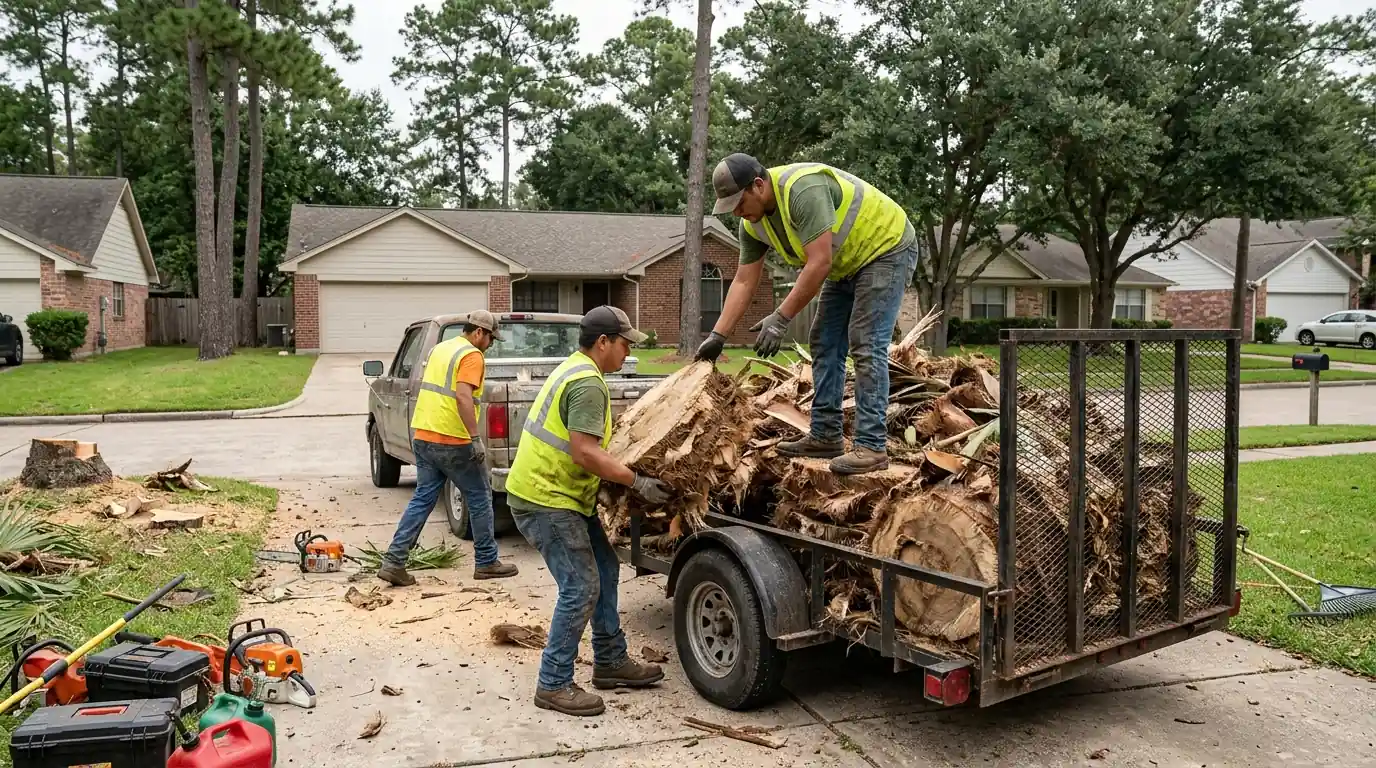
Mexican fan palms grow tall and thin, and an old one often wears a skirt of dead fronds that wasps and rats move into. That skirt is never cut from underneath, because a loosened skirt can slide down the trunk onto a climber, so it comes off before the head. Then the head goes, and the thin trunk whips as the weight leaves it, so the climber stays tied in below the cut. Height drives the price more than girth.
Palm stump and root ball
A single-trunk palm stump does not resprout, so the choice depends on what goes in that spot next. Palm roots form a dense ball of thin cords around the base, not thick laterals. Grinding leaves stringy fibers that mat together rather than loose chips. For lawn or a bed, grinding below grade and topping with soil works. To replant in the same hole, or to pour a slab or deck there, we dig the root ball out and backfill with soil.
Questions about your tree? Talk to a crew lead.
Call (704) 839-2139Warning signs
Signs a palm should come out
Spear pulls free
A loose, rotting newest leaf means the bud has died.
Brown into summer
A crown still brown months after a freeze rarely recovers.
Conk at the base
A woody shelf near the soil line signals butt rot.
Fresh lean
A palm tipping after soaked soil has lost root anchorage.
Pinched trunk
A narrowed or split section is a weak point in wind.
Shrinking head
Fewer, shorter fronds each year show a palm in decline.
Local conditions
Why palm tree removal looks different on Houston's north side
Houston weather hits palms from two directions. Most winters are mild, so queen and fan palms get planted freely, and the hard freezes of some winters brown many at once. Hurricane season, June to November, brings wind that snaps crowns weakened by bud rot, and Gulf humidity keeps that rot moving. Soaked clay after a storm lets a weak palm tip.
Step by step
A palm removal, top to bottom
Walk through
We mark roofs, wires, beds and pool edges near the crown.
Crown off
Dead fronds come off, then the head is lowered on rope.
Trunk down
The trunk comes down in rounds, or whole on open ground.
Stump work
The stump is ground below grade, or the root ball dug.
Haul, rake
Rounds, fronds and fibers are hauled and beds raked of fruit.
Only on a palm that is coming out. Spikes leave holes a palm never heals, so palms that stay get climbed with a rope and lanyard instead.
Yes. The head and trunk are lowered on ropes, not dropped, and the deck is covered where debris could land. Fronds and fruit get skimmed out.
A single-trunk palm will not. Clustering palms, such as some date palms, can push shoots from the base, so those bases are ground deep or dug out.
Not really. Palm trunks hold a lot of water and burn poorly, so most people have the rounds hauled, though we can stack them by the fence.
Yes, if the bud is dead or a conk grows at the base. A palm with a rotted heart can drop its whole head in strong wind.
Rarely. Palm roots stay thin and fibrous instead of thickening like oak roots, so they seldom lift slabs or walks. Trunks against the eave cause more trouble.
Related work