Tree Removal on the north side
Crane tree removal across north Houston
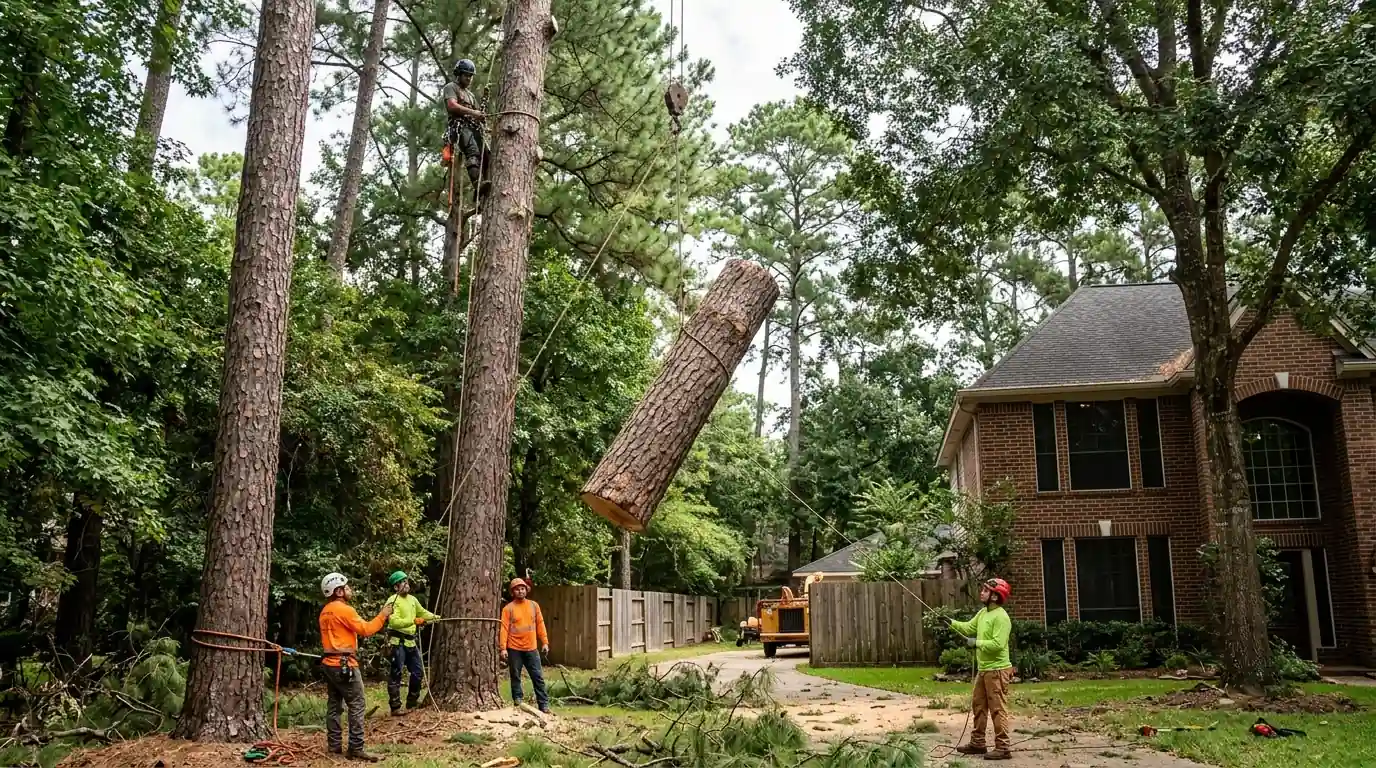
When a tree cannot be felled or rigged, a crane takes the weight, and each piece lifts over the house.
Phone answered 24/7 · office in Spring, TX
- Held before cutting
- Planned landing zone
Updated October 2026
 Tree Removal
Short answer
Crane tree removal in Houston adds about $500 in Angi's figures, including truck and extra staff, on top of the removal. The crane holds each section before it is cut and lifts it over the house. It earns that cost when climbing or felling is unsafe.
The job
Crane or climber?
A climber can take down nearly any tree, given a sound trunk and a place to lower wood. A crane takes over when one is missing: the tree is cracked, dead or hollow, leans over the house, or stands where every piece would hit something.
A climber sets slings around a section, the operator takes up the weight, and only then is the cut made. The piece swings clear to the ground crew. Fewer cuts happen over the roof, and nobody depends on weak wood.
What moves the price
What a crane adds
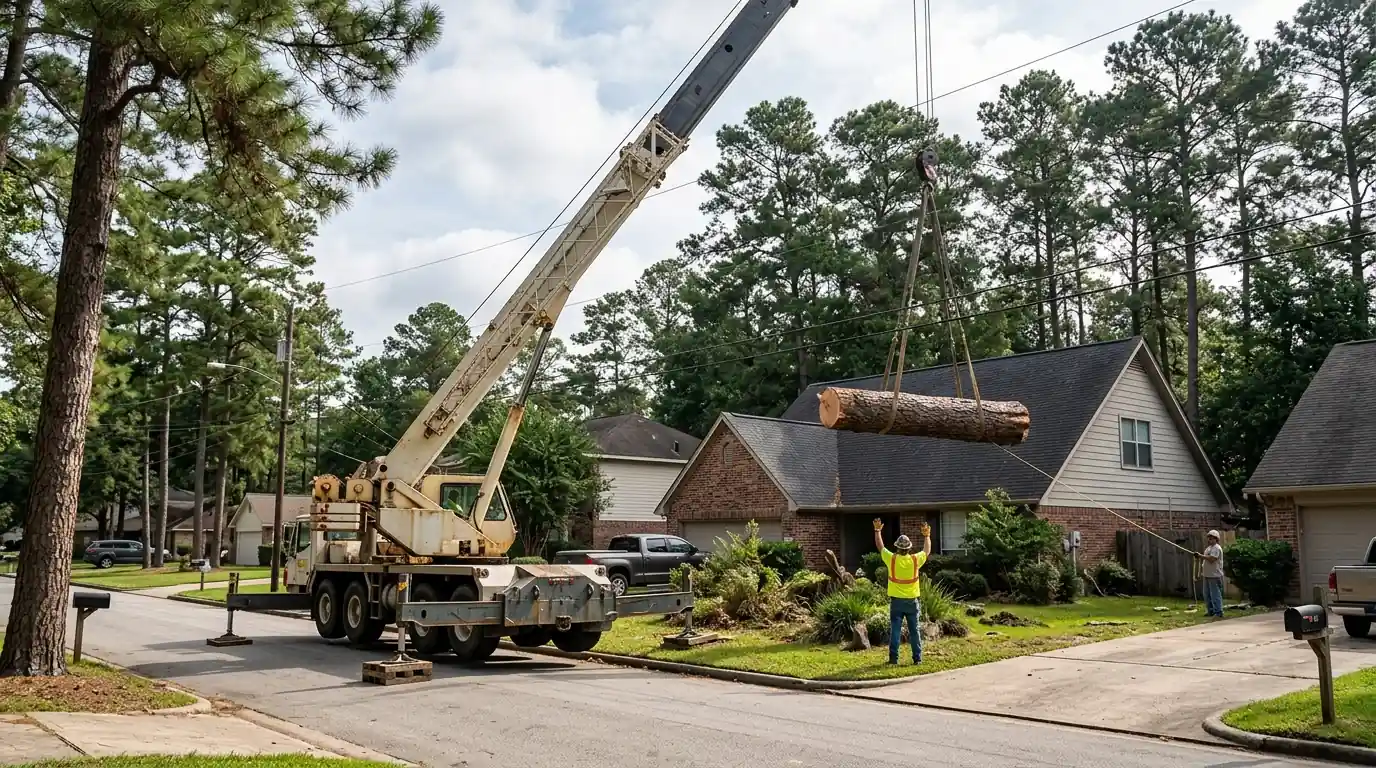
Angi's Houston figures put 60 to 80 foot removals at $800 to $1,500, with the crane add-on on top. Reach and piece weight set the rest.
Setup ground
Outriggers need firm, level ground; soggy clay means mats or another spot.
Pick distance
Farther picks mean lighter sections, more cuts and more time under the hook.
Lines overhead
Overhead lines or a narrow street limit where the crane parks and swings.
Wood condition
Dead or cracked wood can break in slings, so picks stay small.
Cost data: angi.com
Tree removal prices, explainedYour options
Crane, climber or both
| Approach | Right for | Tradeoff |
|---|---|---|
| Full pick | Dead, cracked or leaning trees | Fewest roof cuts, priciest setup |
| Climber plus crane | Heavy wood on a climbable tree | Climbing time plus crane time |
| Ropes only | Sound trees with room to lower | No crane charge, more hours |
Trees leaning over the house
A tree leaning over the roof cannot be felled, and rigging from it adds load in the worst direction. With a crane, the hook takes the top before the first cut, so each piece lifts away from the house instead of dropping toward it. The trunk comes out last, in pieces the crane can hold. If the lean has changed since the last storm, or soil is lifting at the base, treat it as an emergency removal, not a booking.
Landlocked backyard trees
Some backyard trees have no way out except over the house. The crane sets up on the street or driveway and reaches over the roof; each section is lifted out to the front, where the chipper and truck wait. Capacity drops as reach grows, so a far tree means lighter picks and more of them. We plan a lift path that avoids carrying loads over occupied rooms, which sometimes means asking everyone to step out while the heaviest picks fly.
Oversized pines
A loblolly towering over two roofs can be climbed, but every section lowered on a rope is a small piece, and a tall, thin stem sways under the climber. A crane lets the crew take longer stem sections in fewer cuts, each lifted clear before it can swing. Angi lists Houston removals of trees taller than 80 feet at $1,000 to $2,000, before the crane add-on. Pine sap gums slings and decks, so we cut over tarps where it matters.
Trees too weak to climb
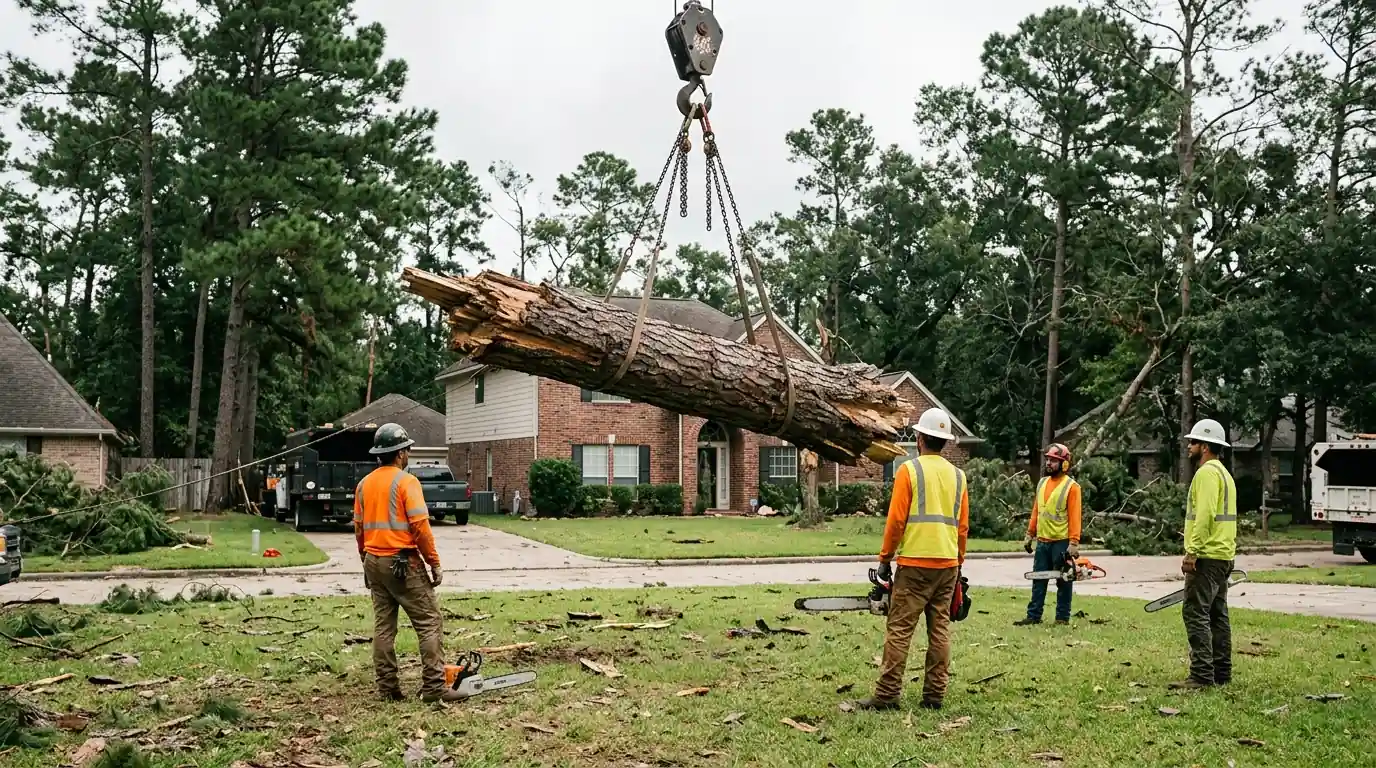
A storm can leave a tree with a cracked trunk, a torn top or a split union, and none of that wood is safe as a climbing anchor. Here the crane does the holding. Slings go on from the safest reach available, the hook takes the weight, and the cut frees a piece that is already supported. Dead and beetle-killed trees belong here too, since brittle wood snaps instead of bending under a climber; more on that under dead tree removal.
Questions about your tree? Talk to a crew lead.
Call (704) 839-2139In the scope
Crane job scope
- Site walk for ground, wires and landing
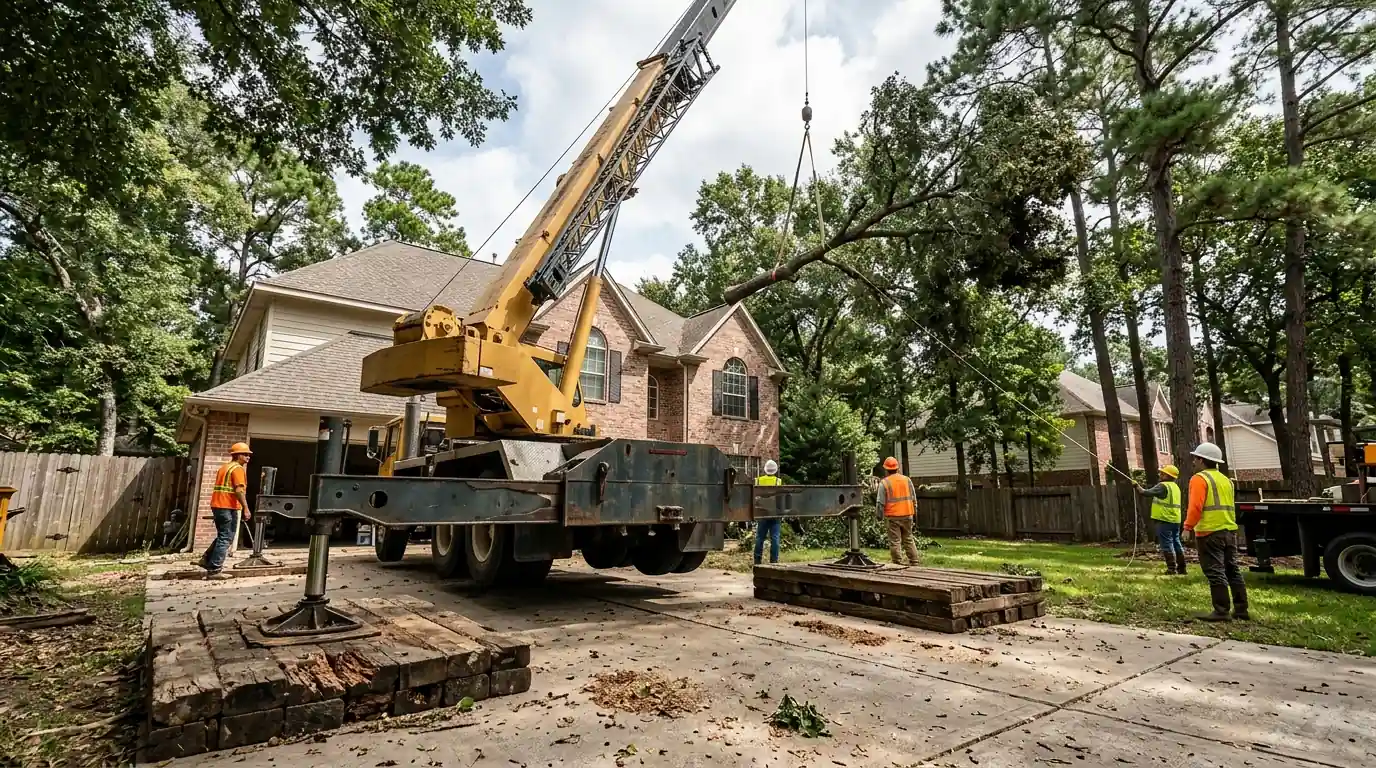
- Outriggers on pads to spread the load
- Each section slung, cut and flown clear
- Pieces cut, chipped and loaded as they land
- Trunk cut low, stump ready for grinding
- Sawdust cleaned from lawn, drive and street
Local conditions
What Houston's storms, trees and soil mean for crane tree removal
Beryl showed what tall pines near houses can do. In Kingwood its 80 mph winds tore pines seventy feet tall from the ground, flattening cars and roofs, and the whole community went dark. Pines that tall, standing close to homes on wooded lots, are where a crane often pays for itself, whether the tree is down or still leaning over one.
Sources: texasmonthly.com
Timing
Hours under the hook
Setup and breakdown take time, so the day turns on how many picks the tree needs and how fast the ground crew clears each landing. A pine with a clean stem may come out in a handful of long sections. A wide oak over a house means many limb picks before the trunk. Wind can pause the lifts, and soft ground can decide the setup spot.
Step by step
Running a pick
Site walk
We check ground, overhead lines, reach and a landing zone.
Crane setup
Outriggers go down on pads over the firmest ground available.
Sling it
Slings go on; the hook takes the section's weight first.
Fly it
The section is cut free and flown over the house.
Process below
Each piece is cut and chipped before the next lands.
Not usually, on a sound slab, since outriggers sit on load-spreading pads. Old, cracked or thin paving is the risk, so mention it before setup day.
Often, for big or damaged trees: fewer, larger pieces come out. On a small tree with open ground, a climber or straight felling is quicker and cheaper.
Yes. The crane may block part of the street, and the lift path can cross a fence line. A heads-up keeps cars moved and kids clear.
Light rain is workable. Lightning, high wind or soaked ground under the outriggers stops a crane job, and we reschedule rather than set up on soft clay.
The limit is the crane, not the tree. Bigger trees mean bigger cranes or smaller picks; setup space and reach decide which one fits your street.
Rarely. Picks are sections, because a whole tree often outweighs what the crane holds at that reach. Small, close trees sometimes come out in one pick.
Related work