Trimming & Pruning on the north side
Shrub and hedge trimming around north Houston homes
We shear hedge rows, hand prune overgrown foundation shrubs and thin wax myrtle and yaupon, each on its own timing.
Phone answered 24/7 · office in Spring, TX
- Shear or hand prune
- Clippings hauled
Updated October 2026
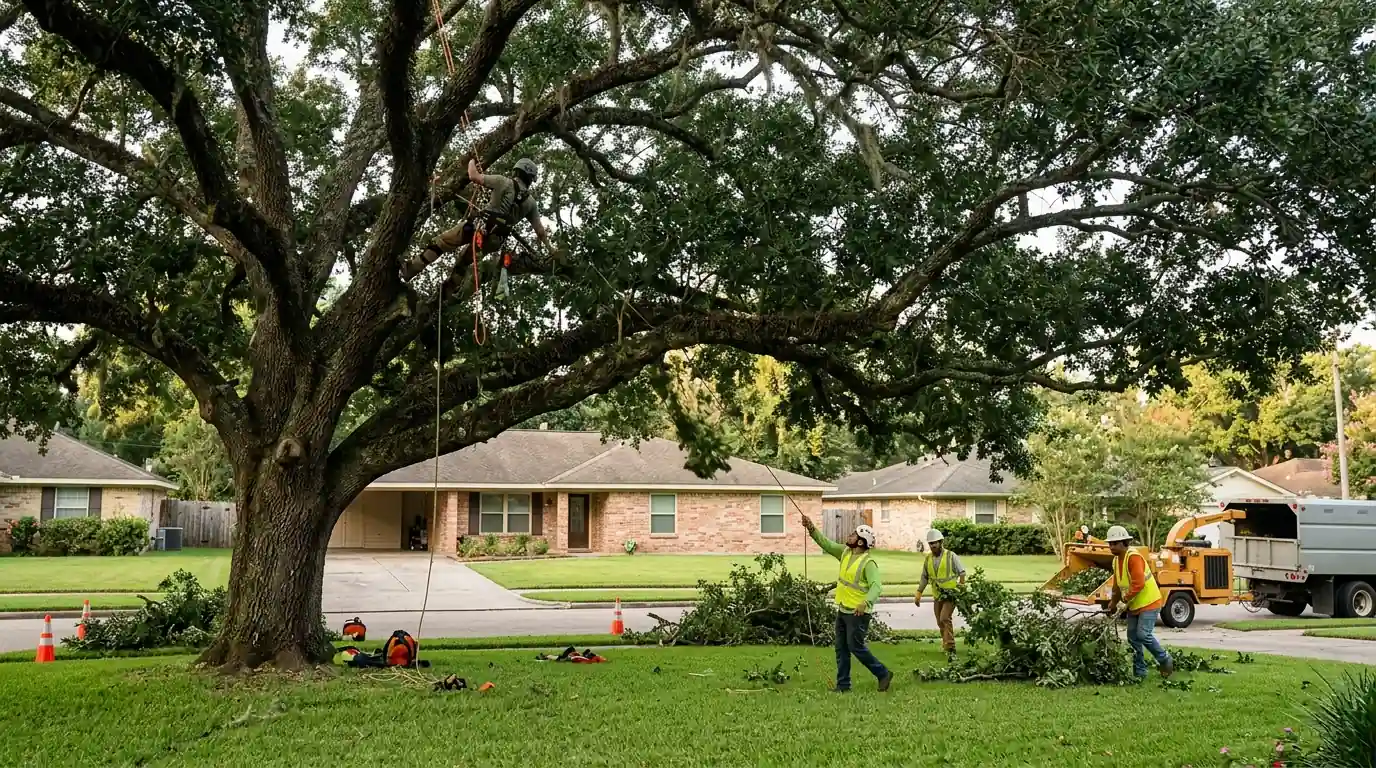 Trimming & Pruning
Short answer
Shrub and hedge trimming in Houston matches the method to the plant: formal hedges get sheared, flowering and overgrown shrubs get hand pruned. Spring bloomers wait until after they flower, and summer bloomers get cut in late winter. Overgrown shrubs come back gradually, not in one cut.
The job
Shearing or hand pruning?
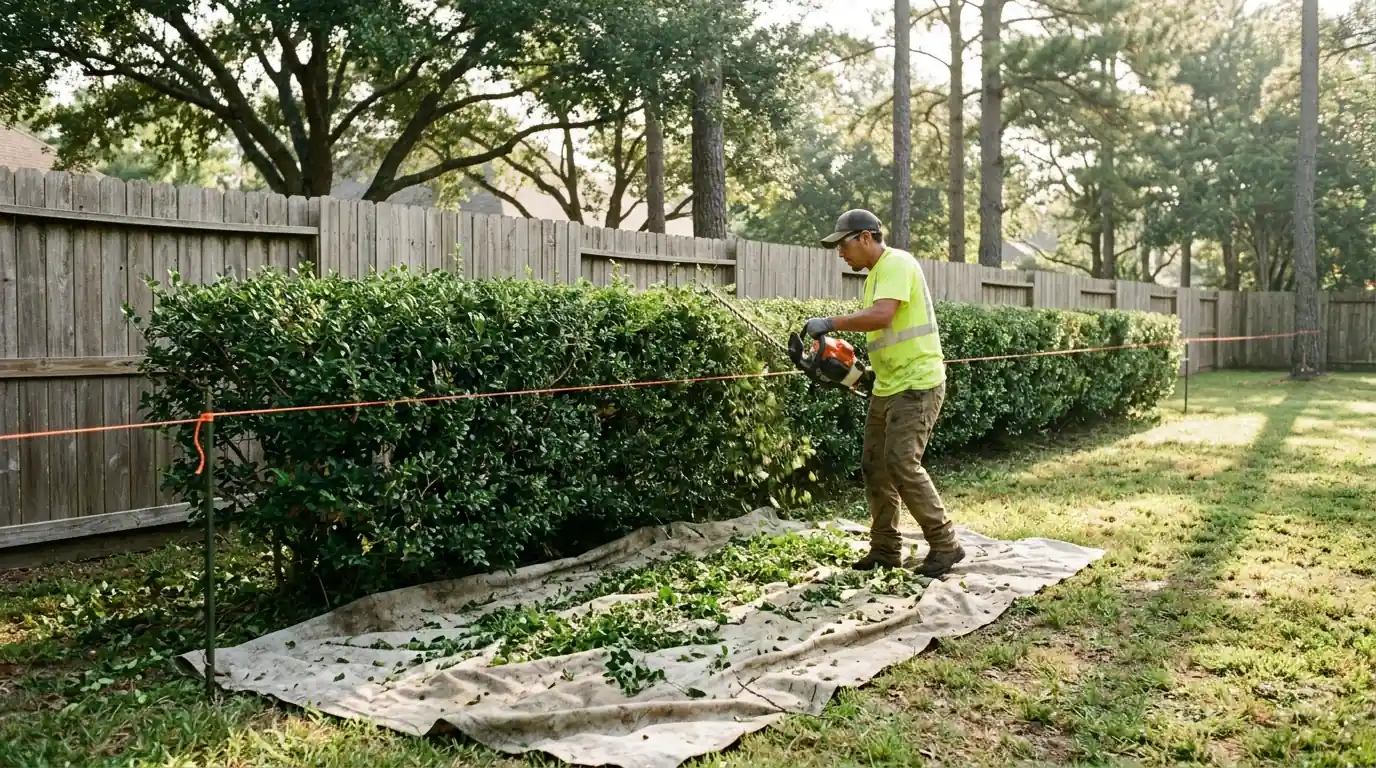
Shearing clips the outer growth of every stem, which suits a boxwood or ligustrum hedge kept in a formal shape. Done for years, it builds a dense green shell over bare, woody interior, and the hedge creeps wider each season.
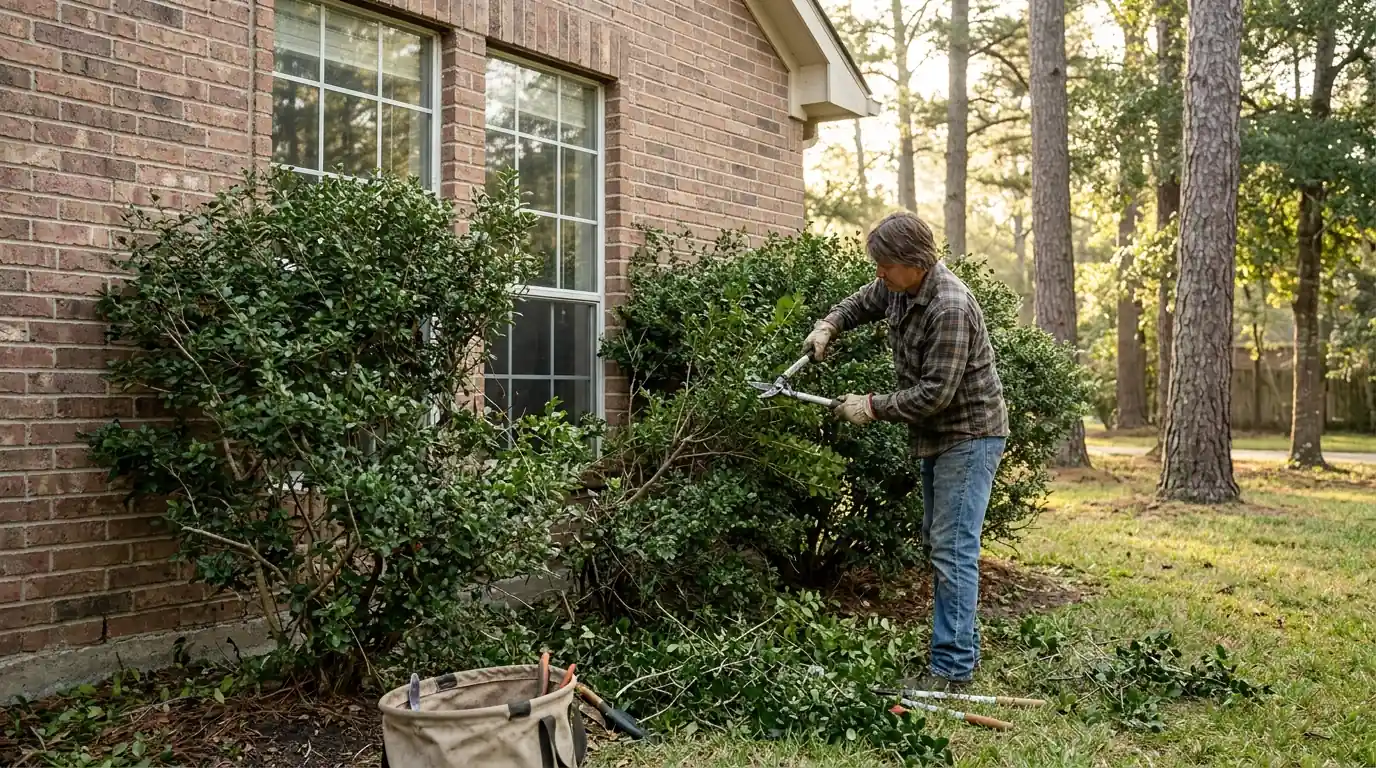
Hand pruning reaches inside and cuts selected stems back to a branch or the base. That thins the shrub, lets light in, and pulls it back from windows and walks. Most foundation plantings need some of each, and shrubs grown into small trees cross into tree trimming.
In the scope
From first cut to last rake
- Hedges sheared level, tapered slightly toward the top.
- Overgrown shrubs thinned by hand, pulled off windows.
- Dead wood and freeze-browned tips cut out of each plant.
- Suckers cleared from wax myrtle and yaupon bases.
- Beds raked out, including the ground under the shrubs.
- Walks blown clear, debris hauled or piled for compost.
Hedge rows
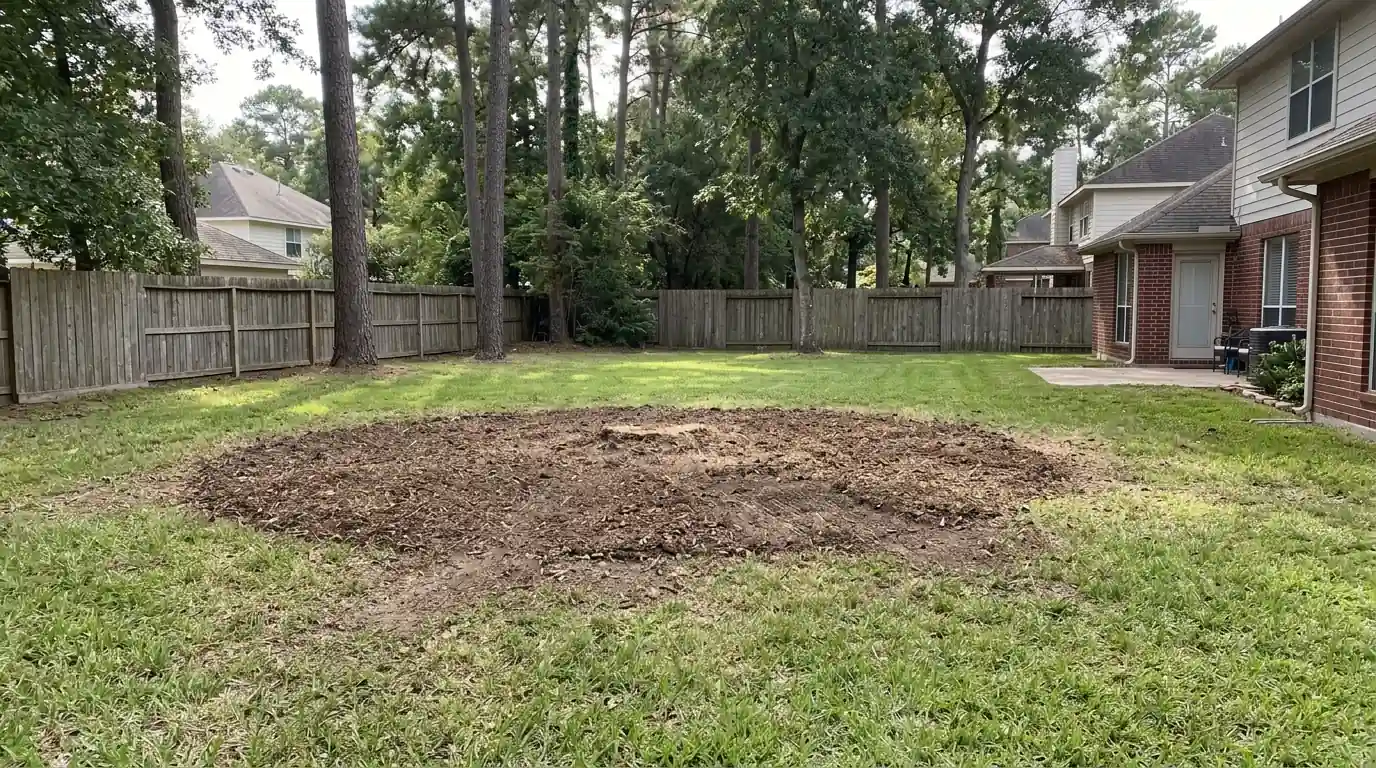
A hedge that is full on top but bare and twiggy at the bottom was sheared straight up or wider at the top, shading its own base. We shape the sides with a slight taper, narrower at the top, so sun reaches the lower leaves, and cut long rows to a string line for a level top. A ligustrum hedge grown too tall can be cut back hard in late winter, at the cost of a thin season while it refills.
Overgrown foundation shrubs
Shrubs covering windows, pressing on siding or holding moisture against the slab are the most common complaint. Shearing them smaller just makes a denser blob. We thin from the inside, cut the oldest stems near the base, and pull the plant back from the wall so air moves behind it. Many old shrubs respond well to renewal pruning spread over a few winters. Junipers and some other evergreens never refill bare wood, so for those, replacement is often the better route.
Wax myrtle and yaupon
These two natives show up as hedges, screens, small trees and, in the woods, underbrush thickets. Both grow fast, sucker from the base and take shearing, but yaupon berries form on last year's growth on female plants, so heavy shearing can cost the winter berries. Wax myrtle gets thinned from inside, since a dense, top-heavy one can split open under its own weight in wind. Yaupon can be raised into a small tree, removing lower stems over a couple of visits.
Hauling off clippings
A full hedge row fills a truck faster than most expect, and wet clippings left in bags turn sour and slimy within days. We rake beds, pull clippings out from under the shrubs, blow off walks and haul the debris. Angi's 2026 Houston figures for tree debris removal average about $148, with $75 to $250 per dump trip, a fair planning range when you want debris gone. Clippings you want for compost can stay behind in a clean pile by the beds.
Questions about your tree? Talk to a crew lead.
Call (704) 839-2139Local conditions
What Houston's storms, trees and soil mean for shrub & hedge trimming
Houston's long, humid growing season keeps hedges pushing new growth from spring into fall. Summer heat is hard on fresh cuts: heavy pruning in August stresses shrubs short of water, so summer work stays light. Hard cutbacks wait for late winter, once the coldest snaps are usually past, so new growth does not push out just ahead of a freeze.
Do it yourself?
Hedge upkeep between our visits
Fine to handle yourself
- Touch up a formal hedge's new growth with hand shears.
- Pull suckers at yaupon and wax myrtle bases.
- Water hedges deeply in dry weeks instead of shearing.
Leave to a crew
- Renewal cuts, where removing the wrong stems loses the plant.
- Tall hedges needing a ladder along a fence or pool.
- Shrubs grown into small trees that need saw work.
Step by step
How a hedge day runs
Bed walk
We sort which plants get sheared, hand pruned or left alone.
String lines
Long hedges get a line set so the top comes out level.
Shear and thin
Formal rows are sheared; overgrown shrubs get thinned from inside.
Bed cleanout
Clippings are raked from beds and fished out from under shrubs.
Haul or pile
Debris goes on the truck, or into a compost pile if asked.
What moves the price
Hedge pricing, piece by piece
A hedge visit costs more the longer and taller the rows, the more overgrown the shrubs and the more cleanup the cuts leave. Regular visits usually cost less than rescues.
Length and height
Long or tall hedge rows take more passes and may need ladders along the top.
How overgrown
Shrubs years past their last trim need hand thinning, slower than shearing.
Bed access
Tight beds against walls, pools and fences slow every cut and rake.
Clipping volume
A full hedge row can fill a truck, and each load adds a dump trip.
A formal hedge here usually needs shearing a few times a year, since growth runs from spring into fall. Informal shrubs often need one thinning a year.
Right after they finish blooming in spring. Azaleas set next year's flower buds over the summer, so cutting them in fall or winter removes the coming bloom.
Some can. Ligustrum, wax myrtle and yaupon usually resprout from older wood after a late-winter cutback. Boxwood refills slowly and junipers not at all, so we reduce those gradually.
Yes. In this heat a condenser needs open air on every side, so we cut shrubs back around it and keep the clippings out of its coil fins.
Yes. We cut shrubs back until branches stop scratching screens and pushing pickets, and lay tarps near the pool so clippings stay out of the water and skimmer.
No. Crape myrtles are small trees that bloom on new growth, and shearing leaves knuckles and weak sprouts. They get a separate late-winter thinning back to branch unions.
Related work