Tree Health & Planting on the north side
Shade Tree Planting for North Houston Yards
Live oak, cedar elm or bald cypress: we match the species to the spot and set the root flare at grade.
Phone answered 24/7 · office in Spring, TX
- Flare set at grade
- Circling roots cut
Updated October 2026
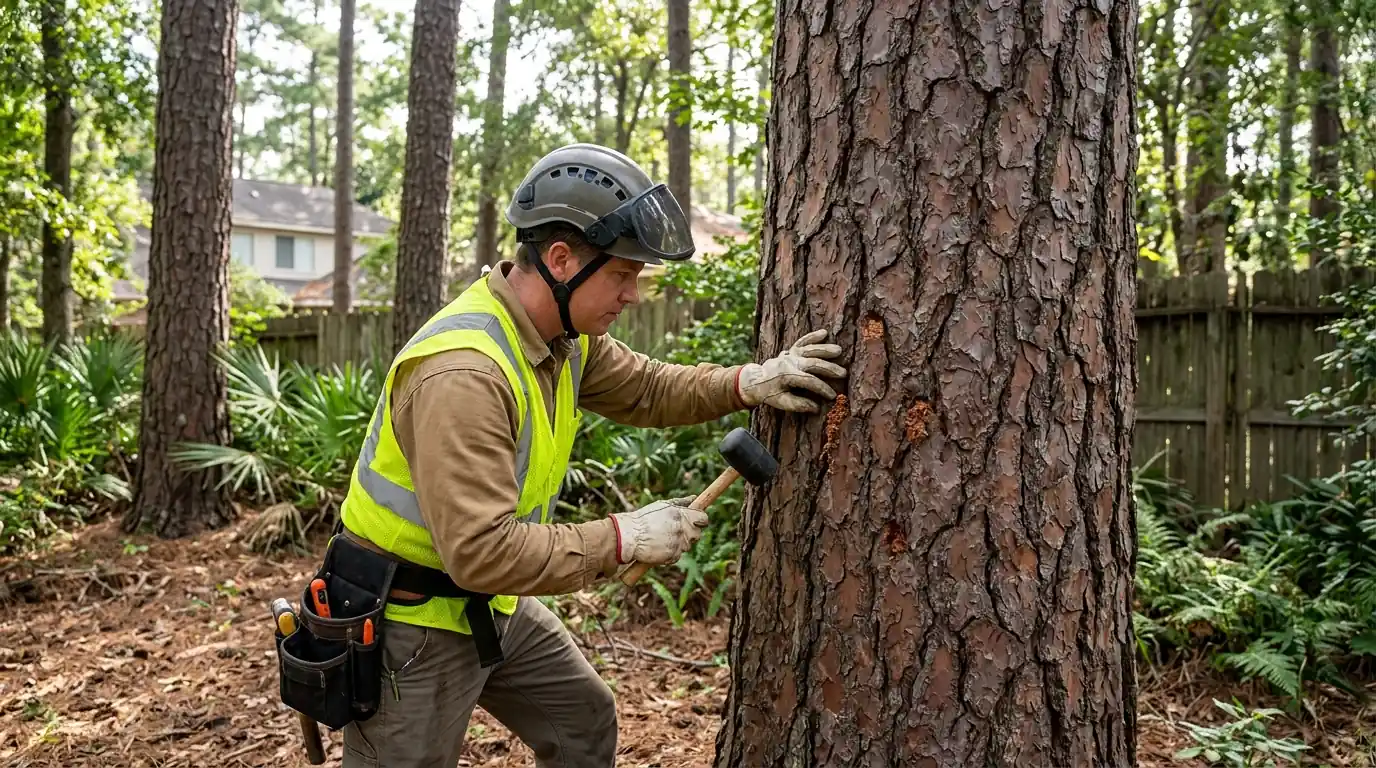 Tree Health & Planting
Short answer
Tree planting in north Houston happens at neighborhood scale too: Trees for Kingwood has planted close to 2,000 trees since 2022. The ones that thrive are clay-tolerant natives, set shallow at the root flare, kept clear of lines and slabs, and watered through their first summers.
The job
Why Most New Trees Fail Here
New trees in Houston yards usually fail because they were planted too deep, watered too little in their first August, or set where they will outgrow the space. Clay makes depth mistakes worse: a hole filled with soft soil holds water like a tub, and roots below the flare stay wet and short of air.
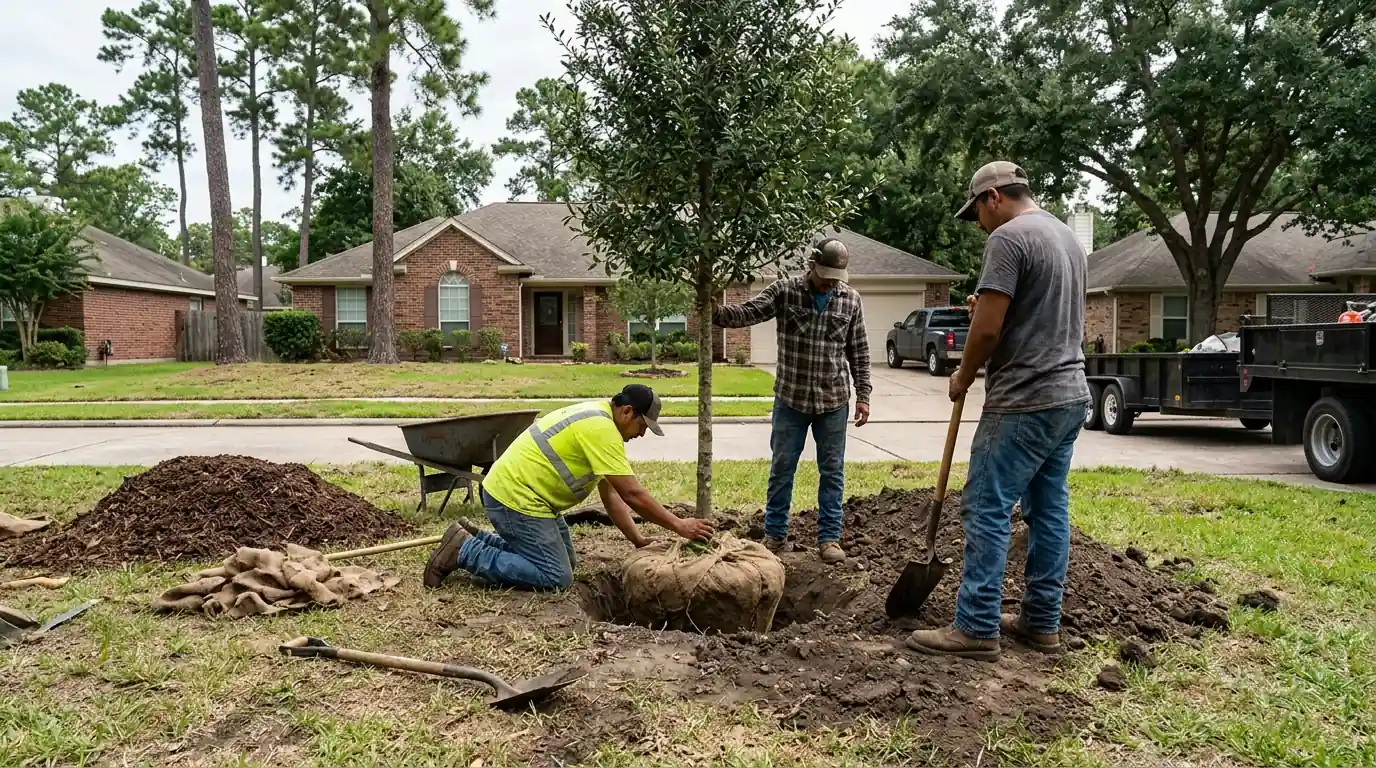
We dig wide and shallow, set the flare at or just above grade, and backfill with native soil. After a removal, grinding the old stump first frees up the planting spot.
What moves the price
Pricing a New Tree
Planting is priced per tree from the nursery size, the digging and first-season care, and on larger stock the tree itself is often the biggest piece.
Nursery size
Saplings and large balled trees differ sharply in price, weight and watering.
Digging conditions
Packed clay, old roots or a buried slab edge slow the hole.
Gate access
Heavy root balls through a side gate need a dolly or extra hands.
Old stumps
Planting near a stump can mean grinding it and swapping chips for soil.
Your options
Choosing a Nursery Size
| Size | Good for | Tradeoff |
|---|---|---|
| Small container | Open yards, patient owners | Roots in fast; slow to shade |
| Mid-size container | Most front yards and HOA plans | Balanced cost, water and wait |
| Large balled tree | Approvals listing a size, or instant presence | Heavy, costly, thirsty; slower to settle |
Native Shade Trees
For shade that lasts on Houston clay, the reliable picks are natives: live oak, Shumard oak, cedar elm, bald cypress, swamp chestnut oak and southern magnolia. Each handles August heat and soggy clay better than a fast-growing import. The tradeoff is patience. A container live oak takes years to throw real shade, and a bigger tree costs more and needs more water to establish. Smaller nursery sizes often catch up anyway, because they root in faster and suffer less transplant shock.
Replacing Storm Losses
After a storm takes a big tree, the urge is to replant in the same hole. That is usually the weakest spot. The old stump and root mass rot and settle for years, and grinding leaves a pocket of chips that robs nitrogen. We plant offset from the stump, or grind it out and swap chips for soil first. Ask why the tree failed, too: a shallow root plate on soggy clay says the new tree needs a different species or spot.
Replanting for the Township
If a removal approval from The Woodlands Township or your HOA lists replacement trees, the planting must match it: species, size and location as written. We read the approval before buying stock, so nothing gets swapped at the nursery. We stake each spot against the site plan, then photograph every tree in the ground with its tag showing, for your records. A larger listed size means heavier watering through its first summers, and permit and HOA help covers the paperwork before removal.
Right Tree, Right Spot
Planting mistakes often show up years later: a live oak spreading into the service drop, roots heaving a driveway, a magnolia shading the only sunny bed. Before digging, we look up and out. Small trees such as yaupon, redbud or wax myrtle go under wires. Big shade trees go well back from slabs, pools and septic lines, where their mature spread and roots have room. Drainage matters too: a low spot that holds water after rain suits bald cypress, not a live oak.
Questions about your tree? Talk to a crew lead.
Call (704) 839-2139In the scope
What Each Planting Covers
- Species chosen for the spot, wires, slab and drainage.
- Utility locates called in before the hole is dug.
- Circling roots cut; burlap and wire pulled back.
- Root flare set at or just above grade.
- Native soil backfill, watered in to settle air pockets.
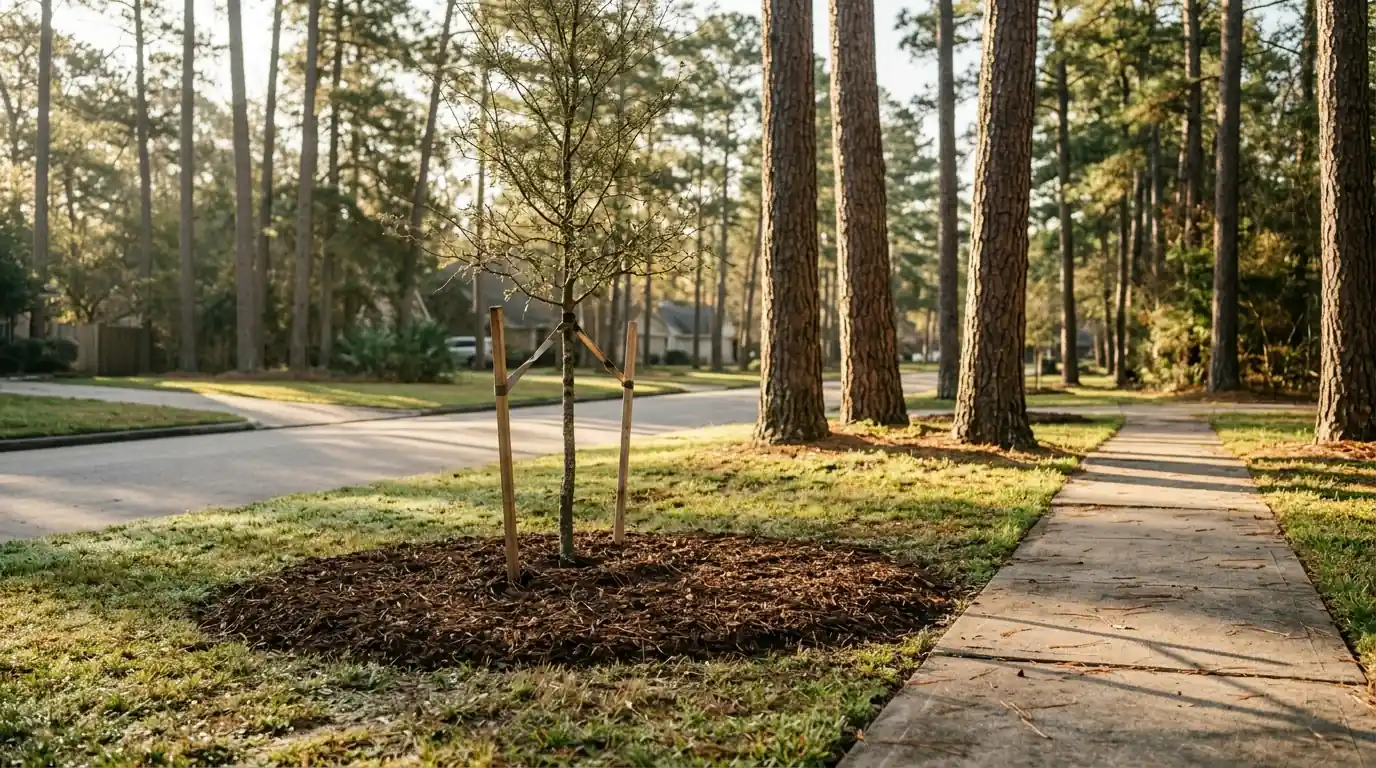
- Flat mulch ring plus a written summer watering schedule.
Local conditions
Why tree planting looks different on Houston's north side
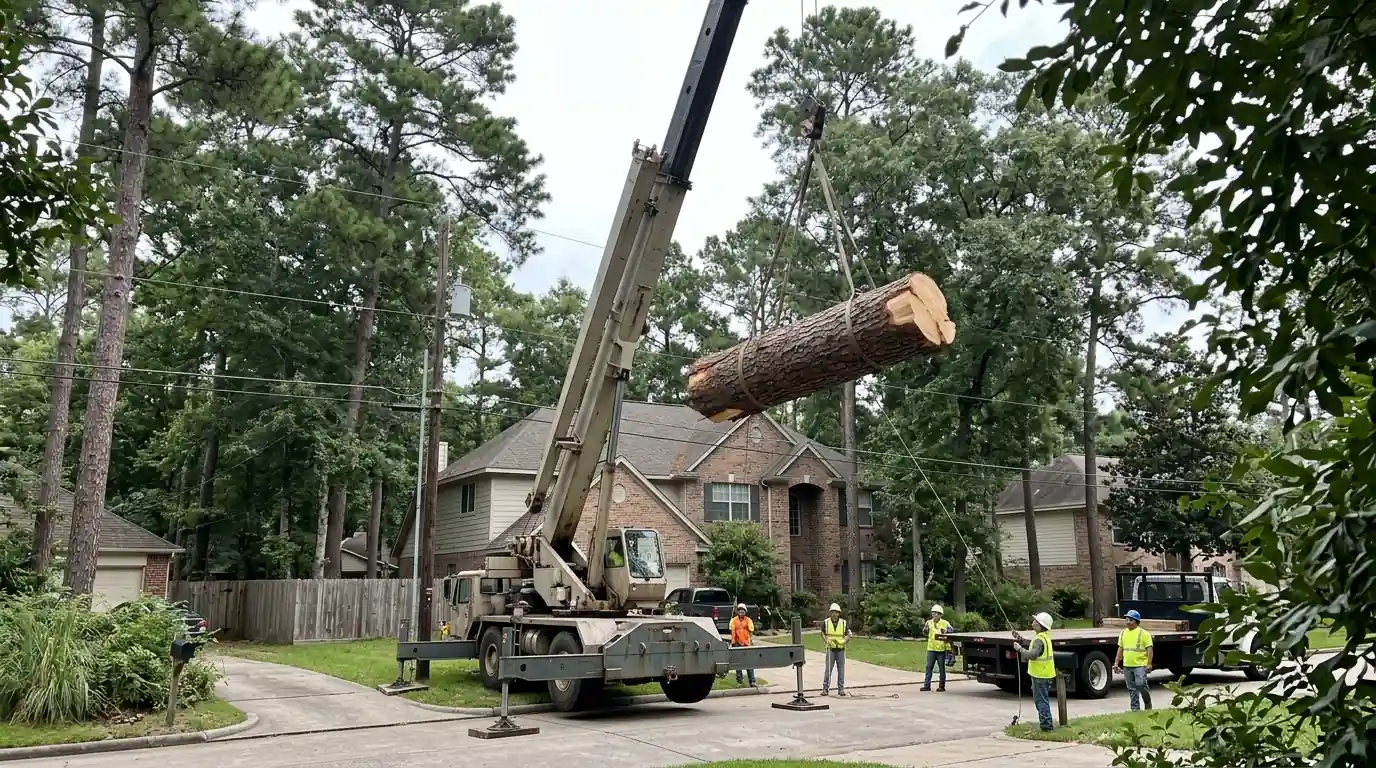
In Kingwood, air potato vines smother the forest edge, and Trees for Kingwood is working to beat them back; a young tree planted at a wooded edge needs them kept off. In The Woodlands, tree removal is one of the exterior projects the township permits under its covenants and standards, so replanting tied to a removal starts with that permit.
Step by step
Site Visit to First Summer
Read the site
We check wires, slabs, drainage and sun before choosing a species.
Locate utilities
Buried gas, power and fiber lines get marked before digging starts.
Dig wide, shallow
The hole goes wide and no deeper than the root ball.
Set and backfill
Flare at grade, circling roots cut, native soil firmed and watered.
Mulch, then water
A flat mulch ring goes down, plus a summer watering schedule.
Fall through late winter. Roots grow in cool soil while the top rests, so the tree meets its first August better rooted. Summer planting needs far more water.
Deeply and less often beats a daily sprinkle. Soak the root ball and just beyond it, then finger-test the soil before watering again; soggy clay drowns roots.
Only if it cannot stand on its own. Ties go loose, and stakes come out after the first growing season so the trunk can flex and thicken.
Skip invasive Chinese tallow, and Bradford pear, which splits in storms. Fast, weak-wooded trees like Arizona ash give quick shade, then decline early, often over a roof.
Far enough that its mature canopy clears the roof and roots stay out from under the slab. On Houston clay, give oaks more room than the tag suggests.
Usually not. Fertilizer pushes leaves before roots are ready. A mulch ring and steady water do more; feed later only if a soil test shows a shortage.
Related work