Land & Property on the north side
Protecting Trees Through a North Houston Build
Fence the root zone, cut roots clean before the trencher, raise limbs for the build, and nurse the tree afterward.
Phone answered 24/7 · office in Spring, TX
- Root zones fenced
- Clean root cuts
Updated October 2026
 Land & Property
Short answer
Tree protection during construction in Houston matters on both sides of the slab: one southeast Houston case study found tree moisture demand pushed the active clay zone to about 28 feet deep. We fence root zones, root-prune ahead of trenches, and clear limbs before equipment arrives.
The job
Most Construction Damage Is Underground
Trees rarely die during a build. They die summers later, from roots cut by a trencher, soil packed by trucks, or fill spread over the root zone. By then the builder is gone and the cause is buried. Most of it happens early, before anyone marks where roots run.
We work with you and the builder before ground breaks, mark the trees worth saving and the ones that should go, and set protection the crews can see. Trees in the way get removed cleanly instead of half-wrecked.
What moves the price
Pricing Tree Protection
Protection is priced by how many trees you keep, how much fence goes up and how much root work the plan needs. Aftercare is priced separately.
Number of keepers
Each protected tree needs its own fence line, signs and root plan.
Trench length
Every run of trench near roots means hand or air exposure first.
Clearance needed
Raising limbs for roof lines, scaffolding or a crane adds climbing time.
Aftercare plan
Watering checks, soil loosening and deadwood pruning carry on after the build.
Protective Fencing
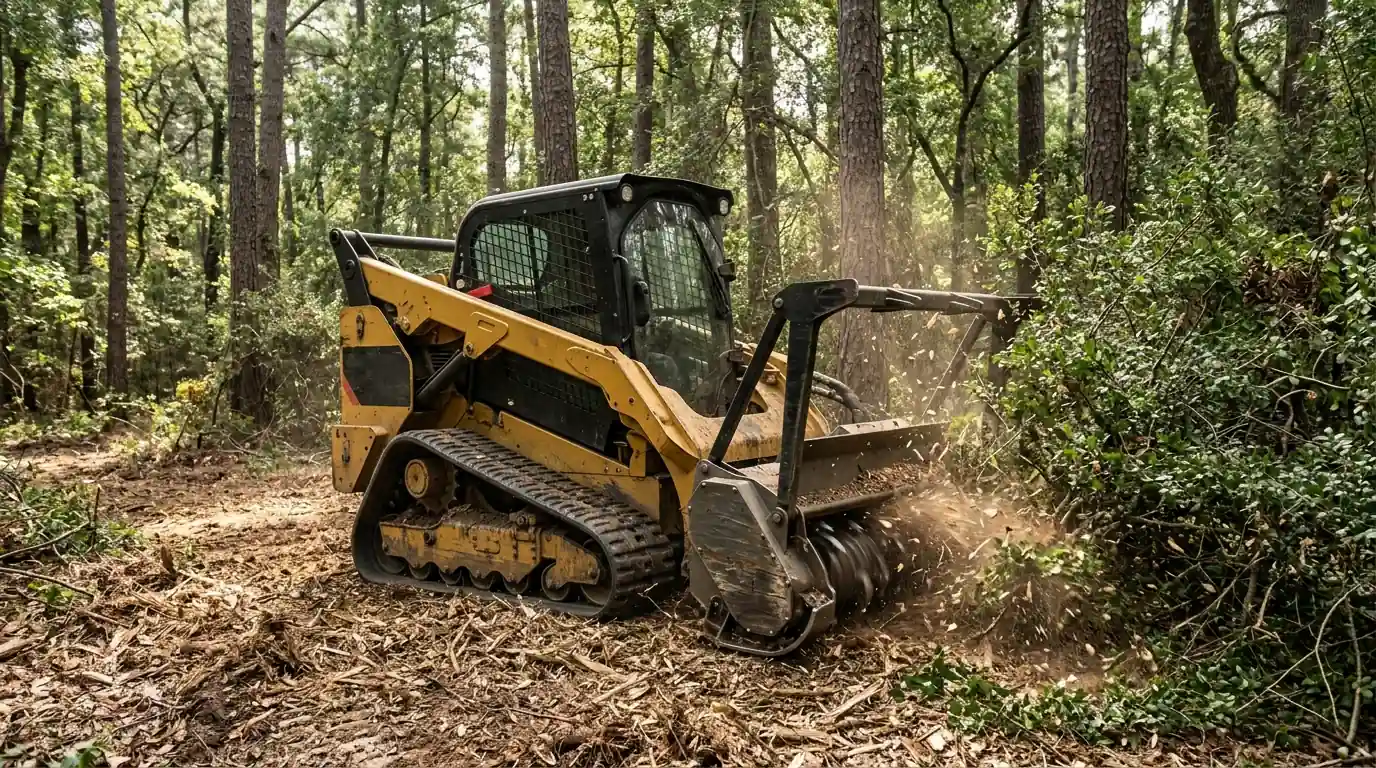
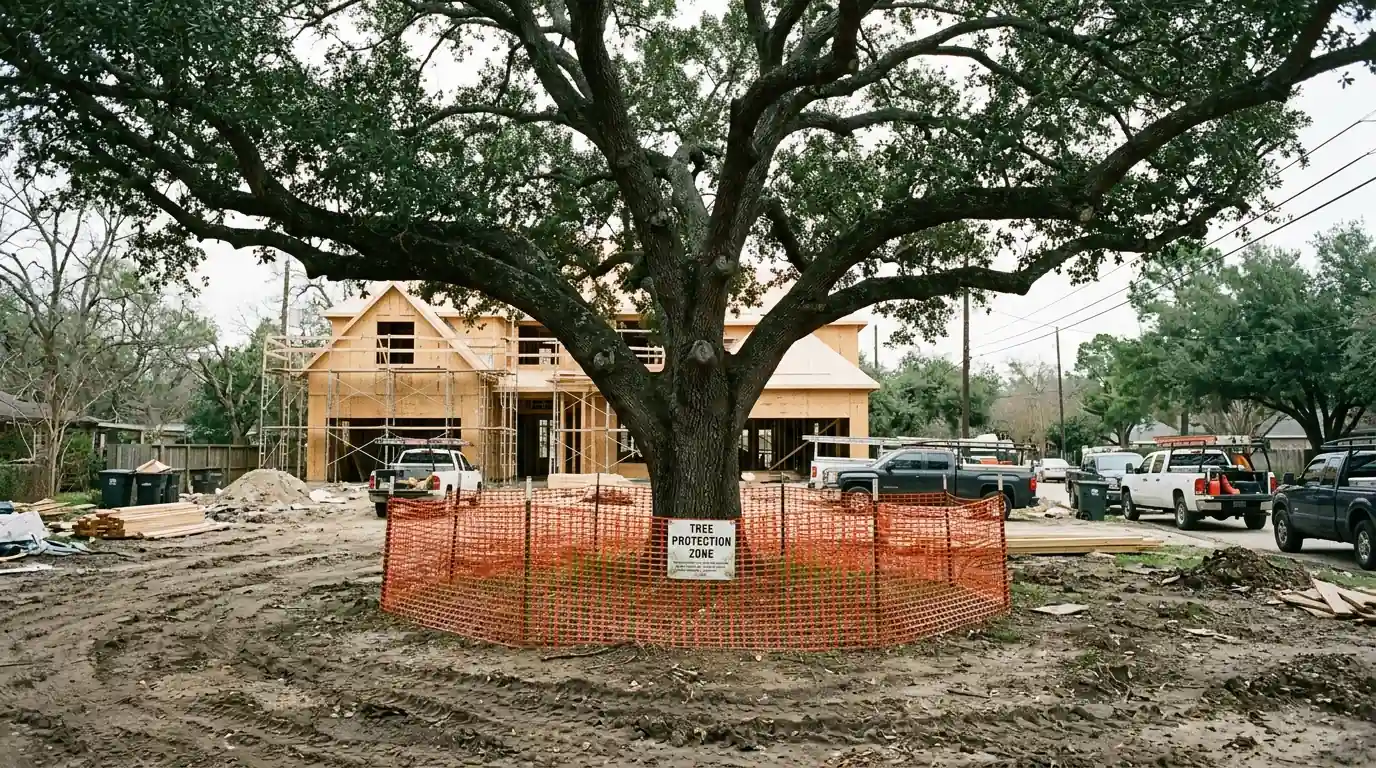
A skid steer parked under a keeper oak packs the clay its roots breathe through. So the first job is a fence. We set sturdy fencing around each keeper's root zone, out toward the dripline or beyond, before equipment arrives. Inside it: no parking, no material piles, no washing out concrete or paint. Where a drive path must cross a root zone, thick mulch under plywood or mats spreads the weight. Flimsy tape gets driven over; a real fence gets respected.
Root Pruning Before Trenching
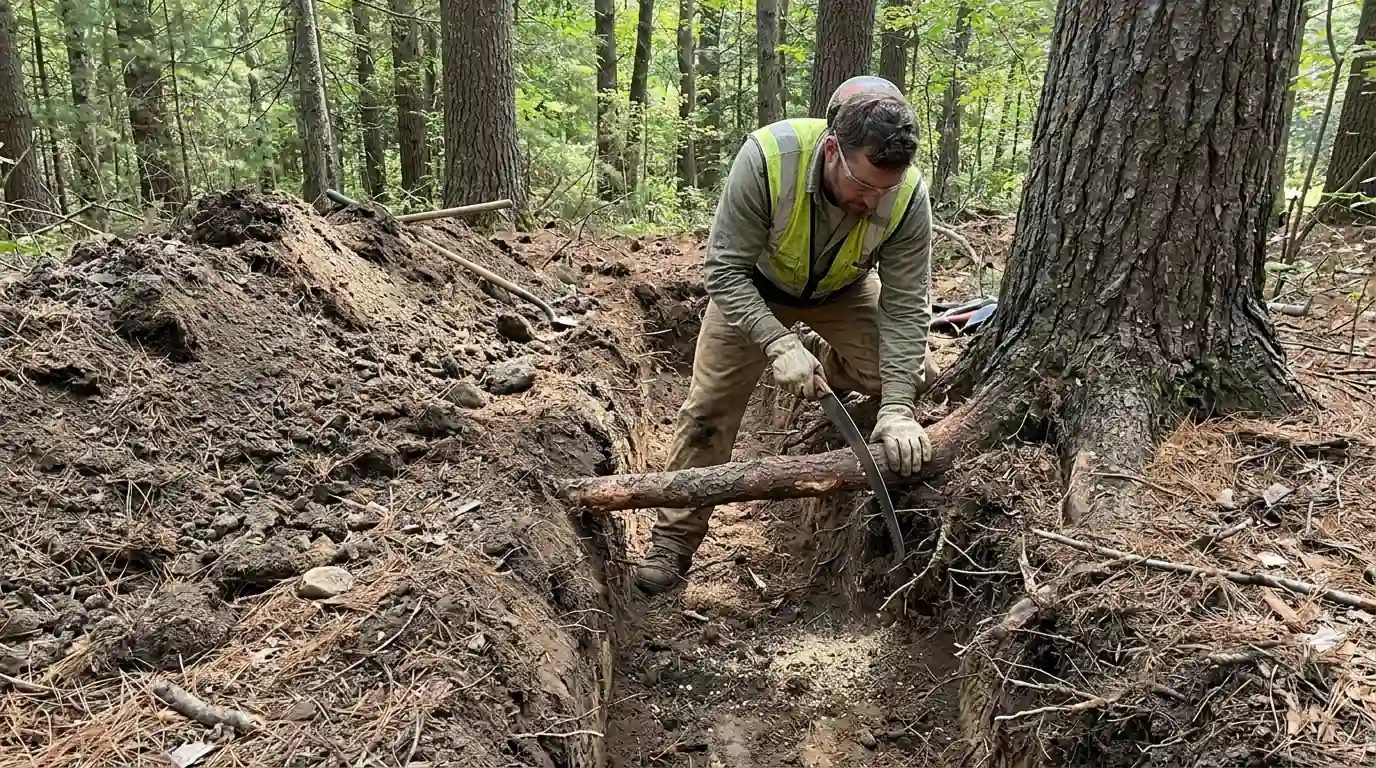
A trencher or backhoe tears roots, splitting them back toward the trunk and leaving ragged ends that rot. Where a utility line, footing or irrigation run has to pass near a keeper, we expose the roots along the trench line by air or hand and cut them clean with a saw first. Clean cuts seal and push new roots; torn ends rot back. Boring under big roots instead of trenching through can save the tree, and we flag where that matters.
Clearance Pruning
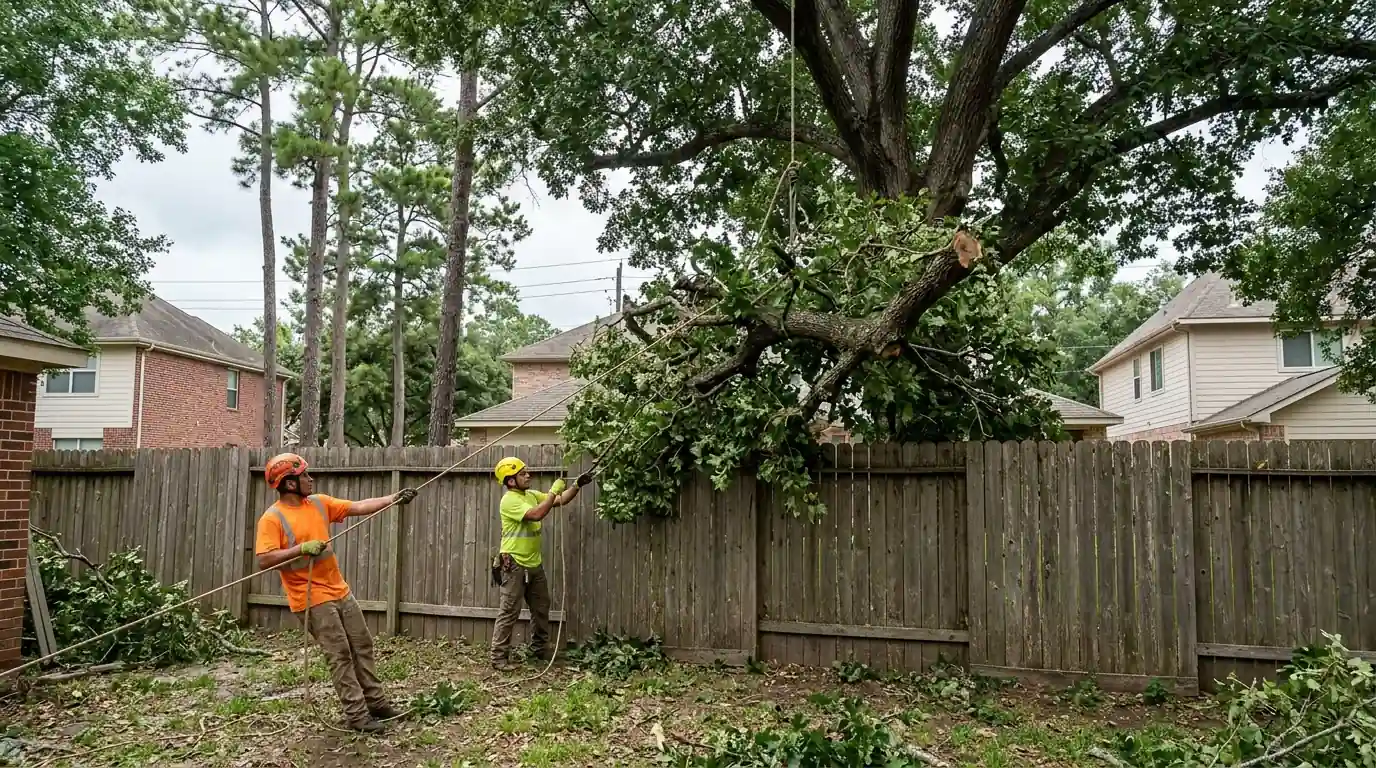
Builders need room for the roof line, scaffolding, cranes and trucks, and a limb in the way gets torn off by a machine, splitting bark down the trunk. Pruning before the build makes those cuts properly at the branch collar, takes only what the work needs, and keeps the crown balanced. We raise low limbs over drives and reduce limbs over the new roof so they clear it at full growth. Done early, it costs less than repairing stubs and tears later.
Care After the Build
When the crews leave, the tree is often stressed even if it looks fine: roots cut on one side, soil compacted, grade changed. Leaves wilting or scorching the next summer, or dieback on the trench side, are the early signals. Aftercare means deep watering through dry spells, loosening compacted soil, a wide mulch layer, and pruning out deadwood as it shows. Stressed oaks and pines invite hypoxylon and beetles, so we watch for pitch tubes and canker crust on follow-up visits.
Questions about your tree? Talk to a crew lead.
Call (704) 839-2139Warning signs
Construction Damage Signs
Soil piled under canopy
Spoil or fill dumped over roots inside the dripline.
Ruts under the tree
Tire tracks pressed deep into the clay near the trunk.
Torn roots along trenches
Ragged root ends sticking out of a trench wall.
Torn limbs and bark
Fresh wounds on the trunk or stubs where machines hit limbs.
Scorch the next summer
Leaves wilt or brown early, often on the damaged side.
Dieback on one side
Dead twigs in the crown above where roots were cut.
In the scope
What Protection Covers
- Root zones fenced, not just the trunk wrapped.
- Signs on the fence explaining it to every sub.
- Mulch and mats where traffic must cross roots.
- Clean saw cuts on roots, never torn by machines.
- Boring under major roots flagged where it helps.
- Follow-up visits through the summers after the build.
Local conditions
Tree Protection During Construction in north Houston: what local conditions change
In The Woodlands, a living tree wider than six inches cannot come down without an application, and the township checks what its loss would do to surface water before it signs off. So a tree hurt by a build cannot just be cut down later without that process. Protecting it from the first day is simpler than applying after the damage.
Sources: communityimpact.com
Step by step
Before, During and After
Walk the plans
We mark keepers on the site plan with you and the builder.
Fence and sign
Root zone fencing and signs go up before equipment arrives.
Prune for clearance
Limbs over the footprint and drives come off with proper cuts.
Root-prune trenches
Roots are exposed and cut clean ahead of any digging.
Aftercare visits
Watering, soil loosening and deadwood checks once the crews leave.
As far out as the build allows, ideally to the dripline or beyond. Roots spread past the canopy edge, so a fence at the trunk protects almost nothing.
Often, if the slab sits outside most of the root zone and roots are cut clean. A slab across most of it usually means removal is the honest call.
Before the site is cleared or staked, ideally while the plans can still move a footing or utility run. Once equipment arrives, protection becomes damage control.
Better when it is sturdy, signed and agreed in the contract. Ask the builder to put protection in writing, including what happens if a fence is moved.
Plan its removal before work starts, cleanly and with any permit in hand. In The Woodlands, living trees over six inches across need an application first.
Not usually, if cuts are clean and well out from the trunk. Cuts close in, or on several sides, can destabilize or starve it, so placement matters.
Related work