Tree Removal on the north side
Clearing Chinese tallow trees from north Houston yards
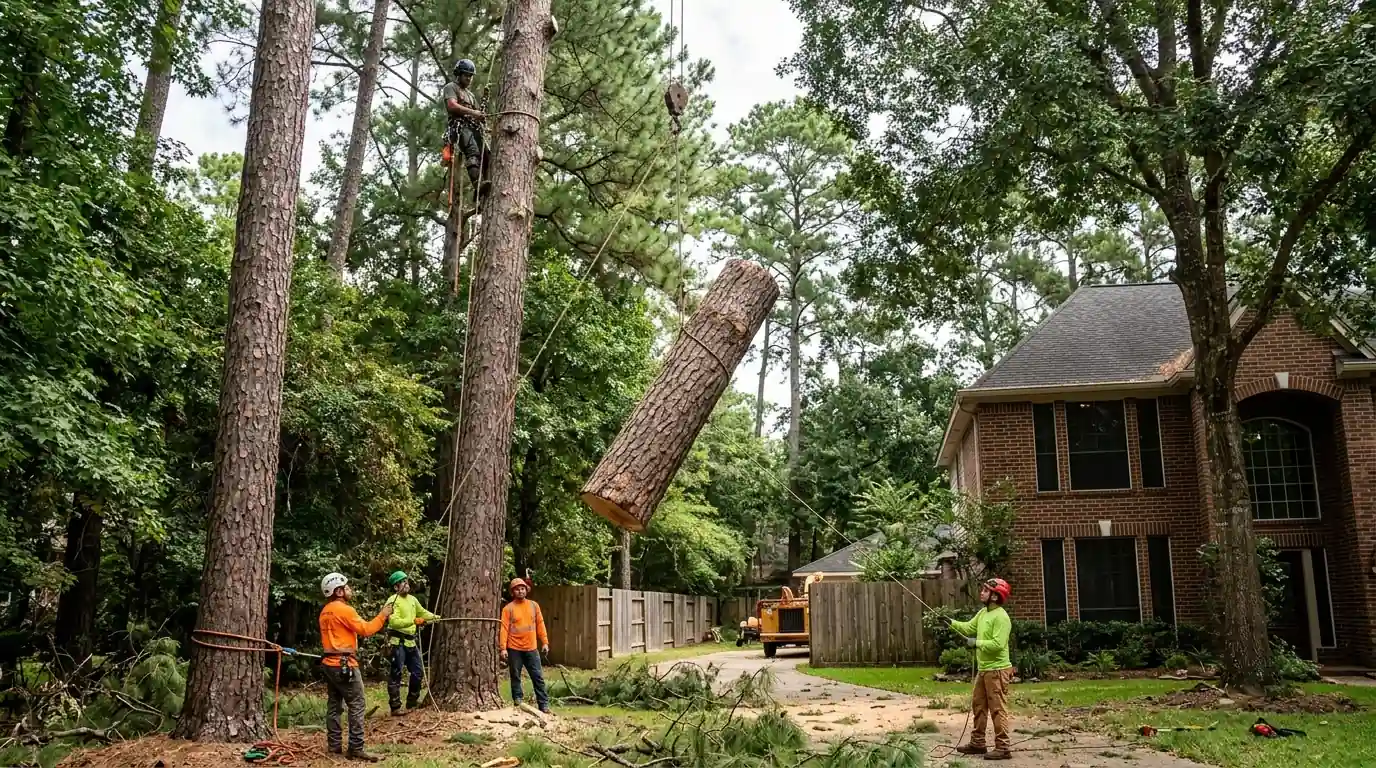
Tallows grow fast, shed brittle limbs and seed the whole yard. We take the tree down and treat the fresh stump against resprouts.
Phone answered 24/7 · office in Spring, TX
- Fresh stumps treated
- Brittle limbs roped down
Updated October 2026
 Tree Removal
Short answer
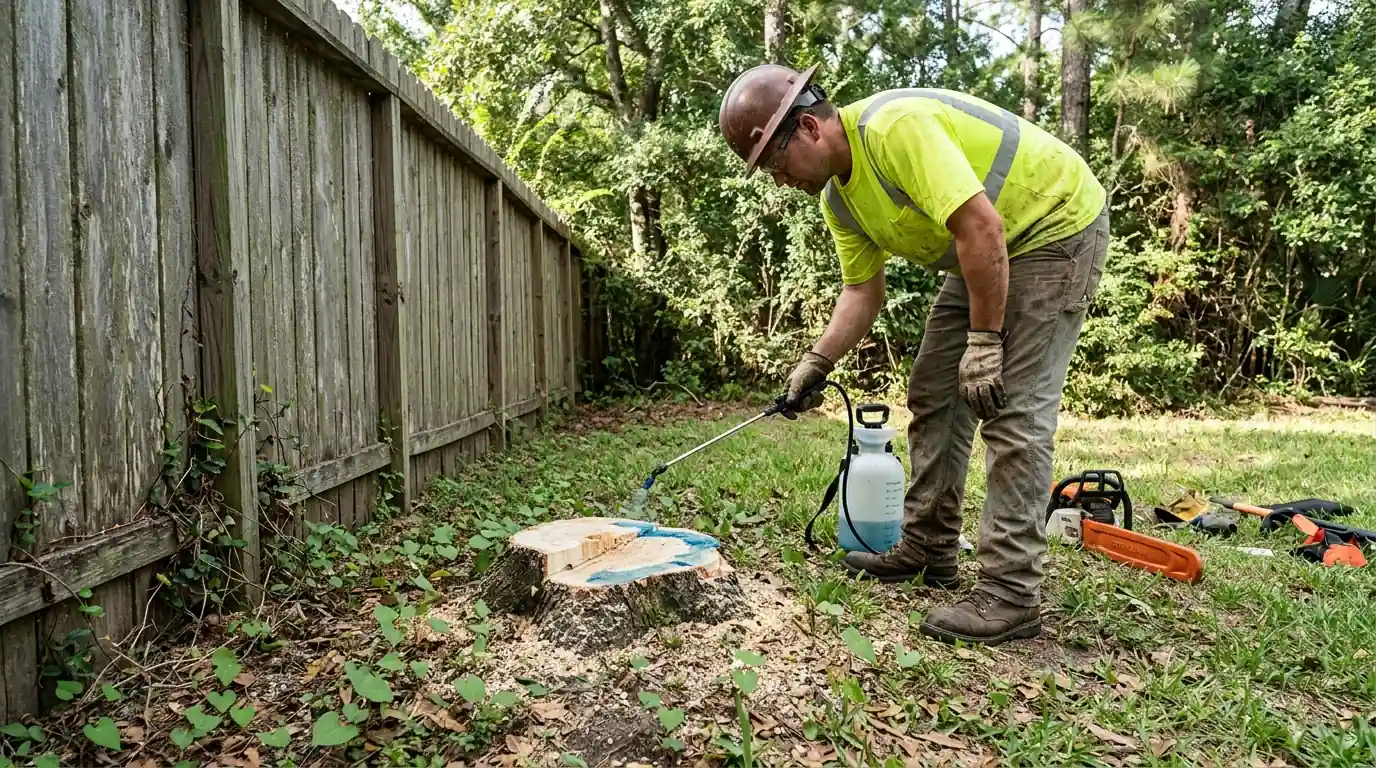
Chinese tallow removal in Houston is easiest before the tree nears 15 years old, when its brittle wood often starts shedding small and mid-size branches. A tallow cut at ground level resprouts from the stump and roots, so the fresh cut gets a herbicide labeled for stumps.
The job
Why a tallow needs more than a saw
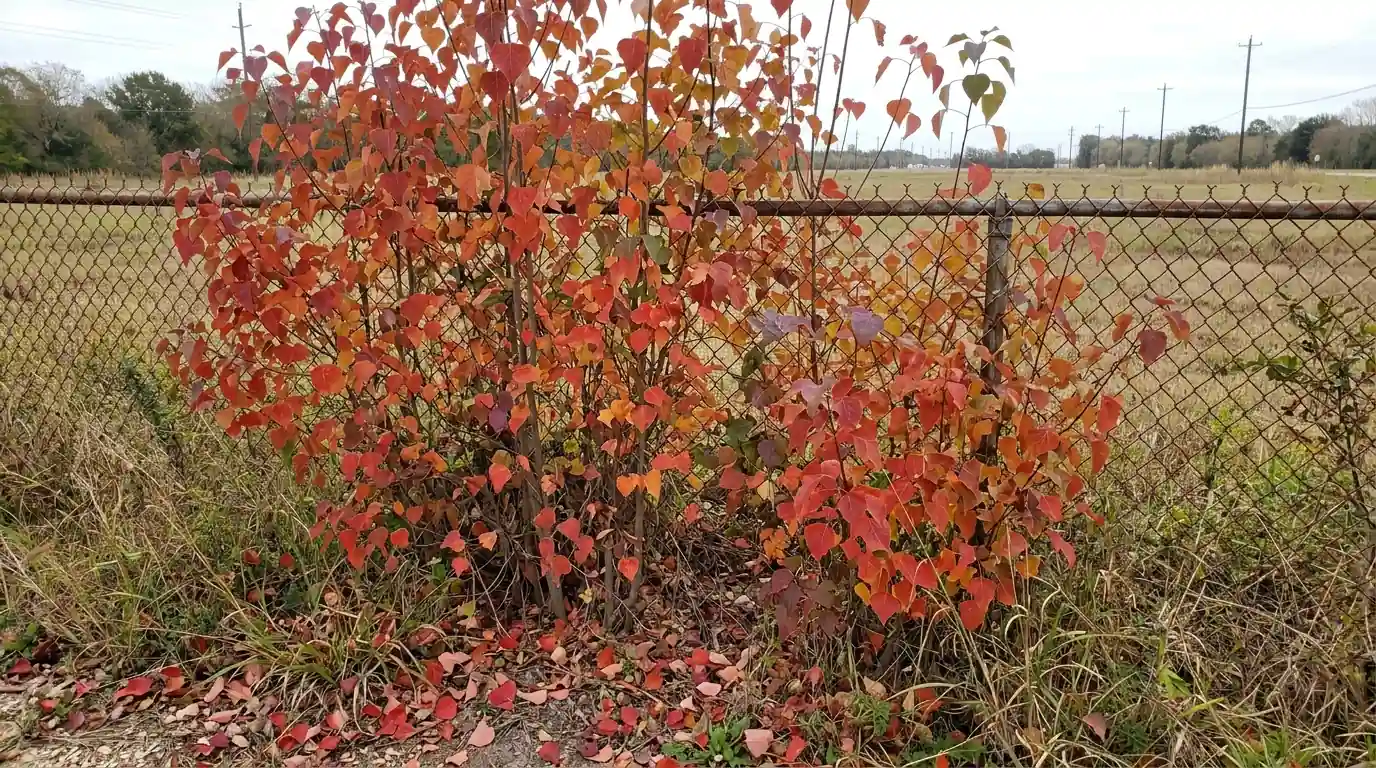
Chinese tallow is an invasive from Asia that has escaped cultivation around Houston. Birds eat the white, waxy seeds each fall and winter and drop them along fences, ditches and beds, so one tree becomes a stand.
Felling the trunk is the easy half. The stump and roots answer with a ring of sprouts, so the plan covers the cut surface, the seedlings already up and what returns. Big stands on acreage suit forestry mulching; in a fenced yard, saws and hand pulling do the work.
What moves the price
Planning numbers for a tallow job
Angi's 2026 Houston figures put trees up to 30 feet at $150 to $450 and 30 to 60 feet at $450 to $1,200, planning bands that cover most tallows.
Stem count
A multi-stem tallow or a fence row of them takes longer than one trunk.
Limb condition
Cracked, brittle limbs over a roof get roped down instead of dropped.
Stump count
Every fresh stump gets treated, and a thicket can leave dozens of small ones.
Return visit
Seed in the soil keeps sprouting, so a follow-up pass is worth planning.
Cost data: angi.com
Read the Chinese tallow guideYour options
Choosing how to stop regrowth
| Method | Fits | Tradeoff |
|---|---|---|
| Cut and treat | Any trunk, any size | Stump stays until it rots |
| Cut, treat, grind | Lawns and beds you want flat | Two steps, cleanest finish |
| Hand pull | Seedlings in wet soil | Slow on big patches, no herbicide |
| Basal bark | Saplings too big to pull | Dead stems stand until cut |
Mature tallow trees
A mature tallow is a fast, weak-wooded tree, and it often has several stems and limbs already cracked by earlier storms. The wood is brittle, so the climber does not trust old unions as anchor points and lowers limbs on a rope rather than dropping them near the house. Milky sap runs from every cut and irritates skin, which is why the crew stays sleeved. Once the trunk is down, the fresh stump is treated before the sap seals it.
Tallow thickets and seedlings
Around a seed tree, tallow seedlings come up thick enough to shade out everything else, and they grow fast. Pencil-size seedlings pull out of wet clay with the root, which is the cleanest fix. Saplings too big to pull get cut low and treated, or a basal bark treatment goes on the lower stem. Where a thicket covers a back lot, we cut it down to stubs and treat each one. Expect a second pass for seed already in the soil.
Stopping stump resprouts
A tallow stump left alone throws up a ring of shoots, and the roots can sucker several feet out. The fix is a cut-stump treatment: a herbicide labeled for that use goes on the outer ring of fresh wood, just inside the bark, right after the cut. That band carries it to the roots. Grinding alone removes the stump but not the roots, so sprouts can still appear in the lawn. Those get spot-treated or pulled on a follow-up visit.
Tallows along fence lines
Fence lines collect tallows because birds perch on the wire and top rail and drop seed beneath. The trees grow into chain link and pickets, and their brittle limbs drop onto the fence in wind. We cut each stem low rather than pulling it, since yanking roots heaves fence posts, and treat the stumps where they stand. Wire a trunk has swallowed is cut free and left in the stump. Stems rooted on the neighbor's side need their okay first.
Questions about your tree? Talk to a crew lead.
Call (704) 839-2139Local conditions
Chinese Tallow Removal in north Houston: what local conditions change
Chinese tallow accounted for about 23 percent of all trees in the eight-county Houston area, the Texas Forest Service found, as the Houston Chronicle later reported. With that many seed trees around Harris County and Montgomery County, a cleared yard can collect new seedlings from the neighbors' tallows. So stumps get treated and seedlings pulled on the removal visit itself.
Sources: swamplot.com
Step by step
How a tallow removal runs
Walk through
We count trunks, saplings and seedlings, including along the fence.
Fell
Trees come down whole or in roped pieces, by what is beneath.
Treat stumps
Each fresh cut gets a stump-labeled herbicide on its outer ring.
Pull seedlings
Seedlings come out with roots; saplings are cut low and treated.
Haul, recheck
Wood is chipped and hauled, and regrowth gets a return check.
Do it yourself?
Tallow work you can do yourself
Fine to handle yourself
- Pull small seedlings after soaking rain, roots and all.
- Bag fallen seed instead of composting it.
- Mow sprouts around old stumps before they leaf out.
Leave to a crew
- Mature tallows over a roof, where brittle limbs snap.
- Cut-stump herbicide work, which must follow the label.
- Fence-line thickets, where saws meet posts and buried wire.
The milky sap irritates skin and eyes, and the leaves and berries are considered toxic, so wear gloves when pulling seedlings and keep pets off the cuttings.
A cut-stump treatment goes on the cut face only, so nothing is sprayed. The label governs use near trees you want to keep, and we follow it.
Cutting works in any season. Taking a seed tree down before its white seed ripens in fall keeps another year of seed out of the lawn and beds.
It can, but the brittle wood keeps shedding limbs and the tree keeps seeding the yard, so trimming buys time rather than solving either problem for good.
Grind the stump first, then plant a native shade tree suited to clay, such as cedar elm or live oak, where its mature spread clears the house.
Yes. Tallow seed travels on water as well as with birds, so trees along ditches and creek banks seed the low ground downstream after a heavy rain.
Related work