Pruning and yard trees
Should You Take Out the Chinese Tallow in Your Houston Yard?
Its red fall color made it a nursery favorite. Around Houston it now crowds fence lines and ditches, drops brittle limbs and sprouts back from cut stumps. Here is the case for removal and how to make it last.
Phone answered 24/7 · office in Spring, TX
By Ursula Lusk, Tree Guides EditorUpdated
 Tree advice
Short answer
In the Houston area, Chinese tallow made up about 23 percent of all trees across eight counties, according to Texas Forest Service figures reported by the Houston Chronicle. It has escaped cultivation, its brittle wood sheds limbs as the tree nears 15 years old, and a stump left untreated usually sprouts back. Removal with stump treatment, then a native replacement, is the lasting fix.
How one ornamental became a quarter of Houston's trees
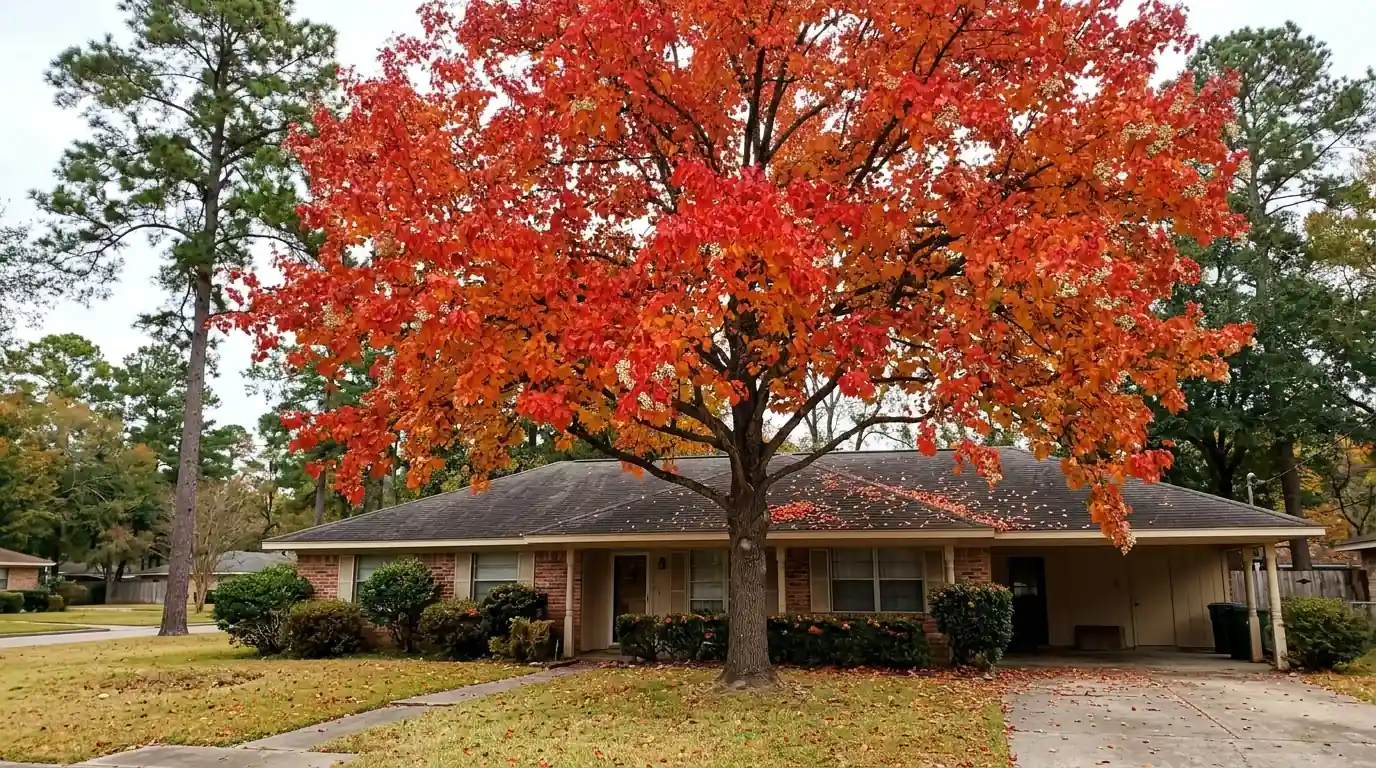
Chinese tallow was planted for fast shade and bright fall leaves, and it has escaped cultivation around Houston. Texas Forest Service figures reported by the Houston Chronicle put it at about 23 percent of all trees in the eight-county Houston area. That share shows how freely it spreads on its own.
The tree spreads by seed. Each fall it sets clusters of capsules that split to show waxy white seeds, which hang on into winter. Birds and moving water carry them into fence lines, ditches and the edges of wooded lots. Seedlings that keep appearing in your beds usually trace back to a seeding tree nearby. Because seed stays on the branches that long, a tree taken out in late fall can still leave a season of seed behind, so plan a seedling check the next spring.
Brittle wood: why a 15-year-old tallow starts dropping limbs
Tallow grows fast and the wood pays for it. Its brittle limbs mean small and mid-size branches often split off as the tree nears 15 years old. In a Gulf storm, those are the branches that end up on roofs, cars and the line to the house.
Trimming does not fix brittle wood. Thinning can lower the wind load for a season. But each cut invites a flush of fast, weakly attached sprouts, so pruning a mature tallow buys time rather than solving anything. If you keep one for now, keep its limbs off the roof and the line to the house, and plan its replacement.
Taking down a big tallow beside the house
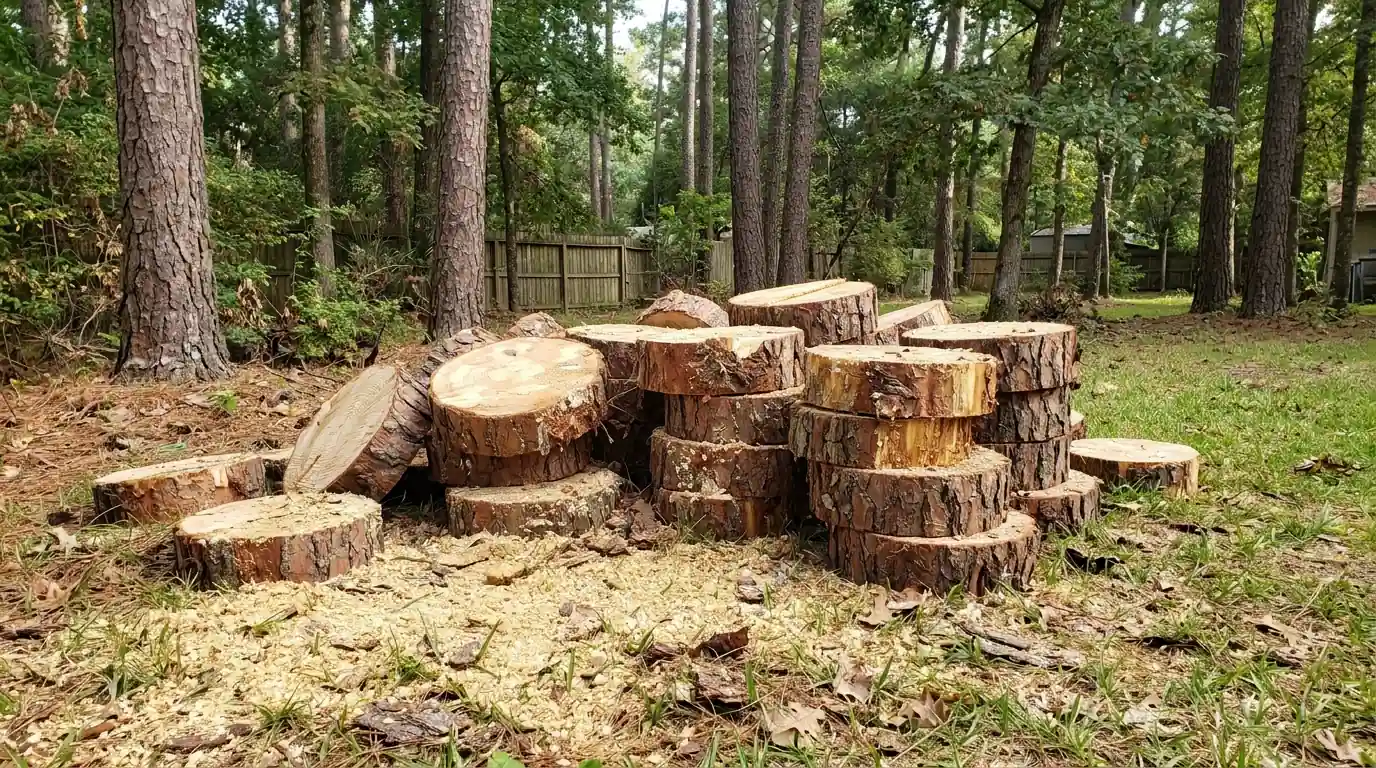
A mature tallow next to a roof comes down in sections, not in one fall. Brittle limbs make poor anchor points, so the climber ties in to the main stem and the ground crew lowers each piece on a rope instead of letting it drop. They also rake up the seed capsules, since a fall removal can leave a carpet of them on the lawn.
Tallow shading your roof?
Ring us to plan a removal with stump treatment, so the tree does not come back as a thicket of sprouts.How to spot a tallow among your other trees
Tallows are easy to confirm once you know the marks, and worth confirming before anything is cut. Look where they hide: under pines on the back fence, along drainage ditches and inside the shrub line, where seedlings grow unnoticed until they are trunk-size.
- Broad, diamond or heart-shaped leaves ending in a long, narrow tip.
- Bright red, orange and yellow fall color, often on one tree at once.
- Clusters of three-part capsules that open to waxy white seeds.
- Milky white sap where a leaf or twig is snapped off.
- Seedlings sprouting thickly in beds, ditches and along fences.
Cutting it down is half the job: stopping stump resprouts
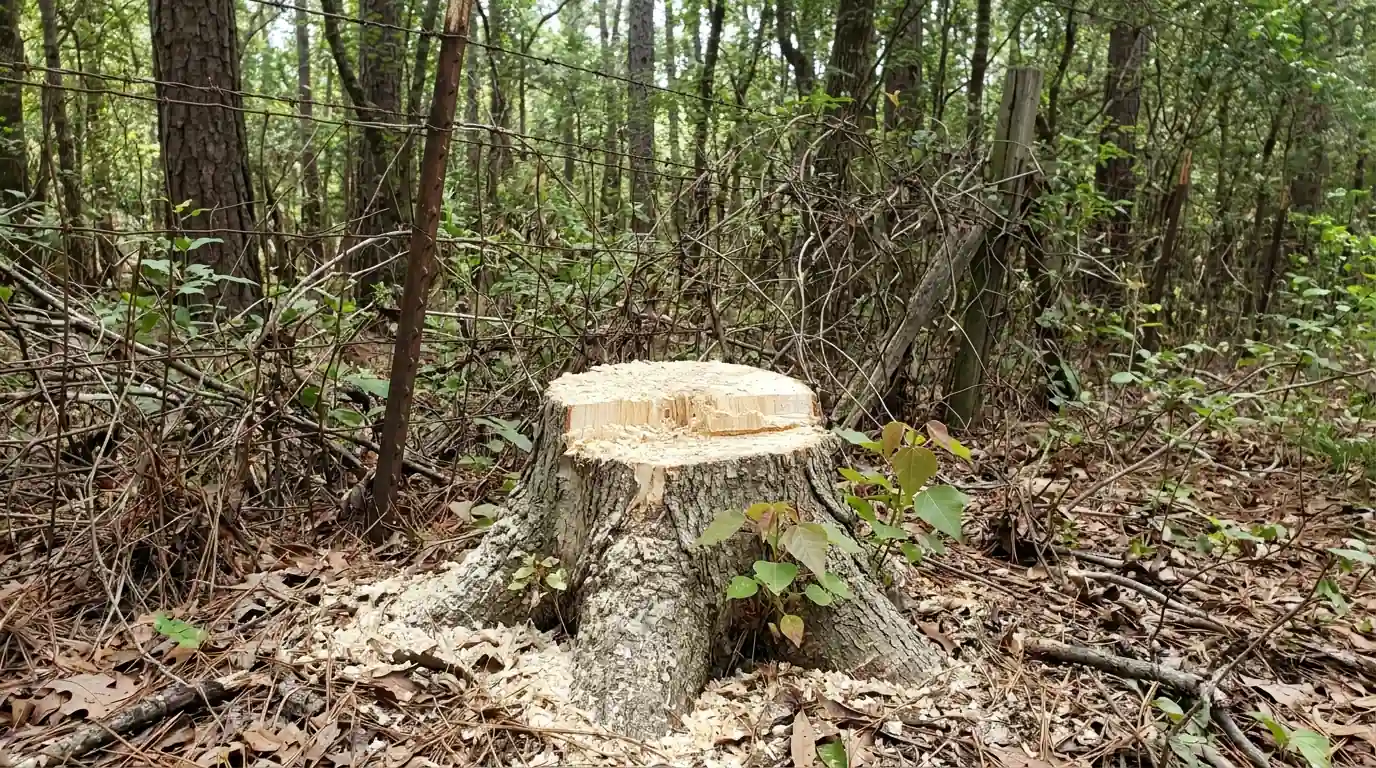
Tallow sprouts back from a cut stump and from its roots, so a plain take-down often leaves a shrub of new stems by summer. The fix is treating the stump right after the cut, with an herbicide labeled for cut-stump use on tallow, applied to the fresh outer ring as the label directs. Grinding alone removes the visible stump but can leave roots that send up suckers across the lawn for a season or more.
On a yard tree, our Chinese tallow removal takes the tree down in sections and treats the stump, and stump grinding can follow once the treatment has worked. A follow-up check catches sprouts before they ever set seed.
| Method | Where it fits | The tradeoff |
|---|---|---|
| Cut and treat the stump | Single yard trees and fence line trees | Lasting, but the herbicide must go on right away |
| Cut, treat, then grind | Lawns or beds you plan to replant | Clean finish; grinding waits for the treatment |
| Hand pull seedlings | Small seedlings in moist soil | No chemicals; the whole root must come out |
| Mulch the thicket | Acreage and overgrown lots | Fast clearing; stumps below grade need follow-up |
Tallow thickets on Montgomery County and Harris County acreage
On wooded acreage the job changes from one tree to hundreds of stems. Forestry mulching grinds a thicket in place and leaves the ground open. Root crowns below grade can still sprout, so mulched ground needs a pass on regrowth through the next season. Lots too small or tight for a mulcher get underbrush clearing by hand, with larger stumps treated as they are cut. Near creeks and ponds, use only a product labeled for use near water, and let the label set the rate and timing.
Native trees to plant where the tallow stood
The gap a tallow leaves fills fast, and if you plant nothing, the next tallow seedling claims it. These native trees cover the jobs a tallow did.
Your county AgriLife Extension office can say which suits your soil and drainage, and tree planting can follow the removal in the same season. Plant in the cooler months, so roots settle before the summer heat arrives.
- Red maple, for red fall color on moist ground.
- Black gum, for scarlet fall leaves and an upright crown.
- Shumard oak, for long-lived shade and red fall color.
- Cedar elm, for tough shade on dry, heavy clay.
- Bald cypress, for wet corners, ditches and low spots.
It has escaped cultivation and made up about 23 percent of trees in the eight-county Houston area, by Texas Forest Service figures. It spreads by seed into ditches, fence lines and woods, where it competes with native trees for the same ground.
That is your call, but it keeps seeding beds and nearby lots every fall, and its brittle limbs get riskier with age. Many owners plant a native tree first, then remove the tallow once the new tree is growing.
For a while, yes. Seed already dropped on the lawn and beds, and seed birds carry in from other tallows, keeps sprouting. Pull seedlings while they are small, ideally after rain, and none of them get the chance to set seed.
Usually not. Small seedlings pull out cleanly when the soil is wet, as long as the root comes with them. Herbicide is for cut stumps and stems too big to pull, applied as the label directs.
Yes. Grinding removes the top of the stump, but roots left in the soil can still send up suckers. Treat the fresh cut first, then grind once the treatment has had time to work.