Land & Property on the north side
Forestry Mulching for Brushy North Houston Land
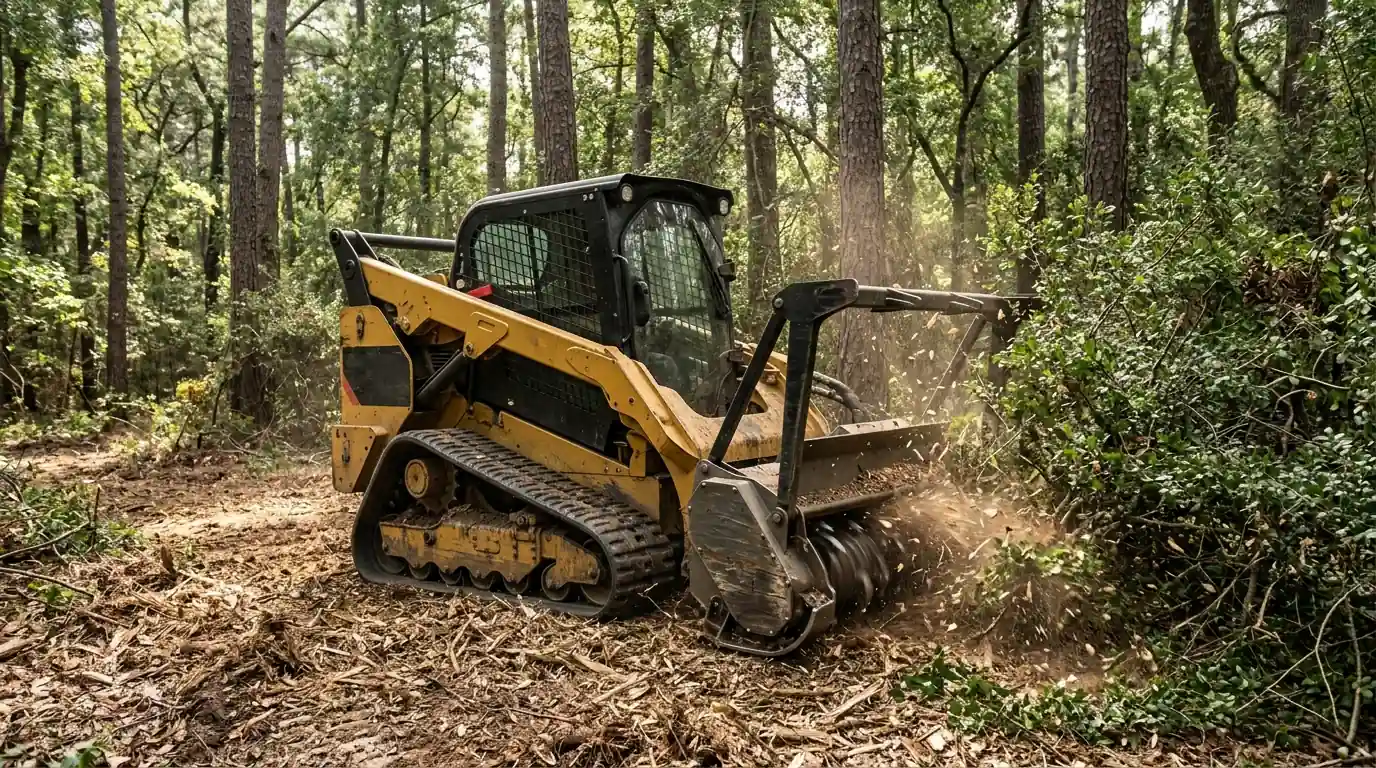
Yaupon, tallow saplings and vines ground where they stand, leaving a mulch layer instead of brush piles and haul-off trips.
Phone answered 24/7 · office in Spring, TX
- Ground in place
- Keeper trees left
Updated October 2026
 Land & Property
Short answer
Forestry mulching in north Houston grinds brush where it stands, which matters where Chinese tallow, about 23 percent of the eight-county area's trees per the Texas Forest Service, has filled in. A mulching head on a tracked machine shreds saplings and thickets into a mulch layer, with no hauling.
The job
How a Mulching Head Works
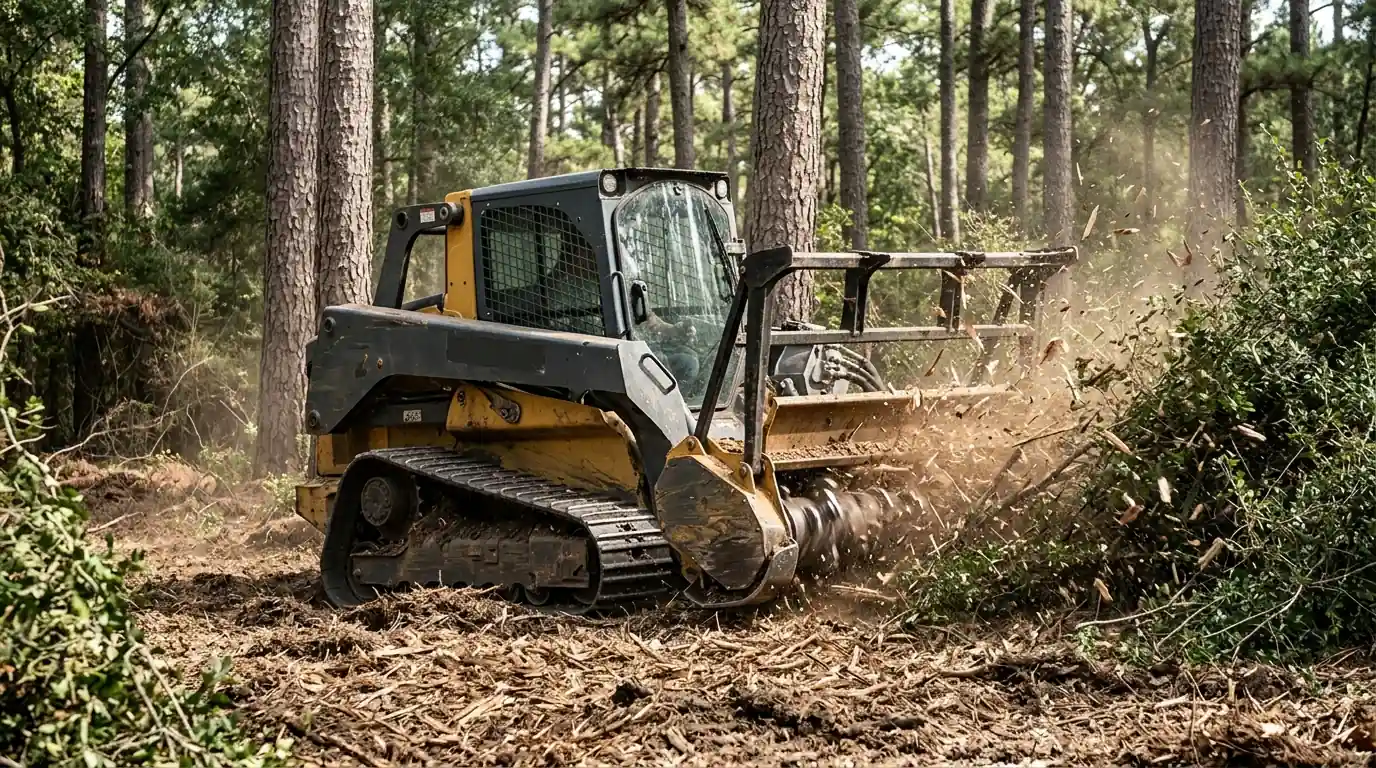
A forestry mulcher is a spinning drum lined with teeth, mounted on a tracked machine. It chews standing brush and small trees down to ground level and spreads the shreds as a mulch layer. Nothing is dragged, piled or hauled, and roots stay in the soil, which limits erosion.
That is also its limit. It does not pull stumps or roots, and big trees get felled separately. For a building pad, use full land clearing; for one thicket beside a house, hand clearing fits better.
What moves the price
Pricing Mulching Work
Mulching is priced per acre or per job by brush density and stem size. Nothing leaves the site, so no dump trips or haul fees go into the number.
Brush density
A solid yaupon wall takes far more passes than scattered saplings do.
Stem size
Trees too big for the head are felled and their stumps ground.
Terrain and water
Slopes, creek banks and wet clay all slow a tracked machine down.
Hidden debris
Old fence wire, posts and trash in the brush must be found first.
Your options
Mulching or Something Else?
| Method | Best for | Tradeoff |
|---|---|---|
| Forestry mulching | Brushy acreage, pasture edges, trails | No haul-off; stumps stay, chips remain |
| Hand clearing | Small lots, tight yards, creek banks | Gentle on ground; slower, hauling adds cost |
| Full clearing and grubbing | Pads, drives and pools | Build-ready ground; most disturbance |
Yaupon and Underbrush
Yaupon holly thickens into a wall under pines, with stems too many to count and too tough for a mower. The mulching head takes it down to the ground in passes and leaves the chips where they fall. Yaupon resprouts from its roots, so the first pass opens the ground and a follow-up mowing or second pass keeps it open. We leave yaupon you want as a hedge; it is a native and makes a good screen when it is kept in bounds.
Tallow Thickets
Chinese tallow seeds heavily into fence rows and old fields, and a sapling stand can close a pasture edge fast and shade out the grass beneath. Mulching knocks the thicket down and grinds the seed-bearing tops, but tallow resprouts from stumps and roots harder than almost anything else here. Plan on a follow-up: mowing the sprouts, or tallow removal work aimed at the stumps. Larger tallows are felled first and their stumps ground, since the head works best on stems it can swallow.
Fuel Reduction Around Homes
On wooded acreage, dense brush right up to the house carries fire in a dry summer and hides snakes and rodents the rest of the year. Fuel reduction means mulching the understory back from the house and raising low limbs on the trees left, so a ground fire is less likely to climb into the crowns. The mulch layer itself is a fuel, so we keep it thin near structures. Mature pines and oaks stay; it is the ladder of brush beneath them that goes.
Pasture Reclaim
Old pasture left alone fills with tallow, yaupon, dewberry and young pines until a mower cannot get through. Old fence wire hidden in that brush wrecks mulcher teeth, so we walk the field first. Mulching resets it: the brush is ground to the soil line, the chips rot down into the ground, and grass can come back where light reaches it. Expect a rough, chip-covered surface at first rather than a smooth field. Regular mowing is what keeps the pasture open; skip it and the sprouts return.
Questions about your tree? Talk to a crew lead.
Call (704) 839-2139In the scope
In Every Mulching Job
- Keeper trees, wet spots and septic lines flagged with you.
- Oversized stems felled by saw and their stumps ground low.
- Vines pulled from keeper trunks before mulching nearby.
- Low limbs raised on keepers for light and clearance.
- Edges near buildings, fences and drives finished by hand.
- A follow-up plan for resprouting yaupon and tallow.
Local conditions
Why forestry mulching looks different on Houston's north side
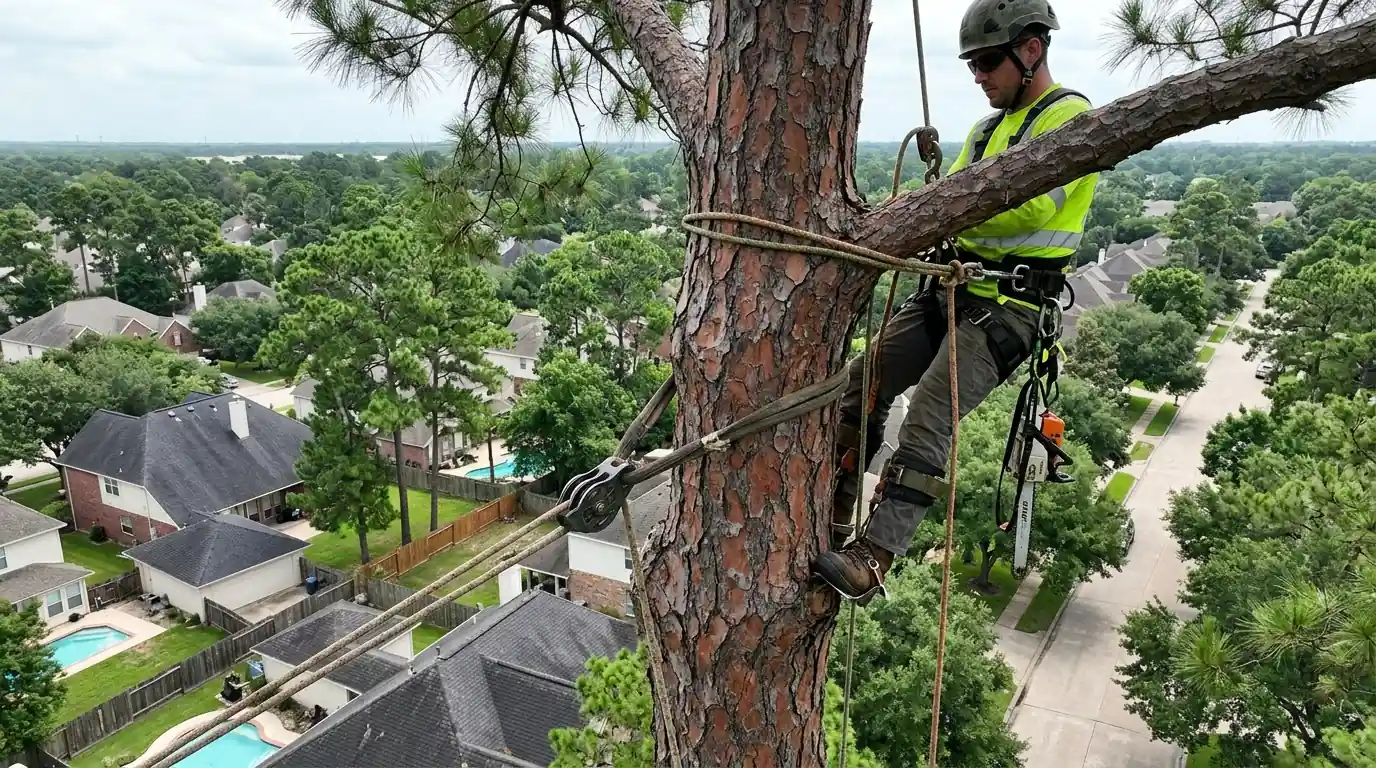
Lots along Plum Creek Drive in Spring average well over an acre, wooded acreage north of Spring Creek in Montgomery County. On ground like that, yaupon, tallow and vines usually close in first at the back of the property, out of sight and past the mower's reach. A mulcher opens that back ground without trucking loads of brush down a long drive.
Sources: redfin.com
Step by step
Mulching, Start to Finish
Walk the ground
We find buried wire, old posts and soft spots before machines move.
Fell big stems
Trees too large for the head come down by saw first.
Mulch in passes
The head grinds brush to the soil line, edges last and slow.
Hand-finish edges
Saws and trimmers clean up near fences, trunks and buildings.
Check the result
We walk it again for missed stems and set follow-up mowing.
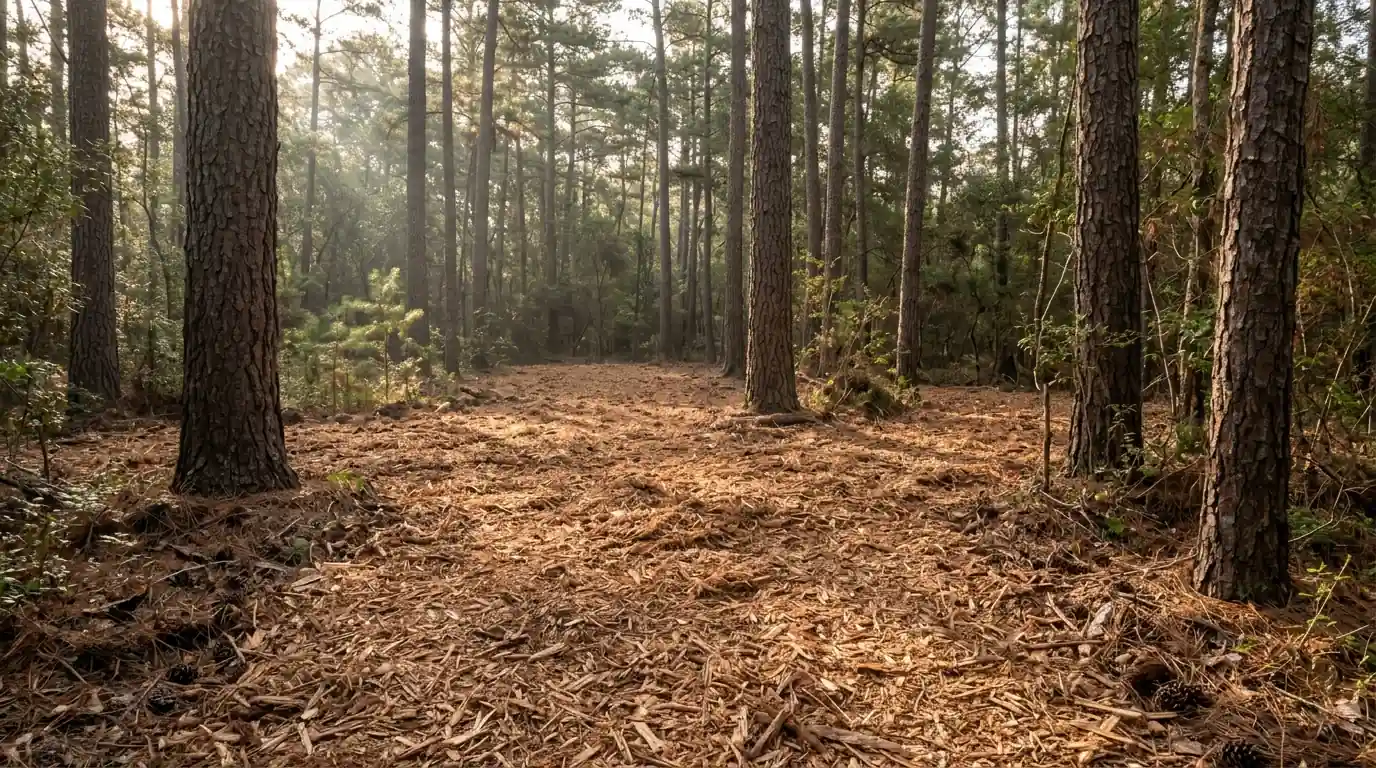
A layer of shredded wood over the ground, stumps cut near grade, and roots in the soil. The mulch breaks down over time and holds soil against washing.
Not directly. A slab or driveway needs stumps and roots grubbed out and the mulch scraped off, because buried wood rots and settles. Mulching suits land staying wooded or open.
Some will. Yaupon, tallow and greenbriar resprout from roots, so the first pass is a reset, not a cure. Mowing or a light second pass keeps the ground open.
Yes, with care. The head throws debris, so the last strip near windows, cars and siding is cut by hand. Keep pets and kids inside while it runs.
Not if the machine stays back from their trunks and off wet soil, where ruts crush roots. We flag keepers first and hand-clear the tight spots around them.
Yes, the head shreds vines along with the brush. Poison ivy oil stays active in the chips, though, so wear gloves when you handle the mulch afterward.
Related work