Tree Health & Planting on the north side
Pine Beetle Checks for North Houston Pines
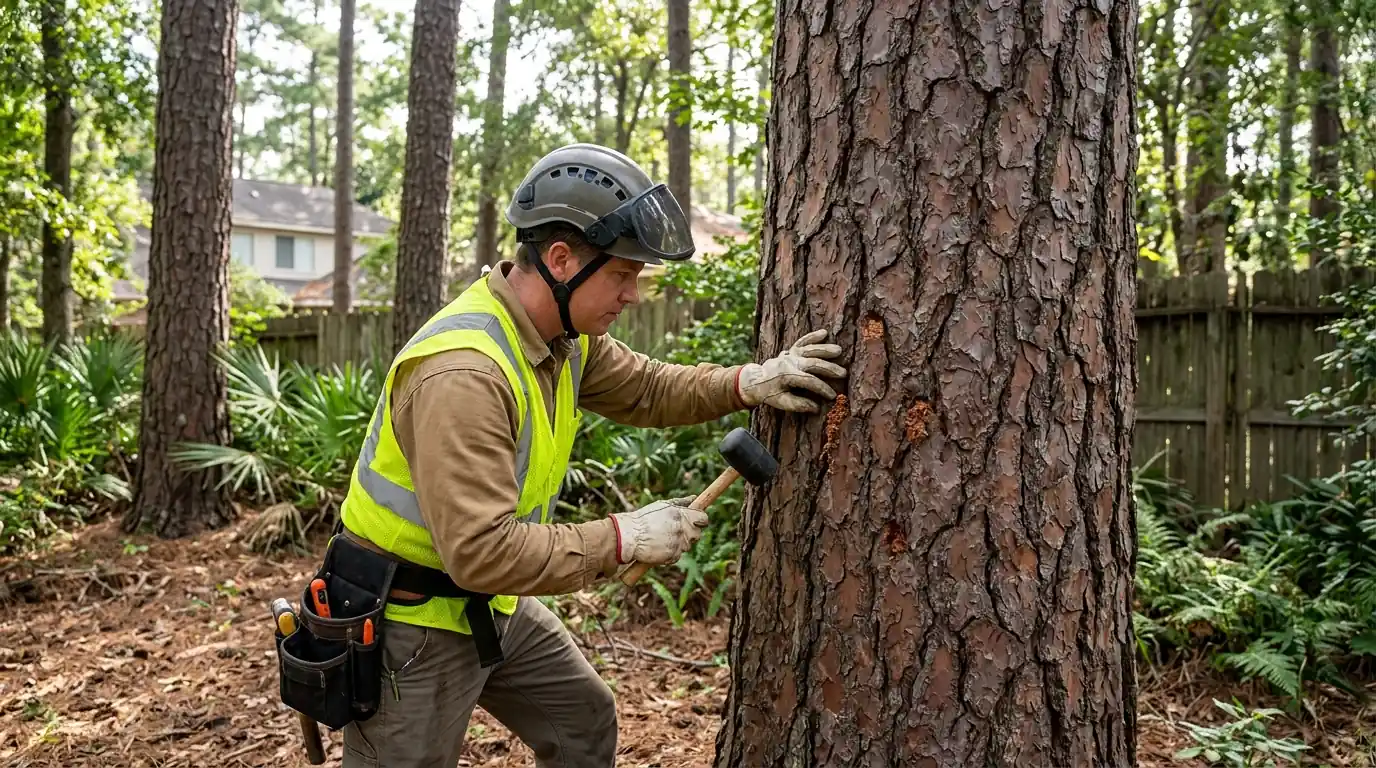
Pitch tubes, boring dust, a rusting crown: we check every pine and separate trees to watch from trees to drop.
Phone answered 24/7 · office in Spring, TX
- Every pine checked
- Infested wood removed
Updated October 2026
 Tree Health & Planting
Short answer
A pine beetle inspection in north Houston decides which pines stay, and Angi's 2026 Houston figures put pine removal at $250 to $1,500 when one must go. Ips engravers target stressed pines. We look for pitch tubes and remove attacked trees before the brood emerges.
The job
Why Speed Matters With Ips Beetles
Ips engraver beetles rarely start on a healthy pine. They bore into trees stressed by drought, storm damage or a trench through the roots. The tree pushes out resin to fight them, forming the pitch tubes you see. Once enough get in, their galleries cut off the tree's water and the crown fades.
An inspection sorts your pines into three groups: healthy, stressed and worth watching, and already lost. Lost trees need pine removal soon, before the next brood emerges and hits the pines still standing.
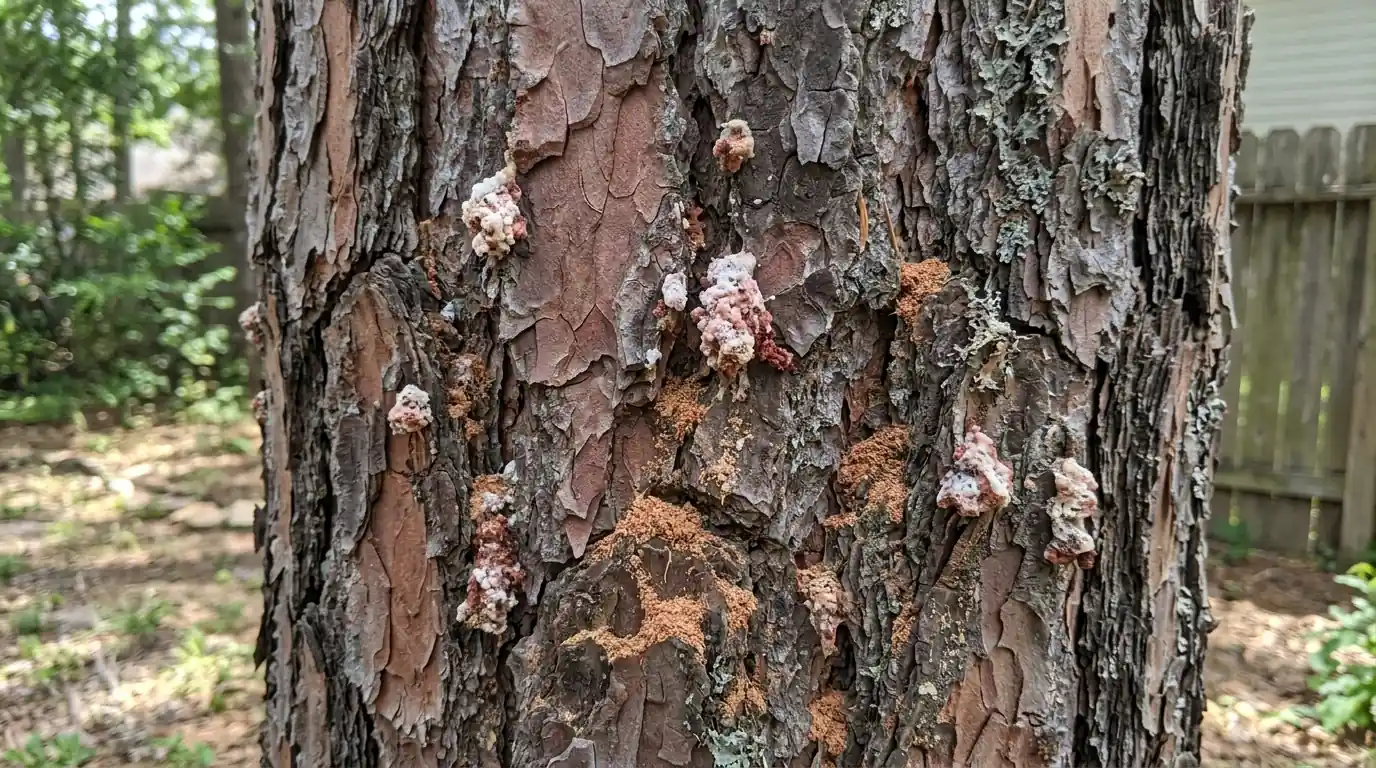
Pitch Tubes on Bark
Most people notice resin blobs dotting the trunk first, white when fresh and reddish-brown as they age. Fine reddish dust in the bark plates or at the base means beetles are boring in. A few old, hardened tubes on a vigorous pine can mean the tree pitched them out and won. Fresh tubes up and down the trunk, with dust and small exit holes, mean an active attack. That pine goes on the removal list while brood is still under its bark.
Browning Crowns
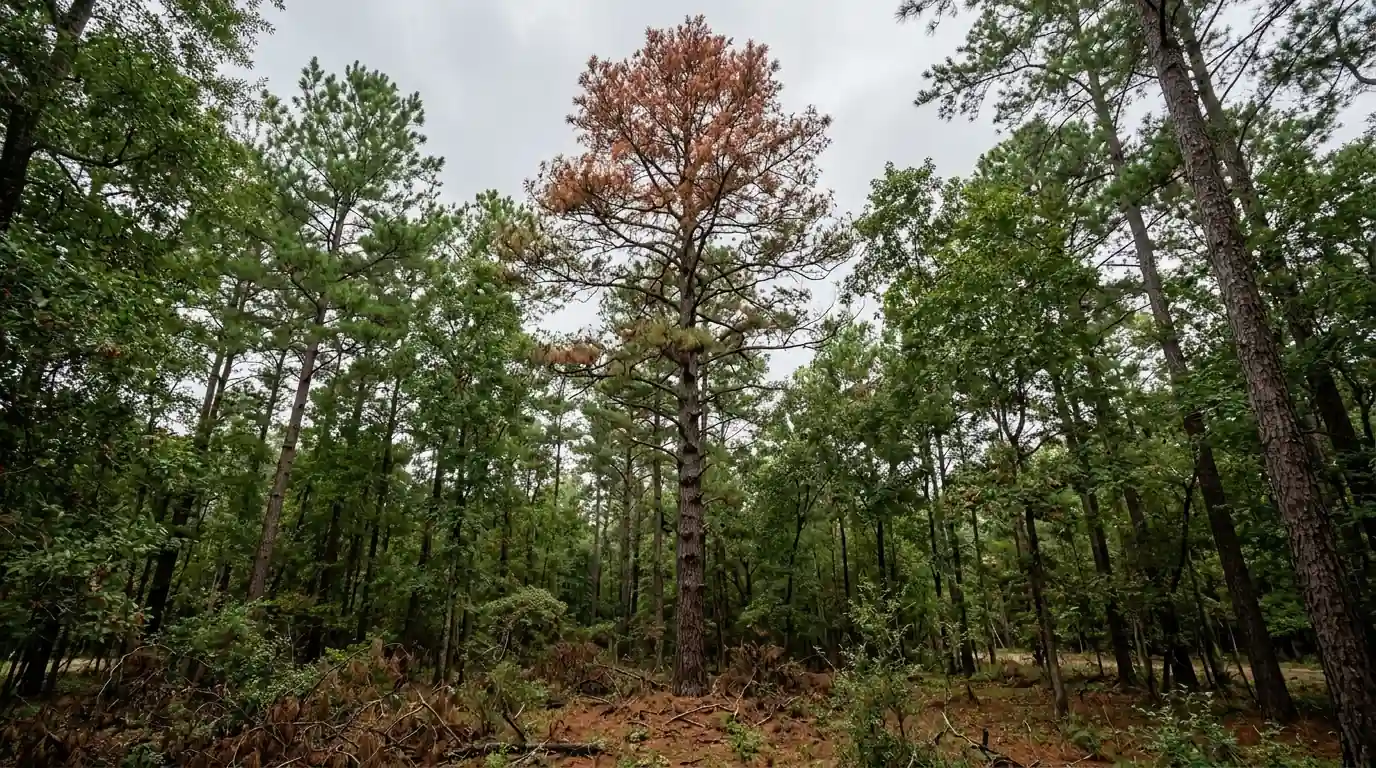
A pine crown that turns yellow-green, then straw, then rust red is past saving, even if the trunk still looks clean from the ground. Ips engravers often start high in the top, where you cannot see pitch tubes without binoculars. By the time the whole crown is red, the beetles may have left for the next tree. The red pine still has to come down before it dries brittle, but the urgent work is checking the green pines standing around it.
Protecting Pines Next Door
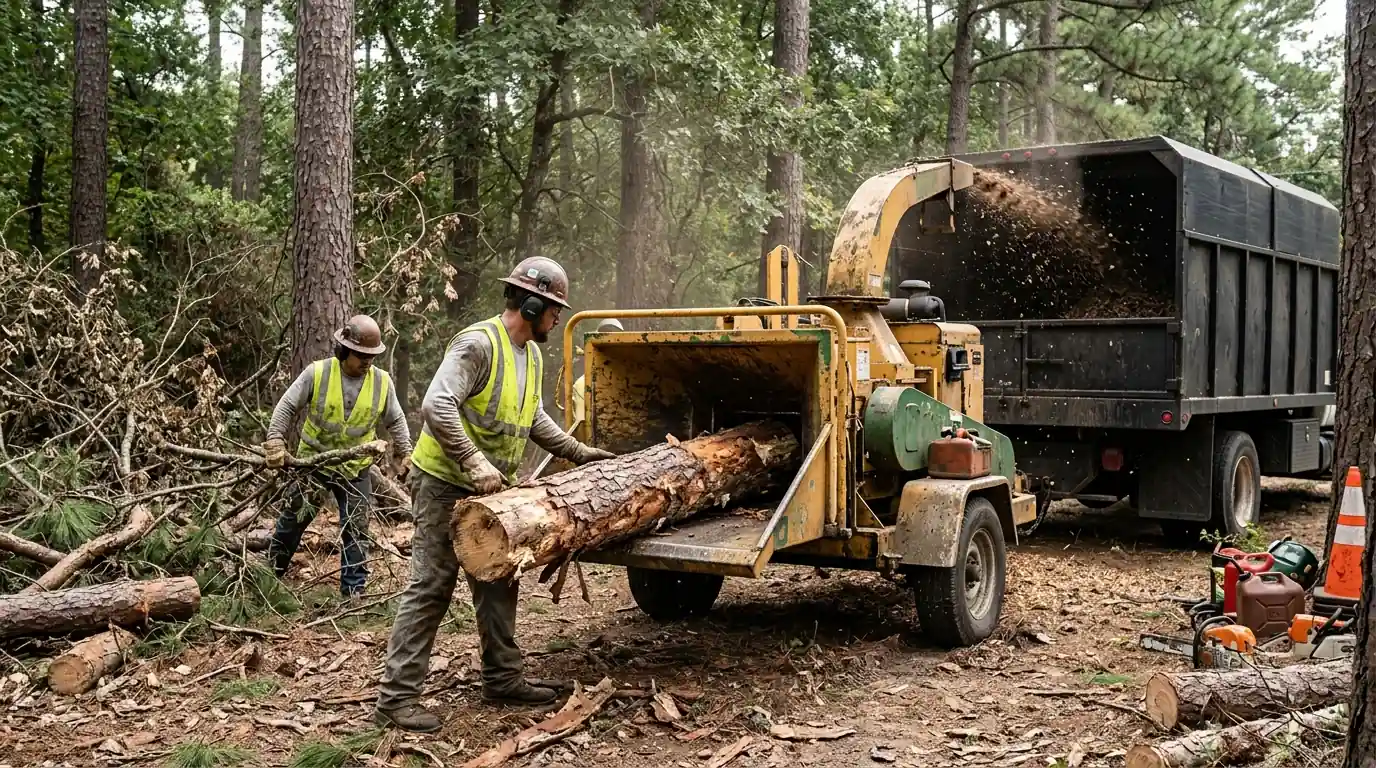
When one pine is attacked, the pines within reach are the next risk, yours or the neighbor's. Protecting them is about speed and handling. We take the infested tree down and get its bark off the lot, chipped or hauled, instead of leaving logs stacked in the shade. Then we look at the survivors: root damage, soil piled on the flare, wounds from mowers. Deep watering through dry spells keeps their resin flowing, which is how a pine pushes beetles out.
Removing Infested Wood Fast
An attacked pine is a beetle nursery until its bark is gone. The goal is to drop it and process the wood while the brood is still underneath, not after it flies. On open lots we fell it; next to a house we climb and lower it in sections on a rope. Logs get chipped or hauled on the same visit when the truck can reach. A pine already gone red is dead tree removal, and brittle wood changes the rigging.
Questions about your tree? Talk to a crew lead.
Call (704) 839-2139Warning signs
Beetle Signs on Pines
Resin blobs on bark
White to reddish-brown pitch tubes dotting the bark plates.
Reddish boring dust
Fine dust in bark cracks or piled on the roots.
Needles fading to rust
The crown turns yellow-green, then straw, then rust red.
Pinhead exit holes
Small round holes where new beetles have flown out.
Dead top, green bottom
The upper crown browns first while lower limbs look normal.
Loose bark patches
Bark pulls away easily, showing branching galleries etched underneath.
Local conditions
Pine Beetle Inspection in north Houston: what local conditions change
Beryl, beetle infestations and other weather cost The Woodlands about 7,000 trees, and the township has started reforestation. For pines in The Woodlands, Spring and Conroe, Texas A&M Forest Service ties Ips engraver attacks to drought-weakened trees and treats salvage cutting as the most practical control. So each inspection ends with a plain call on every pine: watch it or drop it.
Sources: preview-prod.w.houstonchronicle.com, digital-release.ketk.com
Step by step
Inspection, Step by Step
Walk every pine
Every trunk on the lot is checked for tubes and dust.
Read the crowns
Fading color up top shows attacks hidden from the ground.
Sort and explain
You get a plain list: pines to watch, pines to remove.
Remove attacked trees
Infested pines come down while brood is still under the bark.
Clear the logs
Logs and bark leave the lot so nothing re-infests the stand.
Your options
Watch, Remove or Thin
| Option | Fits when | Tradeoff |
|---|---|---|
| Watch and recheck | Old hardened tubes, green crown | No cost now; needs a recheck |
| Remove attacked pines | Fresh tubes, dust or a fading crown | Stops that brood; opens the canopy |
| Thin a crowded stand | Crowded pines competing for water | Less stress later; more trees down now |
What moves the price
Pricing Beetle Work
Cost sits in the pines that must come down, plus the wood: Angi's 2026 Houston figures put chipping at about $95 and haul-away at about $70.
Number of pines
One beetle tree or a whole stand changes rigging, cleanup and loads.
Height and lean
Tall loblollies leaning toward a roof are lowered in pieces, not felled.
Wood disposal
Infested logs get chipped or hauled; stacked logs feed the next brood.
Equipment reach
A pine behind a pool means more hand carrying and rope work.
Cost data: angi.com
When a beetle-hit pine can't be savedAfter a long dry spell, a storm that wounds trees, or work that cuts roots. Those stresses draw Ips beetles, so that is when a walk-through pays off.
Usually Ips engravers working on stressed trees. Southern pine beetle tends to spread tree to tree through a stand. Either way, an attacked pine comes out promptly.
Not with the bark on, because fresh pine logs are where the next brood grows. Debark and stack them away from standing pines, or we chip them.
Tell them early, since their brood can reach your trees. On your side, keep your pines watered through dry spells and have them checked for fresh tubes.
Often, yes. A lightning scar stresses the pine, and engravers tend to follow. Watch that tree through the next warm season and call when fresh tubes appear.
It gives them their best chance. Taking the attacked tree out before the brood emerges removes the source, but stressed neighbors can be hit and need rechecks.
Related work