Tree Health & Planting on the north side
Root Zone Care for North Houston Trees
Mulch volcanoes, packed clay, fill dumped over roots: we work the soil under the canopy so roots get air and water.
Phone answered 24/7 · office in Spring, TX
- Roots left intact
- Flare kept clear
Updated October 2026
 Tree Health & Planting
Short answer
Root zone care in Houston means fixing the soil a tree's roots live in, and across much of Houston that soil is Beaumont Formation clay, which swells wet and shrinks dry. We pull mulch off the flare, loosen compacted ground, and undo grade changes over roots.
The job
Roots Live Near the Surface
Most of a tree's fine roots sit in the top layer of soil, spreading past the dripline. That is where they take up water and air. Clay already holds little air, and anything that packs it or covers it, such as parked trucks, new fill or a deep mound of mulch, starves those roots slowly.
The damage shows years later as a thinning crown. Root zone care works on that cause. If nutrients are short too, a soil test decides whether deep root fertilization should follow.
Mulch Rings
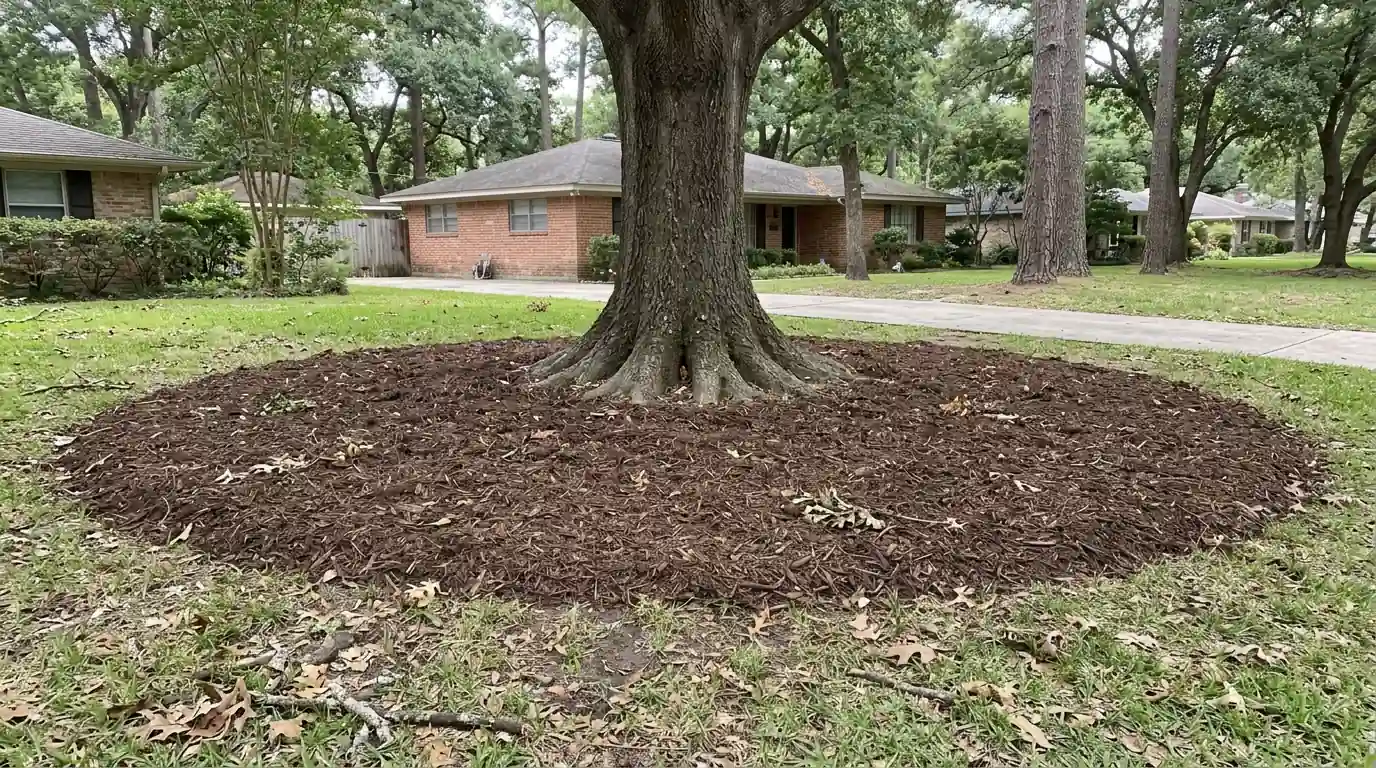
Mulch piled against the trunk, the parking-lot volcano, keeps the bark wet, invites rot and insects, and coaxes roots to circle in the mulch. We pull it back until the root flare shows, then spread a wide, flat ring out toward the dripline, kept thin near the trunk. Shredded hardwood or pine bark breaks down into the soil; rock and rubber do not. A wide ring also keeps mowers and trimmers off the bark, a common way young trees get girdled.
Relieving Compacted Soil
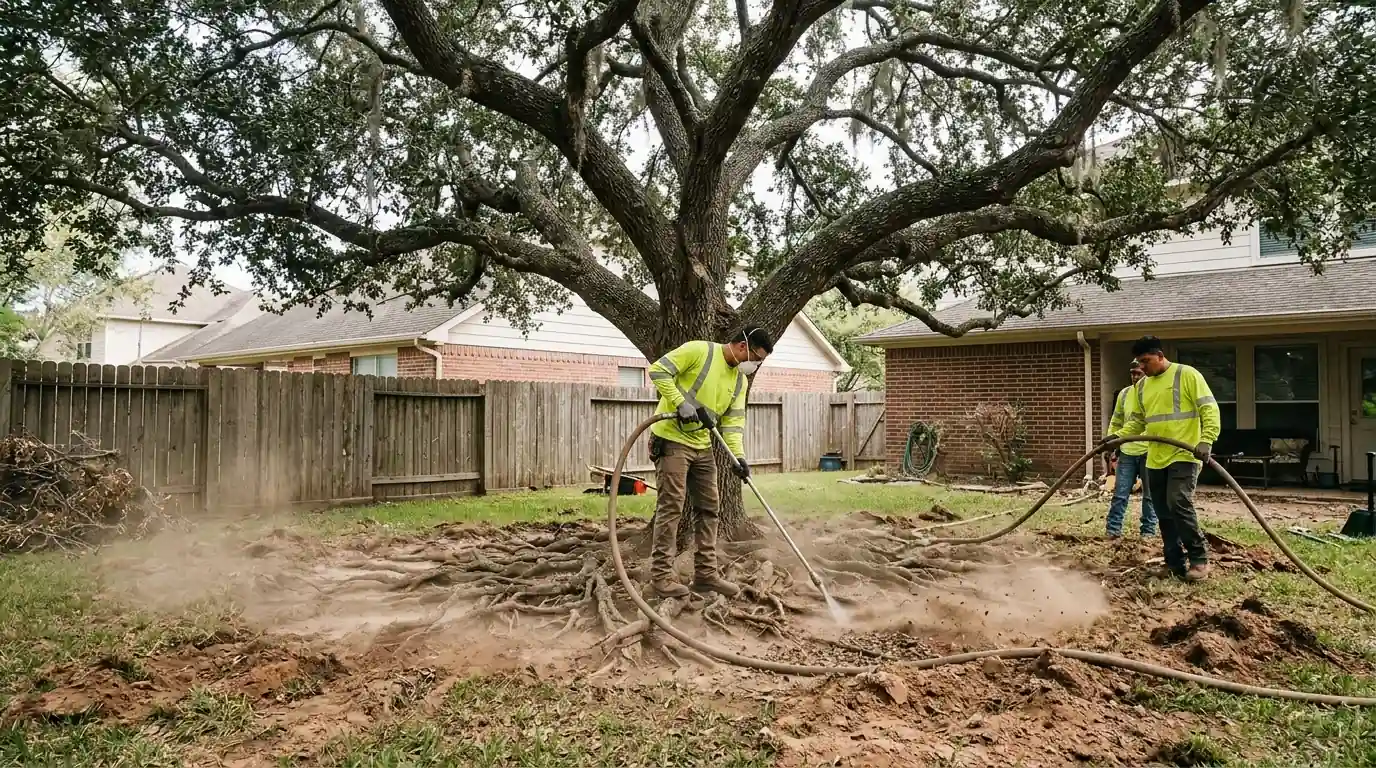
Bare, hard ground under the canopy, water that puddles and runs off, grass that will not grow where cars park: that is compaction. On clay it takes years to undo on its own. We loosen the soil with compressed air from an air spade, which blows soil apart but leaves roots intact, then work in compost and cover it with mulch. The tradeoff is that the first loosening can settle again if traffic returns, so the parking spot has to move.
Vertical Mulching
Where compaction covers a whole yard and air work would take too long, vertical mulching is the slower, cheaper route. We drill a grid of holes across the root zone, steering between major roots, and fill them with compost or coarse organic matter. Each hole becomes a channel for air and water into dense clay, and new feeder roots follow the channels. The tradeoff: results build over seasons, not weeks. It pairs well with a fresh, flat mulch layer on top.
Grade Changes Near Trees
Fill spread to level a yard, or soil banked against the trunk, kills trees slowly. Roots under a modest layer of new clay lose their air and die back, and the decline shows years later. A trunk that rises straight out of the ground like a post is buried. We dig the flare out by hand or air and pull fill back where we can. Cutting grade does the opposite damage by severing roots, so protect the root zone before grading.
Questions about your tree? Talk to a crew lead.
Call (704) 839-2139Warning signs
Root Zone Warning Signs
Mulch volcano
Mulch heaped up the bark, hiding the root flare.
No visible flare
The trunk enters the ground straight, like a fence post.
Hard bare ground
Soil under the canopy sheds water and cracks in summer.
Puddles that linger
Water stands under the canopy long after rain stops.
Shrinking leaves
Each spring the leaves come in smaller and sparser.
Fresh fill nearby
New soil, a slab or tire ruts inside the dripline.
Local conditions
Why root zone care looks different on Houston's north side
Much of Houston sits on the Beaumont Formation, whose clays are highly expansive: they swell when wet and shrink as they dry. In yards across Oak Forest and Garden Oaks, that clay seals tight after rain and cracks open in drought, and feeder roots feel both. Loose, mulched soil softens the swing, which is the whole point of root zone work there.
Sources: archives.datapages.com
Do it yourself?
Your Part and Ours
Fine to handle yourself
- Pull mulch off the trunk until the flare shows.
- Spread a thin, wide ring of shredded mulch.
- Keep cars and foot paths off the root zone.
Leave to a crew
- Digging out buried fill without scraping bark or roots.
- Air loosening, which tears roots in untrained hands.
- Vertical mulching, which means drilling between unseen roots.
Step by step
From Flare to Dripline
Find the flare
We pull mulch and soil back until the trunk flare shows.
Probe the soil
A soil probe shows how hard and wet the ground runs.
Mark the roots
Big roots and utility lines get marked before any loosening starts.
Loosen and amend
Air work or drilled holes open the clay; compost goes in.
Mulch flat, wide
A thin, wide ring finishes the job and keeps mowers off.
What moves the price
Pricing Root Zone Work
Root zone work is priced by the area treated and method, not per tree. A single mulch ring costs less than air work across a backyard.
Area treated
One tree's ring and a yard of shared root zones are different jobs.
Method used
Hand work, air spade loosening or vertical mulching each take different time.
Depth of fill
Pulling back fill buried over roots is slow hand and air work.
Material hauled
Compost and mulch loads, plus hauling off old volcano mulch or fill.
A few inches spread flat, thinner near the trunk, never piled on the bark. Deeper layers keep clay soggy and starve roots of air, like a volcano.
No. A tiller shreds the fine roots near the surface, which do most of the drinking. Air loosening or vertical mulching opens the soil without cutting them.
Not in any depth. A light dusting is fine, but a layer over roots, even for a flower bed, smothers them. Never bank soil against the trunk.
Yes, over time. Tires pack clay until air and water cannot reach roots, and the crown thins years later. Move the parking spot and have soil loosened.
Not always. It helps a stressed tree that has live roots and a fair crown. Once decay or canker sets in, soil work will not reverse it.
Root zone work can happen whenever the soil is workable, ideally ahead of summer heat. Wet clay smears and bone-dry clay resists, so we wait for the middle.
Related work