Houston neighborhood
Lake Houston Tree Removal, Storm Prep and Cleanup
Trees beside an 11,854-acre lake catch wind across open water and sit in ground that stays wet after storms. We prep, remove and clean up around Lake Houston and answer the phone 24/7.
Phone answered 24/7 · office in Spring, TX
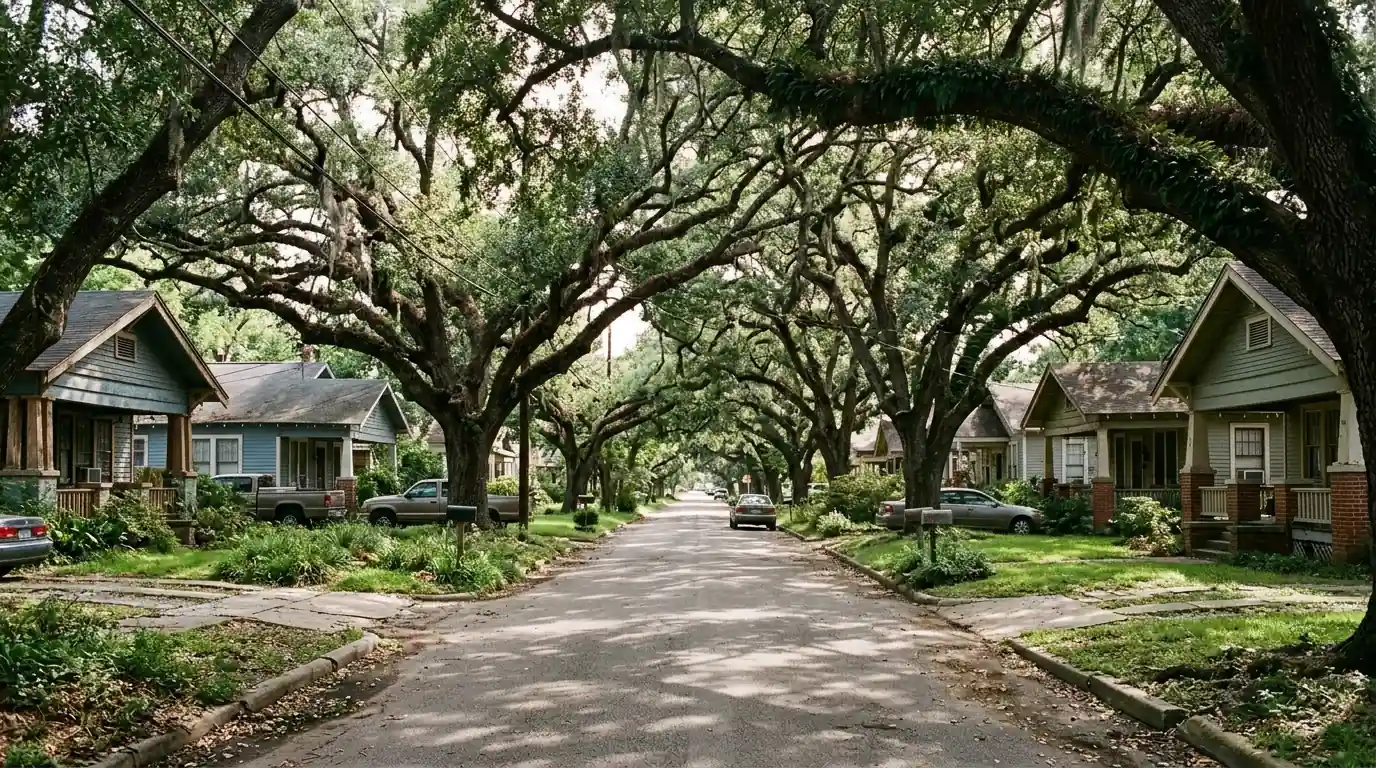 Lake Houston
Short answer
Lake Houston, created in 1953 when the City of Houston dammed the San Jacinto River, covers 11,854 acres and is the city's primary water supply. Shoreline trees catch wind that crosses open water with nothing to slow it. Thinning crowns before hurricane season and removing trees with weak roots are the core jobs.
Local conditions
Open water, wet ground and tall pines by the lake
Lake Houston is a reservoir on the San Jacinto River about 15 miles northeast of downtown, and the west fork is its primary inflow. Kingwood, Atascocita and Humble line its west bank. A tree near the shore has no buffer from wind moving across that much water, so pre-season canopy thinning matters more here than on a sheltered street.
Water also works from below. In 2017, Kingwood on the west bank suffered evacuations and severe flooding after Hurricane Harvey, aggravated by the San Jacinto River Authority's decision to open floodgates. Saturated ground loosens root plates, and a tree that stood in floodwater can decline slowly before it shows. A risk walkthrough after high water checks lean, root flare and crown color.
Beryl tested the lake's canopy in 2024. In Kingwood, its 80 mph winds ripped seventy-foot pines out of the soil and crushed cars and roofs. Storm cleanup on a lakeside lot starts with the trees still hanging.
Sources: en.wikipedia.org, en.wikipedia.org, texasmonthly.com
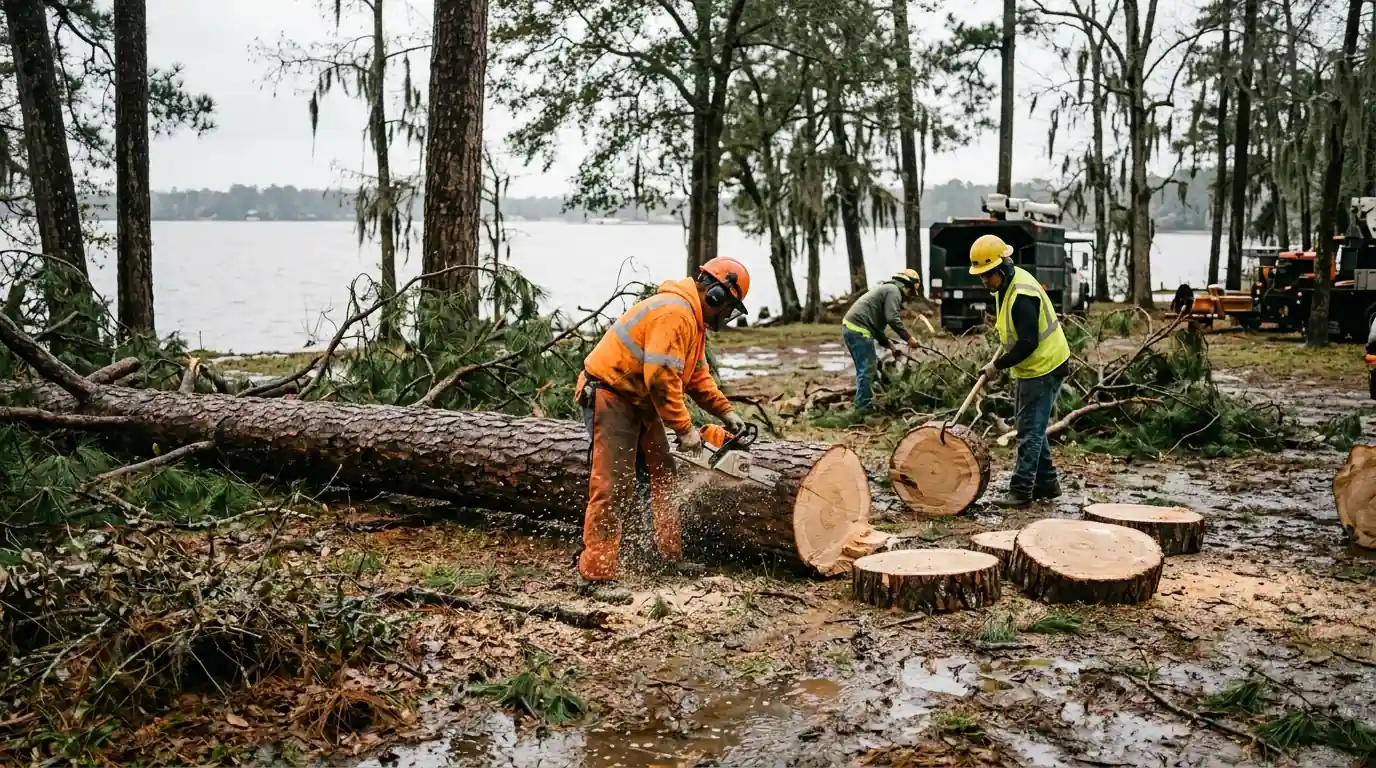
Most called-for work
Lakeside tree work around Lake Houston
- Storm prep for north Houston treesLakeside trees take wind straight off the water; thinning the crown before June lets gusts pass through instead of pushing.
- The post-storm cleanupAfter a Gulf storm, broken limbs and toppled pines pile up on lakeside lots; we cut, chip and haul the wood.
- A written tree inspectionTrees that stood in high water or saturated soil get a root flare, lean and crown check before the next storm.
- Pine tree removalTall pines in wet ground near Lake Houston can lose their root grip, so risky ones come down in controlled sections.
- A make-safe visitWhen a storm drops a tree across a drive or onto a roof near the lake, the phone is answered 24/7.
Close by, see crews working in Kingwood, Atascocita tree removal and trimming, crews working in Humble and crews working in Liberty County, or the whole coverage map.
Often, yes. It catches wind straight off the water, and its roots may sit in soil that stays wet. That does not mean it has to go. A sound tree with a thinned crown and a firm root plate can stand for decades.
Usually by the next growing season. Watch for thin leaves, dieback at the top and fungus at the base. Pines under flood stress also draw beetles, so pitch tubes on the bark mean a quick call.
Yes. Pines carry their weight high on a single stem, so we check the root plate and the top for cracks. Hardwoods get crown thinning and deadwood removal. Both benefit from a look before hurricane season.
It depends on what broke. Lost limbs on a sound trunk can be recut and the tree kept. A split trunk, a torn root plate or a pine with its top snapped out usually means removal. We tell you which on the walkthrough.
Tree trouble near Lake Houston?
Call any hour for a storm-damaged tree, or book a crew lead to check lakeside trees before the season starts.