Land & Property on the north side
Brush and Vine Clearing for North Houston Yards
Privet, greenbriar, air potato and poison ivy on oaks: we cut it by hand and haul it out of tight yards.
Phone answered 24/7 · office in Spring, TX
- Cut by hand
- Brush hauled off
Updated October 2026
 Land & Property
Short answer
Underbrush and vine removal in north Houston is hand cutting plus haul-off, and tree debris removal in Houston averages about $148 per Angi. On lots too small for a mulcher, we cut yaupon and privet at the ground, pull vines off trunks, and bag what resprouts.
The job
Small Lots Need Hand Work
A mulching machine needs room to turn and firm ground to sit on. A fenced backyard, a slope down to a creek or a strip between houses has neither. There, clearing is saws, loppers and brush cutters, with every armload dragged to a chipper or truck at the street.
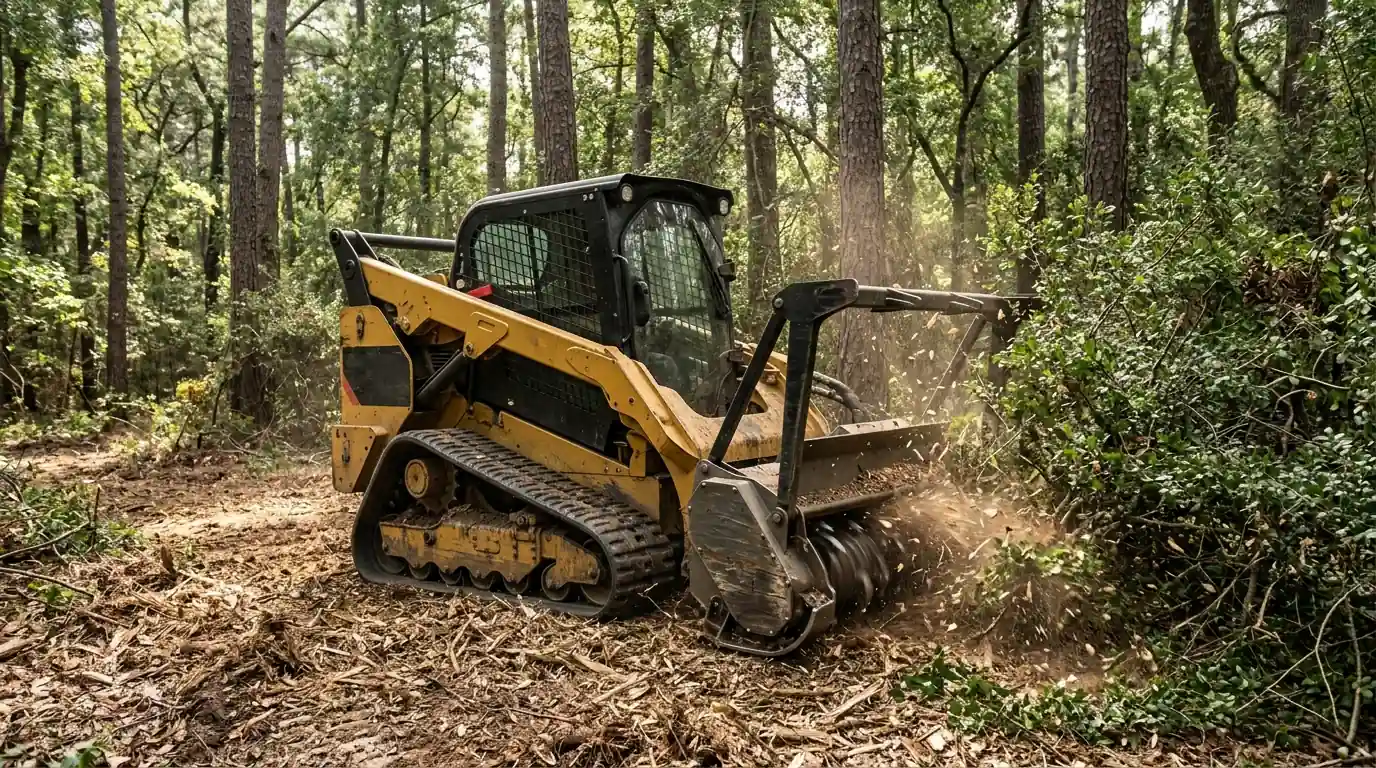
Hand work is slower per square foot, but it spares the lawn, the fence and the trees you want kept. For open acreage, forestry mulching covers more ground; for thickets of tallow, tallow removal handles the stumps.
What moves the price
Pricing Hand Clearing
Hand clearing is priced by area, how thick it is and how far brush gets carried. Angi's Houston figures put each dump trip at $75 to $250 for planning.
Carry distance
Brush dragged from a back corner through a side gate takes longer.
Thicket density
A solid privet wall needs more cutting than scattered saplings and vines.
Vine handling
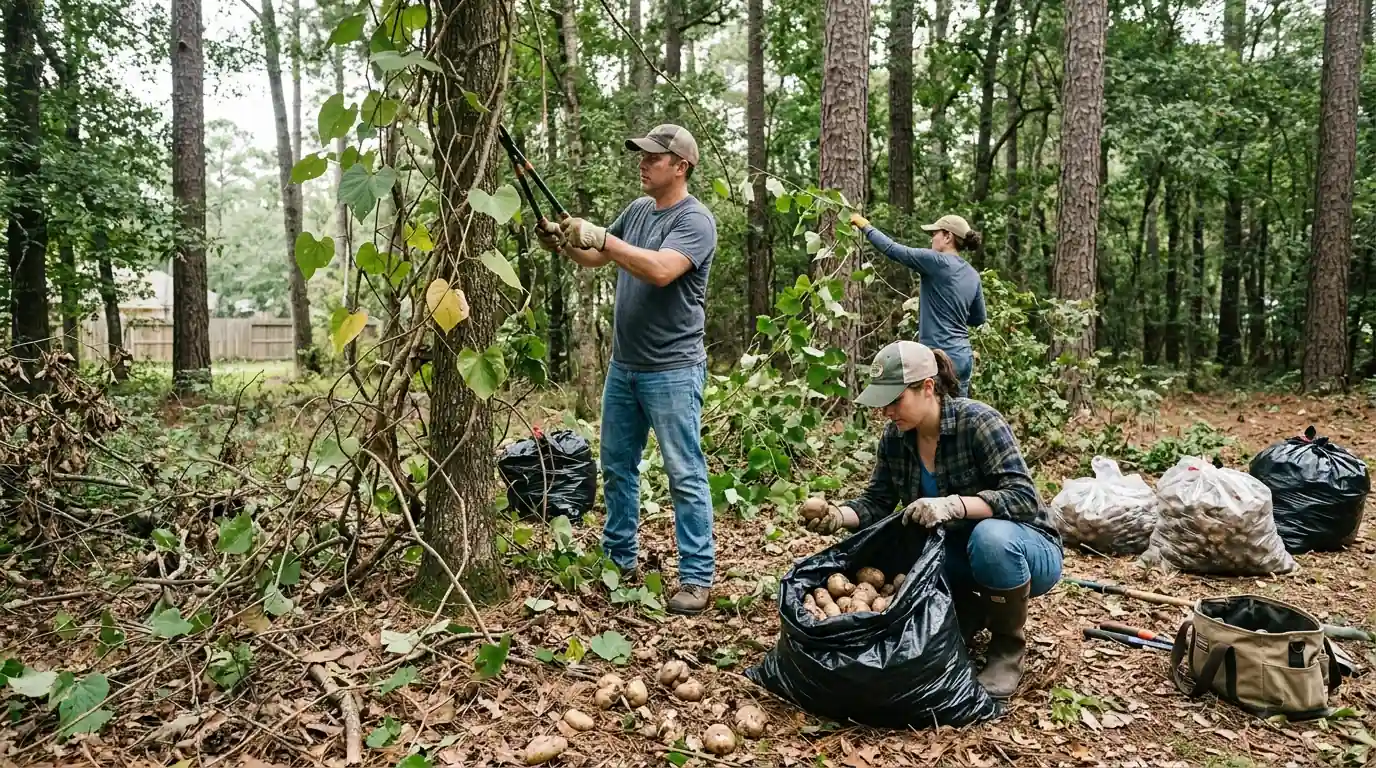
Air potato bulbils and poison ivy get bagged, not chipped, adding time.
Haul-off volume
More truck loads or dump trips raise the total on big thickets.
Your options
Hand, Machine or Both
| Approach | Best for | Tradeoff |
|---|---|---|
| Hand cut and haul | Fenced yards, slopes, creek banks | Gentle on ground; more labor hours |
| Mulcher on open ground | Larger open brushy areas | Fast, no haul-off; needs room |
| Hand edges, machine middle | Open centers with tight edges | Balanced; two methods to coordinate |
Yaupon and Privet Thickets
Yaupon and invasive Chinese privet fill the shade under pines and along fences until you cannot see the back of the lot. We cut stems at the ground with saws and brush cutters and pull small privet by the roots while the soil is moist. Larger stems resprout from the base, so expect a second visit or mowing to keep it open. Native yaupon you want as a screen can stay, shaped and lifted so you can see and mow under it.
Air Potato and Greenbriar
Air potato climbs anything at the forest edge, with heart-shaped leaves and potato-like bulbils that drop and sprout new vines. Pulling it without collecting those bulbils just plants next year's crop, so we bag them and haul them off rather than chipping. Greenbriar is the thorny one; it grows back from knobby tubers underground, so we cut it at the base and dig out tubers where the soil allows. Both come back, and a follow-up pull in the next growing season matters.
Poison Ivy on Trunks
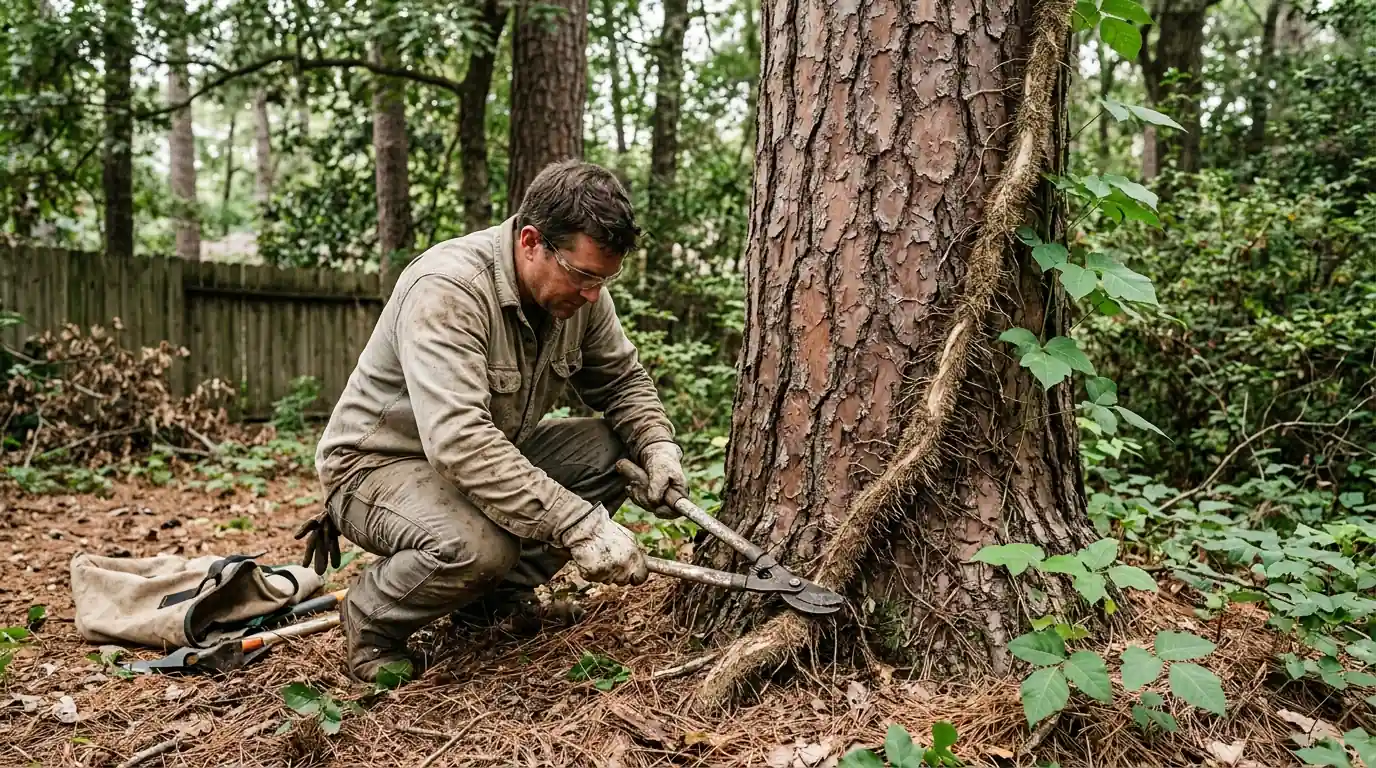
Hairy, rope-thick vines climbing an oak or pine are usually poison ivy, and the oil stays active in dead stems for a long time. Ripping the vine down tears bark and spreads oil everywhere. We cut a section out at the base so the upper vine dies in place, then remove it once it loosens, or leave it if it sits high. Crews work fully covered and bag the cuttings; they never go in a chip pile you might spread later.
Creek Bank Brush
Brush on a creek or ditch bank holds the soil. Clear it to the ground and the next heavy rain can cut the bank back toward your yard. On banks we cut selectively: vines, privet, tallow and dead wood out, native shrubs and roots left to hold the slope. Everything is carried up by hand, since machines on wet clay banks slide and rut. Some creek and drainage strips belong to a district or HOA, so we confirm the line before cutting.
Questions about your tree? Talk to a crew lead.
Call (704) 839-2139Local conditions
Underbrush & Vine Removal in north Houston: what local conditions change
Trees for Kingwood, the group behind close to 2,000 new trees in Kingwood since 2022, is also battling air potato vines, which smother the forest edge. New plantings and saplings at any wooded edge face the same smothering, and vines that reach the canopy shade out the tree beneath. So on a wooded lot we free the young trees first, then clear the brush around them.
Sources: communityimpact.com
Step by step
From Thicket to Clean Ground
Flag what stays
Keeper shrubs, young trees and property lines get marked first.
Free the trunks
Vines on trees are cut at the base before anything else.
Cut the thicket
Saws and brush cutters take stems to the ground, edges first.
Bag the spreaders
Bulbils, poison ivy and seed heads go into bags, not the chipper.
Haul and rake
Brush is chipped or hauled, and the ground is raked clean.
Do it yourself?
You Handle, We Handle
Fine to handle yourself
- Pull privet and yaupon seedlings by hand after rain.
- Collect air potato bulbils into bags, never the compost.
- Mow cleared ground regularly so sprouts never get going.
Leave to a crew
- Thick poison ivy on trunks, where exposure runs high.
- Dense privet walls that need saws and brush cutters.
- Steep creek banks, where footing and erosion both matter.
Never. Burning poison ivy puts its oil in the smoke, and breathing it can cause serious lung reactions. Bag the cuttings and put them out with the trash.
Yes, from bulbils left on the ground and tubers in the soil. Collecting bulbils and pulling new sprouts early wears the patch down over a few seasons.
It should not. Hand work is gentle on turf. We drag brush on tarps where we can, keep trucks on the drive, and rake the cleared ground before leaving.
Small ones, yes. Cut thick vines at the base and let them die and loosen; ripping them off tears bark and can pull down dead limbs overhead.
Clean brush is chipped and left as mulch or hauled, your choice. Air potato, poison ivy and privet with ripe berries are bagged and hauled so nothing replants.
Right away for beds and trees, once roots and tubers are dug out of the planting spots. Mulch the cleared ground so sprouts and seedlings get less light.
Related work