Answered 24/7 for storm calls
Getting a hung limb down in north Houston
Our line is answered 24/7. Keep everyone out from under the hanging limb, and tell us what sits below it.
Phone answered 24/7 · office in Spring, TX
- Tree stays standing
- Lowered, not dropped
Updated October 2026
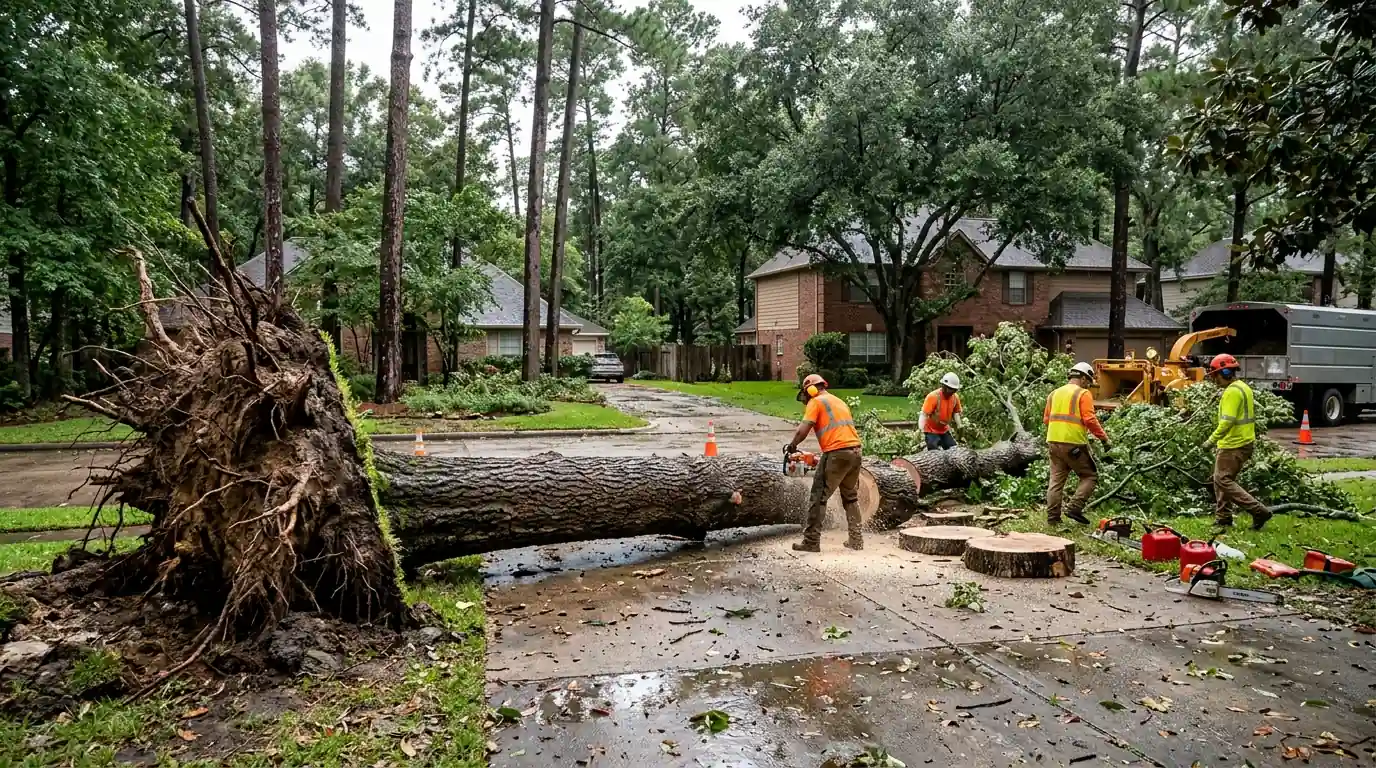 Storm & Emergency
Short answer
For hanging limb removal in Houston, Angi's debris figures list branch removal at $75 to $250, though a limb hung in the crown adds a climb and a lowering line. The climber ties in above it and lets it down under control, while the tree stays standing.
The job
One limb down, tree standing
A hanger is a broken limb that did not fall. It sits caught in lower branches, wedged in a crotch or dangling by bark, and the next gust can bring it down without warning. Climbers call them widow-makers for a reason.
Taking one down is aerial work: a line goes on the limb before it is cut free, so it descends under control instead of bouncing through the crown. A clean pruning cut finishes the stub, and anything else broken is noted for a follow-up trim.
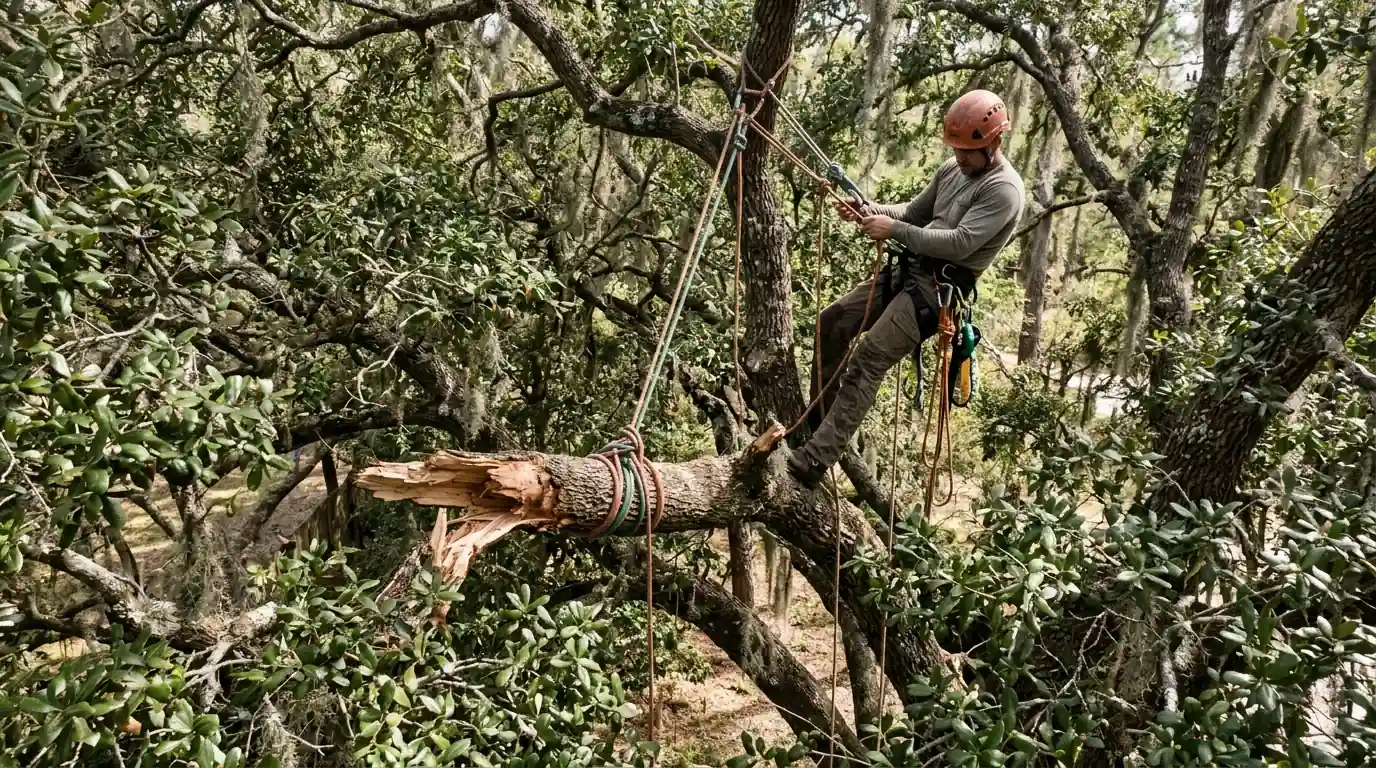
Hung limbs caught in the canopy
Days after a storm, a clump of brown leaves in a green crown usually marks a limb that broke and stayed up. Wind and rain can shift it at any time. The climber picks a tie-in point in sound wood above it, away from the broken limb, and sets a block for the lowering line. The hanger is snugged on that line, cut loose and let down under friction to the ground crew, not dropped to bounce through the branches.
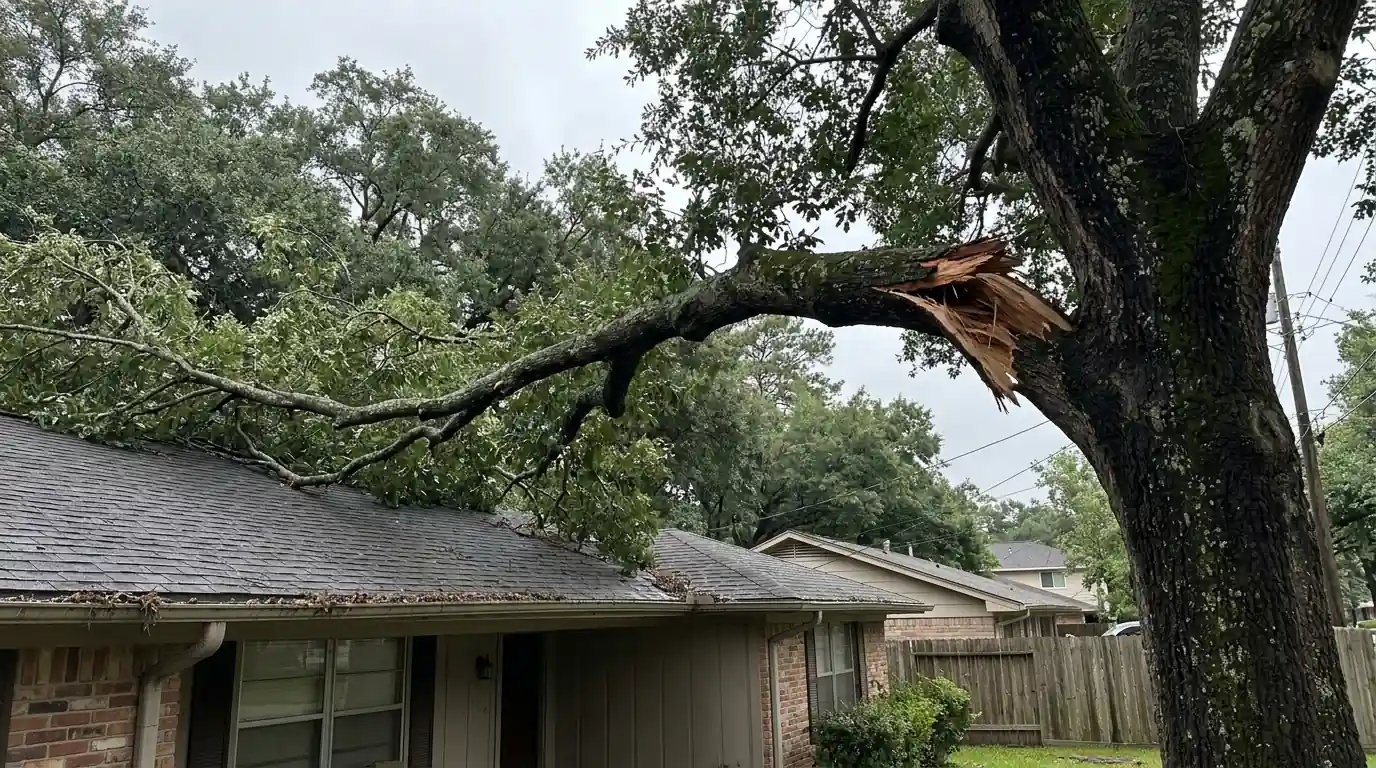
Cracked limbs over the roof
A cracked limb still on the tree is harder to spot: a fresh seam at the union, a limb sagging lower than before, or bark wrinkled on its underside. Over a roof it cannot be cut and dropped. We section it from the tip back, lowering each piece on a rope through a block, then make the final cut at the branch collar so the wound can close. If other limbs crowd the roof, roof clearance cuts can follow in the same visit.
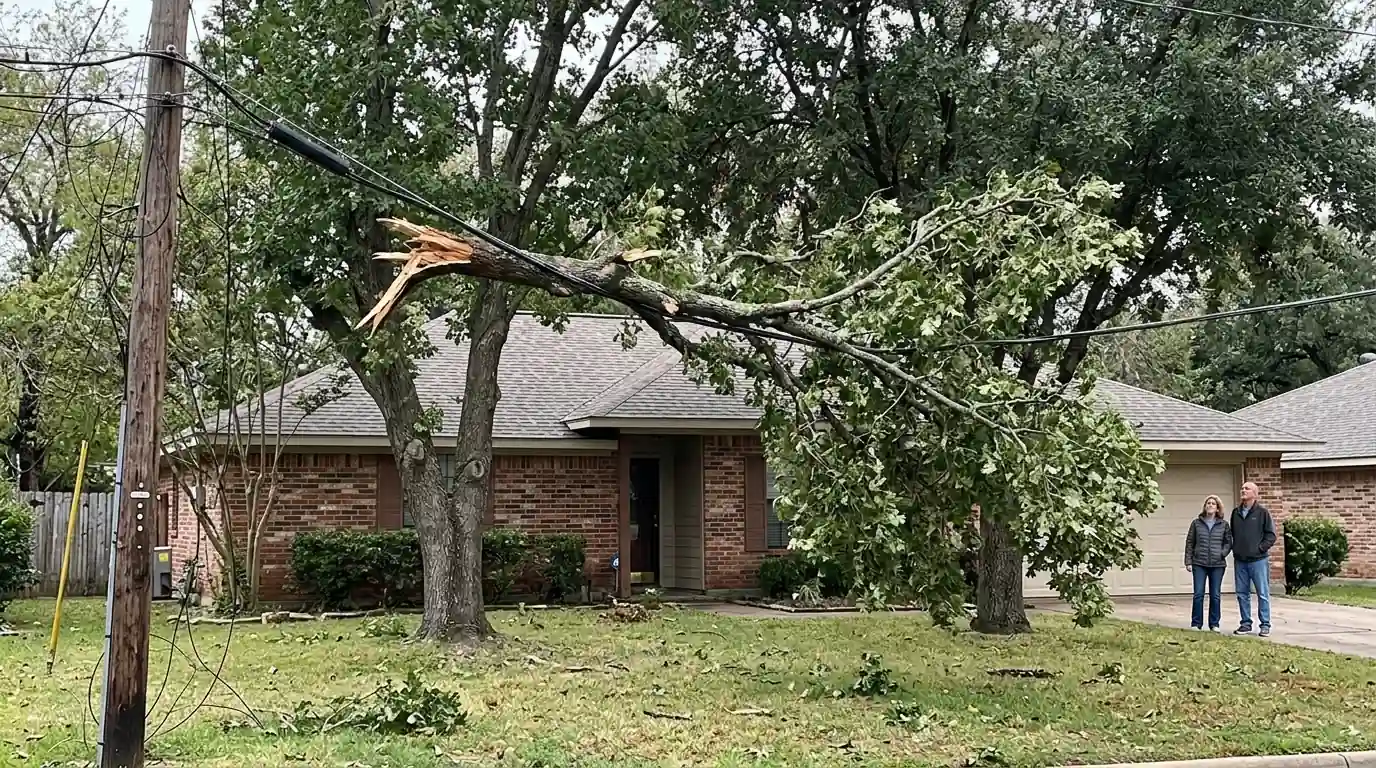
Limbs resting on service wires
A limb draped on the line from the pole to your house can sag it, flicker the lights or pull the mast off the roof. Treat that line as live. Report it to CenterPoint and keep everyone away, including from fences the wire touches. Once the utility cuts power to the drop or clears the contact, we climb, rig the limb and lower it clear of the wire. Our guide on a tree on a power line covers first steps.
Split leaders
When one of two stems tears out of a crotch, it often hangs from the split instead of falling clear. The torn leader is heavy and pivoting on a hinge of fibers, so we tie it off high, take its weight on the lowering line, and cut it free in stages. Then comes the honest call: the stem left behind has an open wound at its base. Sometimes cabling and a reduction can keep it; often removing the tree is safer.
Questions about your tree? Talk to a crew lead.
Call (704) 839-2139Warning signs
Spotting a hanger
Crosswise limb
A branch resting across others instead of growing outward.
Fresh union seam
Pale, raw wood where a limb meets the trunk.
Roof sag
A limb now touching shingles or gutters it cleared.
Flickering lights
A limb rubbing the service line whenever the tree moves.
Decay at breaks
Hollow or soft wood at a stub, pointing to rot.
Bare stub
Torn wood where a limb broke, with nothing below it.
Local conditions
What Houston's storms, trees and soil mean for hanging limb removal
Hurricane Beryl, on July 8, 2024, cut power to about 2.26 million CenterPoint customers around Houston, and the utility reported severe tree damage across its system. CenterPoint said trees had been weakened by three years of freezes, drought and heavy spring rain. Weakened wood tends to leave hangers behind: limbs that crack, catch in the crown and wait for the next gust.
Sources: tdworld.com
Do it yourself?
While the limb hangs
Fine to handle yourself
- Rope off the area beneath the limb.
- Move cars and furniture out from under.
- Watch from a distance; call if it shifts.
Leave to a crew
- Climbing: broken wood shifts under added load.
- Ladder cuts: a cut limb swings back.
- Yanking it: it falls fast and unpredictably.
Step by step
How a hanger comes down
Clear below
People, pets and cars move out from under the limb.
Choose tie-in
The climber anchors to sound wood well above the hanger.
Rig it
A lowering line wraps the hanger and runs through a block.
Lower it
The limb is cut free and eased down to the crew.
Finish the stub
The torn stub gets a proper cut; wood is chipped or hauled.
What moves the price
The climb sets the price
A hanger is priced on the climb and drop zone, not wood volume. A small limb over a roof can take longer than a big one over lawn.
Hanger height
A high hanger takes longer to reach and rig than a low one.
Targets below
Roofs, pools or wires below mean every piece is lowered on rope.
Tree condition
A damaged tree may force the climber to anchor in a neighboring tree.
Wire contact
A limb on the service line waits for CenterPoint, sometimes meaning a return trip.
Yes, at any moment. Wind, rain-soaked leaves, or the last strip of bark tearing can drop it. Until it is down, keep people, pets and cars clear.
Sometimes, if it is small, low and over open lawn. Most sit higher or above something breakable, and a limb cut from below falls where it wants.
Then nobody climbs it. The climber can tie into a sound neighboring tree, or a throwline over the hanger lets the crew pull it free from a distance.
No. The storm did the harm. A clean cut at the branch collar lets the tree close the wound over time; a ragged stub left behind invites decay.
Not by itself; storm wind breaks sound limbs too. A hanger from a decayed union or hollow, or a tree that keeps shedding limbs, deserves a closer look.
Yes. Once the climber is tied in and the line is set, the rest of the crown adds little time. Tell us how many you can see.
Related work