Tree Removal on the north side
Bamboo removal for north Houston yards
Running bamboo under the fence, a clump eating a bed: we cut the culms, dig rhizomes and haul it away.
Phone answered 24/7 · office in Spring, TX
- Rhizomes dug out
- Culms hauled
Updated October 2026
 Tree Removal
Short answer
Bamboo removal in Houston only lasts when the rhizomes come out, because a stand cut to the ground regrows from them. Running bamboo spreads by rhizomes under fences and lawns; clumping bamboo grows from a tight, heavy root mass that is cut apart and dug.
The job
Why bamboo is a digging job
Bamboo is a grass. Each cane, or culm, reaches full height in one season and never thickens, and the plant's real body is the rhizome mat in the soil. Cutting culms barely dents it; the rhizomes push new shoots.
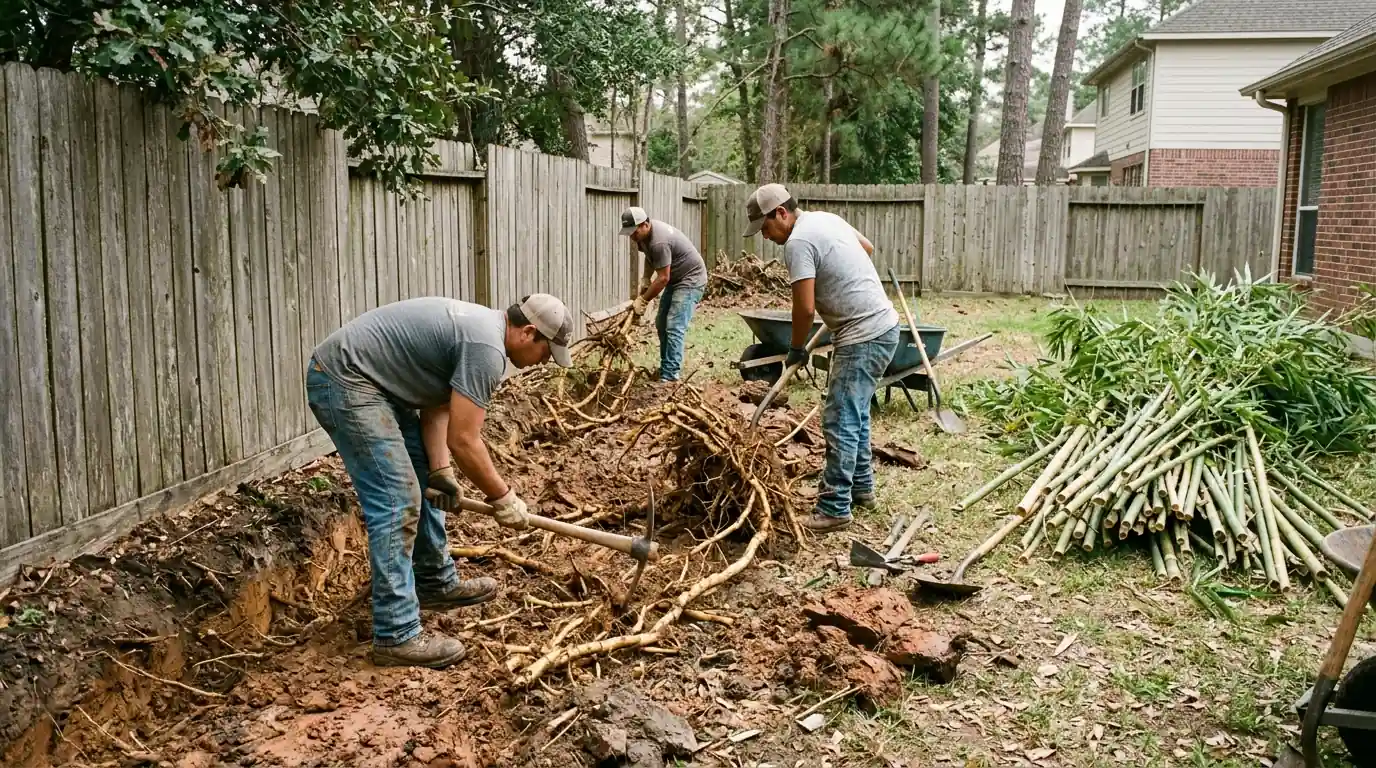
Most of the work happens below grade: cutting the stand down, then digging, prying and sifting rhizomes out of clay. Where a stand is tangled with brush, underbrush and vine clearing happens in the same pass. Running types, golden bamboo above all, take the most follow-up.
What moves the price
What drives a bamboo bill
Stand size and digging time set bamboo costs, not height. Angi's Houston debris figures, a planning guide for bulky culms, run $75 to $250 per dump trip.
Stand footprint
A wide running stand means far more digging than one tight clump.
Bamboo type
Running rhizomes get chased under lawns; clumps come out in one spot.
Neighbor's side
Rhizomes past the fence need consent, and often a barrier trench too.
Load count
Culms and rhizome mats are bulky, and every extra load adds up.
Your options
Dig, barrier, or mow it down
| Approach | Fits | Tradeoff |
|---|---|---|
| Full dig-out | Stands you want gone | Most labor now, least regrowth |
| Dig plus barrier | Bamboo coming from next door | Trench cost, yearly checks |
| Cut and mow | Small patches in open lawn | Cheap now, seasons of mowing |
Running bamboo
Running bamboo shows itself with shoots popping up well away from the stand, often in the neighbor's lawn or under the fence. The rhizomes run shallow and fast, and each node can send up a culm. Removal means cutting the stand, then following every rhizome to its tip and pulling it, including runs that crossed the fence, with the neighbor's consent. Missed pieces resprout, so for the first season after digging, new shoots get cut or dug as they appear.
Clumping bamboo
Clumping bamboo stays where it was planted, widening slowly, but a clump becomes a dense knot of rhizomes and culm bases that a shovel will not touch. The culms come down first and get bundled. Then the clump is cut into wedges with a saw or mattock, pried out in pieces with bars, and the hole is backfilled with soil. It spreads so little that one thorough dig usually finishes it, which is the good news compared with running bamboo.
Rhizome digging
Rhizome digging is the slow, thorough part. After the culms are cut, the crew loosens the soil with forks and a mattock, lifts the rhizome mat in sections and shakes the clay off so pieces are not buried. In wet clay the mat comes up heavy and sticky; in a dry spell it breaks into short pieces that get missed. Where the stand is large and the yard allows, a mini excavator speeds the lift and hand work cleans up.
Barrier along the fence
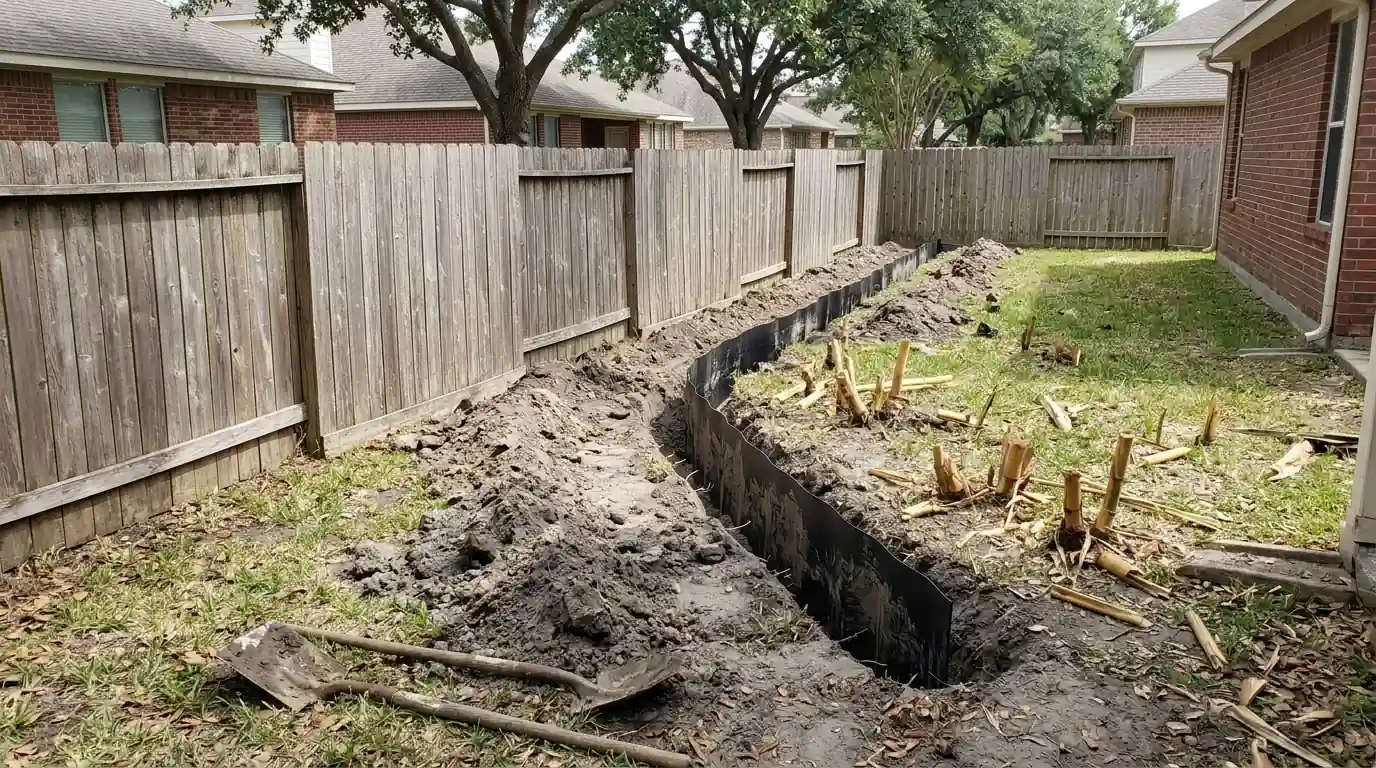
When running bamboo sits on the neighbor's side, digging your side and setting a barrier is often the only lasting option. A trench goes in along the property line, and plastic barrier panels are set on edge in it, seams overlapped and sealed, with a lip left above the soil. Rhizomes that reach the panel turn along it; any that try to jump the lip show up and get cut. Plan to walk that line and check it every year.
Questions about your tree? Talk to a crew lead.
Call (704) 839-2139Local conditions
Bamboo Removal in north Houston: what local conditions change
Houston's climate suits bamboo far too well. Long, hot summers and Gulf humidity keep running types growing most months. Heavy clay holds the rhizome mat tight, so digging after a soaking rain goes slower and messier, while a long dry spell bakes the clay hard. The freezes of some winters brown the leaves, but the rhizomes below usually push new culms.
Timing
How long bamboo work takes
Footprint and type set the pace. A tight clump is one dig. A running stand that has crossed a fence takes longer, since each rhizome is chased to its tip, and a barrier adds trenching. Access matters too: a stand behind a narrow gate means hand-carrying every bundle. Budget for one more short visit the next growing season, when missed pieces show themselves as new shoots.
Step by step
From culms to clean soil
Map spread
We find where shoots have surfaced, including past the fence.
Cut culms
Culms are cut low, bundled and stacked for the trailer.
Dig rhizomes
The mat is lifted in sections and the clay shaken off.
Set barrier
Panels go in a trench along the line, lip above grade.
Haul, level
Debris leaves in loads, and the dug ground is raked level.
Do it yourself?
What you can do between visits
Fine to handle yourself
- Snap off new shoots at ground level.
- Mow lawn shoots every week in season.
- Flag shoots past the fence for the walkthrough.
Leave to a crew
- Digging an established mat with bars and mattocks.
- Barrier trenching along fences, posts and irrigation.
- Cutting thick culms, which splinter under a saw.
Rarely. The rhizome mat stores so much energy that sprayed bamboo regrows, and spraying near other plants is risky. Digging, then spot-treating stray shoots, works better.
You can clear whatever grows on your side. Work past the line needs the neighbor's agreement, so the usual fix is digging your side and setting a barrier.
Running bamboo rhizomes mostly travel shallow, in the upper soil, which is why a barrier stops most. Clumping types sit in a dense mass under the culms.
A few shoots often rise from missed pieces the next growing season. Cutting or digging those promptly finishes the job; ignoring them lets a new stand build.
Thin culms chip, but thick ones are hard on a chipper and split into sharp strips, so most stands leave bundled in loads on a trailer.
It can stay if it has room. Clumping types widen slowly, so edging them yearly holds them in place. Running types are the ones that escape.
Related work