Stumps & Roots on the north side
Digging out stumps and root balls across north Houston
Slab, pool or new tree going in? Grinding is not enough there: we dig the stump and root ball out and backfill.
Phone answered 24/7 · office in Spring, TX
- Root ball dug out
- Backfilled in layers
Updated October 2026
 Stumps & Roots
Short answer
Stump removal in Houston means excavating the stump and its root ball, not grinding in place, and Angi's 2026 Houston stump removal average is about $381. The dig, the haul-off and the backfill are what separate it from a simple grind, and each of them adds cost.
The job
When a stump must come out whole
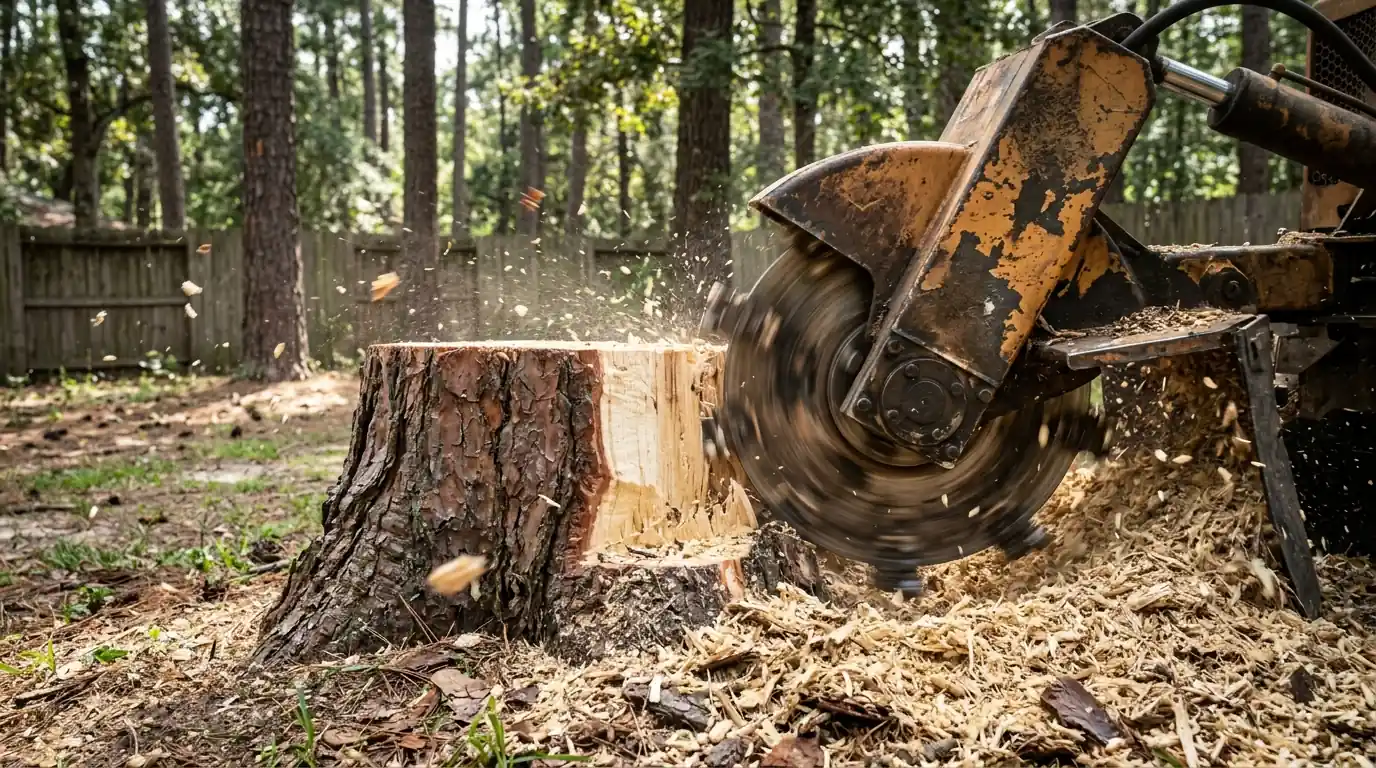
Grinding leaves the root plate and lateral roots in the soil, and they rot over years. That is fine under lawn. Under a new slab, pool shell or footing, rotting wood leaves voids, and the ground settles.
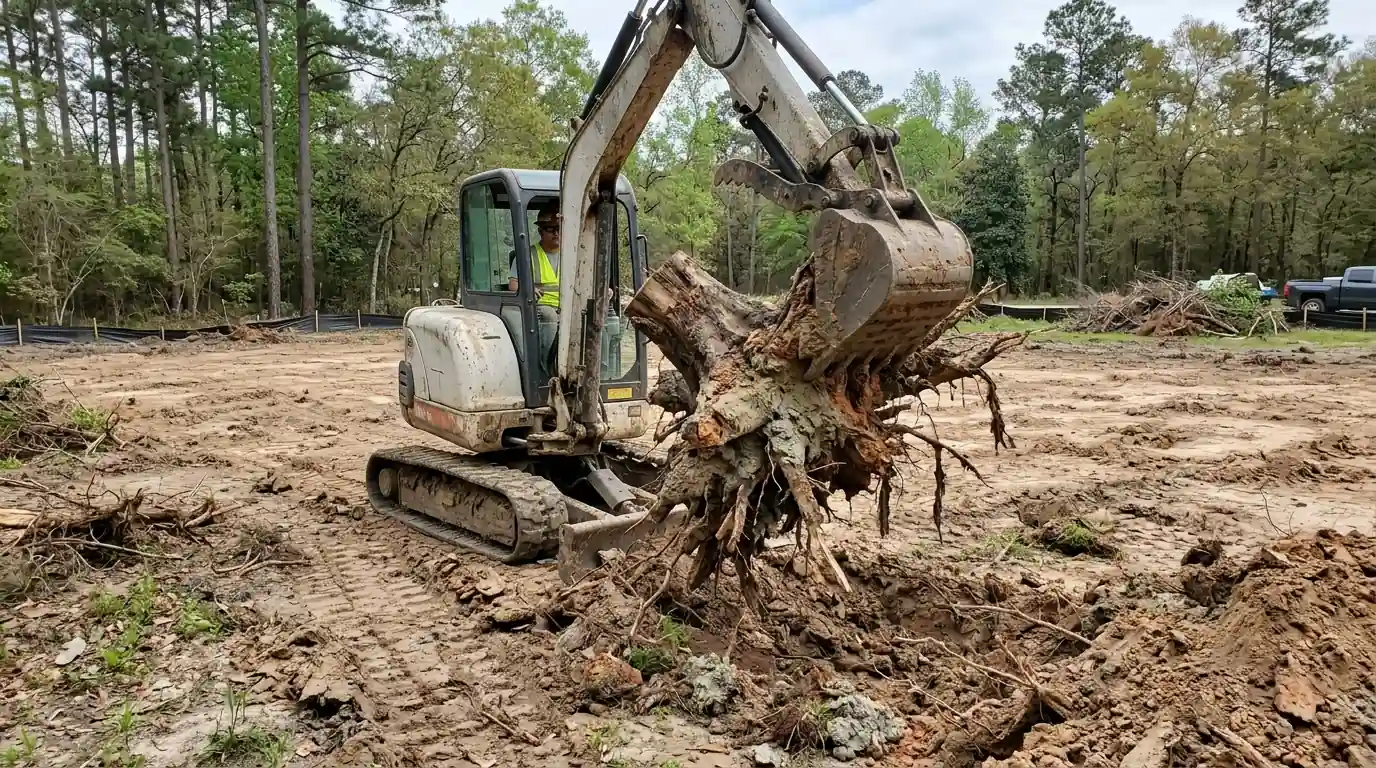
Removal digs around the stump, cuts the big laterals, and levers or lifts the stump and root ball out with a machine. The hole is then filled in compacted layers. It costs more than stump grinding and disturbs more yard, so it suits spots where the ground must carry weight.
What moves the price
What makes extraction cost more
Angi's $381 Houston average, a planning figure, covers typical stumps. Extraction adds digging, fill and loads, and Angi's tree removal figures put wood haul-away at about $70.
Root ball size
A wide hardwood plate means a bigger dig and a bigger hole to fill.
Machine access
A gate, fence or soft lawn decides what can reach the stump.
Haul-off
Stumps come out heavy with clay, and every load leaves on a truck.
Fill and compaction
Clean fill, compaction and topsoil to finish grade add their own line.
Your options
Grind, pull, or both
| Method | Best for | Tradeoff |
|---|---|---|
| Grind in place | Lawns and beds | Roots stay and rot slowly |
| Full extraction | Slabs, pools, additions, replanting | Bigger hole, more cost and fill |
| Cut roots, then grind | Stumps beside the slab | Protects the foundation; deep roots remain |
Full extraction for construction
A cleared building pad, addition or driveway needs clean ground, and most builders want every stump and root out before forms go down. We dig each stump out with its root ball, chase the larger laterals within the footprint, and stockpile or haul the wood and the dirt clinging to it. The holes are left open for the builder's fill or backfilled and compacted, depending on who handles the grade. Coordinate the order with the pad prep so nobody digs twice.
Root ball removal
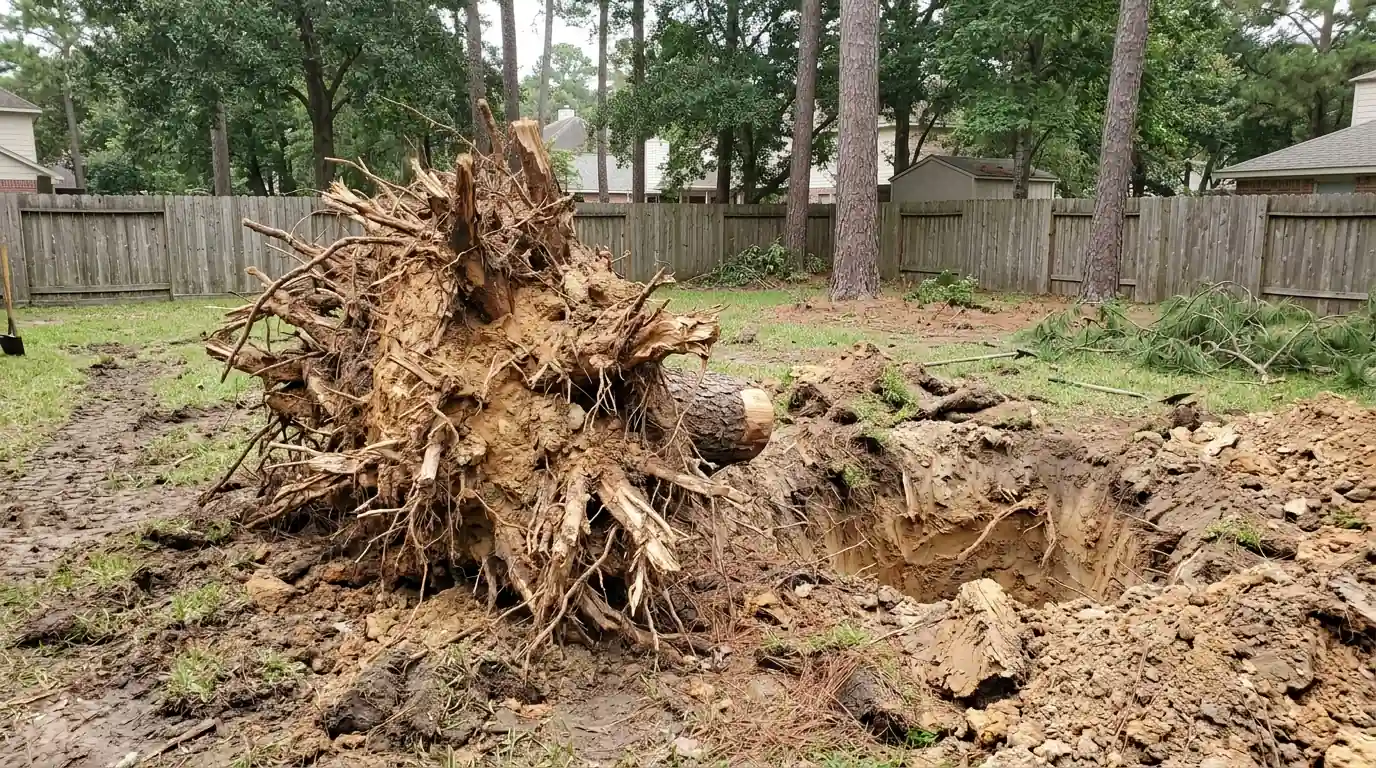
Replanting in the same hole, or setting a pool or patio there, means the root ball has to go, not just the stump. A hardwood root ball is a heavy plate of woody roots and packed clay; a pine often has a taproot under it. The crew digs a trench around the plate, cuts the roots at its edge, and rocks it loose until it can be lifted. Expect a hole wider than the stump and a pile of root-laden soil.
Stumps near foundations
A stump beside a slab is the case where pulling can do harm. Levering a root plate out can crack a slab edge, snap a sewer line or disturb the soil the foundation sits on. Near the house we usually cut the roots at the slab edge first, then lift the stump away from it, or grind instead and leave the deepest roots. On Houston clay, removing a big tree beside a slab can let soil swell back as it rewets.
Backfill and grade
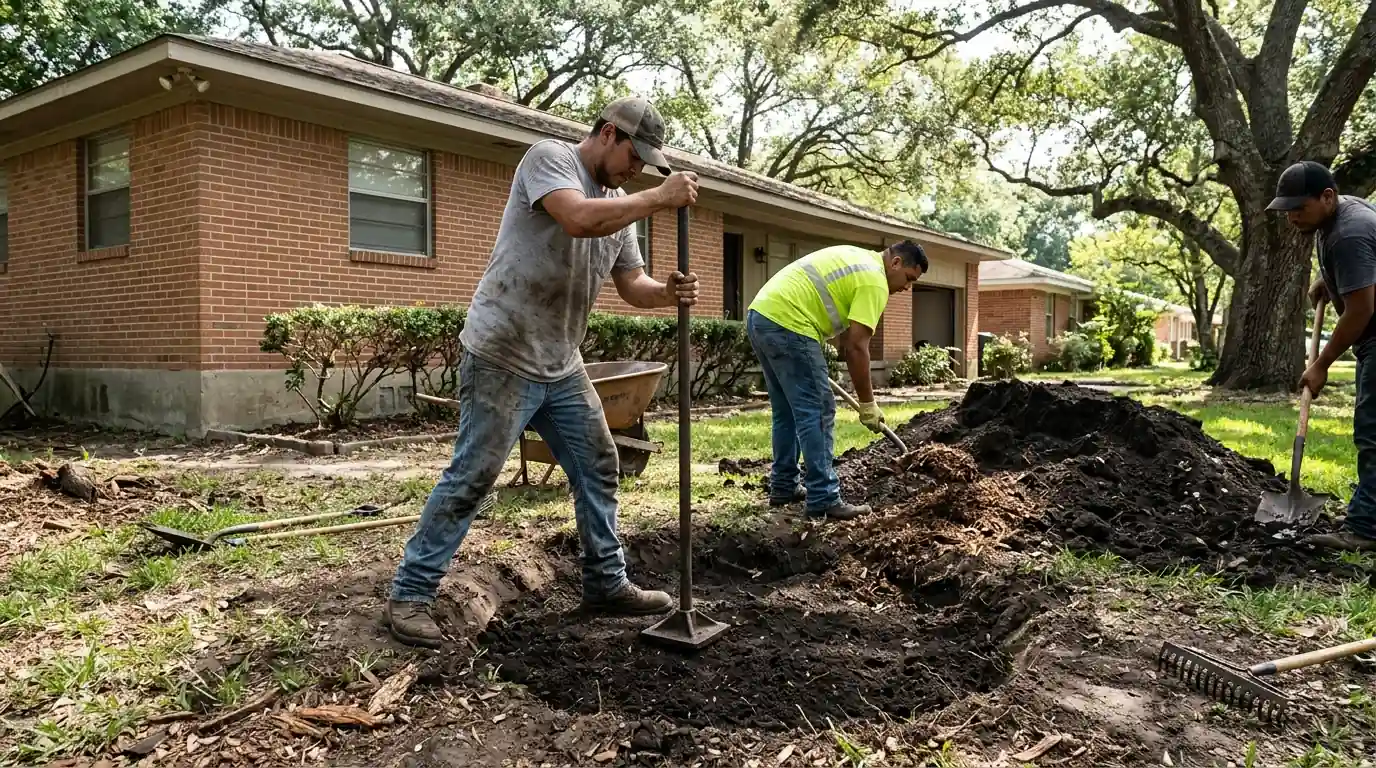
The hole is where stump removal goes right or wrong. Loose fill dumped in a hole settles into a dip, and organic topsoil settles more as it breaks down. We backfill with soil in layers, tamping each one, then finish with topsoil and grade the spot to drain away from the house. Under a future slab, the builder's select fill and compaction spec take over. Wood chunks and root pieces stay out of the hole entirely, since they rot into voids.
Questions about your tree? Talk to a crew lead.
Call (704) 839-2139Local conditions
What Houston's storms, trees and soil mean for stump removal
Large parts of Houston rest on Beaumont Formation clay, a highly expansive soil that swells with rain and shrinks again in dry spells. In neighborhoods on that clay, such as Oak Forest and Garden Oaks, a stump hole backfilled loosely or with the wrong soil keeps moving after the job. Compacted clean fill, with no wood buried in it, is what holds the grade.
Sources: archives.datapages.com
Timing
How long an extraction takes
The size of the root plate sets most of it: a young yard tree comes out quickly, while an old oak plate takes careful trenching and many cuts. Access decides whether a machine reaches the stump or the digging is by hand. Wet clay slows everything and ruts lawns, so dry weather helps. A stump beside a slab usually moves slower than one in open lawn.
Step by step
How a stump gets pulled
Locate lines
Utility, sewer and irrigation lines are marked before any digging.
Dig around
A trench opens around the root plate to expose the laterals.
Cut and lift
Big roots are cut, then the stump is levered out.
Haul off
Stump, roots and wet clay leave the yard by the load.
Backfill
Soil goes in by layers, each tamped, then topsoil and grade.
Only where the ground must carry weight or a new tree goes in the same hole. Under lawn and beds, grinding costs less and disturbs far less.
Some, yes. The machine path and dig zone get torn up, and the backfilled spot needs sod or seed. Plywood over the path limits ruts on soft clay.
Yes, carefully. The roots nearest the shell and plumbing are cut by hand first, and the stump is lifted away from the pool, not levered toward it.
Clean soil without roots or wood, compacted in layers and topped with topsoil for grass. Under a planned slab, use the fill your builder or engineer specifies.
Yes. Pulled stumps come out heavy with clay and leave by the load, though the wood can stay if you want it for a landscape feature.
Usually, yes. A stump that looks rotted on top often has solid root wood and soft pockets below, and both cause settling under new concrete or footings.
Related work