Stumps & Roots on the north side
Root pruning and barriers for north Houston homes
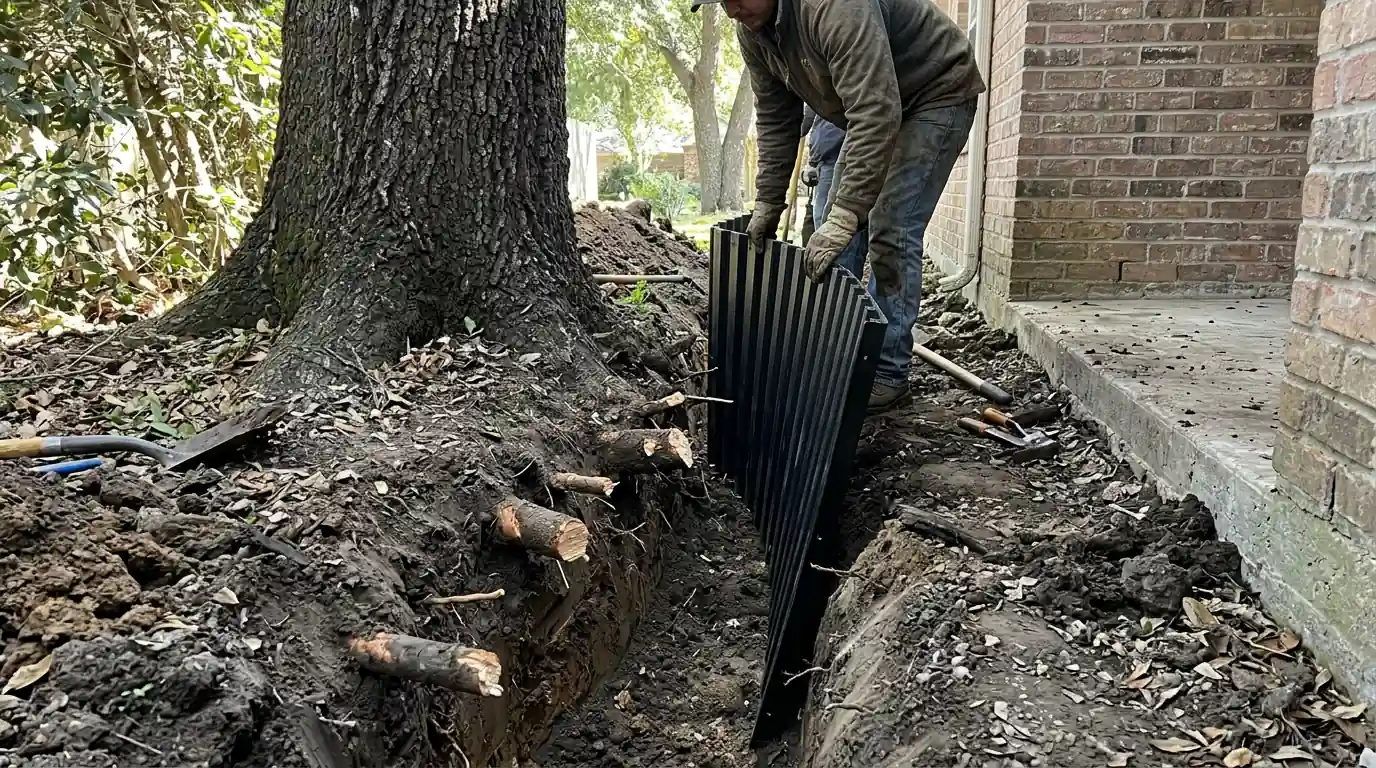
A trench between tree and slab, roots cut clean at the line, and panels that turn new roots away from paving.
Phone answered 24/7 · office in Spring, TX
- Roots cut clean
- Panels set on edge
Updated October 2026
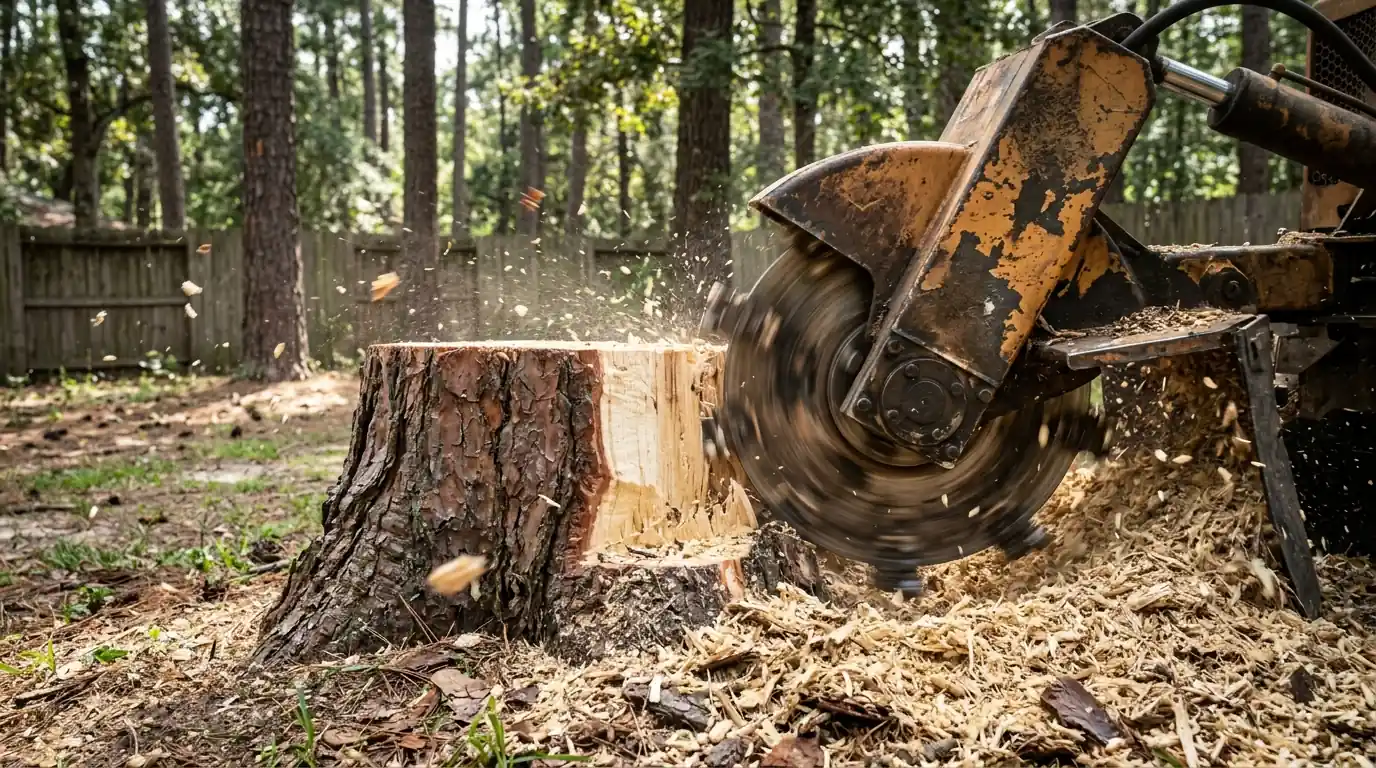 Stumps & Roots
Short answer
Root barrier installation in Houston matters on clay that trees can dry deeply: a southeast Houston case study traced the active zone to about 28 feet, against the usual 6 feet or so. Root pruning cuts the roots and a barrier redirects new ones; neither repairs a foundation.
The job
What a barrier can and cannot do
Root pruning means cutting a narrow trench between tree and structure and severing every root that crosses it cleanly, not tearing it. The barrier is a stiff plastic panel set in that trench to steer new roots down and away.
The tradeoff is the tree. Cutting roots on one side costs it water and anchorage there, so the trench sits as far from the trunk as the house allows. If it would have to run too close, a risk check or removal is the better call.
What moves the price
What sets barrier costs
Barrier work is priced by trench length, depth and what the trench must pass: open lawn is simple, while pipes and patios slow every foot.
Trench length
Every foot of trench means more digging, more root cutting and more panel.
Root size
Thick roots take saw work, and each one slows the trench line.
Obstacles
Pipes, irrigation lines and patios force careful hand digging along the run.
Restoration
Backfill, sod and bed repair over the trench line finish the job.
Your options
Barrier, root pruning or removal
| Approach | What it does | Tradeoff |
|---|---|---|
| Root prune and barrier | Cuts roots, blocks regrowth at the line | Most protection, most trenching |
| Root prune only | Cuts the roots at the edge | Cheaper; roots grow back |
| Remove the tree | Ends the root draw entirely | Lost shade; clay can swell back |
Foundation root barrier
Stair-step cracks in brick on the tree side, or doors that stick each summer, are the usual reasons people ask. The barrier goes in a trench between the tree and the slab, roots cut clean along it, panels set on edge with seams overlapped and a lip above grade. It is not a foundation repair, and it only reaches so deep, so roots can still dive beneath it on deep clay. Have a foundation professional look at the slab too.
Sidewalk and driveway roots
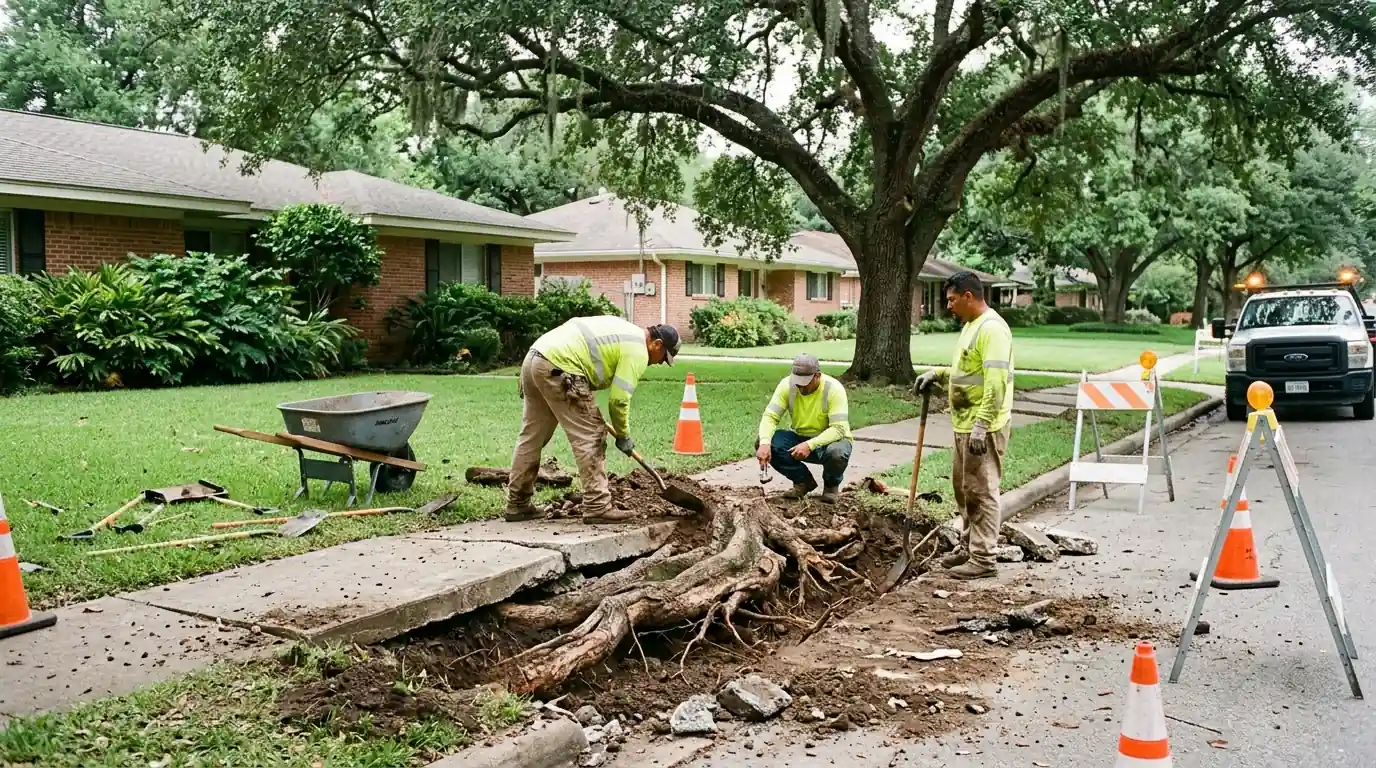
A raised sidewalk panel or a driveway joint lifting near a tree is a root pushing up as it thickens. Before the concrete is repaired, the roots under that edge get exposed and cut back cleanly, and a barrier along the new edge helps keep new roots from doing the same. Cutting a big root near the trunk to save a slab can kill or topple the tree, so the size and distance of each root decide what gets cut.
Roots near pools and pipes
Roots do not usually break sound pipes, but they find leaking joints in old clay or cast iron sewer lines and fill them, and they heave pool decks and coping as they thicken. Where a line or pool runs near a big tree, a barrier set between them keeps new roots from following the moisture. Near pipes, the trench is dug by hand. The barrier goes in after any line repair, so new roots meet plastic instead of a joint.
Surface roots in lawns
Sweetgums, water oaks and live oaks often show roots at the surface here, because dense, wet clay below keeps them shallow. They catch mowers and lift thin turf. Small surface roots can be cut back where they cross a walk or bed edge. Large ones near the trunk are structural and should stay; a thin layer of soil or a mulch ring over them is the gentler fix. Piling deep fill over roots suffocates them. Grinding them is for trees already gone.
Questions about your tree? Talk to a crew lead.
Call (704) 839-2139Warning signs
Signs roots are reaching paving
Stair-step brick cracks
Cracks climbing the mortar on the tree side of the house.
Sticking doors
Frames that bind each summer and free up after rain.
Lifted sidewalk panels
A raised edge or trip lip near a tree.
Driveway joints opening
One slab riding higher than the next near a tree.
Roots along paving
Thick roots running along a walk, bed edge or coping.
Canopy over the roof
A big tree this close draws hard on the clay.
Local conditions
Root Pruning & Root Barriers in north Houston: what local conditions change
The Beaumont Formation clays under much of Houston are highly expansive, swelling when wet and shrinking as they dry. A big tree beside the house pulls water from that clay all summer, so soil under one side of a slab can shrink while the rest stays wetter. A barrier line is meant to keep that pull out from under the slab.
Sources: archives.datapages.com
Step by step
How a root barrier goes in
Locate lines
Utilities, irrigation and plumbing near the run are marked first.
Set the line
The line sits as far from the trunk as possible.
Trench and cut
The trench is dug and crossing roots are cut clean.
Set panels
Panels go in on edge, seams overlapped, a lip above grade.
Backfill
Soil is packed against the panel and the surface restored.
Not alone. It limits what the tree draws from clay on that side, but clay also moves with rain, drought and drainage, so have active movement assessed.
Usually not, if the cut stays well away from the trunk and on one side. Large roots cut near the trunk can kill a tree or destabilize it.
Sometimes. But a big tree taken off expansive clay leaves soil that can swell back as it rewets, so removal near a slab needs a plan too.
No single distance fits, since species, soil and slab design all matter. A large shade tree whose canopy hangs over the roof deserves a closer look.
Mostly not. The trench is narrow, and sod along it gets lifted, set aside and relaid where possible. Beds along the line are put back after backfill.
Yes. Root pruning and a barrier on your side of the line stop them without touching the trunk next door, though telling the neighbor first is wise.
Related work