Land & Property on the north side
Commercial Tree Care for North Houston Properties
HOA greenbelts, apartment courtyards, retail islands: we work around residents and customers, log every tree we touch, and answer storm calls 24/7.
Phone answered 24/7 · office in Spring, TX
- Phone answered 24/7
- Every tree logged
Updated October 2026
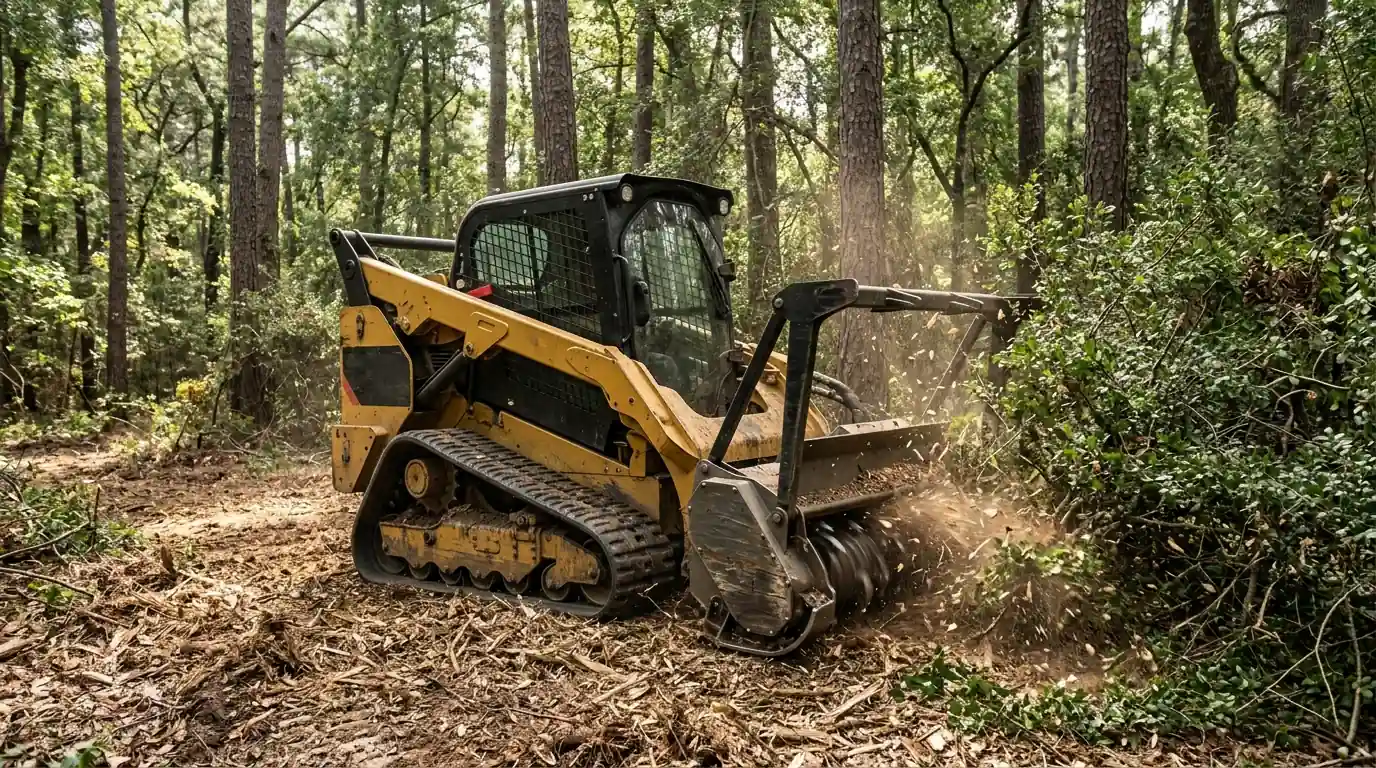 Land & Property
Short answer
Commercial tree service in Houston is storm planning as much as pruning: CenterPoint dealt with about 35,000 trees during its Beryl restoration, and it traced most damage to trees beyond its rights of way. We schedule work around tenants, log every tree, and answer storm calls 24/7.
The job
Planning Trees Across a Site
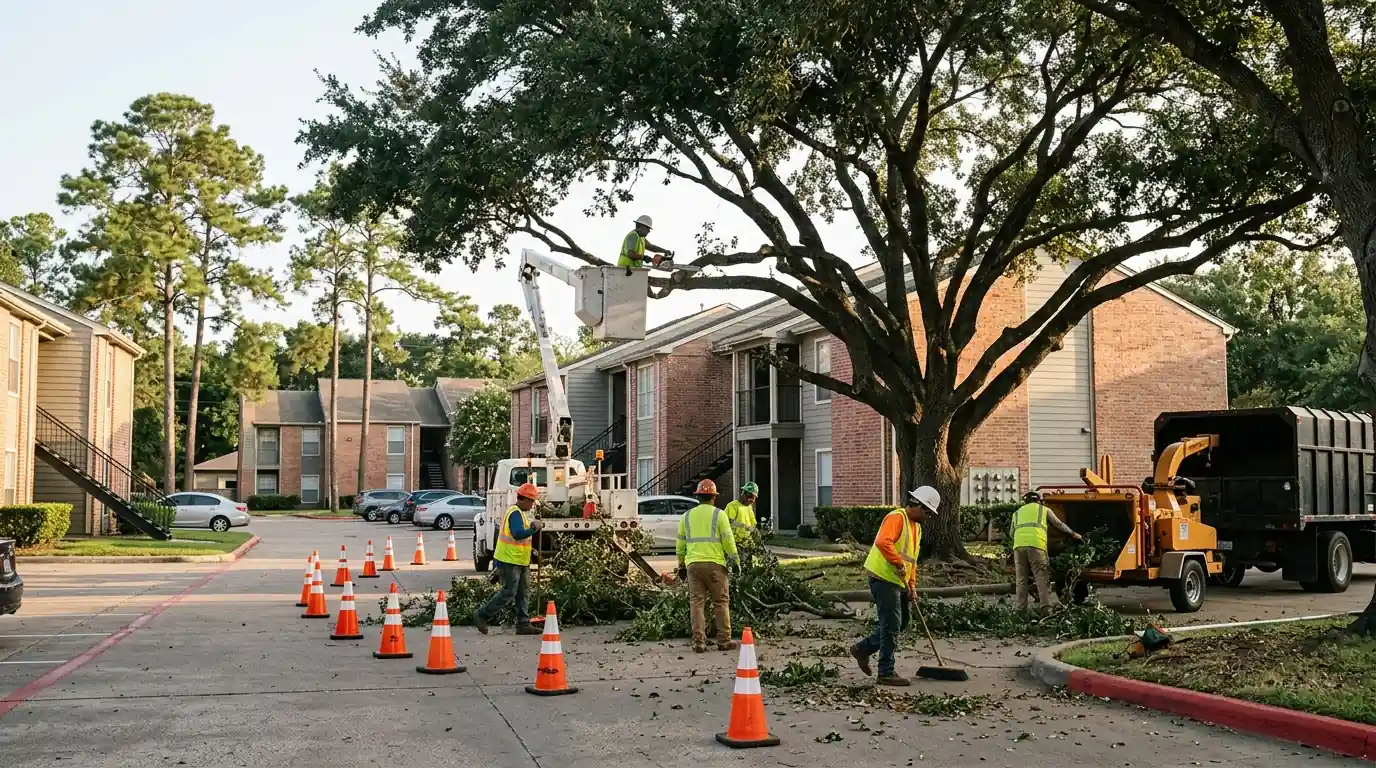
A commercial site holds many trees and many people under them: residents, tenants, shoppers, a board. Access is its own problem: parked cars, fire lanes, store hours. The work has to happen without blocking entrances or leaving debris in the lot, and every cut gets recorded so the next manager knows what was done.
We start with a walk and a tree list: species, size, condition and what each needs. From that comes a schedule you can budget, from routine trimming cycles to risk checks before hurricane season.
What moves the price
Pricing Site Work
Commercial work is priced per visit or per cycle from the tree list. For planning single removals, Angi's 2026 Houston figures put tree removal around $800 on average.
Tree count
The number, size and condition of trees on the list set the base.
Access windows
Early starts, sectioned lot closures or weekend windows all add crew time.
Traffic control
Cones, flaggers and closed rows near entrances add labor on busy sites.
Reporting needs
Tree logs, before-and-after photos and board summaries take real time to prepare.
Cost data: angi.com
Houston tree permit rulesYour options
Service Plans for Sites
| Plan | Fits | Tradeoff |
|---|---|---|
| Scheduled cycle | HOAs and owners with yearly budgets | Predictable cost; work spread over time |
| One-time cleanup | New management, neglected sites, sale prep | Big catch-up visit; no ongoing plan |
| Storm call-out | Sites needing help after wind events | Paid per event; no prevention |
HOA Common Areas
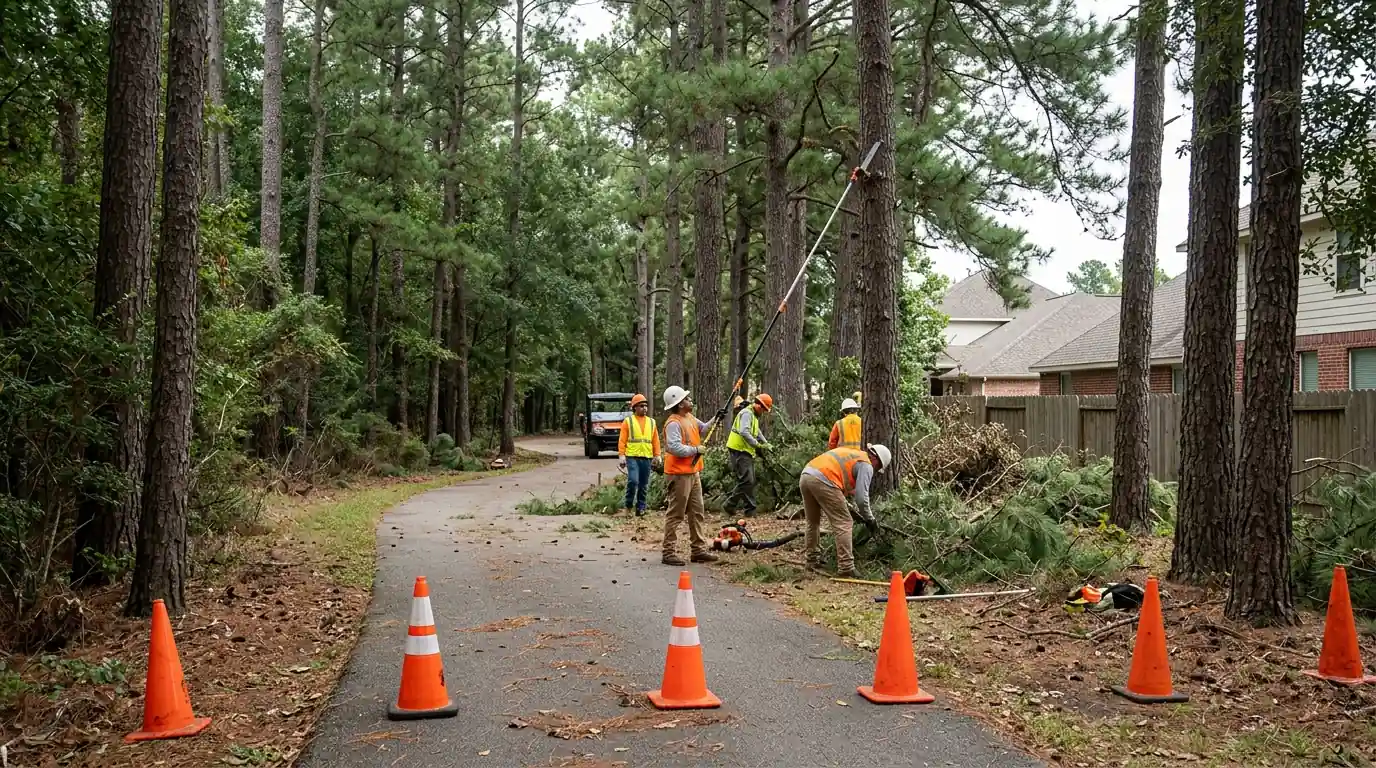
Common areas hold the trees no single resident owns: entrance oaks, greenbelt pines, trees around pools, trails and detention ponds. Boards usually want the work approved at a meeting and residents told before trucks arrive. We give the board a tree-by-tree scope with photos, so the vote is on specifics. Then we work the entrance and pool areas on quiet days, keep trails closed only while cutting, and send a short written report after each visit. Splitting work across budget years is fine, but risk trees go first.
Apartments and Retail Sites
At apartments and shopping centers, the problems are visibility and traffic: limbs hiding signs and lights, roots heaving walks, branches over drive aisles that box trucks clip. We work in sections, coning off a few parking rows at a time, and start early or late around store hours where the owner allows it. Low limbs over walks and drive lanes get raised for clearance. Debris leaves the same visit, because a pile in a parking lot is a liability by morning.
Parking Islands and Right of Way
Trees in parking islands live in a few square feet of hot, compacted soil boxed by curbs, so they decline early and drop limbs onto cars. We raise canopies for vehicle clearance, prune deadwood, and flag islands where a tree is failing and a replacement suited to the island makes more sense. Street-side trees can sit in a public right of way, where the city or county controls the work, so we confirm ownership before cutting, and permit help covers the application.
Storm Work for Managers
After a storm, a manager needs three things fast: blocked entrances and fire lanes opened, trees off buildings and cars, and a record for the owner. Our phone is answered 24/7 for emergency removals, and storm visits run in that order: life safety, access, structures, then cleanup. Trees tangled in power lines wait until the utility makes them safe. We photograph each tree before and after and log what was done where, which saves arguments later. A pre-storm priority list makes those calls faster.
Questions about your tree? Talk to a crew lead.
Call (704) 839-2139In the scope
What Site Work Includes
- A tree list with species, size, condition and priority.
- Before and after photos for every tree worked.
- Notice wording for residents or tenants ahead of work.
- Cones and sectioned closures around entrances and drive lanes.
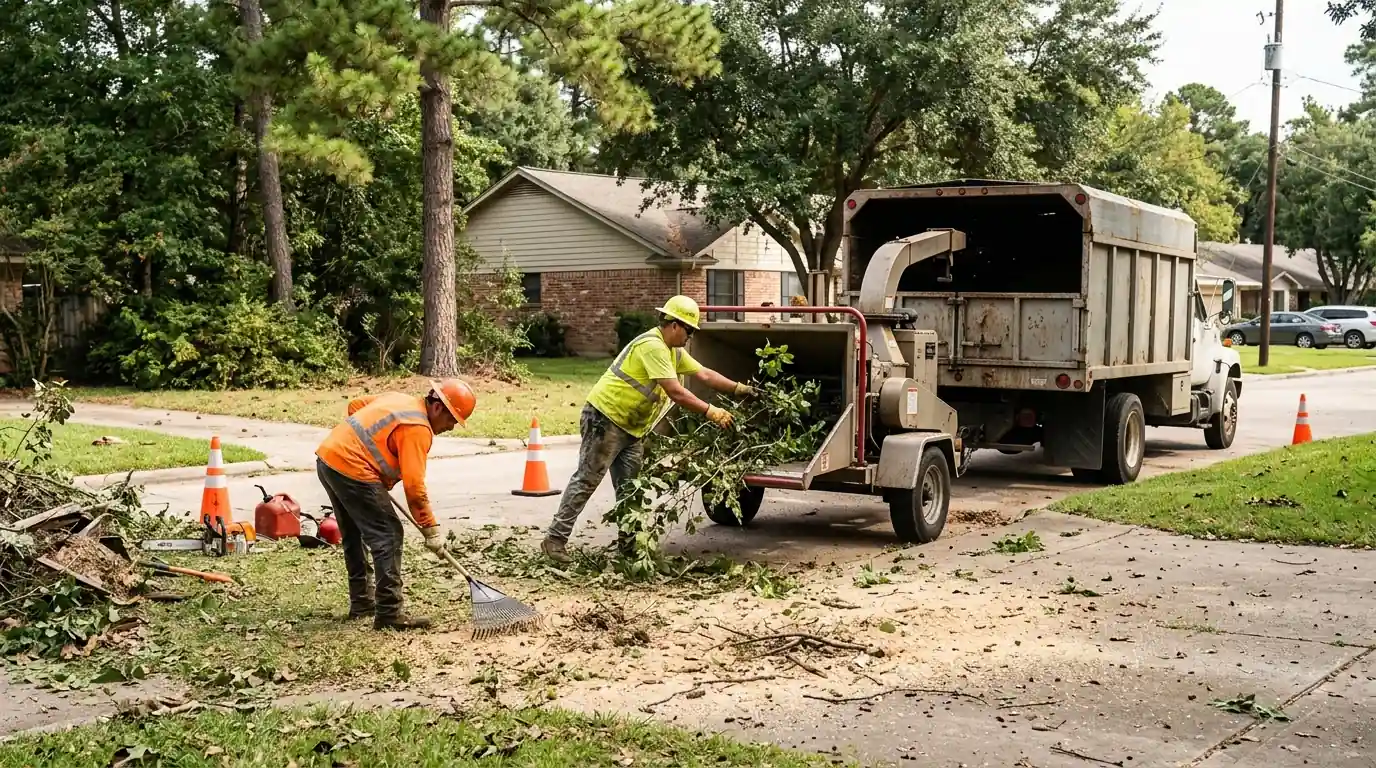
- Debris chipped and hauled before areas reopen.
- A written visit log sent to the manager.
Local conditions
Why commercial tree service looks different on Houston's north side
The Woodlands Township permits tree removal the same way it permits other exterior projects, to hold work to its covenants and standards. For a commercial or HOA property there, removals on the work plan wait on a township permit, and the schedule works backward from approval. We build that step into the plan instead of discovering it on the job.
Sources: thewoodlandstownship-tx.gov
Step by step
How Site Work Runs
Walk and inventory
We list each tree with species, size, condition and needed work.
Scope and schedule
You get a phased scope, priced by visit, with dates around tenants.
Notify and stage
Residents or tenants get notice; cones and closures go up.
Work in sections
Crews clear one area at a time and reopen it clean.
Report back
Photos and a written log go to the manager after each visit.
Often, yes. Early starts before stores open and weekend work are common requests. Night work near homes is limited by noise, so we plan around quiet hours.
We check it, log its condition with photos, and give you a written recommendation you can pass along to the board. Resident reports often catch real defects early.
Yes. A cycle works well: risk checks before hurricane season, structural pruning in winter, and clearance work as needed. It also spreads the cost across budget years.
The utility clears trees from energized lines; nobody else should touch them. We handle everything off the line and coordinate timing so your site reopens once power crews are done.
Brush is chipped as we go and loaded the same visit, with the lot blown clean before rows reopen. Nothing is left piled in the lot overnight.
Yes. Managers with several sites can get one schedule and one reporting format, with each property's tree list kept separate so every board sees only its own trees.
Related work