Tree Removal on the north side
Removing dead trees safely around north Houston homes
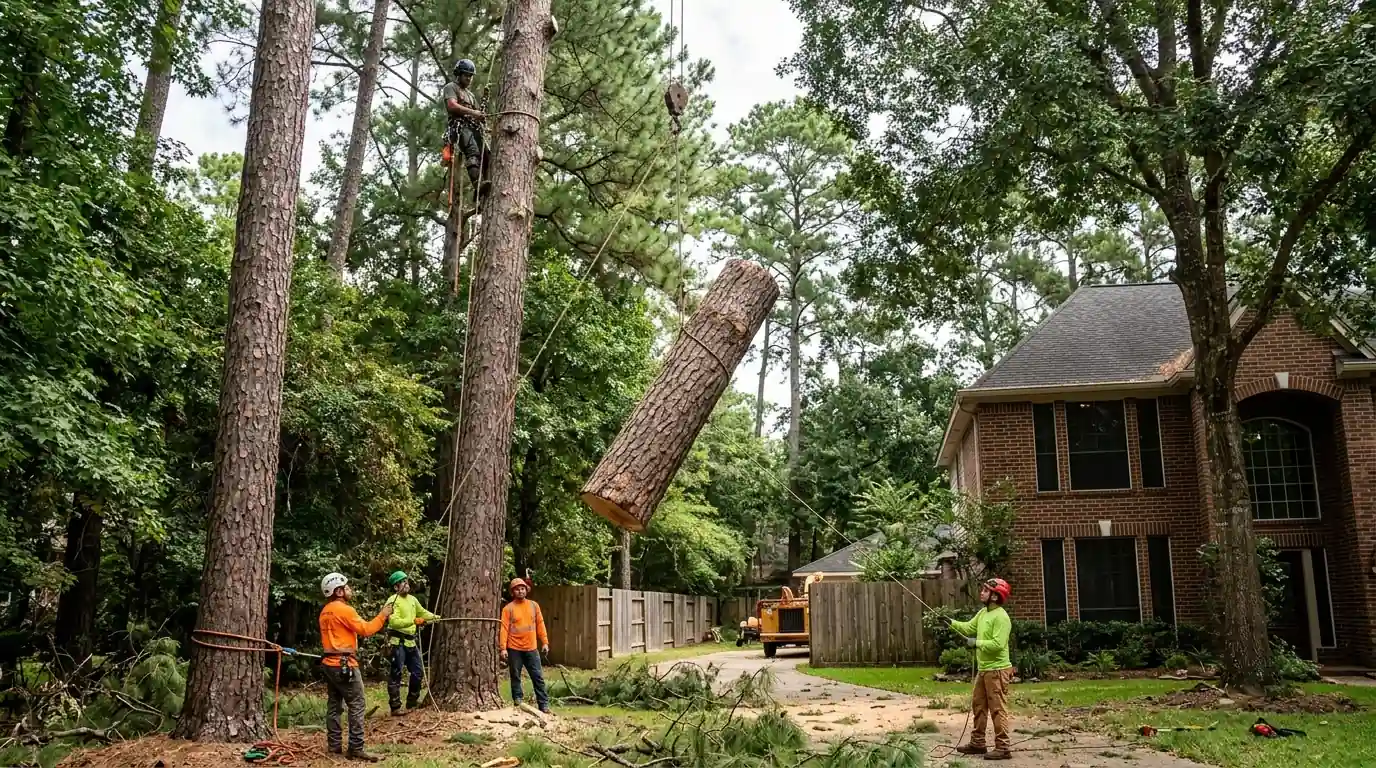
Dead wood does not bend before it breaks, and that fact shapes how we climb, rig and lower a dead tree.
Phone answered 24/7 · office in Spring, TX
- Brittle-wood rigging plan
- Short lowered pieces
Updated October 2026
 Tree Removal
Short answer
For dead tree removal in Houston, Angi's 2026 size bands are a starting point, $450 to $1,200 for a 30 to 60 foot tree, but dry wood changes the method. The longer it stands, the less of it can be climbed, and some need a crane.
The job
Dead wood changes the plan
Live wood bends and holds a hinge; dead wood cracks and lets go. A dead pine sheds bark and limbs in chunks, and a dead oak can drop a heavy limb on a calm day. Decay and insects weaken it every season.
The crew lead checks the wood before anyone climbs, sounding the trunk with a mallet and looking for fungus at the root flare. Sound enough, it comes apart in small pieces on a lowering line; too far gone, it is felled into open ground or picked by crane.
What moves the price
Brittle wood and the bill
Angi's Houston figures run $800 to $1,500 for a 60 to 80 foot removal. Brittle wood can push a job toward a crane, which adds its own charge.
Time dead
Recent kills can often be climbed; long-dead ones need smaller pieces or cranes.
Nearby structures
Houses, fences and lines under brittle limbs mean smaller pieces lowered on rope.
Crane need
Trees too decayed to climb may need a crane pick from the street.
Wood disposal
Beetle or canker wood is chipped or hauled, not stacked near live trees.
Cost data: angi.com
Signs of pine beetlesBeetle-killed pines
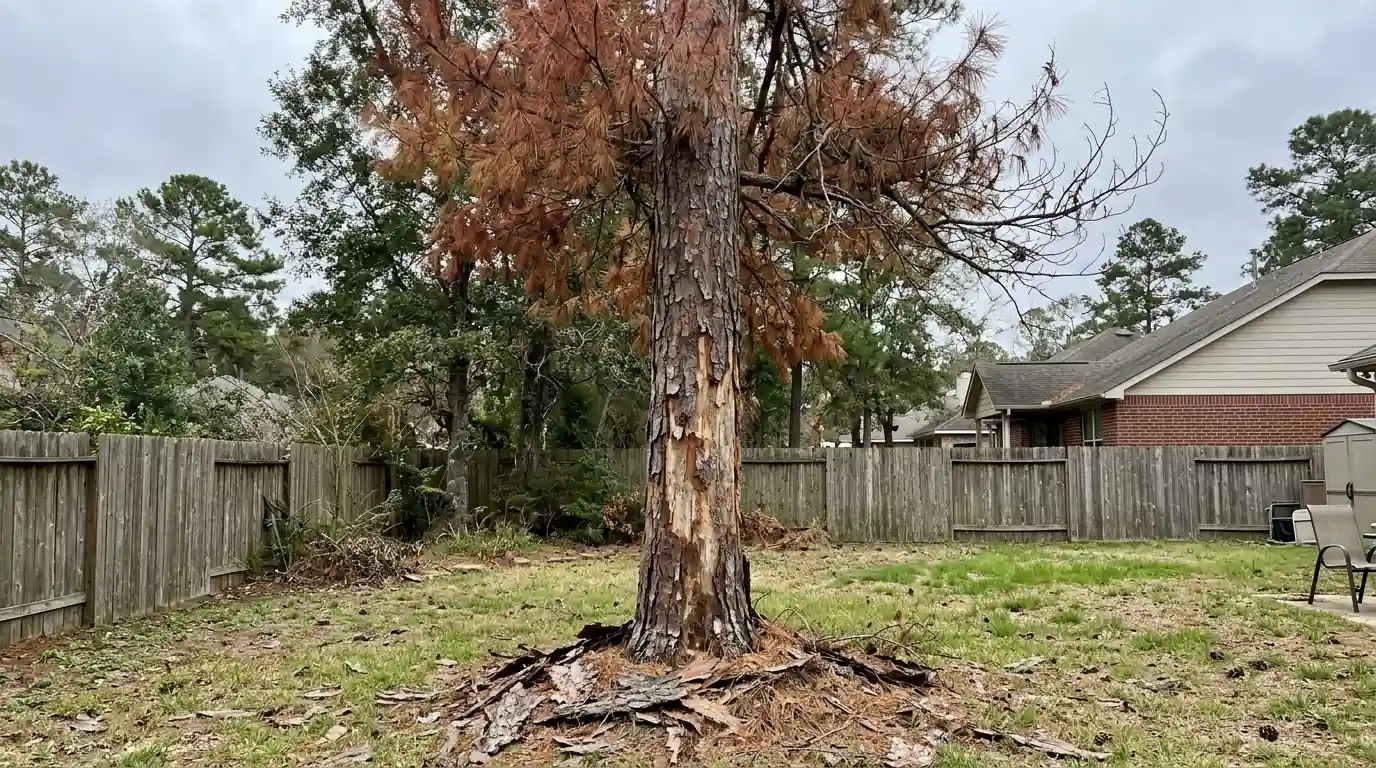
Once the crown goes rusty red, a beetle-killed pine starts coming apart: bark sheets off, limbs drop, and blue-stained sapwood dries and checks. Climbing is still possible early, but the window closes as the wood loses strength. We tie in only while the stem is sound, take the top out first, and lower short pieces. Later, if there is a clear lane, felling is safer than climbing. Have the pines nearby checked too; a beetle inspection shows whether the attack spread.
Drought-killed oaks
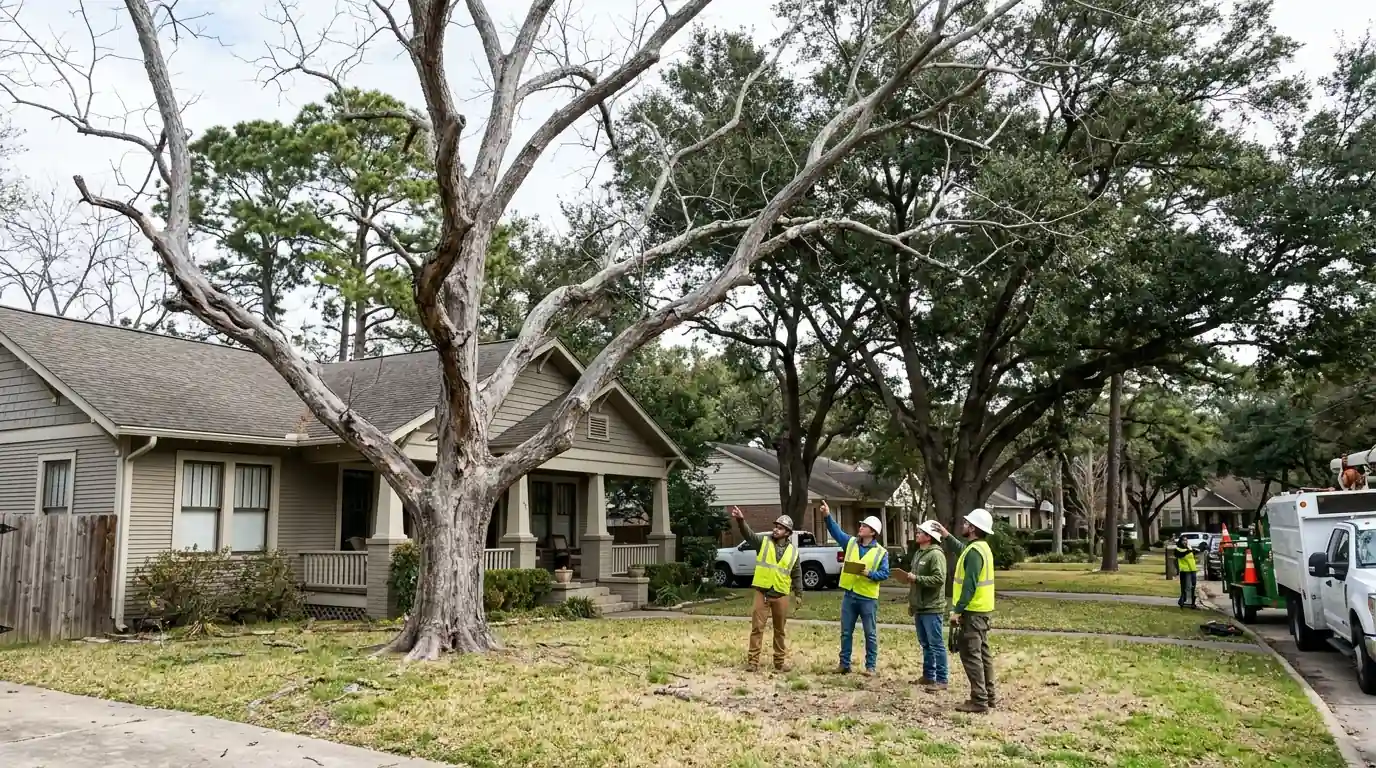
An oak killed by drought or a hard freeze may hold brown leaves for months or fail to leaf out in spring. The heavy laterals are the danger: dead oak limbs can drop without wind, and they shatter on impact. We sound the trunk and main unions before choosing anchors, keep the drop zone wide, and lower anything over the house in short pieces. For planning, Angi's Houston range for an oak removal runs $200 to $2,000, and brittle limbs mean more rigging, not less.
Standing dead snags
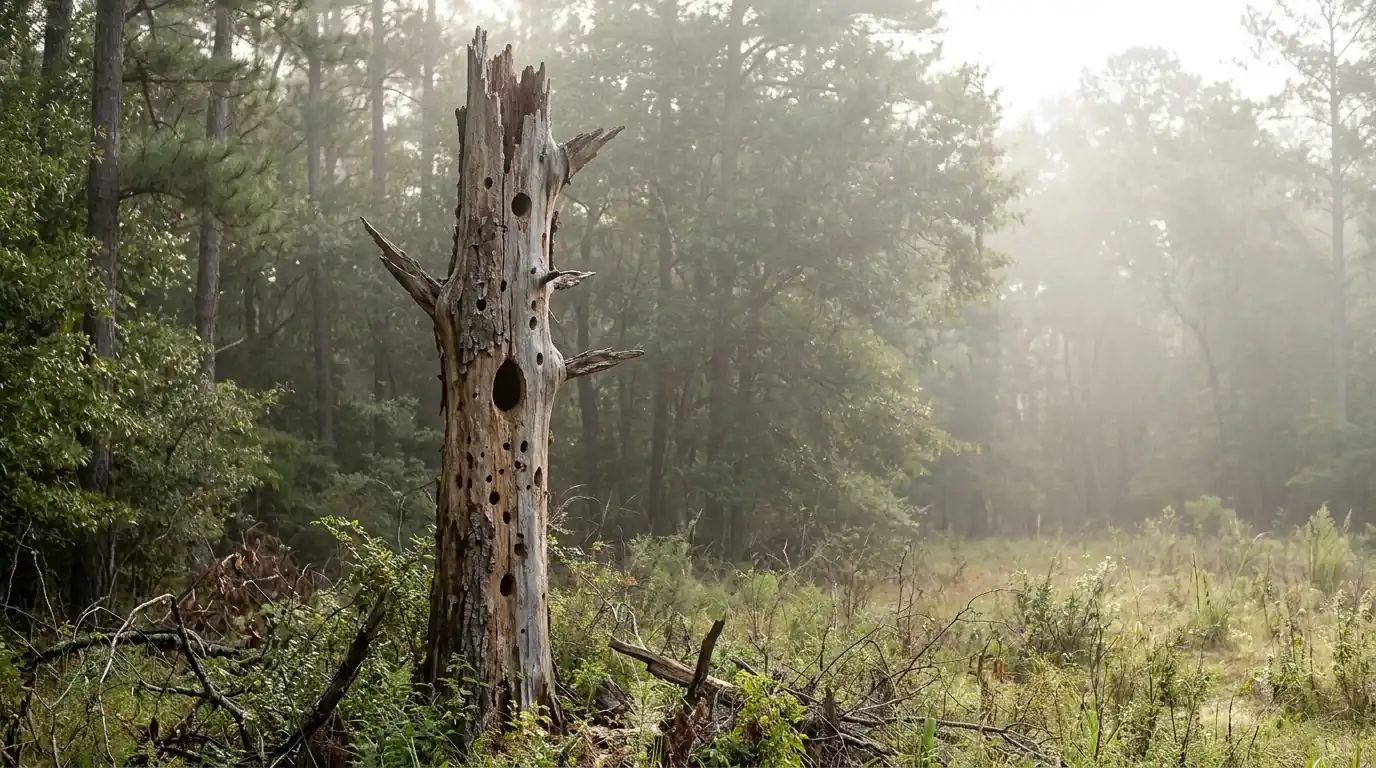
A snag is a dead trunk with most of its limbs gone, often riddled with woodpecker holes and fungus. Far from the house, fence and paths, a snag can be left for wildlife; it is only a hazard if it can reach something. Near targets, it comes down, and sooner is cheaper. Dead hinge wood is weak, so we fell with a pull line set high and a thicker hinge, or take it down in short sections when there is no lane.
Hardwoods lost to canker
Hypoxylon canker shows when patches of bark fall off an oak and leave crusty tan, gray or silver mats beneath. By then the sapwood is decaying fast, and limbs can fail suddenly. The fungus mostly takes over trees already stressed, so a tree showing it is usually a removal, not a treatment case. We take it down in short pieces, since decayed wood holds rigging poorly, and look at the oaks around it; early stress there may respond to tree disease care.
Questions about your tree? Talk to a crew lead.
Call (704) 839-2139Warning signs
Signs it has died
No leaf-out
Branches stay bare while the trees nearby leaf out.
Red needles
The whole pine crown fades from green to red-brown.
Falling bark
Sheets of bark drop, showing dry or stained wood.
Trunk conks
Shelf fungi or crusty mats signal decay in the wood.
Snapping twigs
Small branches break dry and brittle instead of bending.
Woodpecker holes
Rows of new holes often follow insects into dying wood.
In the scope
Scope of a dead-tree job
- Wood soundness check before anyone ties in
- A wider drop zone kept clear of people
- Short pieces lowered on a line over structures
- Infested or decayed wood chipped and hauled
- Trunk cut low, stump ready for grinding
- Nearby pines and oaks checked for trouble
Local conditions
Why dead tree removal looks different on Houston's north side
Texas A&M Forest Service warned in 2024 that three years in a row of hard freezes and drought had left East Texas trees exposed to Ips beetles and hypoxylon canker, a warning that covers Montgomery County and Harris County. The Woodlands lost about 7,000 trees to Beryl, beetle infestations and other weather. Trees weakened by stretches like that are the ones most likely to die standing.
Sources: mail.scttx.com, preview-prod.w.houstonchronicle.com
Step by step
Sound first, then cut
Sound wood
Mallet taps and a look at the base show the decay.
Pick method
Climb, fell or crane, based on what the wood can hold.
Widen zone
Dead limbs shatter and bounce, so the clear zone grows.
Bring down
Short pieces are lowered, or a pull line steers the fell.
Haul wood
Infested or decayed wood is chipped and hauled away from live trees.
No one can give a safe number: some snags stand for years, others drop limbs within months. Each season of decay makes the removal itself riskier.
Not usually. It carries no leaves, but brittle wood means smaller pieces, more rigging and sometimes a crane, and that cost grows the longer it stands.
Scratch a twig with a thumbnail: green under the bark means live tissue. Dry, brittle twigs from several parts of the crown point to a dead tree.
A fresh kill can, while beetles still breed in it. Once the bark loosens, it draws fewer, but by then they have often moved to nearby pines.
Then it is lowered from the live tree with a rope, or picked by crane. The climber anchors there only after checking it can take the load.
If you want the spot back, yes. A stump left to rot takes years and can host fungus or termites meanwhile; grinding also removes the trip hazard.
Related work