Trimming & Pruning on the north side
Palm trimming for north Houston yards and pool decks
Dead fronds off, seed stalks cut before they fruit, loose boots cleaned off, and the green crown left full to feed the palm.
Phone answered 24/7 · office in Spring, TX
- No climbing spikes
- Green crown kept
Updated October 2026
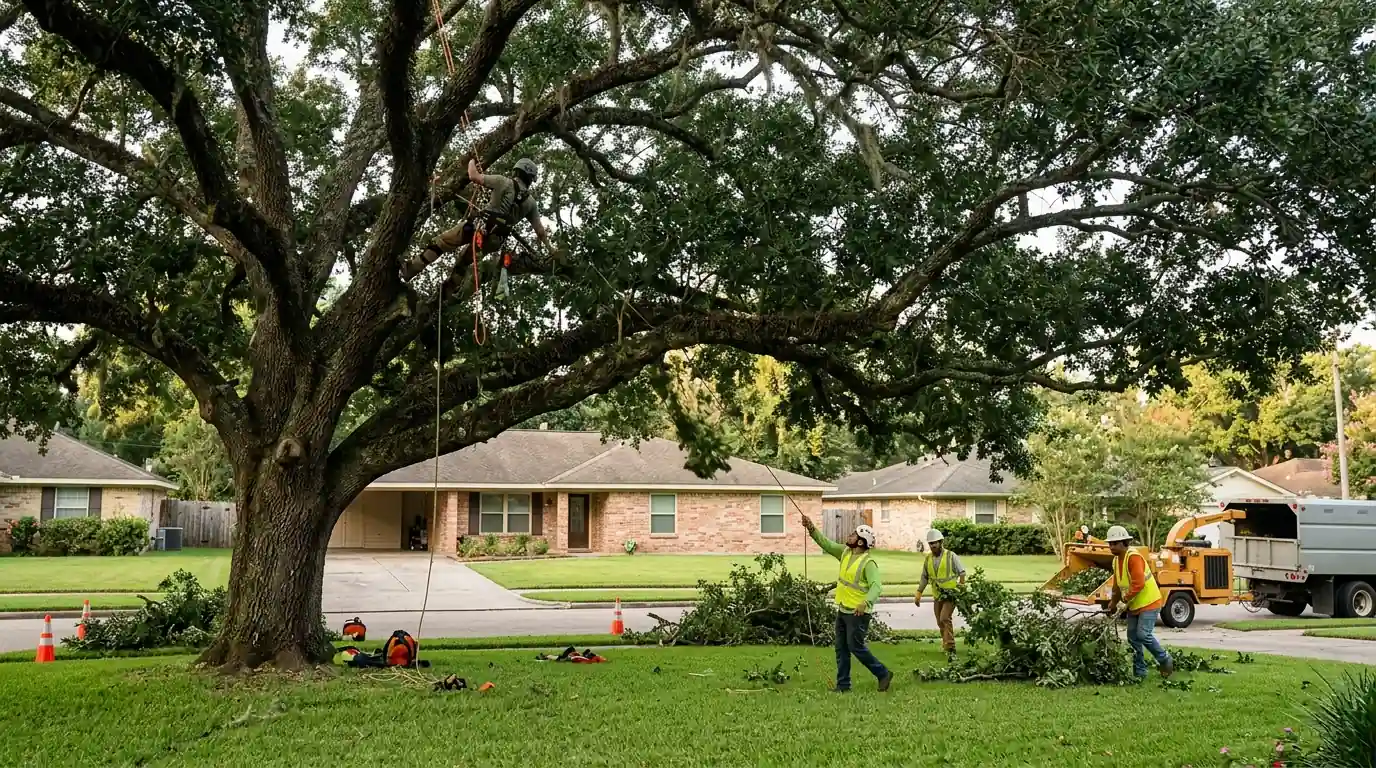 Trimming & Pruning
Short answer
Palm tree trimming in Houston should stop at fronds hanging below the 9 o'clock to 3 o'clock line, because green fronds above it feed the palm and shield its bud. Dead fronds, seed stalks and loose boots come off; healthy green fronds stay on the palm.
The job
Palm pruning is not branch pruning
A palm grows from a single bud at the top of the trunk, and it has no way to replace a damaged one. Every frond, green or yellowing, feeds that bud; older fronds even pass nutrients back to the palm as they die.
So palm work is about what to leave. We cut dead and hanging fronds close to the trunk without nicking it, take off flower and fruit stalks, and peel only boots that come away clean. When a palm is beyond saving, palm removal is the next conversation.
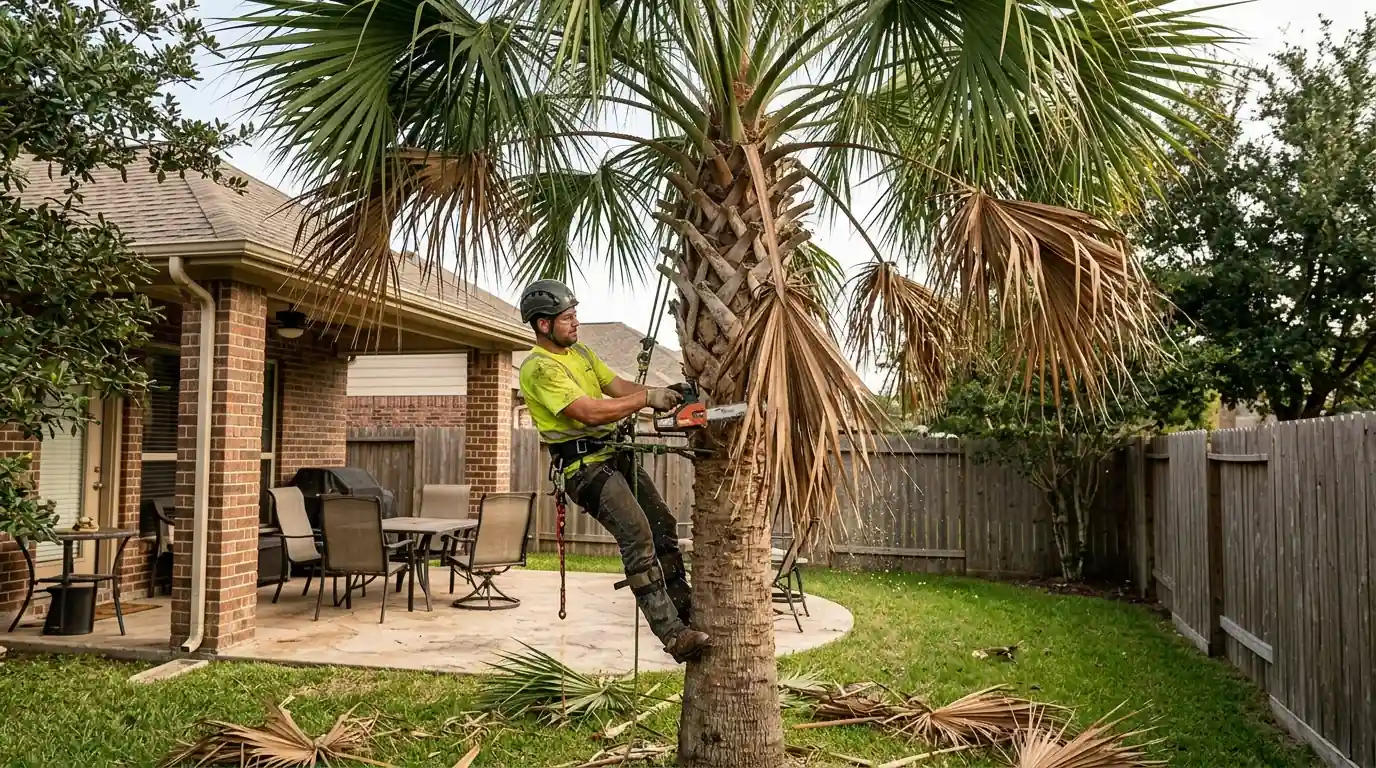
In the scope
What a palm trim covers
- Dead and hanging fronds cut close without scoring the trunk.
- Green fronds above the horizontal left on the palm.
- Flower and fruit stalks cut at the base.
- Loose, dry boots peeled; attached boots left alone.
- Saws cleaned between palms so wilt diseases do not travel.
- Fronds, fruit and fibers raked up and hauled away.
Dead frond removal
Brown fronds hanging below the crown are the usual starting point. They add weight, hold debris and give rats a ladder, and in wind they tear loose and fly at windows. The climber cuts each one close to the trunk without scoring it, since a palm never heals a trunk wound. Fronds that are only yellowing, or still green above the horizontal line, stay on. Short palms are trimmed from a ladder; tall ones are climbed with a rope and lanyard.
Seed pod removal
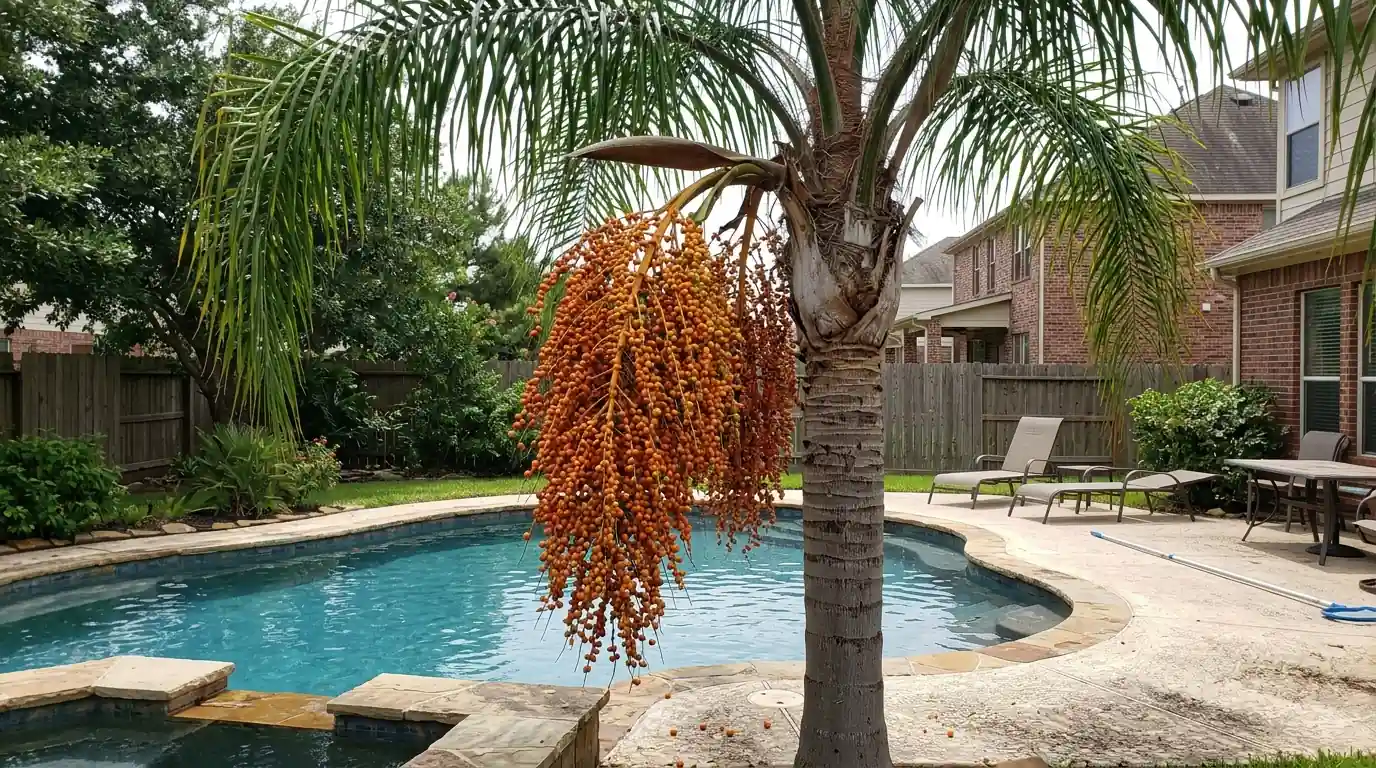
Queen palms, fan palms and date palms push out flower stalks in spring and summer that turn into heavy clusters of fruit. The fruit stains concrete, draws insects and seeds new palms in beds and cracks. Cutting the stalks while they are still flowering, or soon after, stops most of that mess, and it costs the palm little. Once fruit has formed, the clusters come down slowly, since a full stalk is heavy and drops fruit across the pool deck.
Trunk cleanup
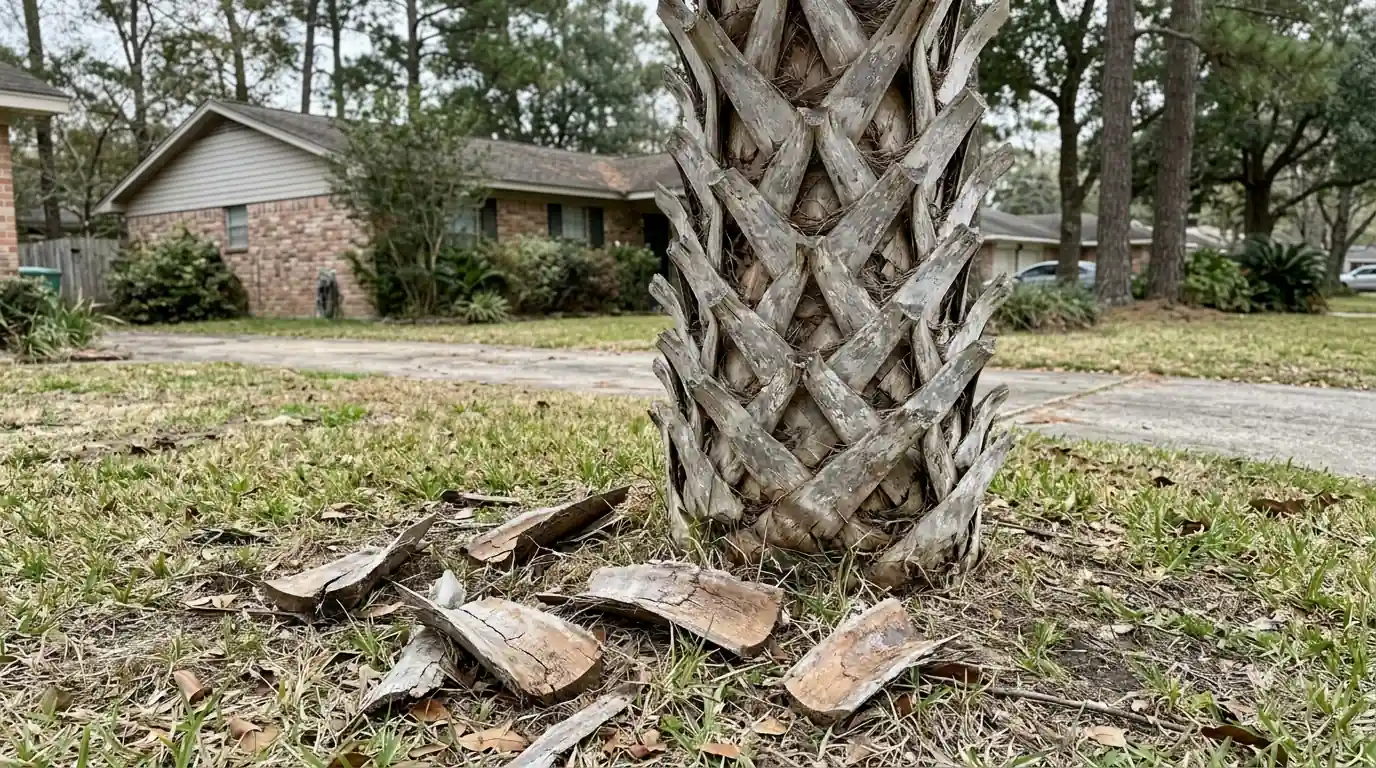
Fan palms and sabals hold old leaf bases, called boots, on the trunk long after the fronds are gone. Some owners like the crosshatched look; others want a clean, smooth trunk. Loose, dry boots come away by hand or with a light cut. Boots still firmly attached are left, because cutting into living trunk tissue leaves a permanent scar and an entry for rot. On tall fan palms, a dense skirt of dead fronds is removed in sections from above.
Skipping the hurricane cut
The hurricane cut strips a palm to a few upright fronds, called a rooster tail, on the idea that less canopy means less damage. It does not make a palm safer. It removes the fronds that feed the bud and store nutrients, leaves it weaker and yellowing, and repeated over years can narrow the trunk into a pencil-thin section. Before a storm, hurricane prep on a palm means dead fronds, loose boots and fruit stalks off, and the green crown left alone.
Questions about your tree? Talk to a crew lead.
Call (704) 839-2139Local conditions
Palm Tree Trimming in north Houston: what local conditions change
Houston's long growing season keeps palms pushing fronds and flower stalks from spring into fall, so a trimmed palm can look shaggy again within the year. Gulf humidity breeds rot where wet dead fronds pile up. Hurricane season, June to November, is when loose fronds and fruit stalks turn into flying debris. After a hard freeze, browned fronds stay on until spring.
Do it yourself?
Palm care you can do yourself
Fine to handle yourself
- Pull low dead fronds that come away easily by hand.
- Rake fallen fruit before it rots or sprouts in beds.
- Feed palms with a palm fertilizer that includes potassium.
Leave to a crew
- Anything above ladder height; palms offer a climber no limbs.
- Dead frond skirts, which can collapse onto whoever is below.
- Fruit stalks over pools and decks, which are heavy and messy.
Step by step
How a palm trim goes
Look up
We note dead fronds, stalks, boots and anything nesting in the skirt.
Access
Short palms get a ladder; tall ones a rope climb, never spikes.
Cut fronds
Dead and hanging fronds come off close to the trunk, unscored.
Stalks and boots
Flower and fruit stalks are cut, and loose boots peeled.
Clean up
Fronds and fruit are raked from beds, decks and pool.
What moves the price
What a palm trim depends on
A short sabal by the patio and a tall fan palm over the roof are different climbs, so palm trims are priced per palm after a look.
Height
Ladder work on a short palm beats a rope climb on a tall one.
Buildup
Years of hanging dead fronds and boots take longer than a yearly trim.
Fruit stalks
Full fruit clusters come down slowly so they do not shower the deck.
Haul-off
Palm fronds are bulky and fibrous, so most leave as hauled loads.
Usually once a year, in late spring or summer after new fronds and flower stalks appear. A heavily fruiting palm over a pool may need a second visit.
Not right away. Brown fronds still shield the bud from the next cold snap, so leave them until warm weather settles in, then cut only what stayed dead.
Yellowing oldest fronds, often with orange spotting, usually mean potassium deficiency. Leave them on, since the palm is drawing potassium from them, and feed the palm.
No. A palm grows from its single bud at its own pace, and cutting green fronds slows it by taking its food. Trimming is about safety, mess and looks.
Often wasps, rats, roaches or birds, and sometimes snakes after them. The crew checks the skirt before cutting, and a wasp nest gets dealt with before anyone climbs.
They are raked up and hauled. Palm fronds are too fibrous and spiny to chip well, so they leave as bulk loads, along with fruit and stalk debris.
Related work