Trimming & Pruning on the north side
Tree trimming around north Houston power and cable lines
We trim around service drops, cable and fiber lines and street-side limbs, after CenterPoint has made its energized lines safe.
Phone answered 24/7 · office in Spring, TX
- Utility clears first
- Limbs roped off wires
Updated October 2026
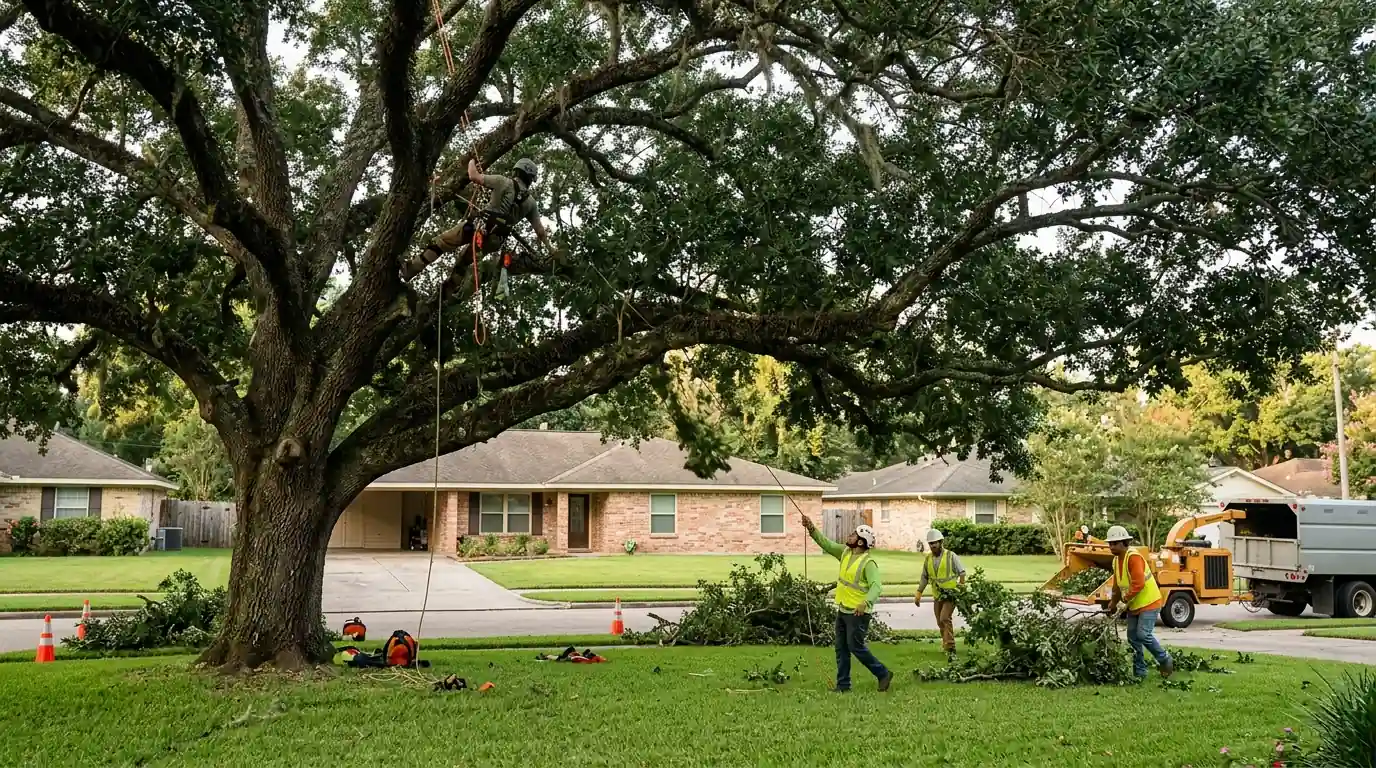 Trimming & Pruning
Short answer
Tree trimming near power lines in Houston is split work: CenterPoint, which cut back or took out about 35,000 trees restoring power after Beryl, handles its energized lines. We trim the rest, working near the service drop only after it is made safe. Never touch a line.
The job
Who trims what near the wires
Many north Houston streets carry three kinds of overhead line. Primary lines at the top of the pole carry high voltage and belong to CenterPoint. The service drop runs from the pole to your house. Lower on the pole hang cable, phone and fiber lines owned by those providers.
Limbs come off in small pieces, roped away from the wires, and work near the drop waits for CenterPoint. If a limb is already lying on a line, read what to do when a tree hits a line first.
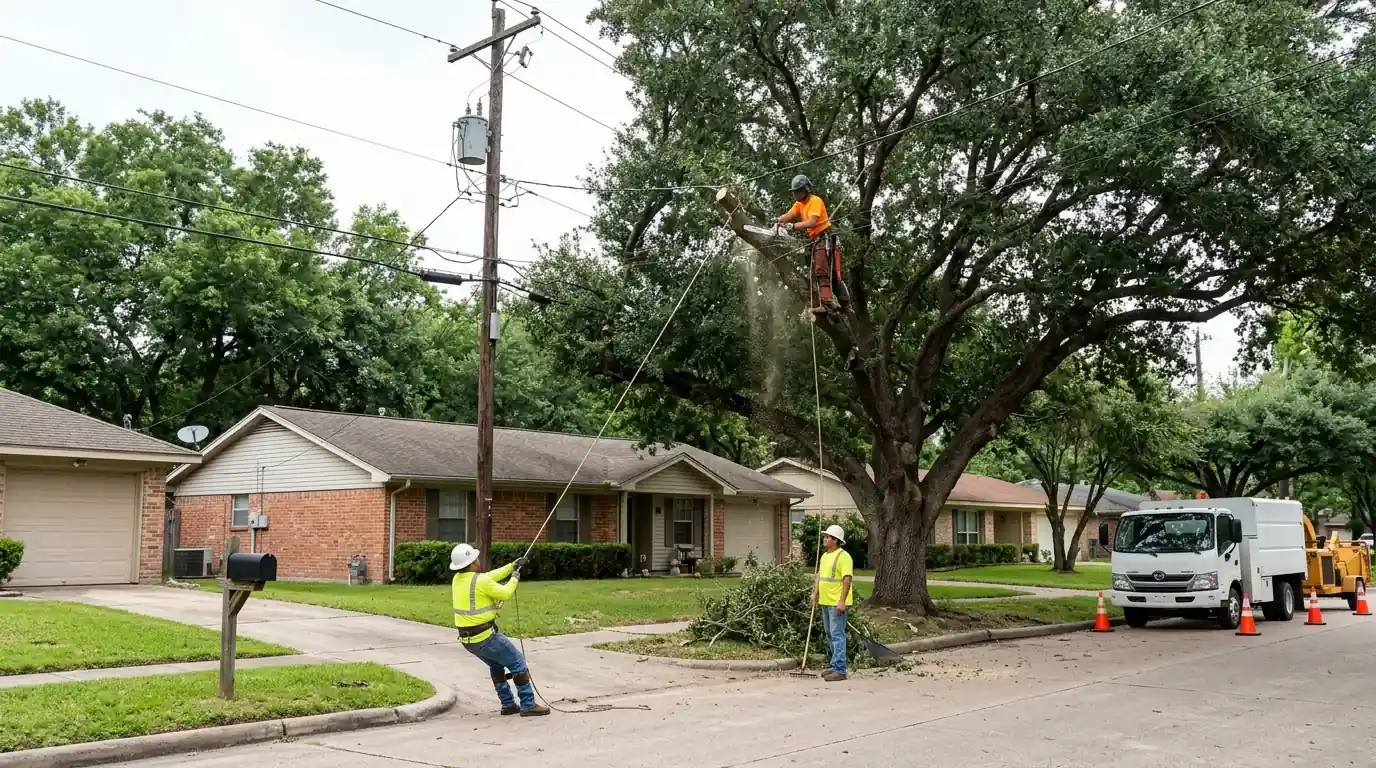
Service drop clearance
You notice the line bouncing when the tree sways. Limbs rubbing the drop can wear its insulation or, in wind, pull the service mast loose. That line is energized, so the account holder first asks CenterPoint to make it safe; a temporary disconnect is one way the utility handles it. Once CenterPoint is done, our climbers cut the limbs back in small pieces and rope them away from the wire. Until then we trim only parts of the tree well clear of it.
Cable and fiber lines
Cable, phone and fiber lines hang lower on the pole and often cross backyards to the house. A sagging line with a limb on it is usually one of these, but from the ground nobody can be sure, so we treat every wire as energized until it is identified. Once it is confirmed as communication only, we cut the limb off in sections and lower them clear. Damage to the line itself is the provider's to repair, so report it to them.
Working with CenterPoint
If limbs are growing into the high-voltage wires at the top of the pole, that is a report to CenterPoint, not a job for a private crew. The utility keeps clearance along its primary lines and rights of way on its own schedule. What we coordinate is timing: once CenterPoint has cleared or made safe its part, we return for the rest of the tree, shape the cut side and haul off any wood left behind from the line work.
Street-side limbs
Low limbs scraping trash trucks, or sagging toward wires after rain, are the usual complaint. Front-yard trees often send limbs over the street, where lines run along the curb. Limbs growing toward the wires come down first, in small pieces, while the ground crew keeps traffic and walkers clear below. Anything within reach of primary lines stays with CenterPoint. A tree standing in a city right of way needs a city permit before anyone trims it, a step our permit help covers.
Questions about your tree? Talk to a crew lead.
Call (704) 839-2139Local conditions
Tree Trimming Near Power Lines in north Houston: what local conditions change
When Hurricane Beryl hit Houston on July 8, 2024, about 2.26 million CenterPoint customers lost power. CenterPoint later pinned most of the damage on vegetation growing outside the rights of way that its line crews maintain and keep clear. Trimming around a service drop is usually the owner's job, which is why it belongs on the spring list, before storm season.
Sources: tdworld.com, spglobal.com
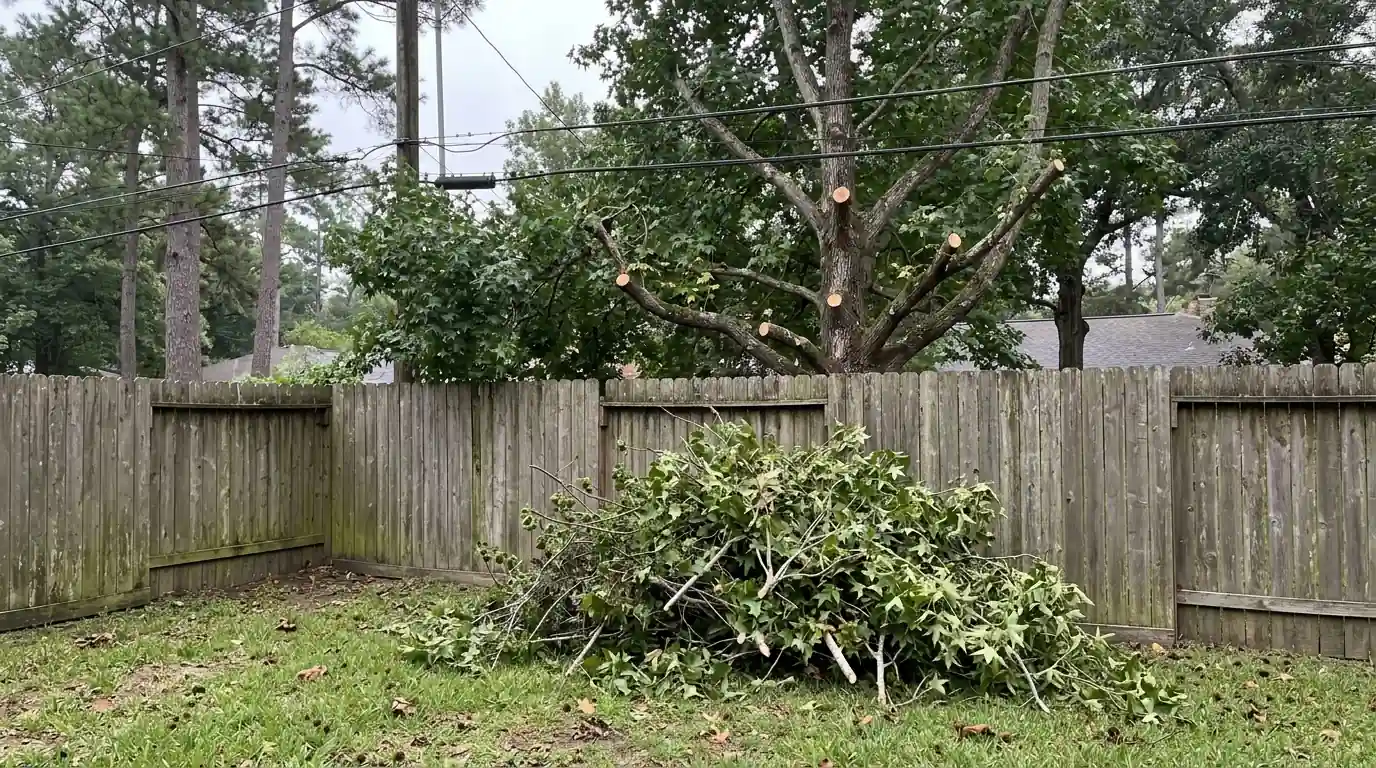
Do it yourself?
Your part, and ours
Fine to handle yourself
- Photograph limbs touching the drop, from a safe distance.
- Report limbs in the pole-top wires to CenterPoint.
- Keep ladders, pole saws and kids away from those lines.
Leave to a crew
- Any cut near an energized line, where a springing limb can arc.
- Limbs under tension against a wire, which whip when cut.
- Large limbs over the street, which need rigging and traffic watch.
Step by step
Order of work near a line
Identify lines
From the ground we sort primary, service and communication lines.
Line up CenterPoint
Where a drop is involved, the utility makes it safe first.
Rig above
The climber ties in above the work and sets lowering lines.
Small cuts
Limbs come off short and are roped away from the wires.
Clear the street
Brush is chipped and the street and yard are cleaned.
Your options
Which line, and whose job?
| Line | Wire handled by | Our part |
|---|---|---|
| Primary lines | CenterPoint, on its schedule | The tree away from those lines |
| Service drop | CenterPoint makes it safe first | Limbs around the drop, roped off |
| Cable or fiber | Its provider repairs damage | Limbs on it, once confirmed unpowered |
What moves the price
Line-side trimming: what affects price
Line-side trimming has no flat rate. The price follows how many limbs reach the wires, how small each piece must be cut, and whether the utility must act first.
Distance to wire
Limbs against a line come down in smaller pieces, with more rope work.
Utility timing
Waiting on CenterPoint to make a drop safe can split the job in two.
Tree size
A tall pine leaning over the street needs more rigging than a yard oak.
Street work
Curbside jobs may need cones and a spotter, and leave more brush to chip.
It clears limbs near its primary lines. Trees around the service drop, and the rest of your tree, are usually the owner's to trim once the drop is safe.
Cable and fiber lines carry little or no power, but they share poles with energized wires and look alike from the ground. Treat every line as live until identified.
The account holder makes that request with the utility. We schedule climbers around it and, until then, work only on limbs well away from the wire.
Early in the year. A make-safe step is easier to schedule in a calm week than in the rush before a storm; hurricane season runs June to November.
Not near energized lines. A pole saw, a damp limb or a metal ladder can carry current if it touches the line. Twigs well away from any line are fine.
Utility clearance removes only what threatens the line, often leaving a V or L notch. We can shape the rest, though a hard-cut side may never balance.
Related work