Answering 24/7 across north Houston
Tree removal, trimming and storm work for north Houston homes
A pine across the driveway or a limb cracked over the roof cannot wait for Monday. We pick up around the clock from our Spring office, take trees down by rope or crane, trim the ones worth keeping, grind the stumps and haul the wood away.
- Storm calls answered 24/7
- Rope and crane removals
- Office in Spring, TX
Short answer first
How tree jobs are priced on Houston's north side
Most calls start with two questions: what is it going to cost, and how soon can someone look at it. The second answer is easy, because the phone is answered any hour. The first depends on the tree.
Short answer
Tree removal in north Houston runs about $150 to $450 for a yard tree under 30 feet and $1,000 to $2,000 for one over 80 feet, going by Angi's 2026 Houston figures. Height, lean, what sits under the canopy and whether a crane has to come all move the number. We walk the tree, then give one price for cutting, chipping and haul-off.
What is going on with your tree?
Trees we climb, cut and care for across north Houston, from loblolly pines in The Woodlands to the live oaks of the Heights:
- Loblolly pine
- Live oak
- Water oak
- Sweetgum
- Pecan
- Southern magnolia
- Cedar elm
- Crape myrtle
- Sycamore
- Bald cypress
- Hackberry
- Chinese tallow
- Sabal palm
- Shortleaf pine
Tree work
Every job, from one hanging limb to a crane pick
36 kinds of tree work, grouped the way we schedule them. Storm calls jump the line.
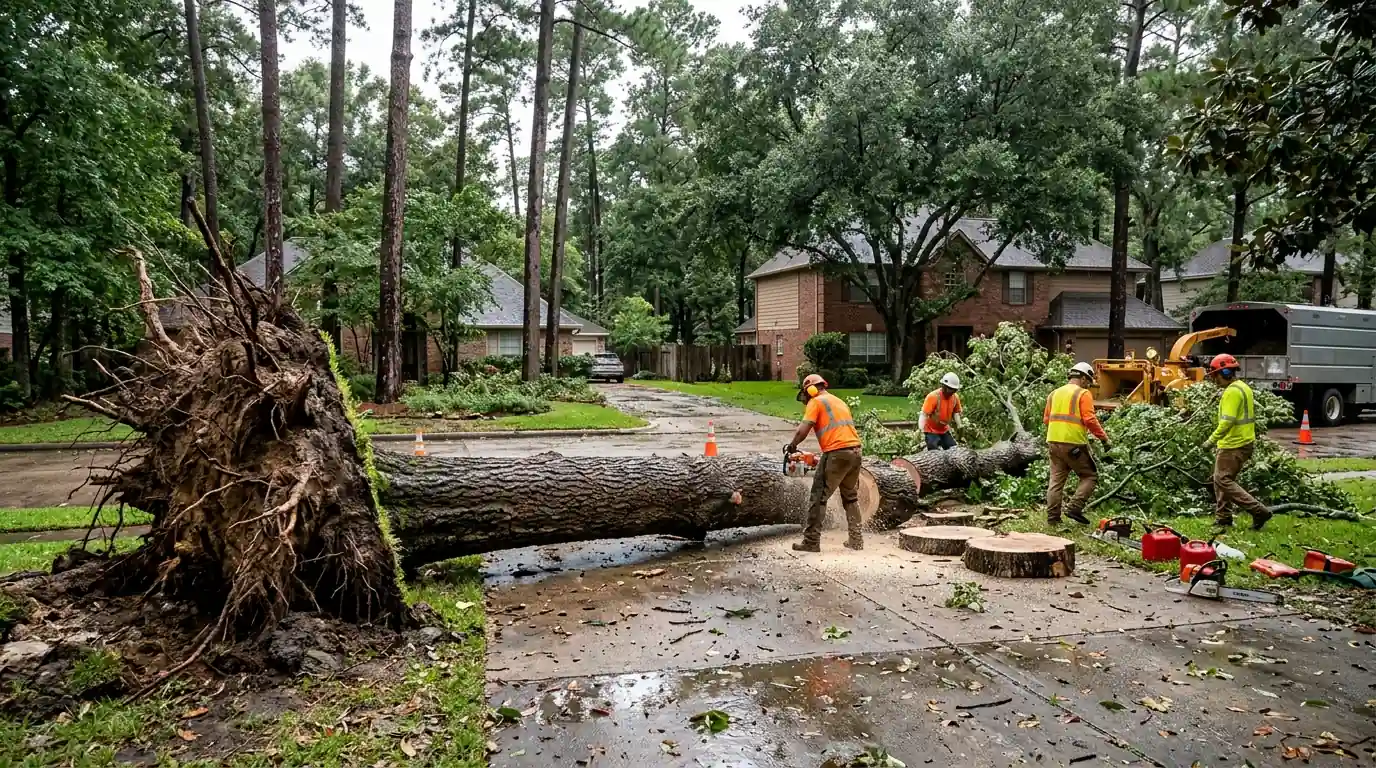
Storm & Emergency
5 jobsTrees down, split or hanging after wind and rain.
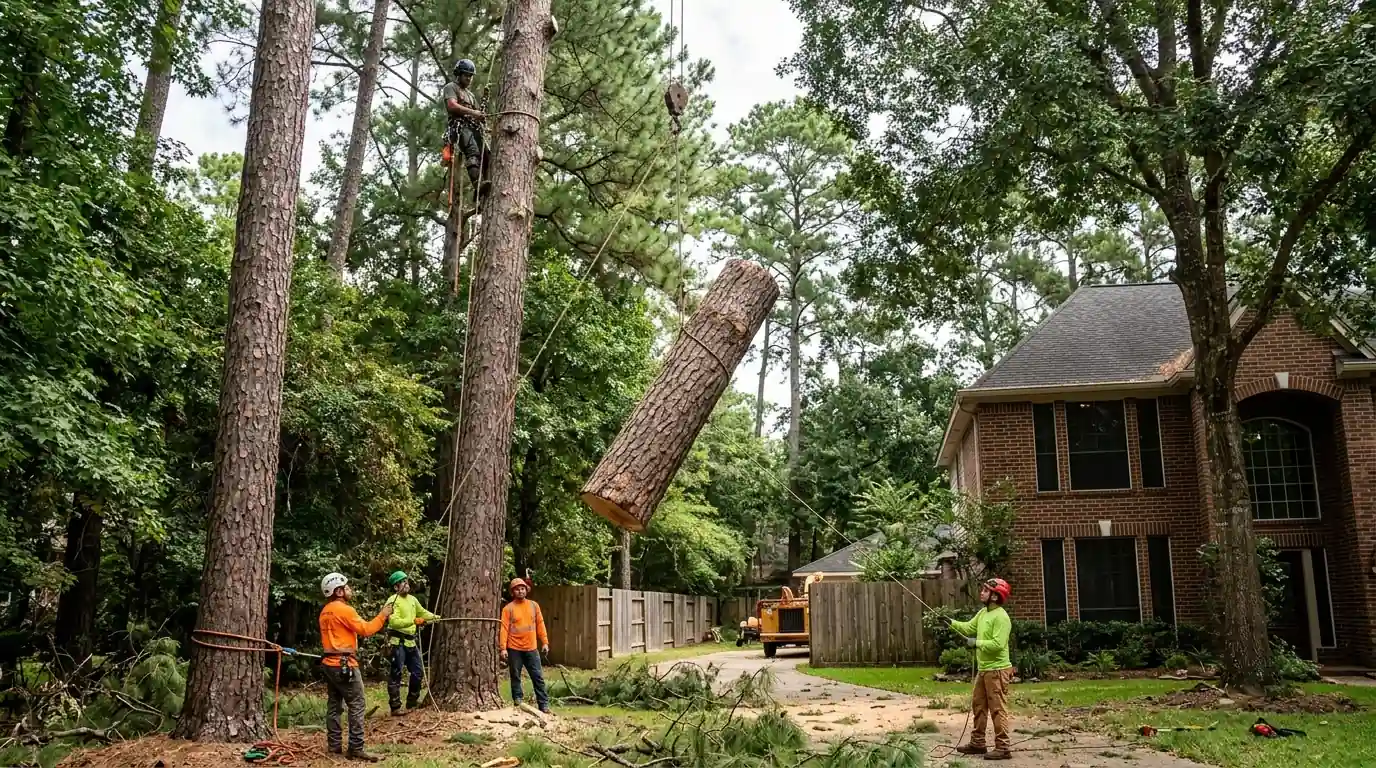
Tree Removal
7 jobsPlanned take-downs, from yard trees to crane picks.
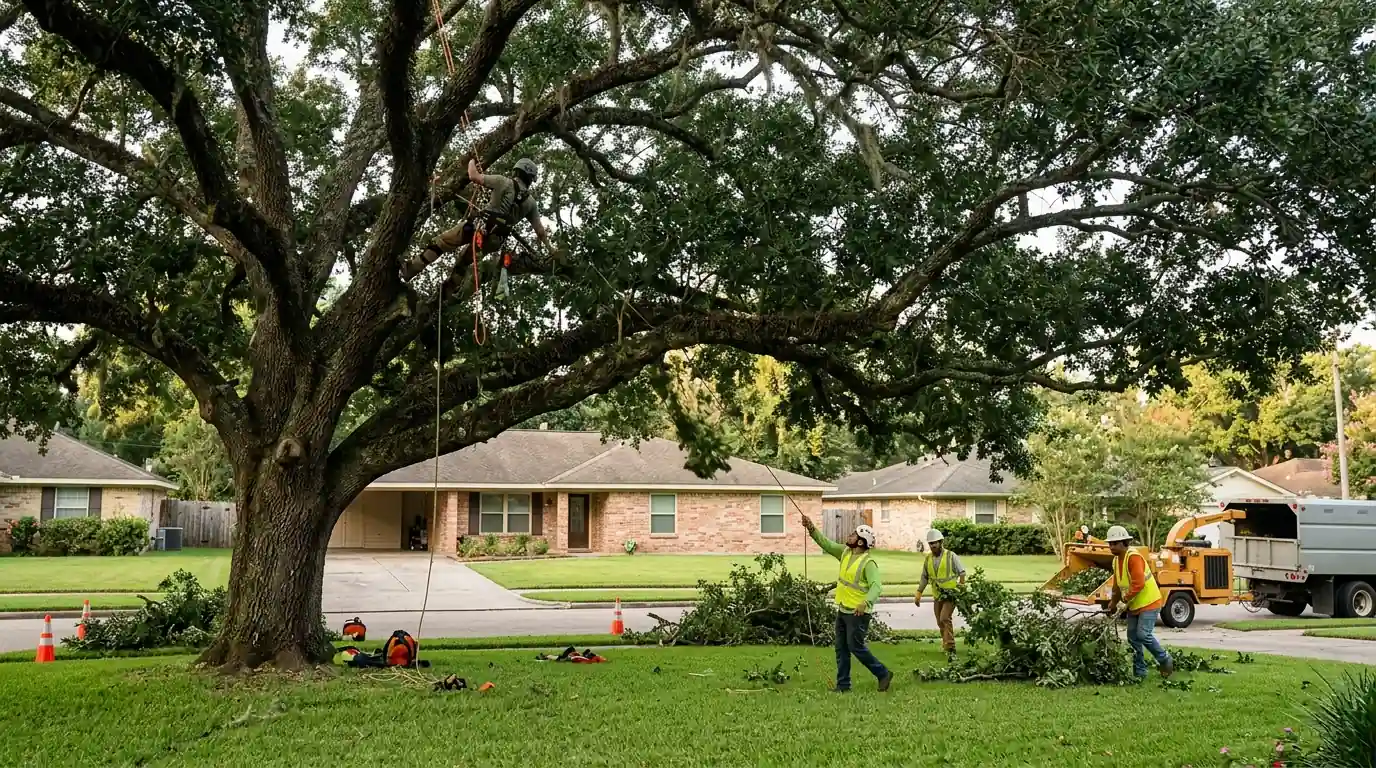
Trimming & Pruning
8 jobsThinning, clearance and shaping cuts.
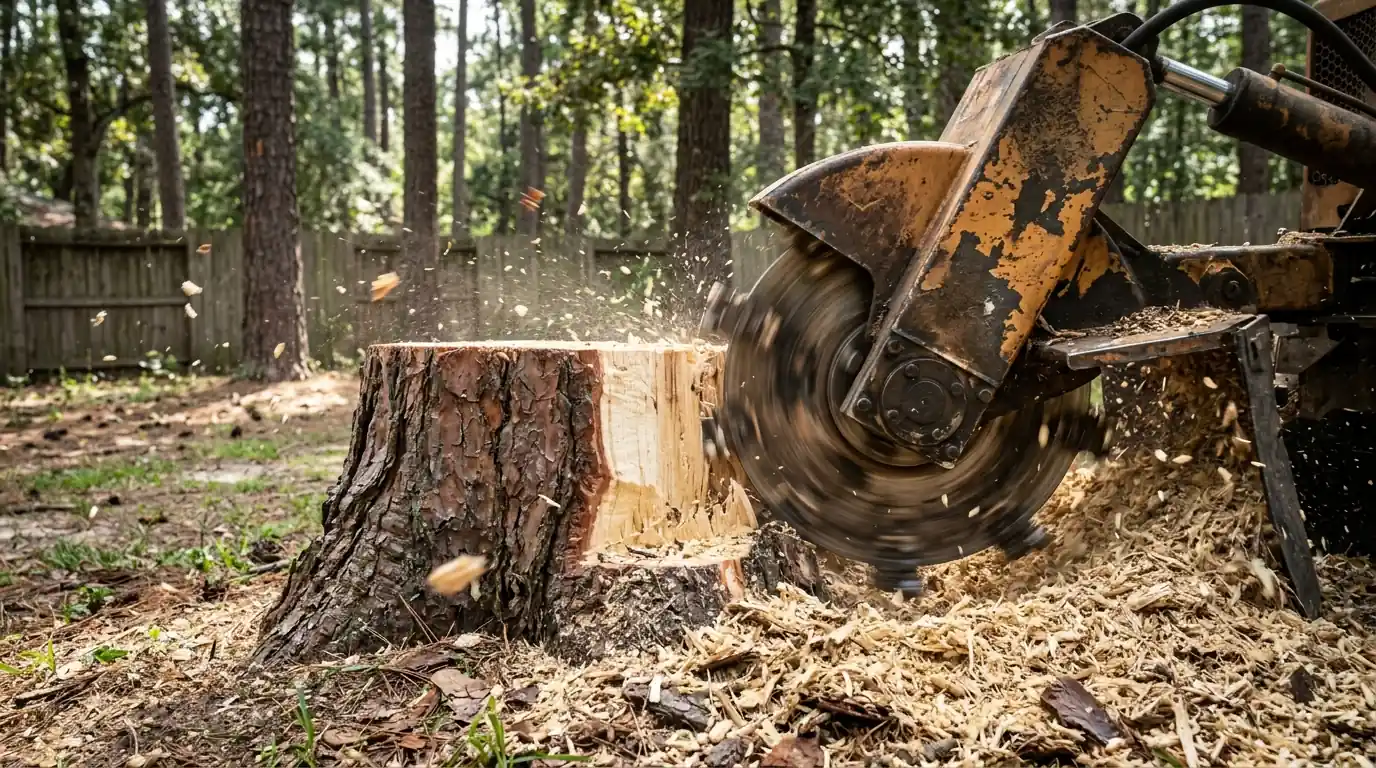
Stumps & Roots
3 jobsGrinding, extraction and root control.
Tree Health & Planting
8 jobsChecks, support systems, care and new trees.
Land & Property
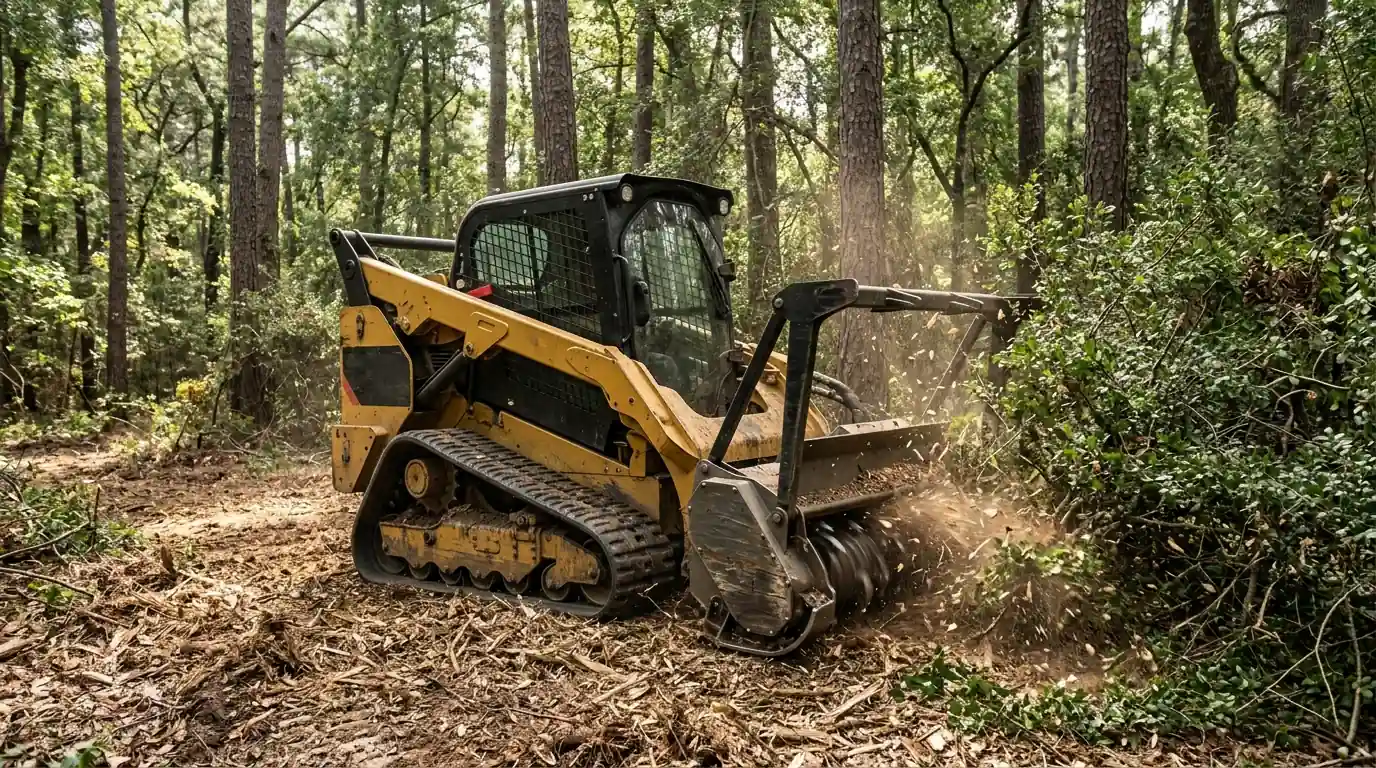
5 jobsAcreage, brush, commercial sites and builds.
Why north Houston trees fail
Tall pines, heavy clay and a Gulf storm season
Houston's north side grows trees fast and drops them hard. When Hurricane Beryl came through on July 8, 2024, CenterPoint counted about 2.26 million customers without power and blamed trees weakened by three years of freezes, drought and heavy spring rain. In Kingwood, seventy-foot pines came out of the ground roots and all.
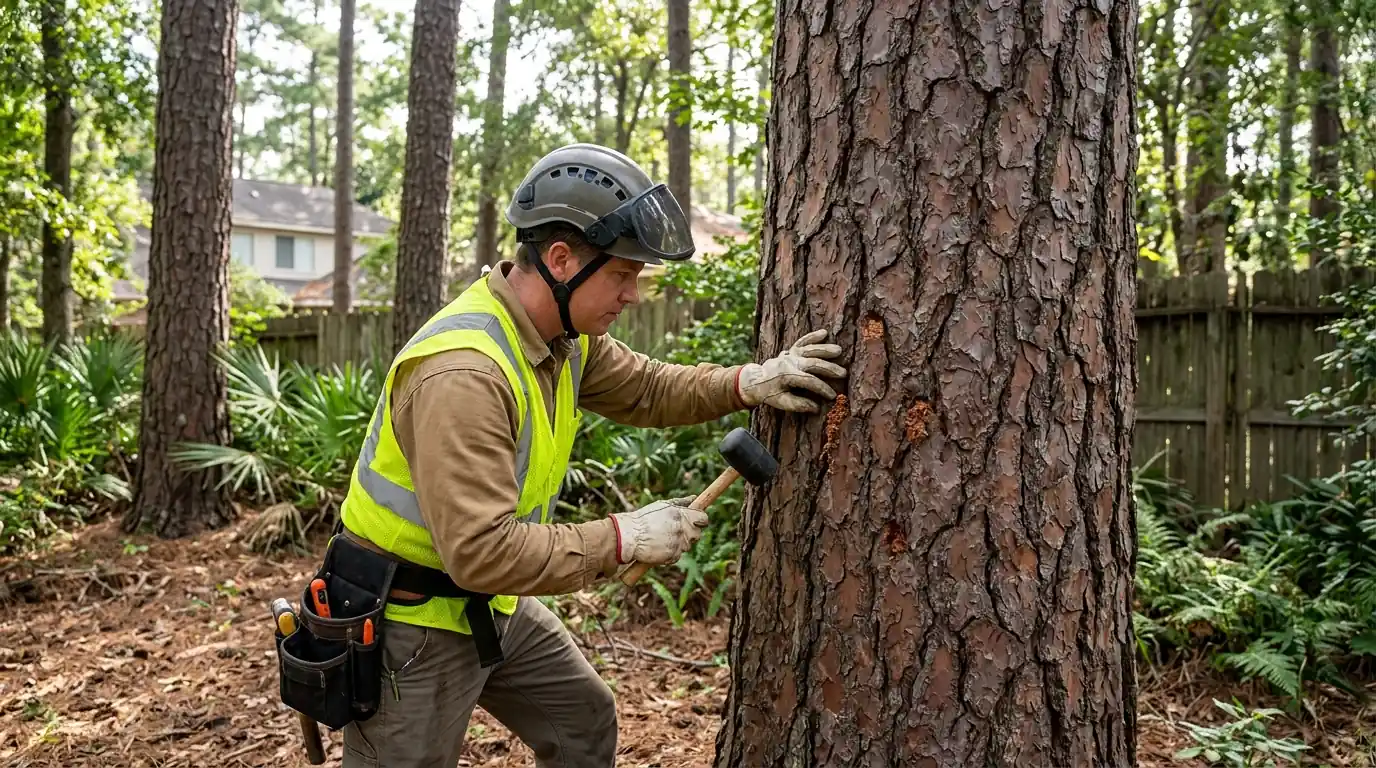
Pines are the trees we watch most. After a dry summer, Ips engraver beetles move into stressed loblollies and leave pitch tubes about the size of a wad of gum on the bark. Under the hardwoods the problem is the soil: much of Houston sits on expansive Beaumont clay, so roots, lean and foundations all shift with the rain.
The rules change at the city line, too. The Woodlands asks for an application before most living trees over six inches come down, and inside Houston any tree in the street right of way needs a city permit posted 20 days ahead. Every MCS Tree Services quote notes which of those applies before a saw comes off the truck.
How a job runs
From the first call to a raked-out yard
Five steps, tied off one after another. Emergency calls compress the first three into one visit.
You call, any hour
Tell us the tree, where it stands and what sits under it. A tree on a house goes first.
We walk the tree
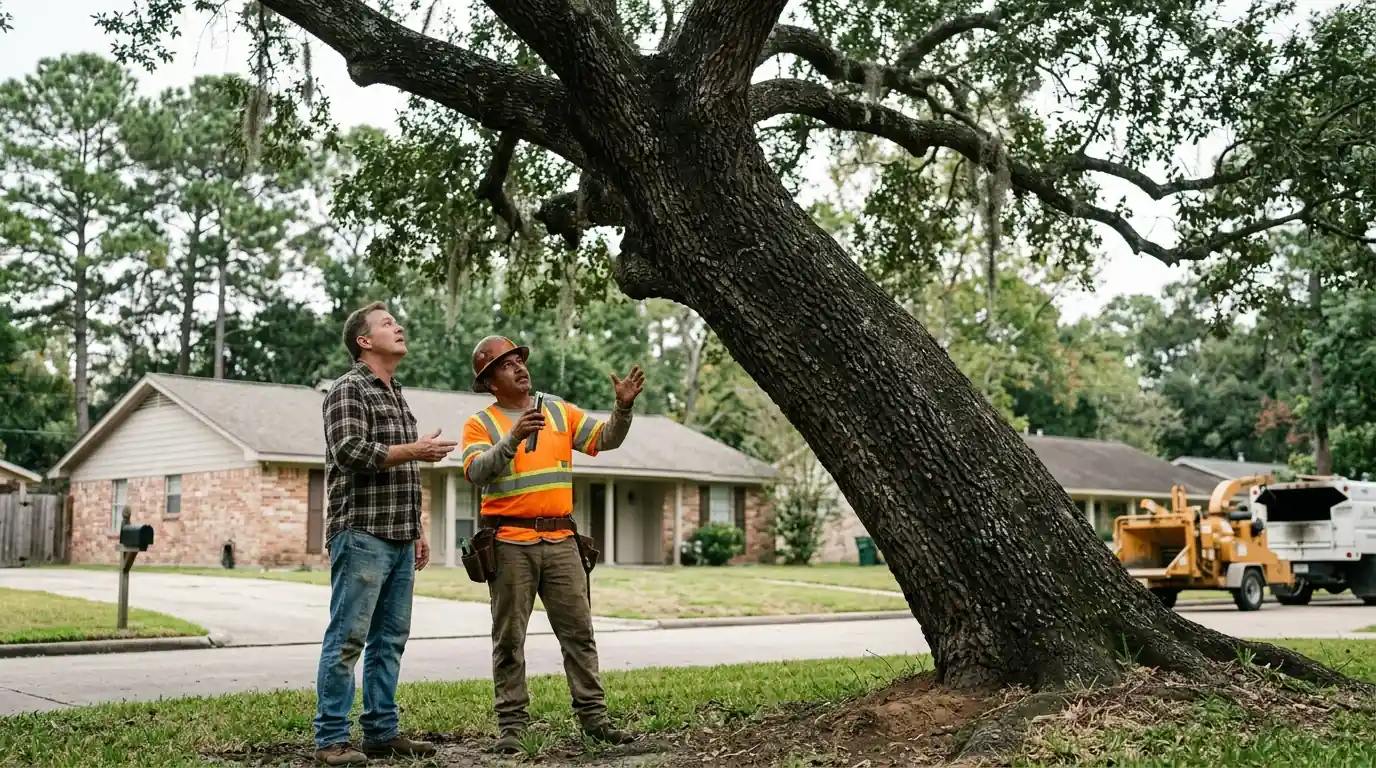
Lean, decay, the root plate and the targets get checked, plus any permit the job needs.
One written scope
What comes down, what stays, the stump plan and the haul-off are listed, so the price covers the whole job.
Rigging and the cut
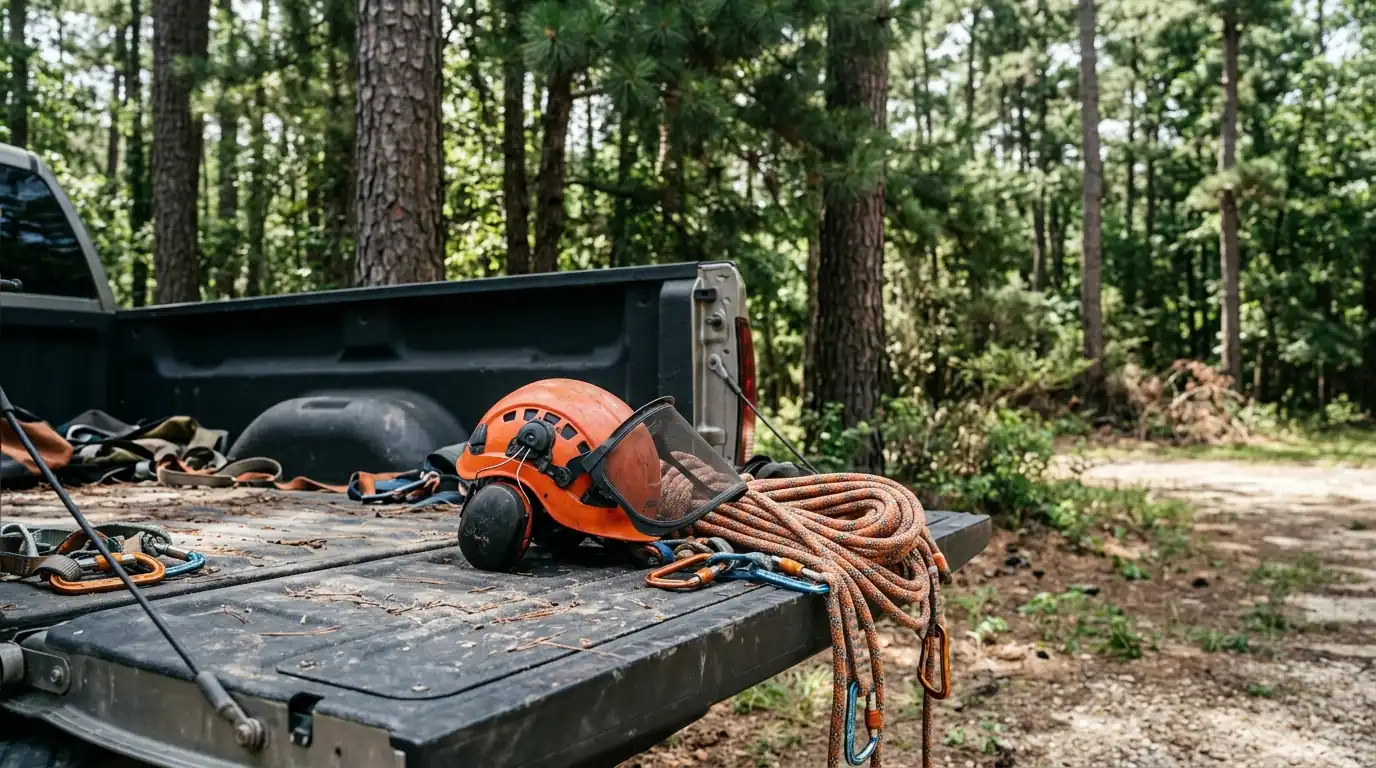
Sections come down on ropes or a crane over roofs, fences and pools, with the drop zone kept clear of people.
Cleanup to the curb
Brush goes through the chipper, the wood leaves with us and the stump gets ground when it is in the scope.
When to call
Six signs a tree needs a crew, not a wait-and-see
None of these means a tree has to come down. Each one means someone should look at it before the next storm does the deciding. Book a tree risk assessment
Mushrooms or conks at the base
Fungus at the root flare usually means hidden decay in the roots or lower trunk.
Cracks where limbs meet
A seam down a fork, or a split that opens in wind, is a failure point. Cabling saves some.
Pitch tubes on a browning pine
Small resin blobs on the bark and fading needles point to bark beetles.
A new lean or lifted soil
A lean that grows after heavy rain, or ground heaving on one side, means the root plate is moving.
Dead limbs in the growing season
Bare limbs in June are deadwood, and deadwood drops without warning.
Cavities and hollow spots
A hollow sound, an open cavity or bark peeling in sheets means less sound wood.
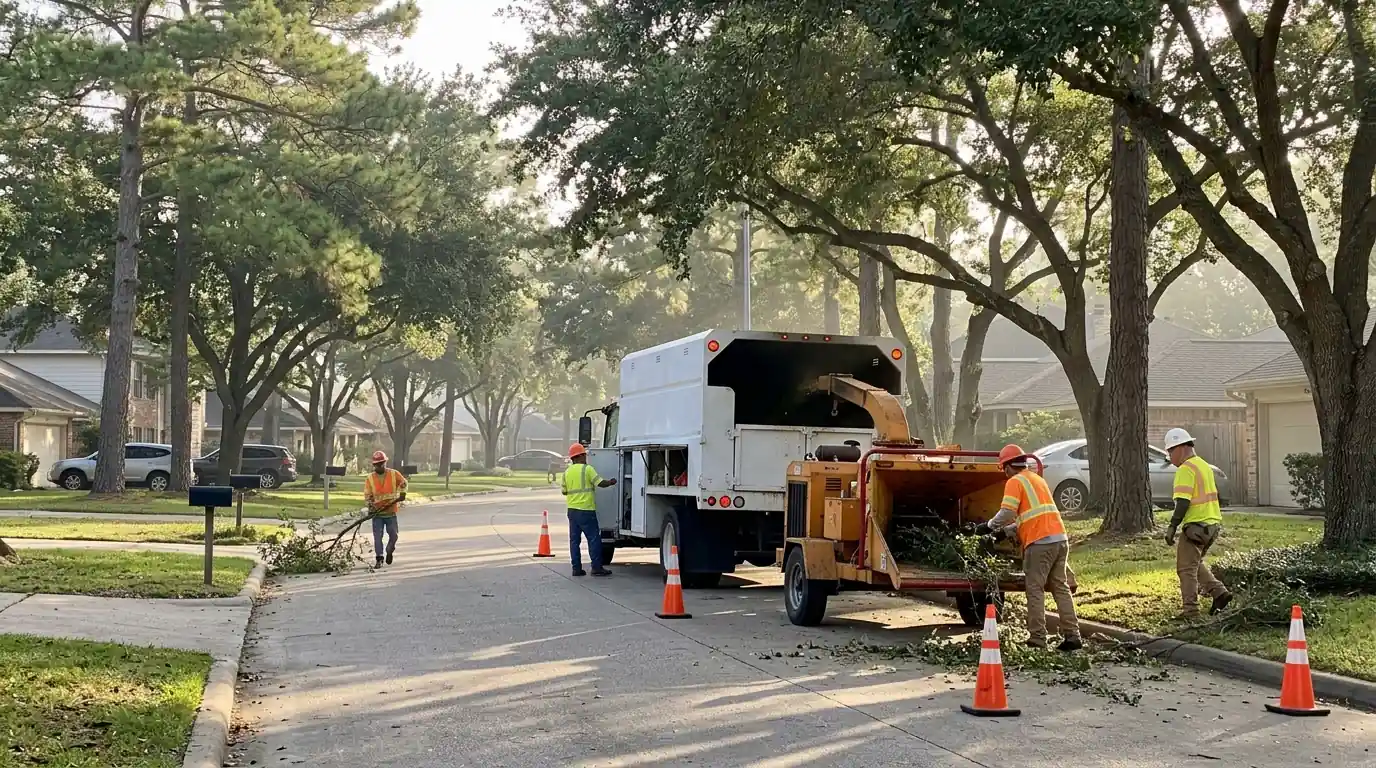
Most removals end the same way: brush through the chipper, wood on the truck and the lawn raked before the crew pulls off the street.
How we work
Plain habits that make tree work go right
Phones answered at night
The line is answered 24 hours a day, and a tree on a house gets handled first.
The scope on paper first
What comes down, what gets trimmed and what happens to the stump, agreed before work starts.
Rigging picked for the yard
Pools, fences and tight yards decide between felling, roping down or a crane.
A clean finish
Brush chipped, wood hauled and the lawn raked before the crew leaves.
Where we work
North Houston first, then the counties around it
The office sits in Spring, north of Spring Creek, so the north side is where a crew reaches you fastest. From there the work runs into Houston's neighborhoods and the towns around them.
Houston neighborhoods
Cities and towns
Tree advice
Read before you hire anyone
Costs, permits and storm prep for Houston's north side, written to answer the questions we hear on the phone. All tree advice
Questions
What Houston homeowners ask before a tree job
Straight answers on cost, permits and storm calls. Anything not covered here, ask on the phone.
Call (704) 839-2139Angi's 2026 Houston figures put most removals between $197 and $1,972: about $150 to $450 for a tree under 30 feet and $1,000 to $2,000 for one over 80 feet, with roughly $500 more when a crane is needed. Our price covers cutting, chipping and haul-off, so you can compare whole jobs. Angi Houston data
The City of Houston requires a permit for any tree on city property, including street rights of way and medians, and the permit is posted 20 days before work. Trees on your own lot are a different matter, though many HOAs set rules of their own.
The Woodlands covenants call for an application before removing any living tree larger than six inches in diameter, and the tree is checked for its effect on drainage before a permit is approved. We help gather the photos and measurements.
The phone is answered 24/7. At night the job is making things safe, such as taking weight off a roof or opening a blocked driveway. The full removal follows in daylight.
Stay well back and call CenterPoint first. A line can be live even when your lights are out. Once the utility has made the line safe, we take the tree off the property and deal with what is left.
Usually not once the crown starts to fade. Texas A&M Forest Service treats prompt removal of infested pines as the most practical control and notes that high-value trees nearby can be sprayed. We check the neighboring pines too.
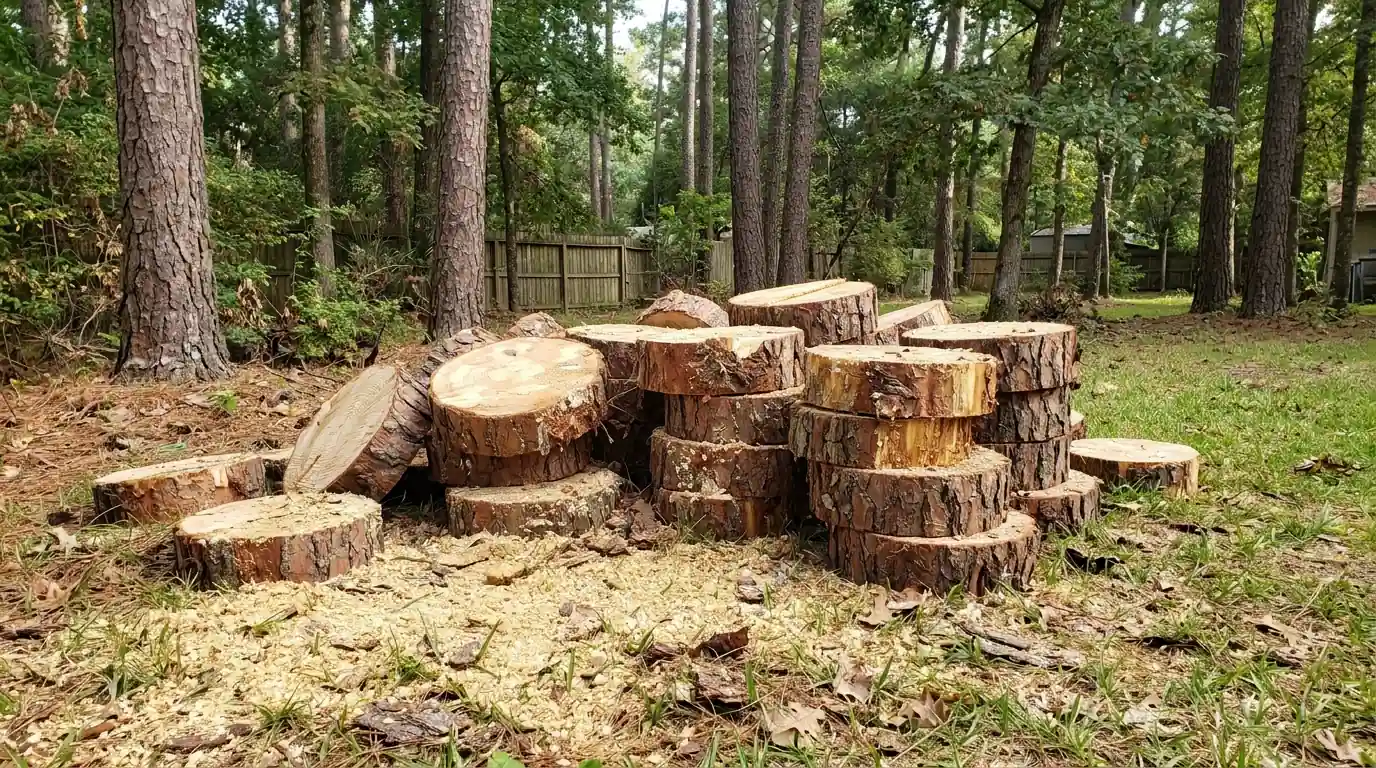
When grinding is in the scope we can usually do it on the same visit, then rake the grindings into the hole or haul them off. Planning to plant or pour concrete there? Say so, and the grind goes deeper.
Get a crew looking at that tree
Call any hour. Tell us what the tree is doing and what is under it, and we will set a time to walk it, or head over now if it is on the house.