Stumps & Roots on the north side
Stump grinding for north Houston yards
Old stumps, fresh ones, surface roots catching the mower: we grind them below grade so soil or sod can cover the spot.
Phone answered 24/7 · office in Spring, TX
- Ground below grade
- Lines marked first
Updated October 2026
 Stumps & Roots
Short answer
Stump grinding in Houston cuts the stump below grade with a toothed wheel, and Angi's 2026 Houston stump removal figures average about $381. The grindings can fill the hole or be hauled and replaced with soil. Roots past the stump stay in the soil and rot.
The job
What a grinder leaves behind
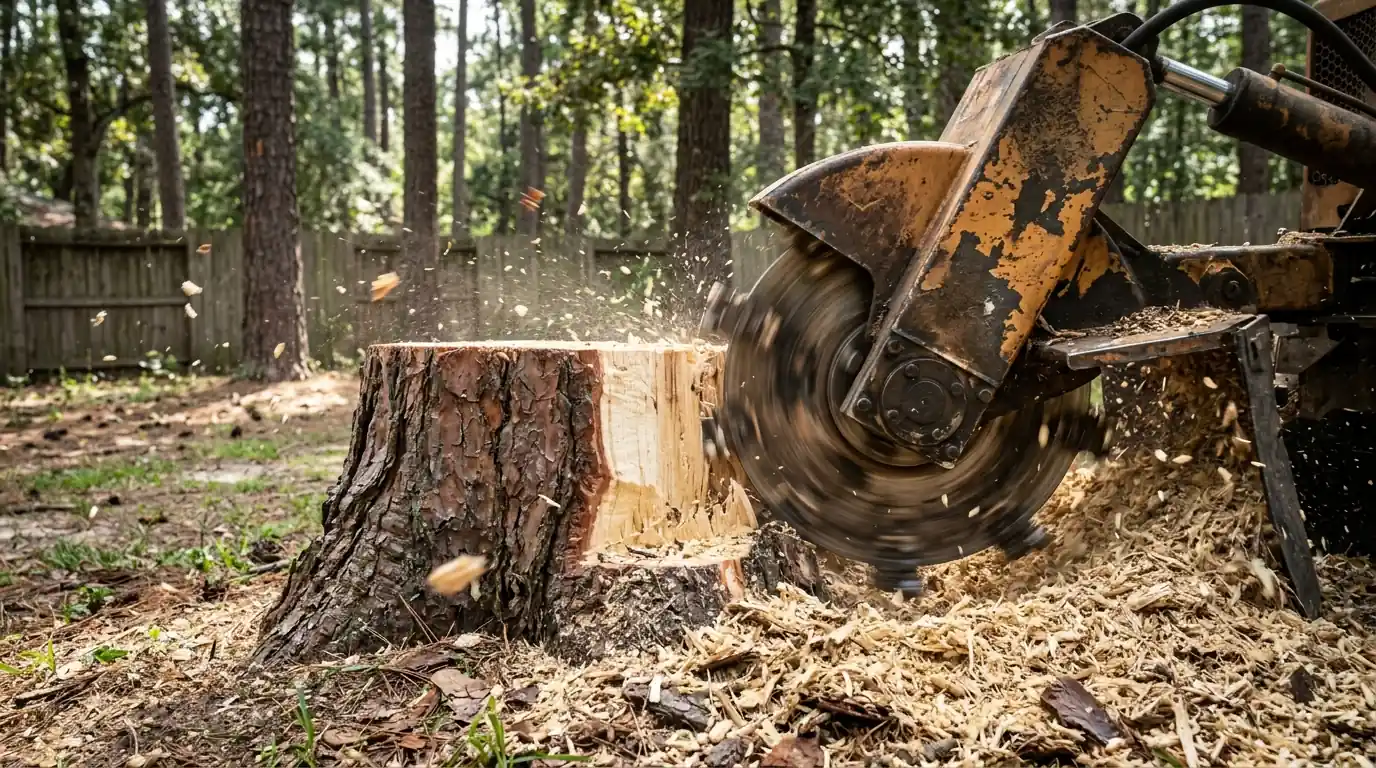
A stump grinder works a spinning wheel of carbide teeth side to side across the stump, shaving it into chips until the wheel is below the soil line. The wood stays on site as a mound of grindings and soil.
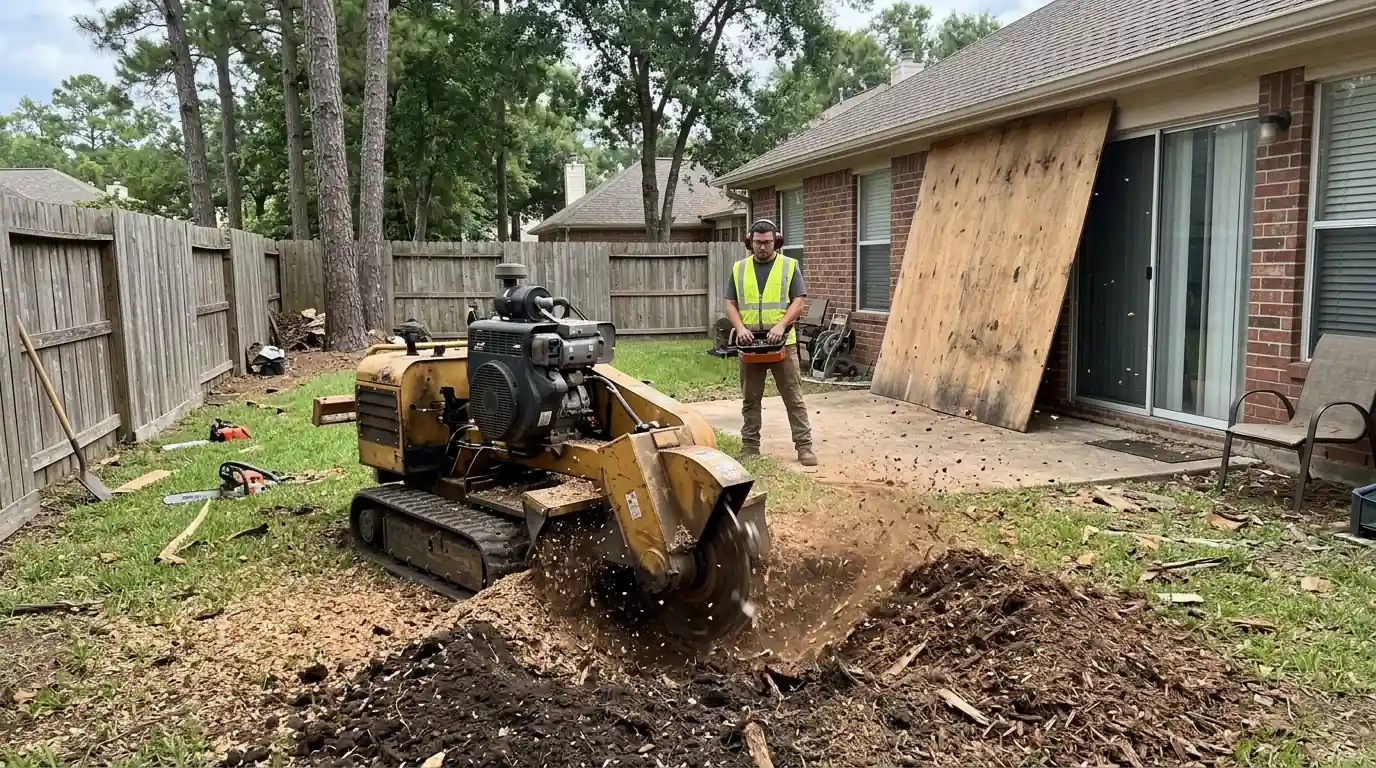
Before the wheel touches wood, sprinkler heads, irrigation lines and buried cable get marked, because a grinder chews through them as easily as roots. Rocks around the base get cleared first, since they break carbide teeth. Pulling the whole root ball is a bigger, separate job.
What moves the price
Planning a stump grinding budget
Angi's $381 Houston average is a planning figure, not a quote. Diameter, root spread and access move a stump above or below it, and hauling grindings adds a step.
Diameter
Grinding time climbs fast with width, especially on flared oak and pine stumps.
Access
A narrow gate, steep slope or soft lawn limits which grinder can reach.
Grindings
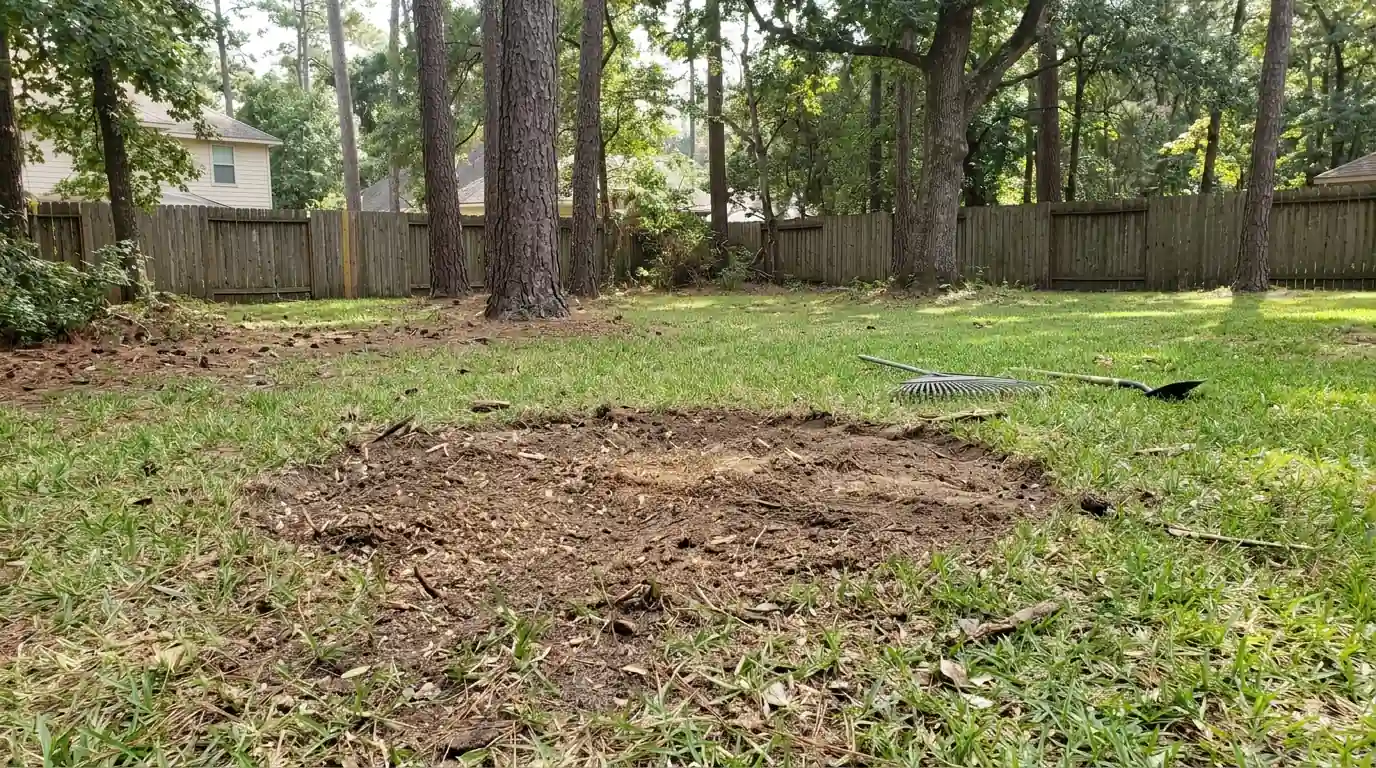
Raking chips back is quickest; hauling them and bringing soil adds a step.
Count
Several stumps in one visit share setup, so each costs less than alone.
Cost data: angi.com
Read the Houston tree removal cost guideYour options
What happens to the grindings
| Choice | You get | Tradeoff |
|---|---|---|
| Rake back in | Hole filled with chips and soil | Settles as it rots |
| Haul and backfill | Chips gone, topsoil in the hole | Extra step and soil cost |
| Keep as mulch | Chips piled for paths or beds | Soil-mixed, rougher than bagged mulch |
Single stumps
One stump in the lawn is the usual case: an old tree taken down years ago, now a mower obstacle, a trip hazard and a home for fire ants. Its size and the access to it decide the work. A compact grinder through a backyard gate handles most single stumps, cutting below grade and out past the root flare so the edges do not poke through the grass later. The chips go back in the hole or get hauled, your call.
Several stumps at once
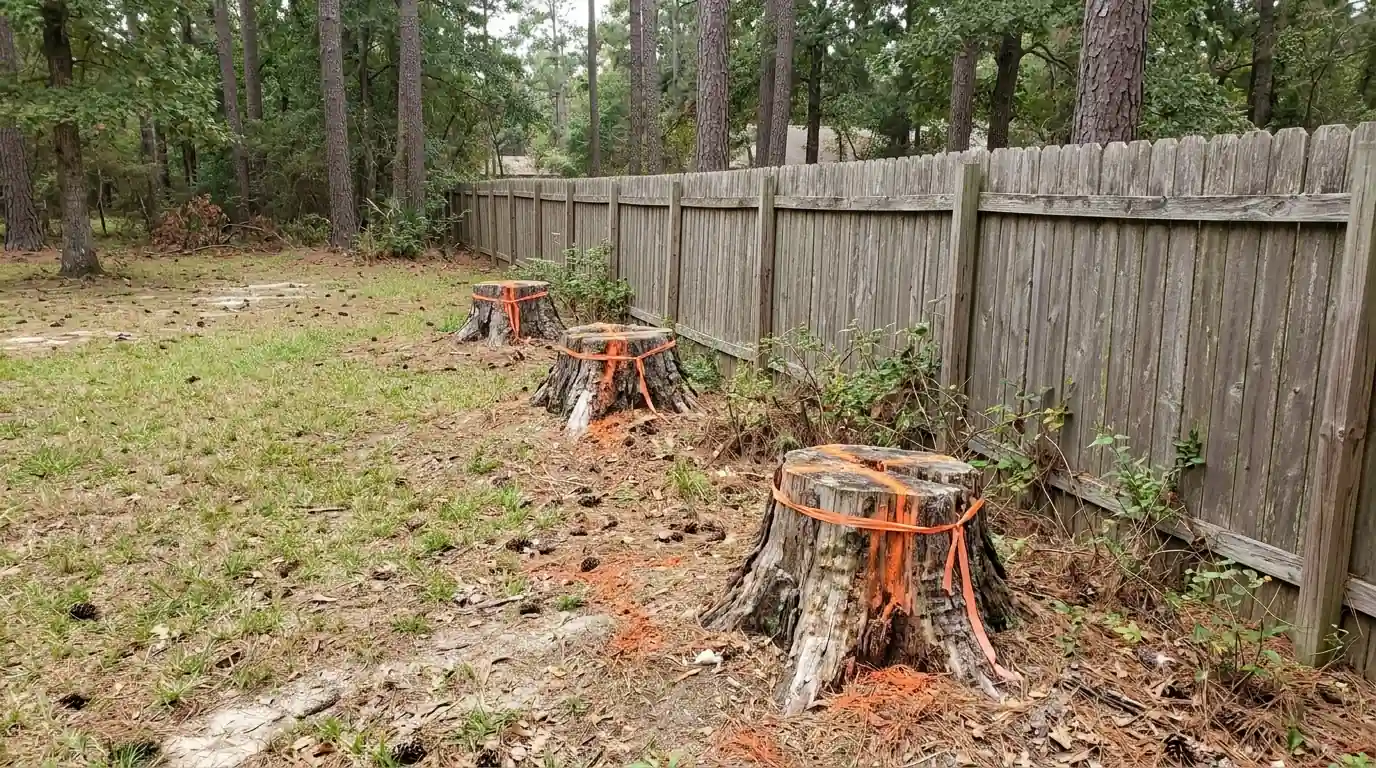
After clearing a lot or a storm season, stumps often come in groups along fences. Grinding several in one visit spreads the setup, travel and cleanup across all of them, so each one costs less than it would alone. We walk the yard first, mark every stump and nearby sprinkler head, and plan a path that keeps the grinder off lawn that rain has softened. The chip piles add up quickly, so decide on haul-off or raking back before grinding day.
Large stumps
Big oak, pecan and loblolly pine stumps flare wide at the base, with buttress roots that run out several feet before diving. Grinding one takes many passes, and the grindings can fill a truck bed. The crew grinds the center below grade, then follows the buttress roots out until they drop below the surface. A large stump near a fence, slab or wall gets ground carefully on the near side, with shields up to stop flying chips from breaking glass.
Surface root grinding
Surface roots ridge the lawn under oaks and pines on Houston clay, catching mower blades and tripping people. On a tree that is already gone, those roots can be ground out along their length to below grade. On a living tree, it is a different call: grinding a large root wounds it and cuts off water and anchorage on that side. Small roots can be ground out; big ones near the trunk usually stay, with a thin mulch layer over them.
Questions about your tree? Talk to a crew lead.
Call (704) 839-2139In the scope
What our grinding includes
- Utility locates and sprinkler flags before grinding.
- Grinding below grade, past the visible root flare.
- Shields set near windows, cars and glass doors.
- Chips raked into the hole or piled, your choice.
- Sprayed chips cleaned from beds, walks and drives.
- A last check for root ends at grade.
Local conditions
What Houston's storms, trees and soil mean for stump grinding
Houston's heavy clay grips a stump and its roots, and in a wet season it turns grinding into a muddy job that ruts the lawn, so dry stretches are easier. Summer heat and Gulf humidity speed up rot, so grindings left in the hole settle and need topping up. Hurricane season, June to November, adds storm-broken trees and their stumps.
Step by step
From stump to level ground
Mark lines
Sprinkler heads and utility locates get flagged around each stump.
Clear base
Rocks and loose soil come away from the root flare.
Grind
The wheel sweeps the stump until it sits under the soil.
Chase roots
Buttress roots are ground until they dip below the surface.
Finish
Grindings go back in the hole or get hauled, as agreed.
Do it yourself?
Getting a stump ready for us
Fine to handle yourself
- Flag sprinkler heads and lights near the stump.
- Keep kids and pets inside during grinding.
- Top up the hole as grindings settle.
Leave to a crew
- Running the grinder, which throws chips and stones hard.
- Stumps against slabs, fences or buried pipes.
- Large flared stumps that need many passes.
Below grade, far enough for soil and sod to cover it, and deeper on request where a new tree or bed is planned. Ask at the walkthrough.
Not right away, since grindings and old roots settle as they rot. Plant off to the side, or haul the grindings and backfill with soil first.
Most will not. Some species, such as Chinese tallow and sweetgum, can sucker from leftover roots; those sprouts get mowed or treated until the roots give up.
Yes. The near side is ground slowly behind shields, and roots running under a slab or footing are cut at its edge, not chased beneath it.
Not usually, if gates are open and pets are inside. We do need to know about sprinkler lines, dog fences and anything buried near the stump.
It can. Decaying wood draws termites and carpenter ants, a good reason to grind a stump near the house instead of waiting for it to rot.
Related work