Tree Health & Planting on the north side
Tree risk checks in north Houston, with written findings
A crew lead checks your trees for lean, root plate, decay, cavities and targets, then writes up findings. Nothing gets cut.
Phone answered 24/7 · office in Spring, TX
- Inspection only
- Written findings
Updated October 2026
 Tree Health & Planting
Short answer
Tree risk assessment in Houston got more urgent after Beryl in July 2024, when wind damage reached about half the region's trees by Texas A&M Forest Service's estimate, mostly older ones. We check lean, root plate, decay, cavities and targets and write findings, cutting nothing.
The job
Lean, root plate, decay and targets
Risk comes down to two questions: how likely is this tree, or part of it, to fail, and what would it hit? A dead limb over an empty back fence is a different problem from the same limb hanging over a bedroom.
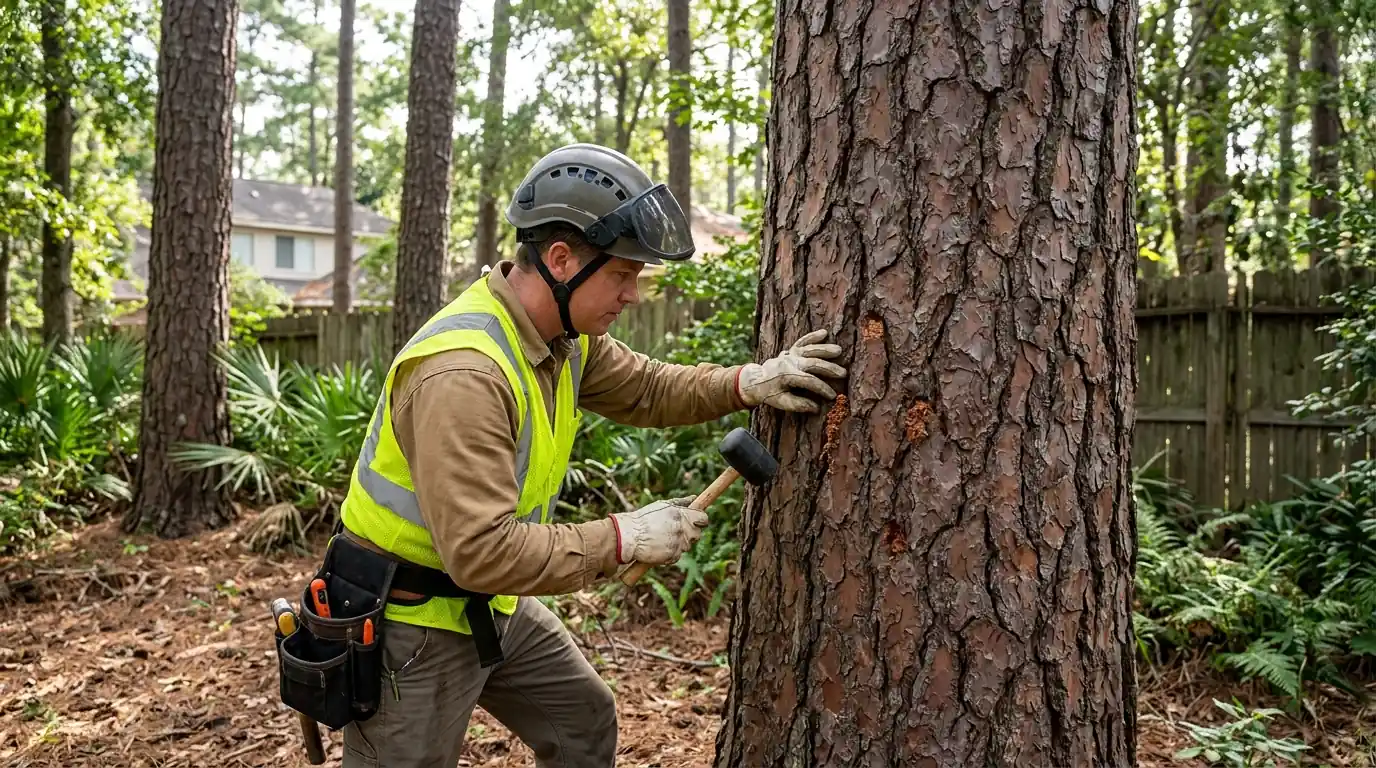
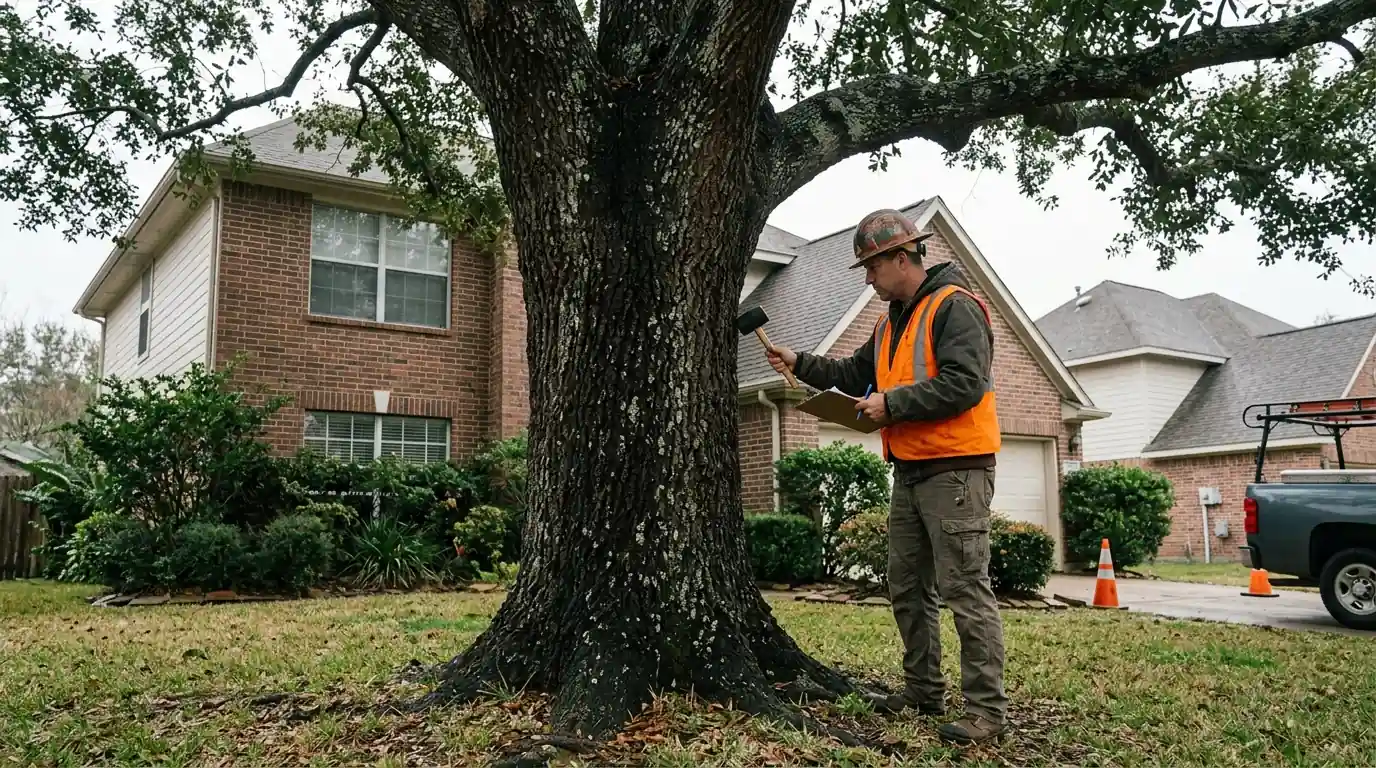
On the walkthrough the crew lead looks at lean, soil heave around the root plate, fungal conks, cracks, cavities and deadwood, tapping the trunk with a mallet where decay hides. The written findings list each tree, the concern and the options, from cabling to removal.
In the scope
Checked on every tree
- Every tree that could reach a house, drive or street.
- Lean, soil cracks and root plate lift on each.
- Trunks sounded with a mallet, soft spots probed.
- Crowns scanned for deadwood, hangers, cracks and weak forks.
- Targets noted: roof, drive, play area, lines or street.
- Written findings with each concern, its urgency and options.
Storm-season walkthrough
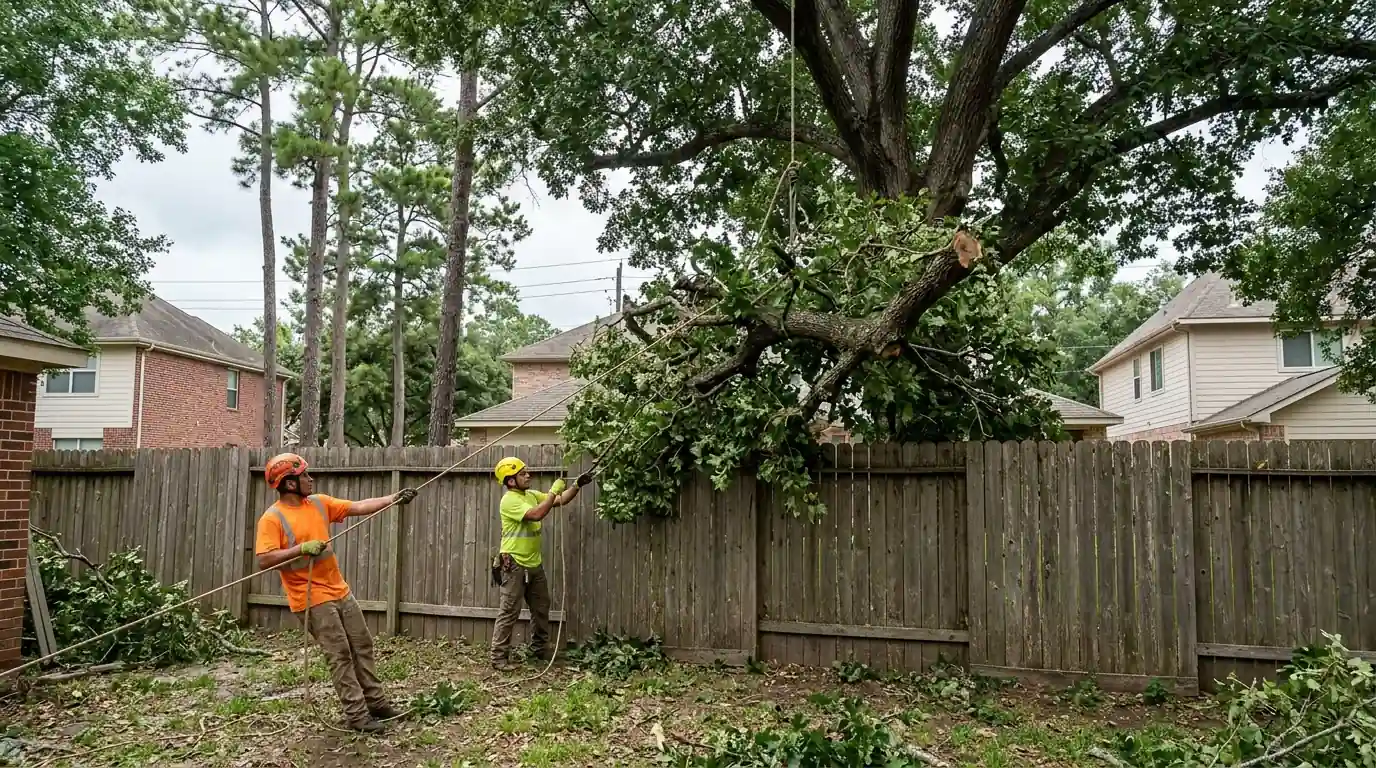
A forecast often sends you outside to look up at the big oak. Before hurricane season, which runs June to November, a walkthrough covers every tree big enough to reach the house, the drive or the street. The crew lead notes deadwood in the crown, heavy limbs over the roof, codominant stems and pines with thinning tops. Findings are ranked, so urgent work stands apart from work that can wait a year. That list makes pre-season pruning easy to plan.
Leaning tree check
A lean by itself is not the warning sign; a change is. A tree that grew at an angle for decades, with its top corrected upward, is often stable. One that started leaning after a storm, with cracked soil or a raised root plate on the far side, is moving. We check the soil, roots on the tension side, buckled bark on the lean side and what lies in the fall path. Fresh leans go to the top of the list.
Decay and cavity check
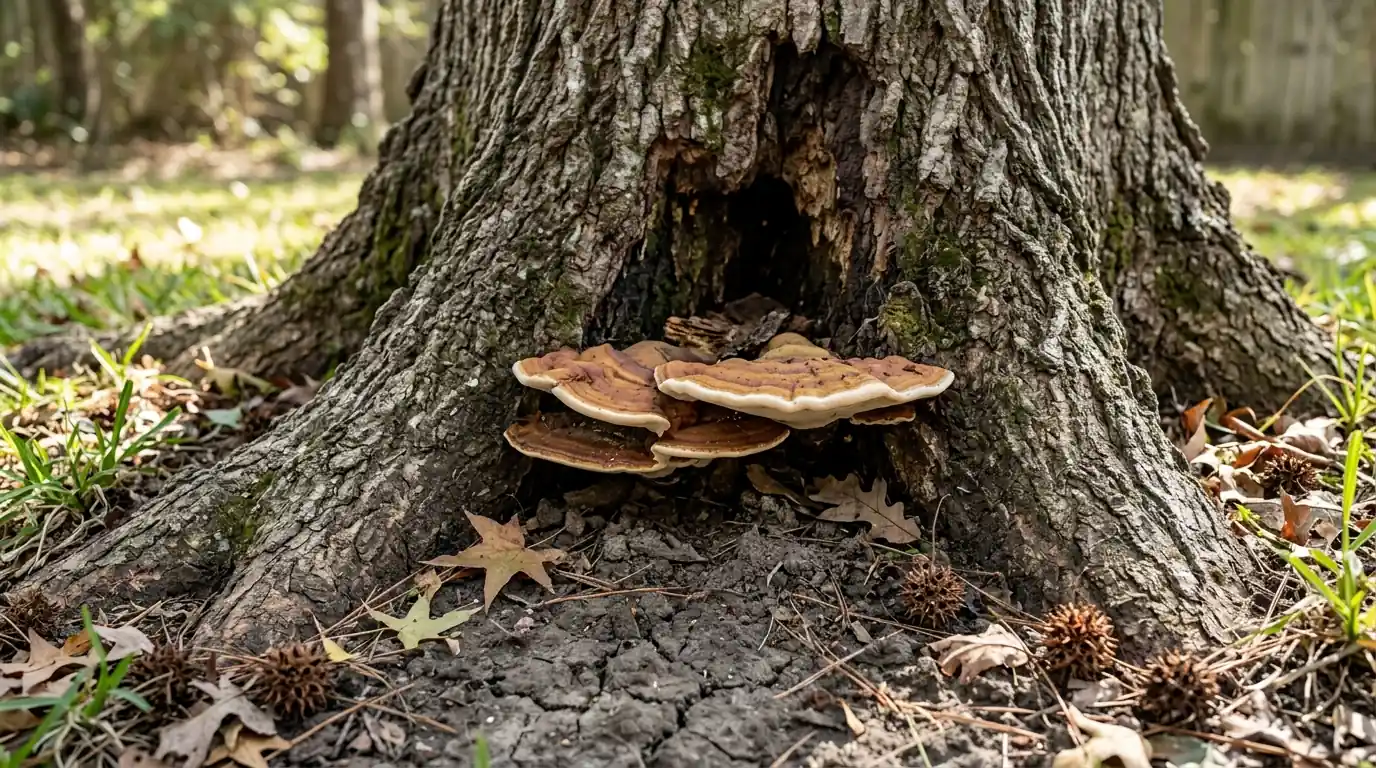
Mushrooms at the base, shelf fungus on the trunk, a hollow knock or a cavity where a limb once was each point to decay, but not every cavity is fatal. Trees wall off decay, and a hollow trunk with a thick shell of sound wood can stand for years. We sound the trunk with a mallet, probe soft areas and weigh the sound wood left against the weight of the crown. When that shell is thin, the findings say so plainly.
Before you buy a house
Home inspection reports often note trees only where they touch the roof. A walk before closing tells you which trees are healthy, which need work soon and which are likely removals, so you can weigh that before you sign. We look at trees near the slab, over the roof and along the property lines, plus signs of past storm damage or heavy topping. You get the findings in writing to use as you see fit, including in talks with the seller.
Questions about your tree? Talk to a crew lead.
Call (704) 839-2139Local conditions
Tree Risk Assessment in north Houston: what local conditions change
CenterPoint reported severe tree damage across its system during Beryl, and it pointed to three years of freezes and drought, plus heavy spring rain, as what had weakened Houston's trees. That kind of stress is easy to miss from the patio. It turns up as thinning crowns, dieback at the top and decay at old pruning wounds, which is what a walkthrough is built to find.
Sources: tdworld.com
Do it yourself?
What to watch between walkthroughs
Fine to handle yourself
- After storms, look for new leans or cracked soil.
- Watch for mushrooms or shelf fungus at the base.
- Photograph big trees from the same spots each year.
Leave to a crew
- Sounding and probing a trunk; decay depth decides the call.
- Judging cracks high in the crown, which takes a climber's view.
- Choosing between cabling, reduction and removal for a weak tree.
Step by step
How a walkthrough runs
Your concerns
You show us the trees that worry you and what sits below.
Every tree
We check each tree that could reach a target, not just one.
Low to high
Roots and soil first, then trunk, unions, crown and deadwood.
Sound, probe
Suspect wood is tapped and probed to judge how deep decay runs.
Written findings
You get findings tree by tree, ranked from urgent to watch.
What moves the price
Pricing a risk walkthrough
With no cutting involved, a walkthrough's price comes down to time on site: the number of trees, the size of the lot and how detailed the findings must be.
Lot size
A wooded acre takes longer to walk and document than a few yard trees.
Check depth
Probing decay or climbing to see a high crack adds time per tree.
Written detail
Findings for a home sale or an HOA need more detail and photos.
Rough terrain
Creek banks, fenced pasture and thick underbrush slow the walk between trees.
No. The visit is inspection only, so the findings are not shaped by work booked that day. Pruning or removal is scheduled separately, after you read them.
Not automatically. A storm can crack a union or loosen roots without dropping the tree, and the damage may show months later as dieback or a new lean.
Once a year, before hurricane season, suits most big trees near a house, plus a look after any major storm. Trees with known decay may need more.
Often, from the signs: mushrooms or conks at the base, a thinning crown and soft roots at the flare. Some root decay stays hidden, and findings say so.
We assess any tree visible from your side and what it would hit, staying off the neighbor's lot unless they agree. Findings note whose side it stands on.
Written findings record each tree's condition on the date we saw it, which some HOAs and insurers ask for. Coverage varies, so read your policy or ask your agent.
Related work