Tree Removal on the north side
Pine tree removal across north Houston's piney woods
Loblollies grow tall on one straight stem, crown up top, and that shape decides how a pine comes down near a house.
Phone answered 24/7 · office in Spring, TX
- Topped out first
- Rounds lowered
Updated October 2026
 Tree Removal
Short answer
Pine tree removal in Houston runs $250 to $1,500 in Angi's 2026 figures. A climber usually tops the loblolly out, then the stem is felled into open ground or lowered in sections. Beetle-hit pines move up the list, because the attack can spread to the next pine.
The job
Top first, then the stem
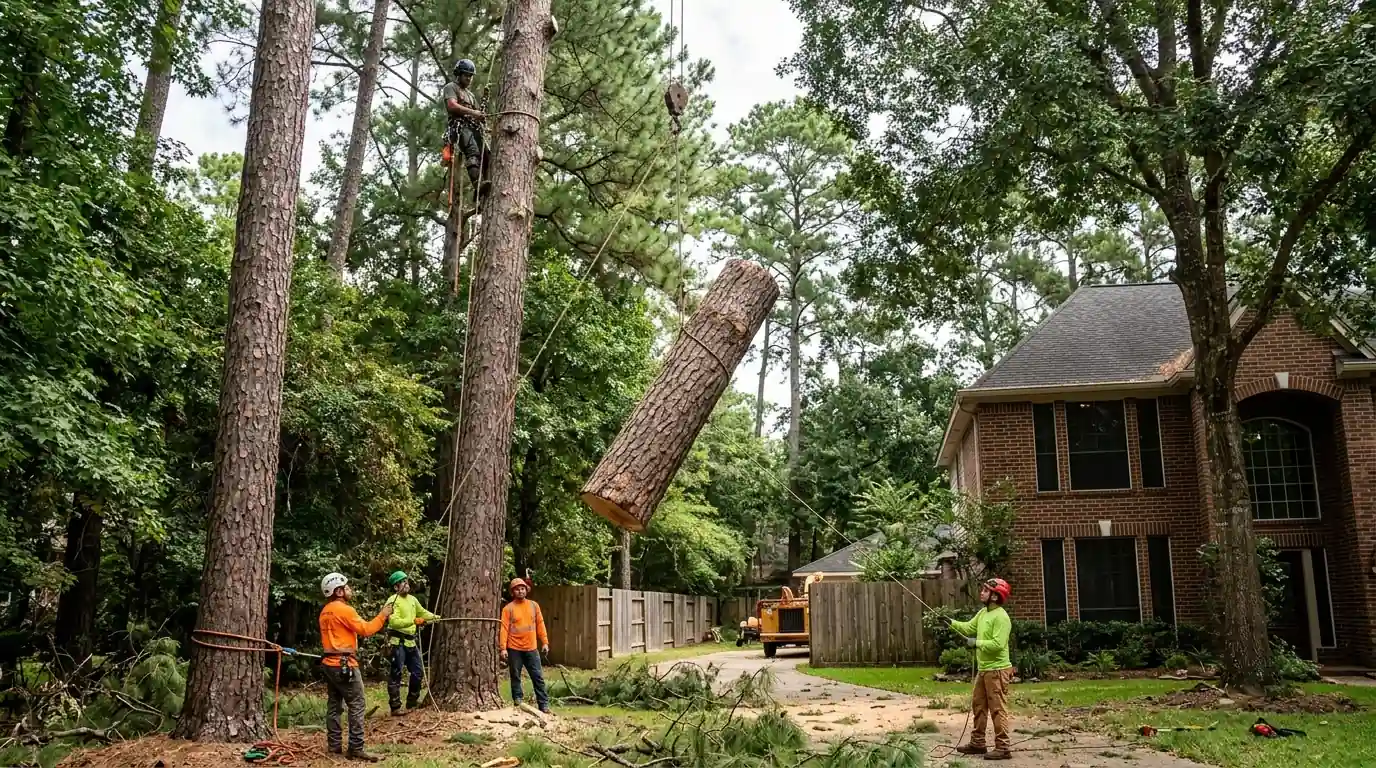
A pine is simpler to plan than a spreading oak, but harder to drop: the top is high, the trunk is heavy, and a tall stem sways with the climber on it. Sap gums saws, ropes and anything it touches.
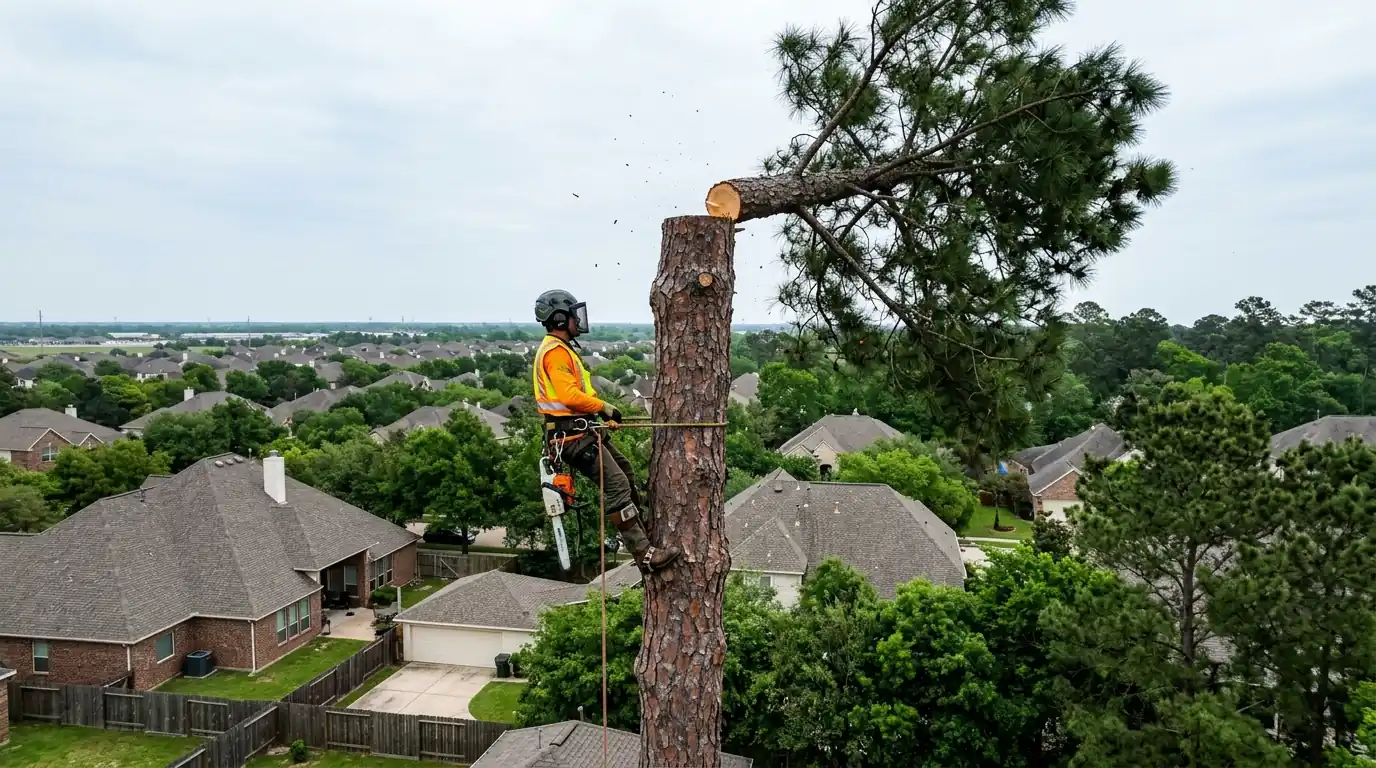
Most pines near houses come apart from the top down, with the stem lowered or dropped in lengths. Where a pine has a lane longer than its height, it can be felled whole, which is faster. A short, clean stump is the easiest to grind.
What moves the price
Pricing a pine
Within Angi's Houston range of $250 to $1,500, height, lean and rigging near the house decide most of the price. Beetle wood that must leave adds hauling.
Stem height
A taller pine means a longer climb and more rounds to lower or drop.
Lean direction
A lean toward the house needs a pull line and smaller sections.
Close quarters
Pines close to walls or pools are lowered piece by piece on a line.
Beetle wood
Infested wood is chipped or hauled promptly instead of stacked on site.
Cost data: angi.com
Read the pine beetle guideTall loblolly pines
A loblolly standing above every roofline nearby is a long climb, done on spurs since the tree is coming down anyway. The climber limbs the stem on the way up, then notches and pushes the top over in a chosen direction. Below that, the stem comes down in rounds, dropped into a clear lane or lowered on a line. In Angi's Houston bands, a 60 to 80 foot tree runs $800 to $1,500 and anything taller than that $1,000 to $2,000.
Leaning pines
A pine leaning toward the house carries its weight on one side of the stem, and that weight wants to fall the way it leans. Felling it whole needs a bore cut and a fast finish to avoid a barber chair, where the trunk splits upward. Near a house, a leaning pine is usually topped and sectioned instead, with a pull line tensioned from the ground steering each piece. If the soil is lifting at the base, nobody climbs; that becomes a crane removal.
Pines close to the house
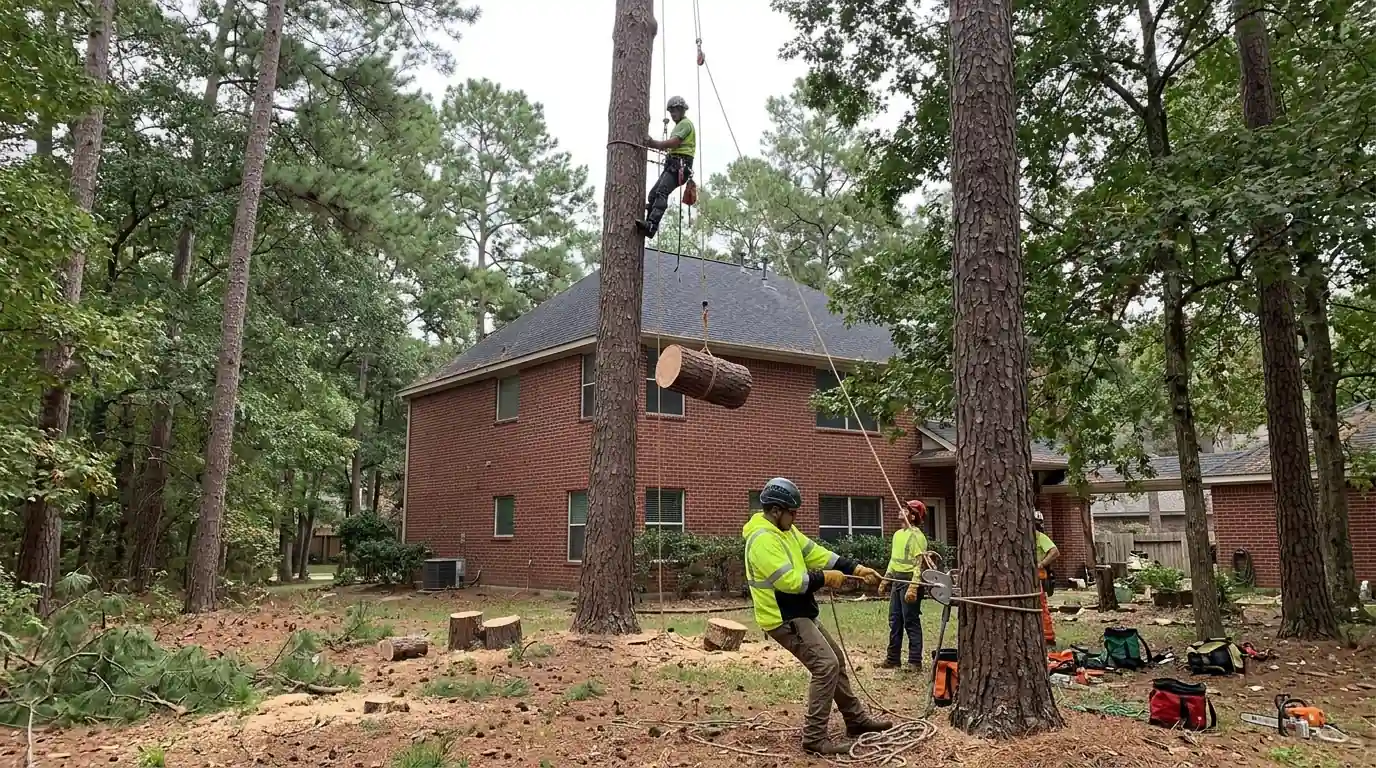
A pine a few steps from the wall leaves no room to drop anything. The climber sets a rigging block high on the stem and the ground crew lowers each limb and log on a friction device, landing them on the lawn side, away from windows. Rounds stay short so the line and the anchor point can hold them. Move cars and patio furniture, since sap drips from every cut. The stump beside the slab is ground carefully, without digging toward the foundation.
Beetle-hit pines
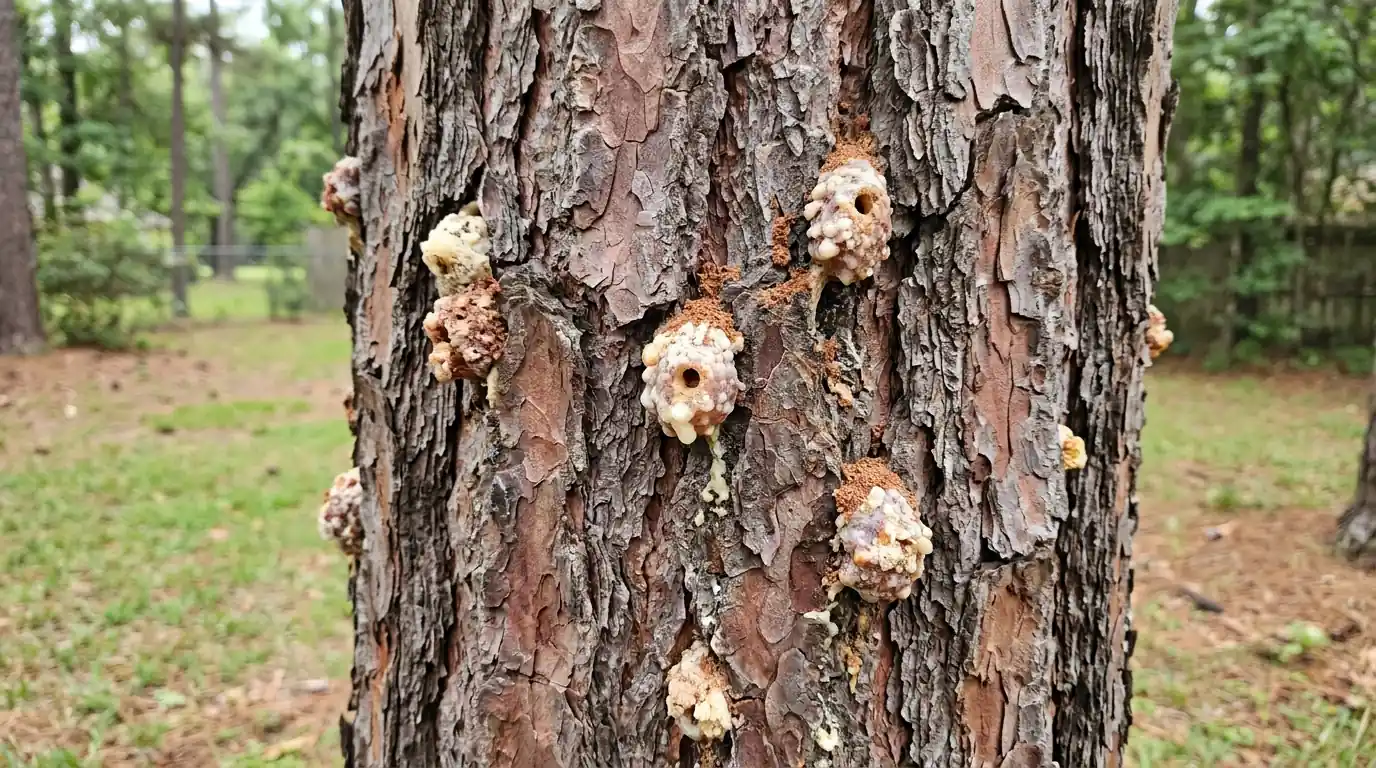
Ips and other bark beetles go after pines already stressed by drought, storms or root damage. The first sign is often pitch tubes on the bark, then a crown that fades yellow to red. By the time it turns red, the beetles have often left for the next pine. We take infested pines down promptly and send the wood through the chipper or off site, never into a firewood stack by your other pines. An inspection of the other pines is worth it.
Questions about your tree? Talk to a crew lead.
Call (704) 839-2139Warning signs
When a pine should go
Pitch tubes
Resin blobs, white to reddish-brown, dotting the lower trunk.
Fading crown
Needles turning yellow, then red-brown, from the top down.
New lean
A tilt that appeared since last year, often after rain.
Heaving soil
Cracks or a mound at the base, opposite the lean.
Lightning scar
A strip of torn bark running down the whole stem.
Crowding the house
Trunk or roots pressing the roofline, gutters or slab edge.
In the scope
Pine job checklist
- Climber limbing and topping with planned drops
- Rounds lowered on a line near walls
- Limbs chipped, logs hauled or left for you
- Beetle wood hauled off, never stacked by pines
- Stump cut low and ready for grinding
- Needles in gutters cleared before we leave
Local conditions
Pine Tree Removal in north Houston: what local conditions change
Ips engraver beetles go after drought-weakened pines, and Texas A&M Forest Service says an attack shows as white to reddish-brown pitch tubes on the bark; it calls prompt salvage cutting the practical fix, with spraying kept for high-value trees around The Woodlands. Wind is the other threat: in Kingwood, Beryl's winds of 80 mph pulled seventy-foot pines out of the ground.
Sources: digital-release.ketk.com, texasmonthly.com
Step by step
From the top down
Plan drops
We choose a lane for the top and rounds, or lower everything.
Limb up
The climber removes limbs on the way up, clearing the stem.
Top out
The top is notched and pushed over in the planned direction.
Stem down
Rounds are dropped into the lane or lowered on a friction device.
Rake-out and haul
Needles and brush go through the chipper, rounds leave on the truck, and a stump grind follows if booked.
It can. Pines grown in a group shelter each other, so a gap exposes the rest to wind they never bore alone. Thin a stand gradually.
Yes on a kept tree, so spurs stay off pruning jobs. On a removal the wounds do not matter, and spurs speed the climb up a bare stem.
Usually, if the wires run beside the crown rather than through it; pieces are lowered away from them. Where branches touch a line, CenterPoint makes it safe first.
Chips make decent path and bed mulch. Pine logs burn fast and sooty indoors, so most get hauled, and wood from beetle-hit pines should leave the property.
Not by itself; many pines grow with a slight lean toward light. A new or growing lean, with soil cracking at the base, means moving roots.
No. Unlike tallows, a cut loblolly does not sprout from the stump; it dies and rots. Grinding is about reclaiming the space and removing a trip hazard.
Related work