Tree Health & Planting on the north side
Sick Oak and Pine Care in North Houston
Canker on a water oak, conks at the flare, scorched August leaves: we read the signs and say what they mean.
Phone answered 24/7 · office in Spring, TX
- Cuts to sound wood
- Infected wood hauled
Updated October 2026
 Tree Health & Planting
Short answer
Tree disease care in Houston often starts with hypoxylon canker, which Texas A&M Forest Service warned about in 2024 after three straight years of hard freezes and drought. We read the bark, crown and root flare, cut out infected wood, and say when decay means removal.
The job
Reading Bark, Crown and Root Flare
Most tree disease around Houston is opportunistic. Hypoxylon lives in oak bark and takes over when drought, flooding or root damage weakens the tree. Root rot fungi follow, often after a grade change or a utility trench. The first job is finding the stress.
We diagnose only what we can see, and we say so when signs leave doubt. Nothing sprayed or injected cures canker or heart rot. Our part is cutting out dead wood, easing stress and timing a removal before brittle wood fails.
What moves the price
What a Sick-Tree Visit Costs
Pruning is priced on cuts and cleanup. If a canker-killed oak must come down, oak removal in Angi's 2026 Houston data spans $200 to $2,000, as a planning range.
Number of cuts
Priced on how many infected limbs come out and how high they sit.
Yard access
A fenced backyard oak means every limb is carried out by hand.
Brittle wood
Canker-rotted limbs snap without warning, so climbers rig more and drop less.
Wood disposal
Diseased wood is chipped or hauled away, never left in a pile.
Cost data: angi.com
Spotting Ips beetles in Houston pinesYour options
Prune, Watch or Remove
| Option | When it fits | Tradeoff |
|---|---|---|
| Sanitation pruning | Disease only in limbs; trunk sound | Tree stays; needs rechecks |
| Watch and recheck | Mild scorch, no decay found | No cutting; decline may continue |
| Removal | Trunk mats or root plate rot | Risk gone; replanting starts over |
Hypoxylon Canker
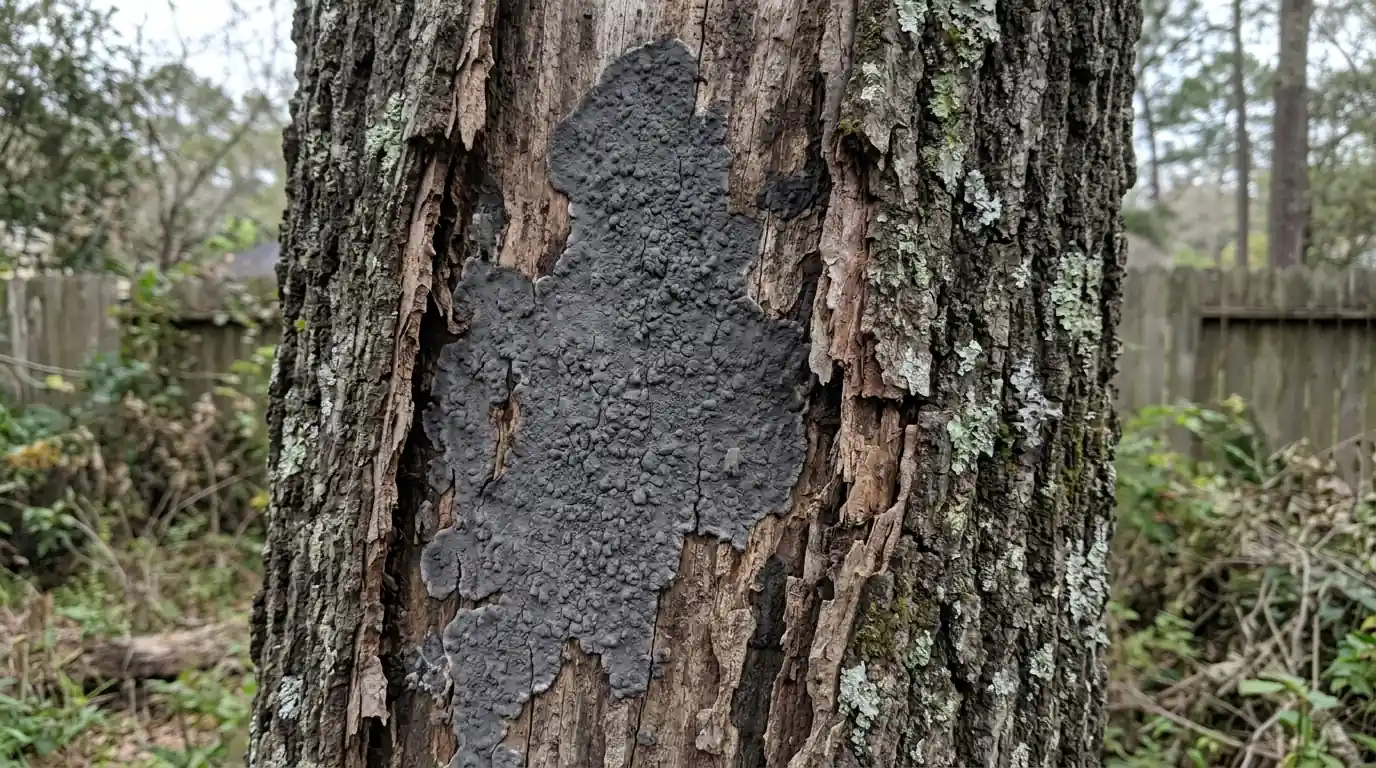
On a stressed water oak or post oak, hypoxylon shows as bark peeling to expose a tan or olive powder that turns silver-gray and crusty. By the time those mats run up the trunk, the wood underneath is rotting and the tree is usually beyond saving. Mats on one limb mean cutting that limb back to sound wood and easing the stress behind it. Mats on the trunk mean planning a removal before dead limbs drop on the roof or drive.
Root Rot and Conks
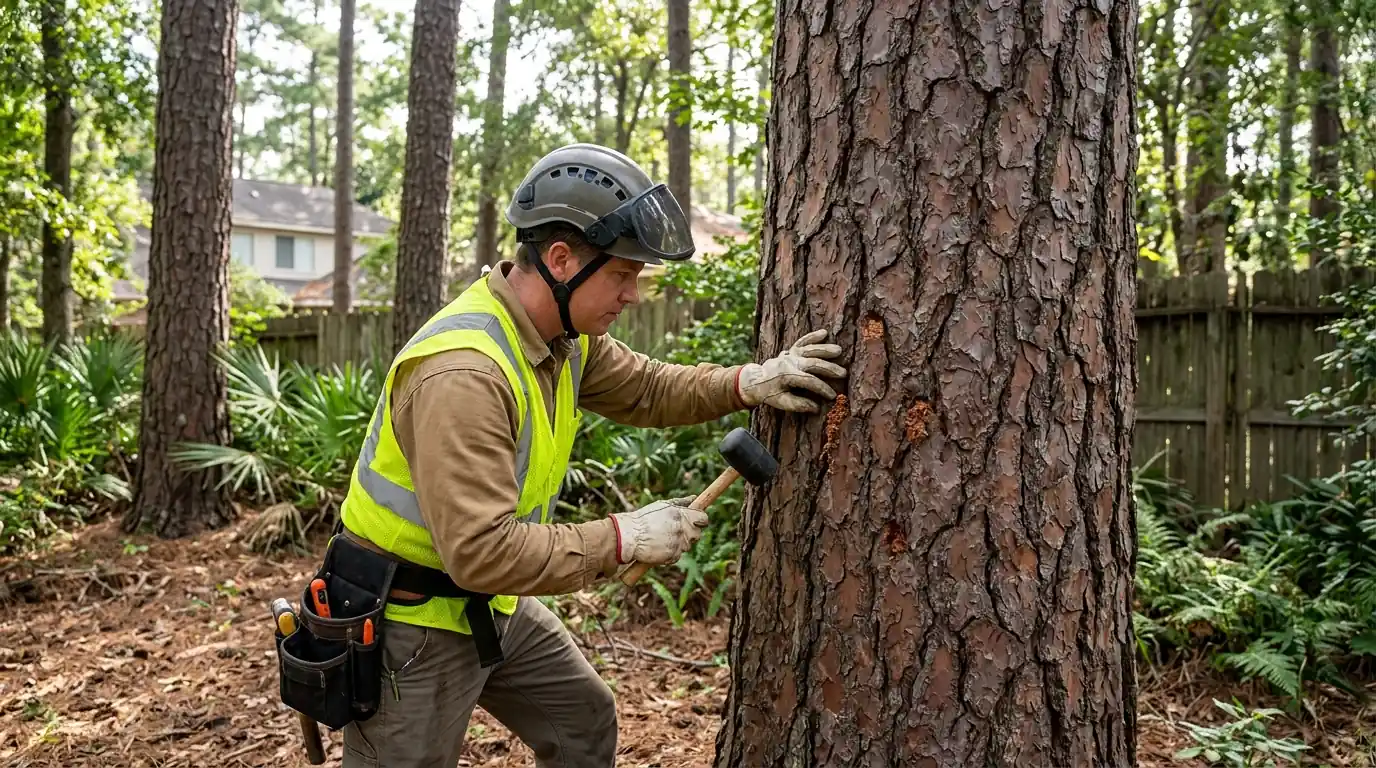
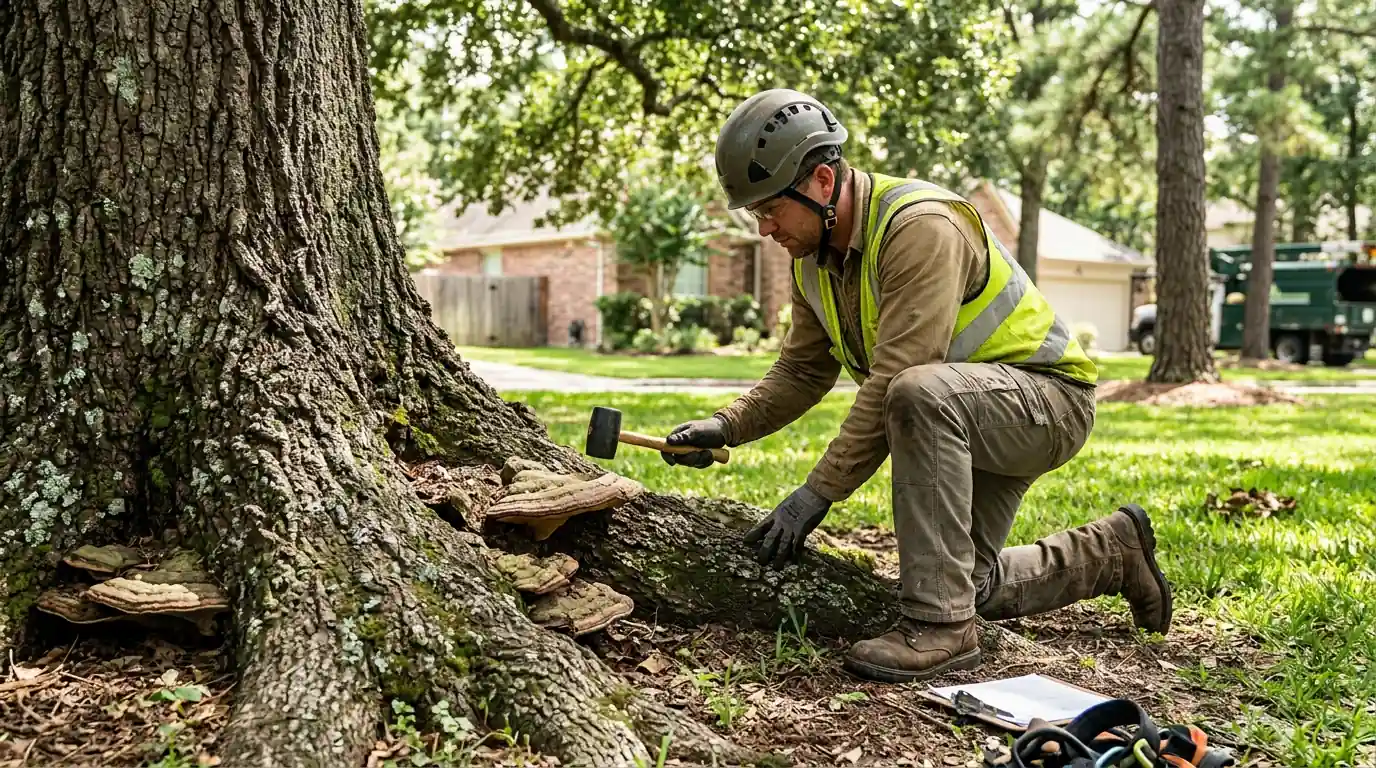
Shelf conks or mushroom clusters at the root flare mean a fungus is feeding on roots or the butt of the trunk. What you see outside says little about how far the decay runs inside. We sound the flare with a mallet, probe for soft wood and check for new lean or lifting soil. A tree with rotted roots can go over in a wet storm while its crown still looks green. Near a house, that risk usually decides removal over waiting.
Leaf Scorch and Decline
Leaves that brown from the edges in late summer can mean heat stress, root trouble or bacterial leaf scorch, which hits oaks, elms and sycamores. Nobody can tell those apart by eye with certainty. Decline is slower: a thinner crown each year, small leaves, dead twigs at the top. We look for the cause on the ground first, such as buried root flares, compaction or a new driveway, and prune deadwood. Photos a year apart show whether it is holding or sliding.
Pruning Out Infected Wood
Sanitation pruning suits disease that sits in limbs, not the trunk: a cankered branch, tip dieback, a limb with conks. We cut back to healthy wood at a branch collar, past the discolored edge, and clean saws and pruners between trees. We cut in dry weather when we can. Infected wood gets chipped or hauled, never stacked under other trees as firewood. We take only infected wood, since stripping leaves from a sick tree adds stress; save routine crown thinning for later.
Questions about your tree? Talk to a crew lead.
Call (704) 839-2139Warning signs
Visible Disease Signs
Bark peeling off
A tan or gray crust shows where bark fell away.
Conks at the base
Shelf fungi or mushroom clusters returning to one spot.
Scorched leaf edges
Leaf margins turn brown, often with a yellow band inside.
Dieback up top
Twigs die from the top while lower limbs stay green.
A thinning crown
More sky shows through the canopy than last summer.
Hollow-sounding trunk
A knock sounds dull, or bark gives under a thumb.
Local conditions
What Houston's storms, trees and soil mean for tree disease care
Across Harris County and Montgomery County, the 2024 warning from Texas A&M Forest Service was plain: trees worn down by three years straight of freezes and drought lay open to Ips beetles and hypoxylon canker. Both finish weak trees. So we treat a sick oak and the stress behind it as one job, especially on clay that stays soggy after rain.
Sources: mail.scttx.com
Step by step
How a Disease Visit Runs
Walk the yard
We check the sick tree and its neighbors; stress rarely hits one.
Sound and probe
A mallet and probe at the flare find hidden soft wood.
Explain it plainly
You hear what the signs show and what stays uncertain.
Cut or remove
Infected limbs come off, or the whole tree comes down.
Clear the wood
Diseased wood leaves; tools get cleaned before the next tree.
No. Nothing cures hypoxylon once mats show on the trunk. On a limb, cutting it back to sound wood and watering through dry spells can buy time.
Usually they mean a fungus is feeding on roots or the lower trunk. We sound the wood to judge how much is gone before anyone talks removal.
Not in a way removal can stop. Hypoxylon spores are already common in local woods. What protects the rest is less stress: water in drought, no root damage.
Nobody can say for sure by eye, since heat, root damage and bacteria scorch leaves alike. For a valuable tree, a lab test on leaf samples beats any guess.
Not as a first step. Fertilizer pushes new growth a stressed tree cannot support. Water in dry spells, a proper mulch ring and looser soil come first.
When decay runs through the trunk or root plate, mats cover the main stem, or a rotting tree tilts toward the house. Pruning cannot fix rotten structure.
Related work