Tree Health & Planting on the north side
Cabling and bracing for big north Houston trees
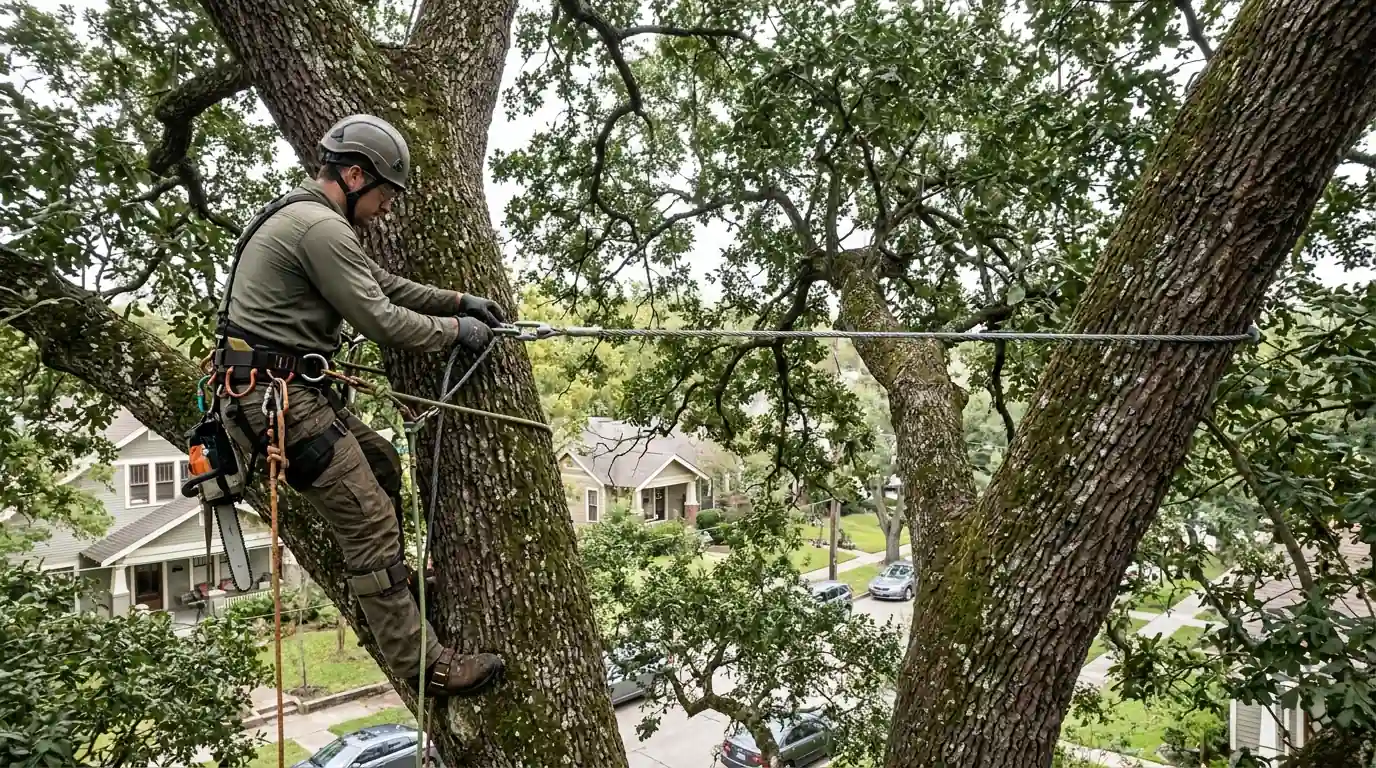
For a weak fork, split crotch or storm-cracked limb, we install cables high in the crown and rods through the union.
Phone answered 24/7 · office in Spring, TX
- Cables set high
- Rods through unions
Updated October 2026
 Tree Health & Planting
Short answer
Cabling and bracing in Houston can keep a tree worth saving, the kind of 100-year-old tree Heights residents saw downed by the dozens after Beryl. A cable high in the crown limits how far codominant stems spread in wind, and a through-rod pins a split union.
The job
How cables and rods hold a fork
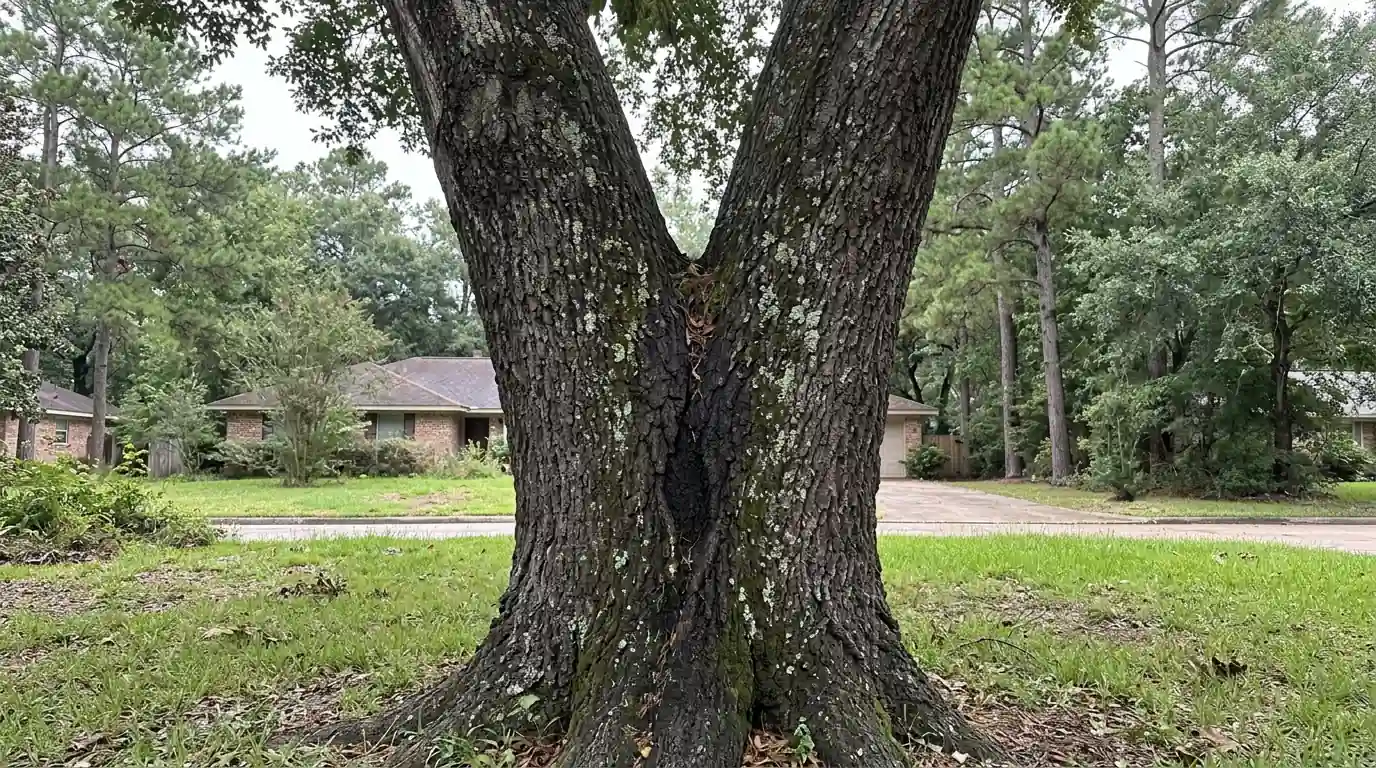
Codominant stems, two trunks of near-equal size from one fork, are the weak point in many oaks, elms and pecans. When bark gets trapped inside the V as they grow, called included bark, the union has little wood holding it. Wind works the stems apart until the fork splits.
Hardware does not heal a weak union; it shares the load so the fork moves less in wind. Sizing, placement and follow-up checks decide whether it works. For a wider storm plan, see our hurricane season tree checklist.
What moves the price
Pricing a cabling job
A cabling price comes from the walkthrough, once the crew lead has seen the union, the crown height and whether weight reduction must come first.
Hardware count
Each added cable or rod means more drilling, fitting and climbing time.
Install height
Cables belong well up the crown, so taller trees mean longer climbs.
Steel or dynamic
Dynamic systems skip the drilling but need replacing sooner than steel cable.
Pruning with it
Many cabled trees also need weight reduced on the weak stems first.
Your options
Steel cable, dynamic rope or rods
| System | How it works | Tradeoff |
|---|---|---|
| Steel cable | High-strength strand between eye bolts, well up the crown | Long-lived, but each stem gets drilled |
| Dynamic system | Stretchy synthetic rope wrapped around the stems | No drilling, but wears out sooner |
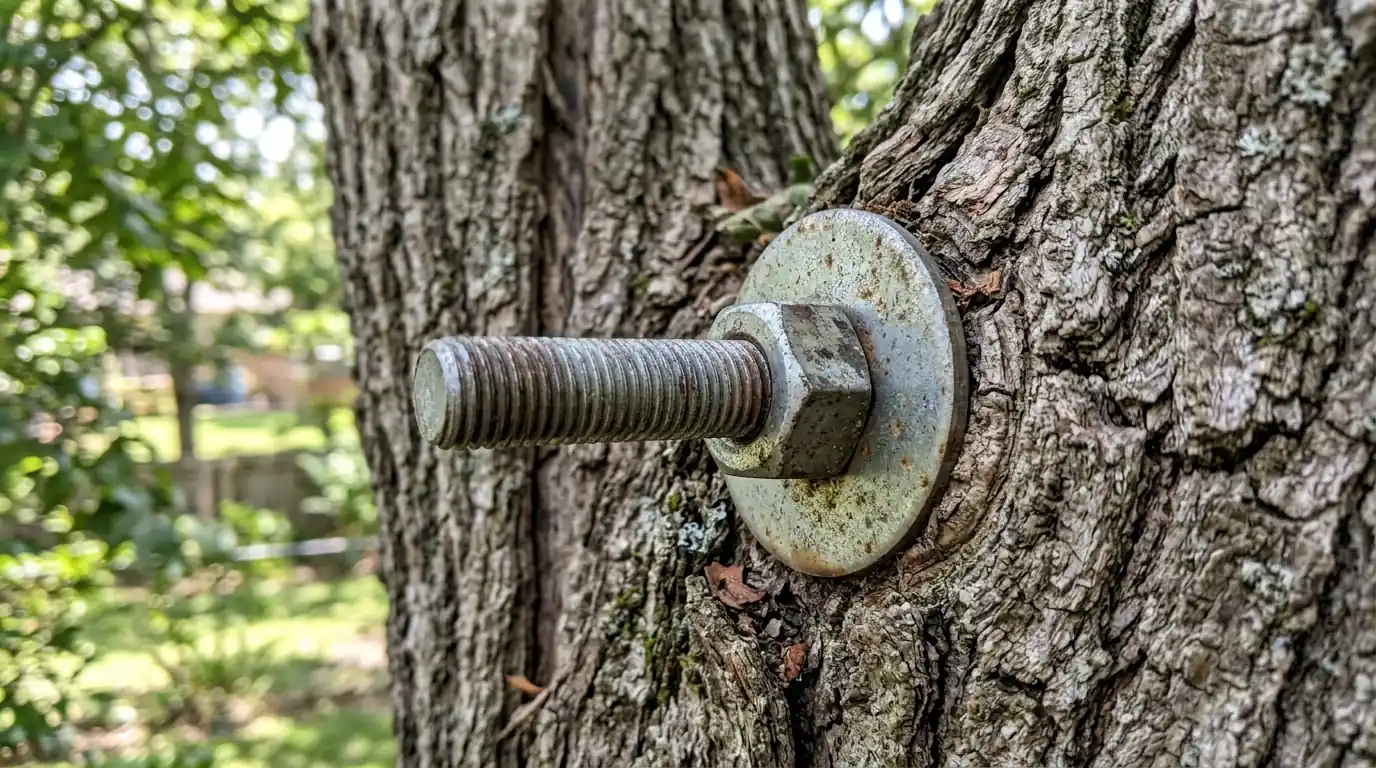
| Through-rod | Threaded steel bolted through a weak union | Pins a crack; drilling adds a wound |
Codominant stems
A narrow V between twin trunks, with a seam of bark down into the fork, is the classic case. Nothing looks wrong for years, until a wet, windy night when one stem tears away with half the crown and whatever sits under it. We judge how tight the union is and how much included bark shows, then install a cable between the stems well up in the crown. On a younger tree, structural pruning of one stem may be the better fix.
Split crotches
A crack running down from the fork, sap or water weeping from it, or a gap that opens when the wind blows means the union has started to fail. A cable alone will not do. We drill through the union and install a threaded through-rod with washers and nuts to pin the halves, then add a cable higher up to take load off it. A split tree never regains full strength, so the decision rests on what it could hit.
Storm-damaged limbs worth keeping
After a storm, a big limb that cracked but did not fall, or a stem partly torn at the union, can sometimes be held rather than cut. We weigh the size of the tear, any decay, and how much crown would go with it. If the wood is sound, a cable from that limb to a stronger stem carries it while the tree adds wood around the wound. Badly torn limbs are better taken down; holding them only delays the fall.
Through-rod bracing
Two limbs rubbing their bark raw where they cross, or a fork too low or tight for a cable to work alone, call for a rod. A rod is threaded steel run through a drilled hole, with washers and nuts on both sides set against the wood. Drilling makes a wound, so we place rods only where the wood is sound, and as few as the union needs. Rods stay in for good; over time the tree grows around the hardware.
Questions about your tree? Talk to a crew lead.
Call (704) 839-2139Warning signs
Signs a fork may need support
Cracks below forks
A seam or open crack just where two stems meet.
Tight twin trunks
Equal stems from one narrow fork, with bark pinched inside.
Fork spreading apart
The gap between the stems visibly widens in strong gusts.
Cracked limb hanging
A storm-torn limb still hanging on by splintered wood fibers.
Bulges below unions
Swollen wood or vertical ribs on the trunk below it.
Worn old hardware
Rusted, slack or bark-buried cables, or rods splitting the wood.
Local conditions
Why cabling & bracing looks different on Houston's north side
After Beryl, Houston Heights residents described Heights Boulevard as looking like a war zone. When a storm takes the old trees next door, the ones still standing get a hard look from their owners. A cable is one way to keep a sound tree with a single weak fork, and the walkthrough is where we tell you whether yours qualifies.
Sources: theleadernews.com
Step by step
Install to inspection
Union check
We look at the fork, included bark, cracks and decay first.
Lighter stems
Heavy ends are reduced so the hardware carries less load.
Hardware set
Cables go well up the crown; rods go through the union.
Snug, not tight
Cables are set snug, without pulling the stems toward each other.
Later checks
Hardware needs periodic checks, and one after any major storm.
A long time, but not forever: the tree grows, eye bolts get buried and strand can corrode. Dynamic rope wears faster in our sun and heat.
No. A cable lowers the odds that a weak fork splits, but it cannot stop uprooting or a sound limb snapping in extreme wind. Risk drops; it does not disappear.
Yes. Older cables can be slack, rusted or buried in bark. We check the hardware and the union, then say whether to adjust, replace or remove it.
A sound tree with one bad fork is a good cabling case. Root decay, a hollow trunk or several bad unions over the house usually point to removal instead.
A yearly look is a sensible rhythm, plus one after any major storm, checking for slack or fraying, bolts the bark is swallowing and new cracks.
Yes, and it usually should be. Reducing weight on the weak stems takes load off the hardware, and the climber checks the cable while up in the crown.
Related work