Trimming & Pruning on the north side
Tree trimming for north Houston shade trees
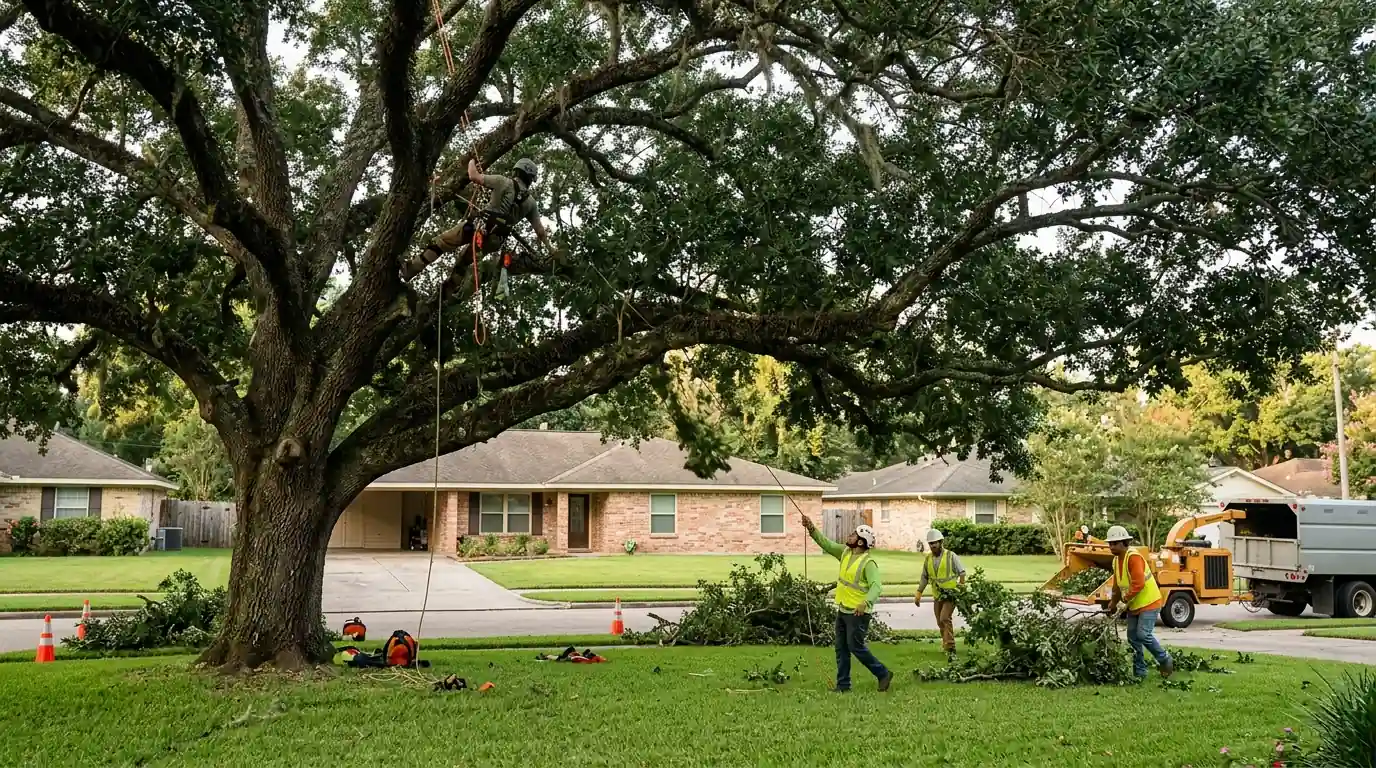
Thinning a crowded crown, lifting limbs off the roof, shortening a long leader or clearing deadwood, with clean cuts and no topping.
Phone answered 24/7 · office in Spring, TX
- Cuts at the branch collar
- No topping
Updated October 2026
 Trimming & Pruning
Short answer
Tree trimming in Houston on a street-side tree needs a City of Houston permit when the tree stands on city property, and processing runs about 10 business days. For yard trees, the work is thinning, raising, reduction or deadwood removal, each cut made at a collar or strong lateral.
The job
Cuts a tree can close over
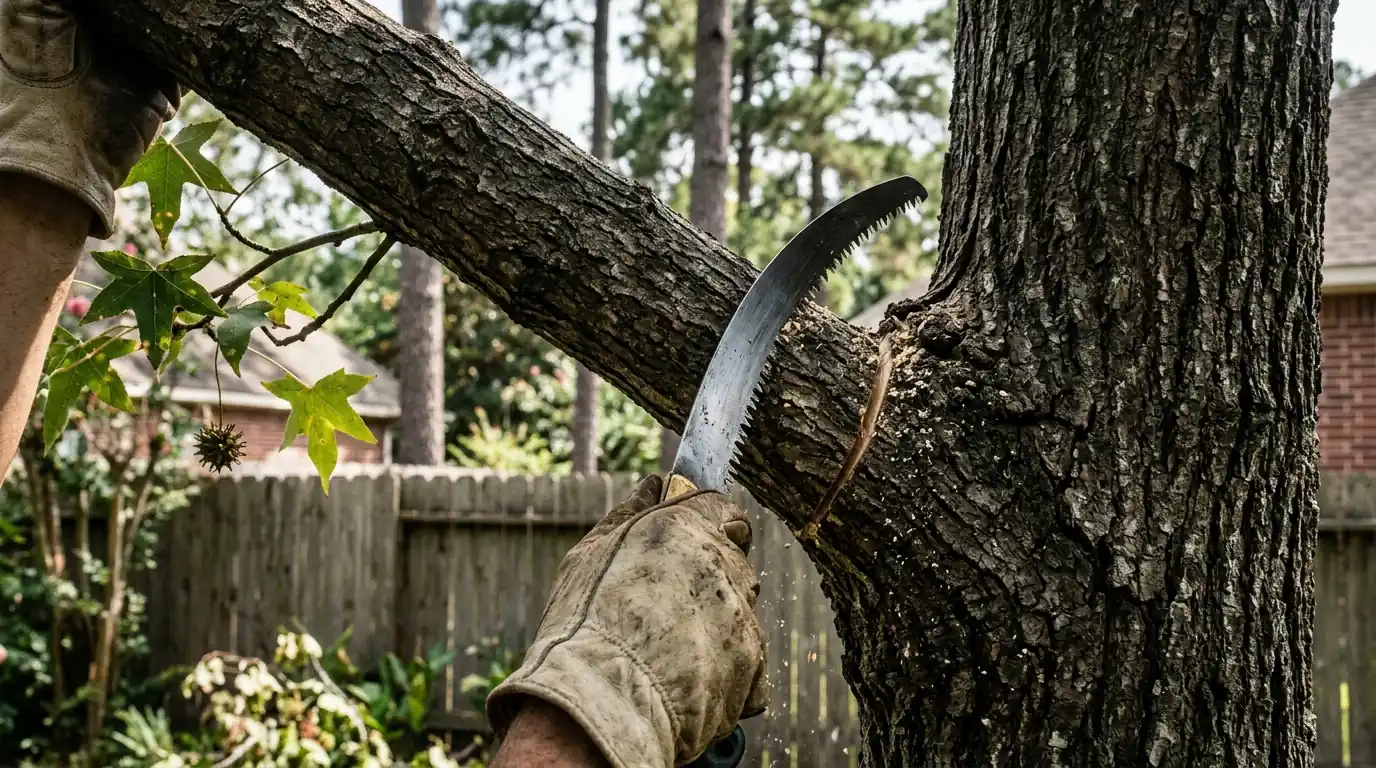
A good pruning cut stops just outside the branch collar, the swollen ring where a limb joins the trunk, so woundwood can close over it. Flush cuts into the collar and long stubs left beyond it both invite decay.
Heavy limbs come off in three cuts, with an undercut first so the bark cannot tear down the trunk. Topping, cutting leaders back to stubs, does lasting harm: the stubs rot and sprout weak, crowded shoots. For limbs over shingles, roof-line clearance uses the same cuts.
In the scope
What a trimming visit covers
- Cuts at the branch collar or a strong lateral.
- Deadwood out of the whole crown, not just low limbs.
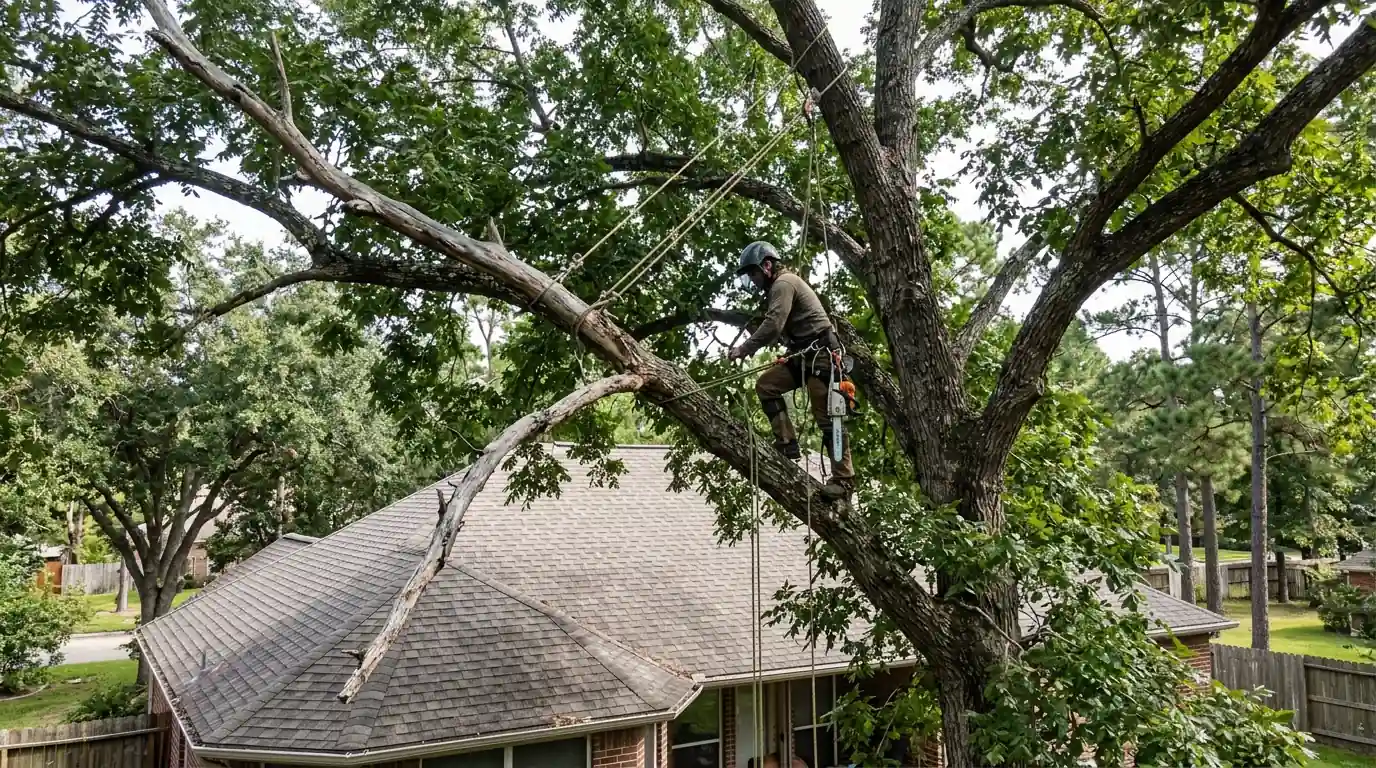
- Heavy limbs over roofs lowered on rope, not dropped.
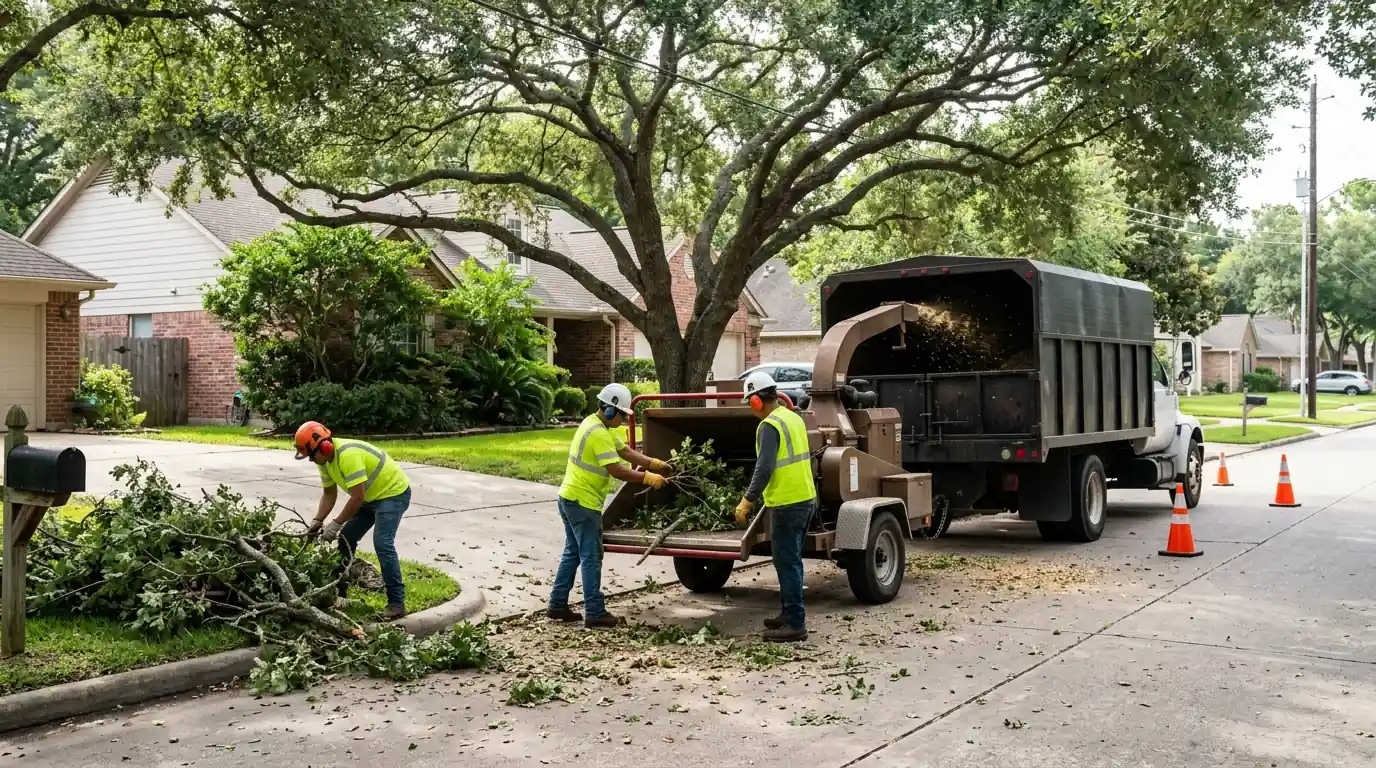
- Brush chipped, with chips hauled or left as mulch.
- Notes on cracks or decay the climber finds aloft.
- Beds, walks and roof edges raked clean afterward.
Crown thinning
Thinning is for a dense crown that blocks light, shades out the lawn and catches wind like a sail. The climber removes selected branches throughout the canopy, back to their point of origin, so the crown keeps its shape but lets air and light through. The mistake to avoid is lion-tailing: stripping the inner branches and leaving foliage only at the tips, which loads the ends of limbs. A modest share of live foliage comes out, never most of it.
Crown raising
Raising lifts the lower canopy off a roof, driveway, sidewalk or lawn by removing the lowest limbs. It is the cut people want when the mower clips branches or a delivery truck scrapes them. Large low limbs come off in stages over a few years instead of all at once, since big wounds near the trunk decay. The tradeoff is taper: strip too many low limbs and the trunk grows thin and top-heavy, so the live crown stays deep on the stem.
Crown reduction
Reduction shortens a tree's height or spread when it has outgrown its spot, such as a limb reaching over the roof or a leader leaning toward the street. Each limb is cut back to a lateral branch big enough to take over as the new tip, which keeps the natural form. That is the difference from topping, which cuts to stubs. Pines do not take reduction well, and large cuts on old trees can decay, so sometimes removal is the honest answer.
Deadwood removal
Deadwood means the branches that have already died: gray, barkless or brittle limbs that snap in a storm and land on roofs, cars and people. Removing it is the least stressful cut a tree gets, since no live tissue is lost, and it is often the first job after a hard freeze or drought. The climber works the whole crown, including high limbs over the house, and lowers anything heavy on a rope instead of dropping it through the canopy.
Questions about your tree? Talk to a crew lead.
Call (704) 839-2139Local conditions
Tree Trimming in north Houston: what local conditions change
CenterPoint's Beryl restoration meant trimming or removing about 35,000 trees, and the utility said vegetation beyond its rights of way did most of the damage. Trees beyond those rights of way are pruned by whoever owns them, or not at all. In a city where hurricane season runs June to November, the months before it are when thinning and deadwood work pay off most.
Sources: spglobal.com
Do it yourself?
What you can prune from the ground
Fine to handle yourself
- Snip suckers and twigs within reach of hand pruners.
- Pole-prune small limbs far from any wire.
- Rake fallen deadwood and pull mulch off the trunk flare.
Leave to a crew
- Any cut that needs a ladder and a saw together.
- Limbs over the roof, pool or service drop.
- Large limbs that need three-step cuts to avoid tearing bark.
Step by step
How a trimming visit runs
Walk through
We look up with you and agree on which limbs come out.
Rig up
The climber ties in high and sets lowering lines over targets.
Cut
Cuts land at the collar, with heavy limbs taken in three steps.
Lower, chip
Limbs come down on rope and feed straight into the chipper.
Rake out
Beds, walks and roof edges are cleared of twigs and leaves.
What moves the price
What shapes a trimming quote
Trimming is priced per tree from the walkthrough, because one oak over a roof and three small ornamentals are different jobs. These four factors move it most.
Tree height
A climber in a tall crown takes longer than pole work on a small tree.
What sits underneath
Limbs over roofs, pools or wires get roped down piece by piece.
Cut type
Deadwood removal goes quicker than selective thinning through a full, dense canopy.
Cleanup
Chipping and hauling the brush adds time, while leaving wood rounds saves some.
Mature shade trees usually need a visit every few years, young trees more often while their structure forms. Storm or freeze deadwood is worth clearing sooner.
Late fall through winter suits most hardwoods, since bare limbs show structure. Deadwood can come out any time, and oaks keep their own calendar because of oak wilt.
Not on most trees, since wound paint can trap moisture. Oaks are the Texas exception, because fresh oak wounds can draw the beetles that carry oak wilt.
It lowers the risk by cutting wind load and end weight, but no pruning makes a tree storm-proof. Cracked unions or decay may call for cabling or removal.
Texas law generally allows trimming overhanging branches back to the property line, provided the cuts do not kill or seriously harm the tree. Tell the neighbor first.
Less than most people expect. Mature trees handle a light thinning, old or stressed trees less, and heavy cuts at once drain stored energy and trigger weak sprouts.
Related work