Costs and permits
Houston tree permits: what the city regulates and what it leaves to you
The City of Houston permits work on trees it owns, including street trees in the right of way. Trees on a private lot answer to other rules: your deed restrictions, your HOA and, in The Woodlands, the township.
Phone answered 24/7 · office in Spring, TX
By Ursula Lusk, Tree Guides EditorUpdated
 Tree advice
Short answer
In Houston, a city permit is required to remove or trim any tree on city property, including street rights of way and medians. The permit is posted 20 days before work, and processing runs about 10 business days. A tree on your own lot generally falls outside it, though deed restrictions or an HOA may still have a say.
Who owns the tree? Start at the property line, not the trunk
Every Houston tree question starts with ownership. The city's permit covers trees on city property: street rights of way, medians, parks and other city land. Houston Urban Forestry works only on city property, and for trees on private property the city directs residents to a professional tree service.
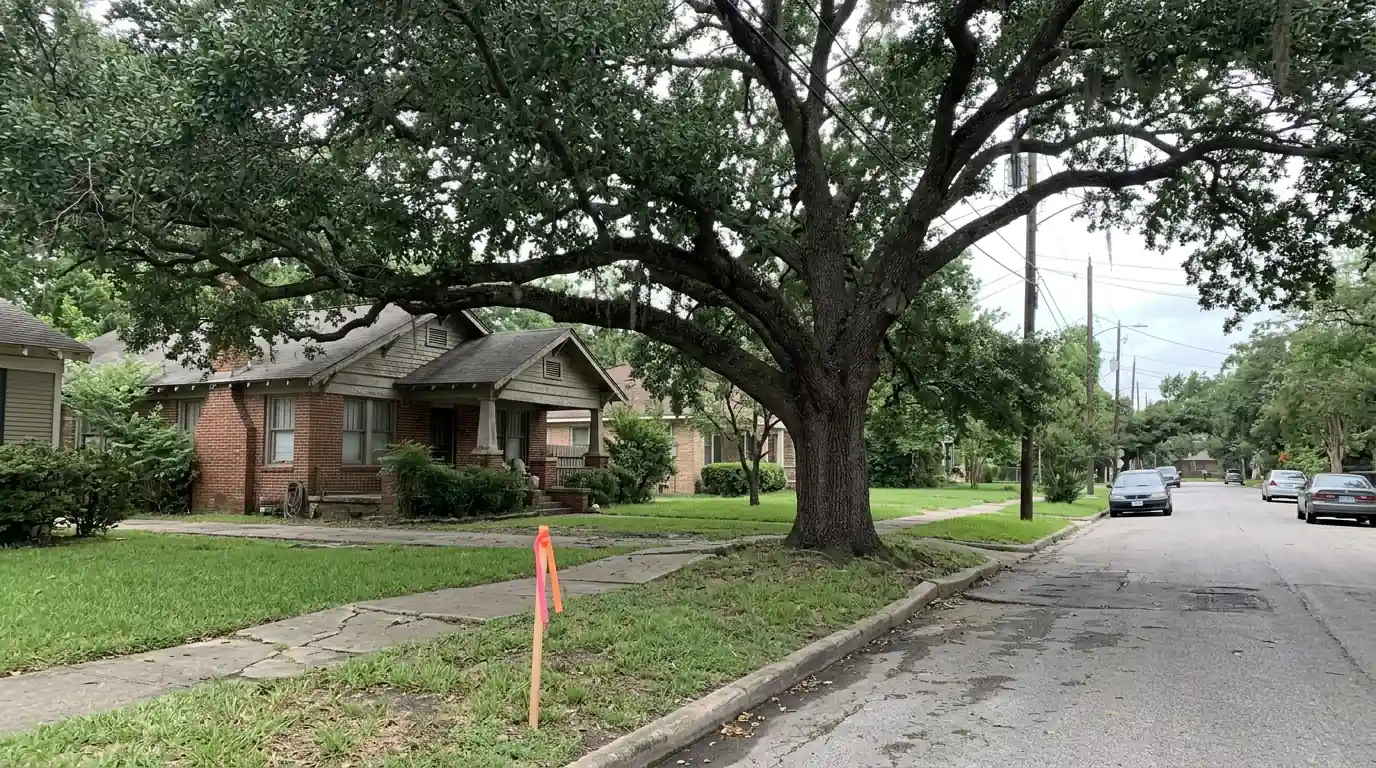
The tricky tree is the one out front. A street tree you have mowed around for years may stand on city right of way rather than on your lot. Your plat or survey shows the property line. If the trunk sits near it, settle the question before anyone cuts, because the answer decides whether a permit applies.
The city's tree removal and trimming permit, in plain terms
The Houston Permitting Center page shows who the permit is mainly written for. Applicants email a written notice of intent, then upload a landscape plan showing utilities, sidewalks, street lights and existing trees, plus a plant schedule with sizes and names. That is a development-site packet, and the page notes that commercial properties and parking lots face more specific requirements.
For a homeowner, the practical point is the calendar. About ten business days of processing, then a 20-day posting window before the work, means a planned right-of-way job takes weeks.
| Item | What the Houston Permitting Center lists |
|---|---|
| Covers | Removing or trimming trees on city property, rights of way, medians, parks or a setback |
| Posting | Kept on site and posted 20 days before the work |
| Processing | About 10 business days |
| Fee | Varies with the size and location of the tree |
| Valid for | One year, with no renewal required |
| City steps | A plan check, then a site inspection |
Dead or hazardous street trees are the city's job
Houston Urban Forestry trims street trees for height clearance and removes dead or hazardous trees on street rights of way. If the dead tree in question stands on the right of way, report it to the city rather than paying to have it cut.
The same page asks residents to report street-tree removals they see happening, so the city can check for permits and avoid losing street trees. A crew working on a right-of-way tree should be able to show you the posted permit.
Storm season blurs the lines. After Beryl, CenterPoint said it trimmed or removed about 35,000 trees during restoration, and that most damage came from vegetation outside its rights of way, yard trees included. Clearance around the service line to your house is worth planning before storm season, and our trimming near service lines is built around that work.
Not sure which rules apply?
A crew lead can check the trunk against your plat, photograph the tree and tell you what paperwork to expect.Private lots inside city limits: deed restrictions and HOAs
A private tree outside the city's permit is not automatically free of rules. Many Houston subdivisions carry deed restrictions, and some add an HOA with an architectural committee. Those documents can address things the city does not, such as approval for front-yard removals or a replacement tree. Whether yours do is a matter of reading them.
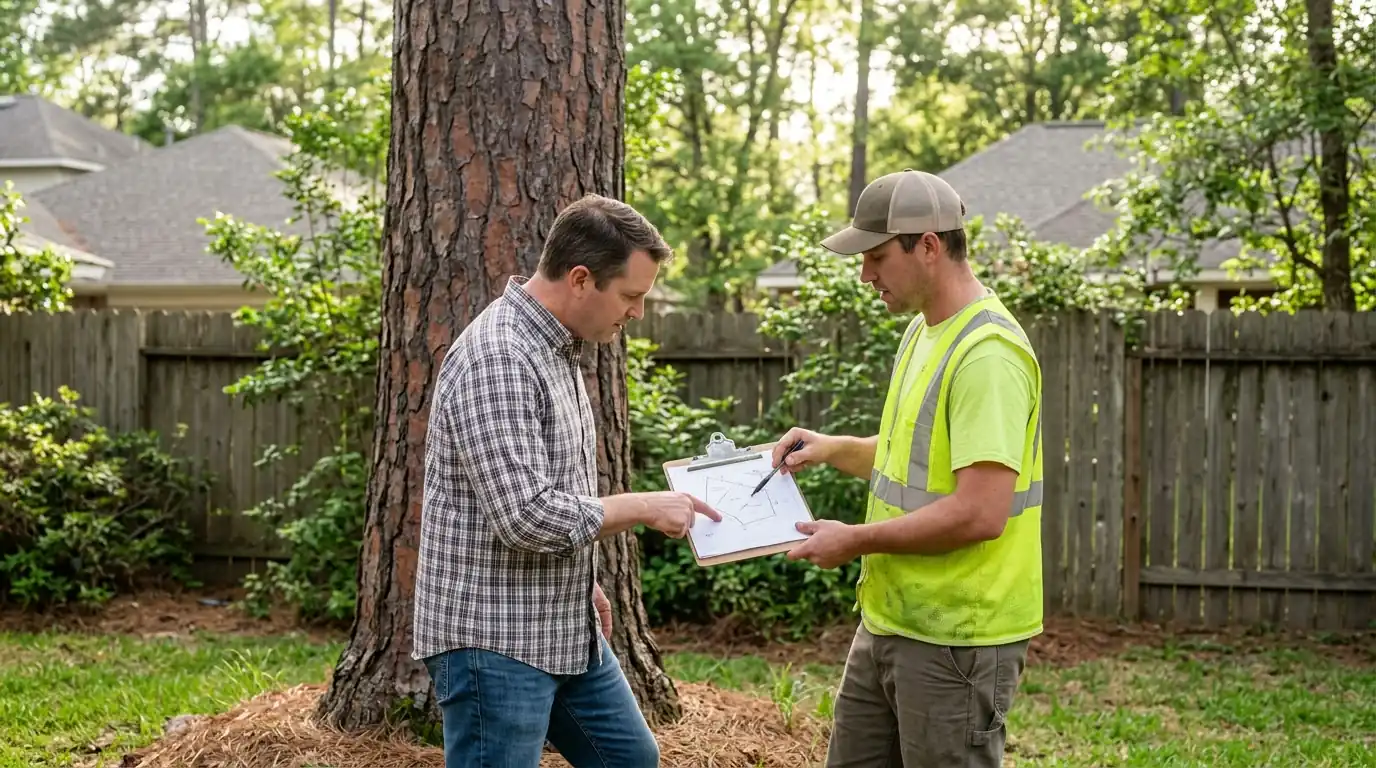
If a rule applies, the approval packet looks a lot like a permit application: photos, a site sketch and a reason. Our HOA approval help puts that together before a planned tree removal is scheduled.
- Deed restrictions, from your title papers or county property records
- HOA architectural or modification rules
- The plat or survey, for easements and the property line
- Utility easements along the back fence
Outside city limits and in The Woodlands
A Houston mailing address does not always mean Houston city limits. If your address sits in unincorporated Harris or Montgomery County instead, the city's tree permit has nothing to say about your yard. Deed restrictions and HOA rules carry the weight there.
Your property tax statement lists the taxing units for your address. If the City of Houston is one of them, you are inside city limits. The Woodlands runs its own system: under its covenants, residents apply before removing any living tree larger than six inches in diameter, and our guide to The Woodlands permit steps walks through it.
Building or adding on? The setback line and the landscape plan
The permit page also lists trees on a setback, and that matters mostly when a lot is being built on. The packet asks for a landscape plan of the building site and, if you want credit for trees you keep, a preservation method. A site inspection then checks the work against that plan.
If you are building or adding on, ask the Permitting Center early whether the trees near the front of the lot are part of the plan. Trees you intend to keep need their root zones fenced before the first trench, which is the core of tree protection during construction.
A five-question permit check before the saw starts
Run through these before booking any removal. If every answer is no, what remains are questions about the tree itself: lean, targets and access.
- Does any part of the trunk stand on city right of way or a median?
- Is the lot an active development site with a city landscape plan?
- Do your deed restrictions or HOA rules mention trees?
- Is the address in The Woodlands, under township covenants?
- Are power lines or a utility easement involved?
Check your plat first. If it stands on city right of way, it is city property, so removing or trimming it needs a city permit, and Urban Forestry removes dead or hazardous right-of-way trees.
Not without a permit, as a rule. Houston's permit covers trimming as well as removal of trees on city property, including rights of way. Urban Forestry also trims street trees for height clearance, so ask the city first.
Yes, for trees on city property. The Houston Permitting Center says fees vary with the size and location of the tree, and a permit stays valid for one year with no renewal required.
Both can apply at once. A city that does not regulate a private tree does not cancel a deed restriction or HOA rule that does. Ask the HOA for its rule in writing, and talk to an attorney if a dispute starts.
Report it to the city. The Houston Permitting Center asks residents to report street-tree removals so it can check for permits, and its line for those reports is staffed around the clock.