Storm & Emergency on the north side
Hurricane prep for north Houston trees, before June
Hurricane season runs June to November. Work done in the quiet months thins crowns, clears roof lines and finds leaning pines.
Phone answered 24/7 · office in Spring, TX
- Done before June
- Thinning, never topping
Updated October 2026
 Storm & Emergency
Short answer
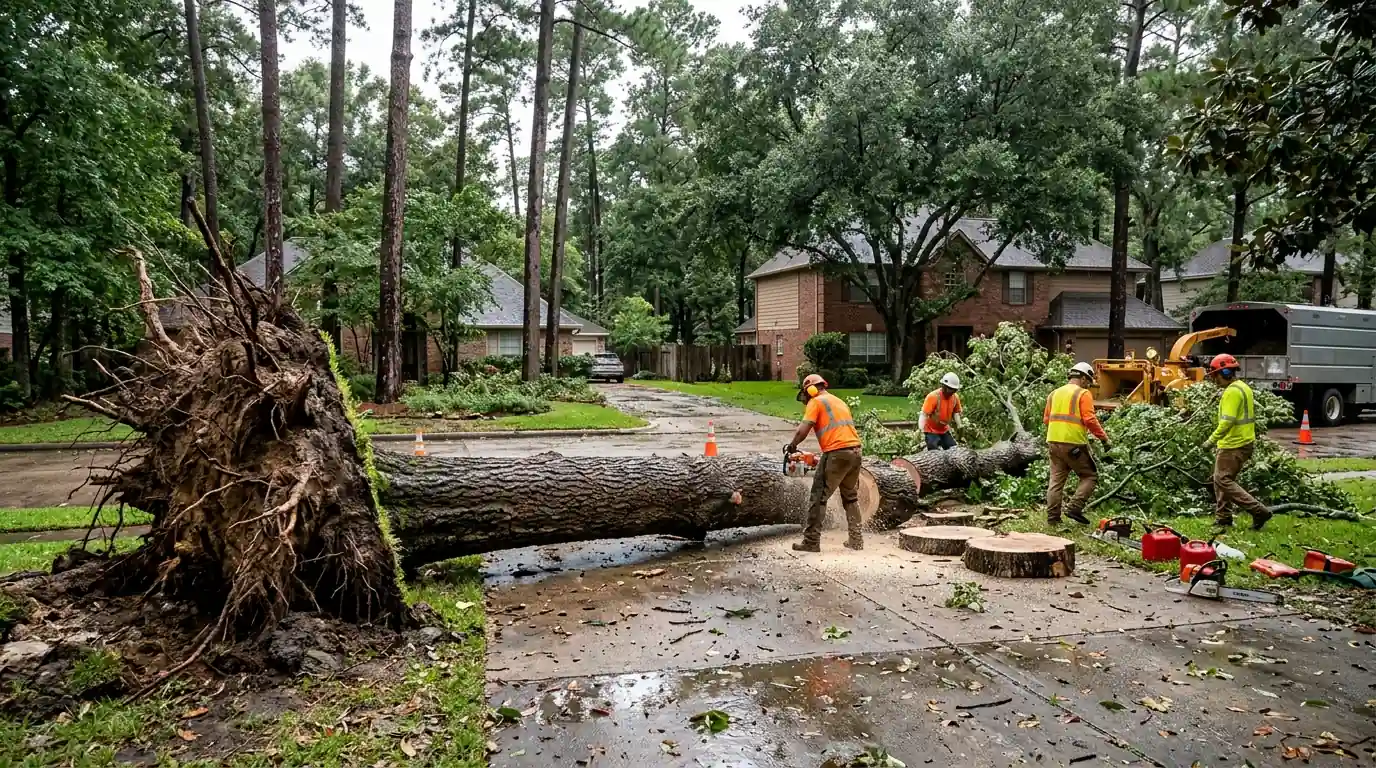
Hurricane tree prep in Houston belongs in the months before June, and Beryl in 2024 showed why: Texas A&M Forest Service judged that about half of the area's trees took wind damage in that one storm. The work: crown thinning, deadwood removal, roof-line clearance and pine lean checks.
The job
Letting wind through the crown
Storm prep is not about making trees smaller. It removes the parts most likely to fail or do damage: dead limbs, branches rubbing a wound into each other, a heavy limb reaching over the roof, and a crown so dense it catches wind like a sail.
Timing matters. Work done in the cooler months gives cuts time to start closing before summer, and pines get checked before heat and drought stress them. A tree that fails that check can be scheduled as a planned removal instead of an emergency.
In the scope
What prep covers
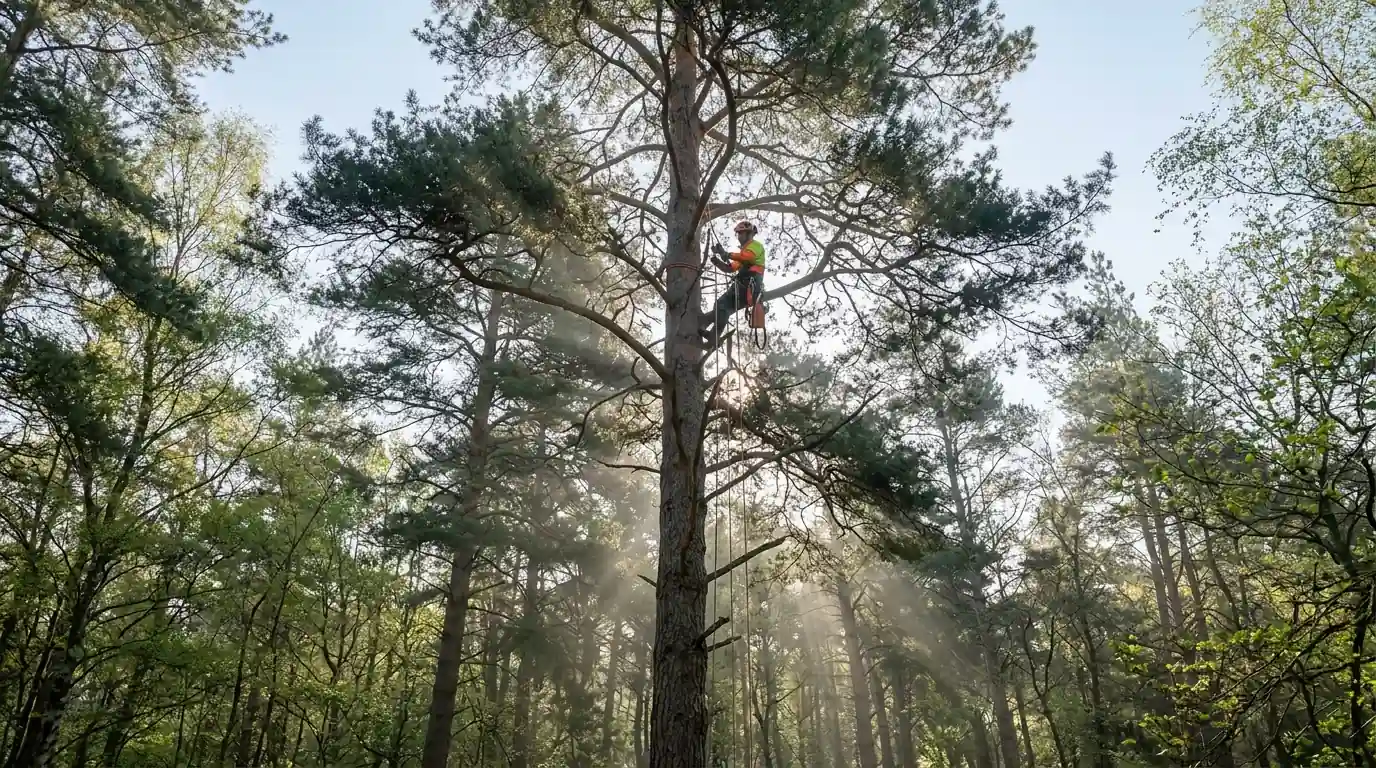
- Crown thinning spread evenly, interior branches kept
- Deadwood cut back to live wood or collars
- Roof, gutter and chimney clearance where limbs reach
- Lean, root plate and trunk checks on pines
- Heavy limbs over the house lowered on ropes
- Brush chipped and hauled, flagged trees noted
Canopy thinning before the season
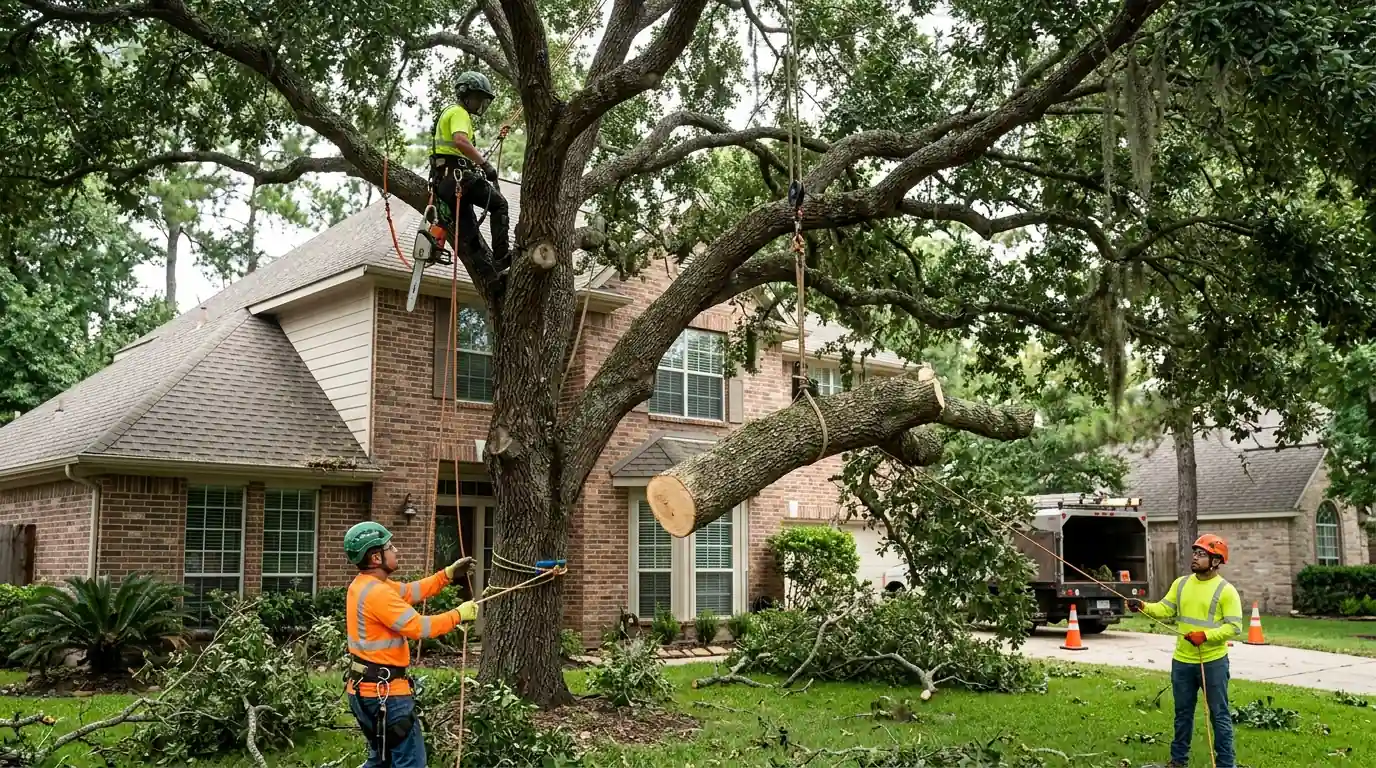
If you cannot see sky through the crown from below, the wind loads all of it. Thinning takes out crossing branches, weak sprouts and a share of interior limbs, spread evenly through the canopy, so gusts pass through instead of pushing. The tradeoff is real: take too much and the tree throws dense water sprouts, or ends up lion-tailed with foliage only at the tips, which raises the odds of breakage. A good thin is hard to spot from the street.
Deadwood out of the crown
Dead limbs are the first wood a storm throws, and they hit roofs like clubs. From the ground they show as gray, bare branches that held no leaves this summer, often with bark peeling away. Houston's freezes and dry summers leave many oaks and pines carrying more deadwood than owners expect. A climber cuts them back to live wood or the branch collar, lowering heavy ones on a rope so they do not tear through living limbs on the way down.
Lean and root plate checks
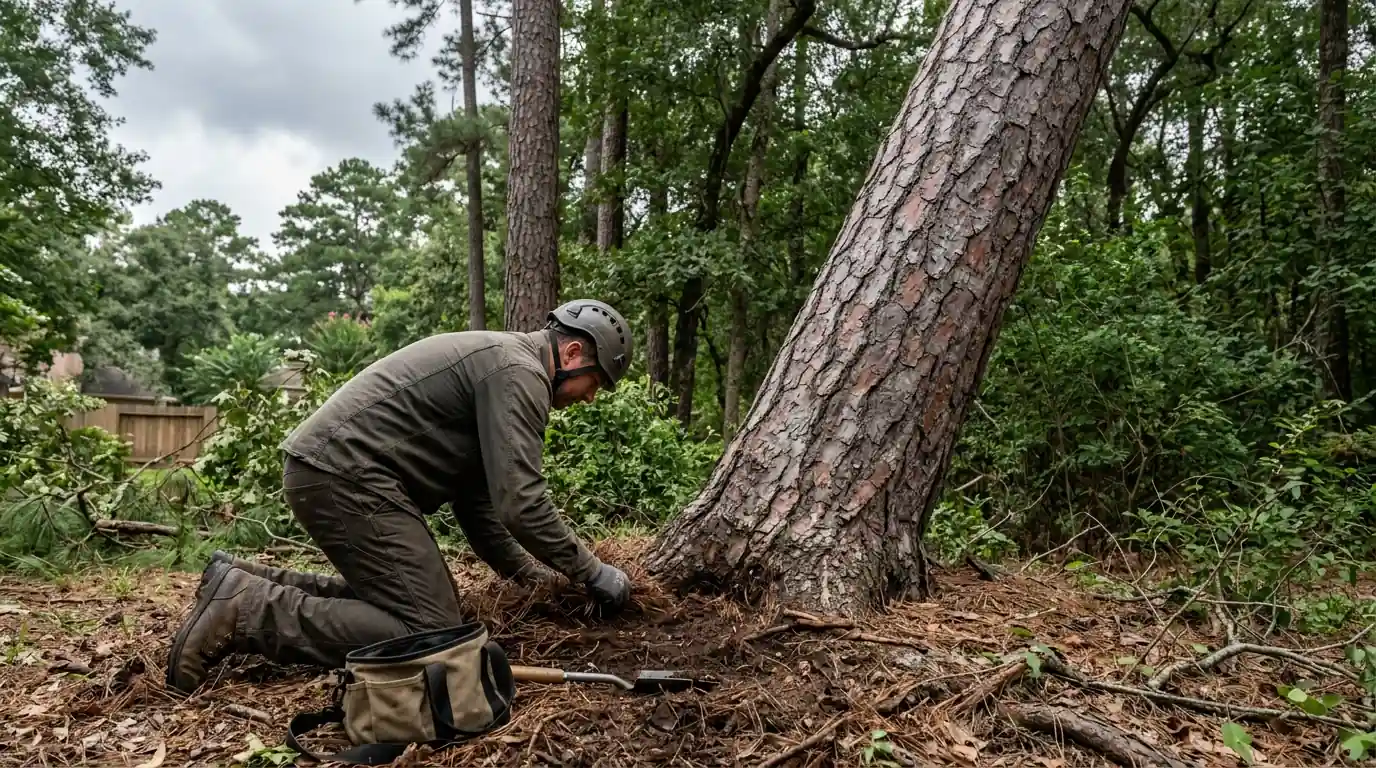
Tall pines on wet clay often root wide and shallow, so the base tells you more than the crown. A risk check looks for a lean that has grown since the last storm, soil heaved or split on the far side from the lean, exposed roots, and decay or pitch tubes on the lower trunk. A pine whose root plate is moving will not ride out a hurricane better next year; take it down on a calm day, before the season.
Limbs off the roof line
Limbs that brush the shingles in an ordinary breeze will hammer the roof in a hurricane, and a long lateral over the house is the limb most likely to land on it. We cut back to a healthy side branch or to the trunk to open a clear gap above the roof, and shorten heavy limb ends instead of removing whole limbs when the tree can spare it. This is the same work as clearing limbs off the roof, timed for the season.
Questions about your tree? Talk to a crew lead.
Call (704) 839-2139Warning signs
Trees due for prep
Bare limbs
Branches leafless this year fly first in a storm.
Limbs on shingles
Branches resting on the roof pound it in wind.
Growing lean
A pine tilting more than last year, toward the house.
Cracked fork
A seam where two stems meet, bark pinched inside.
Fungus at base
Conks or mushrooms on roots or trunk signal decay.
Pitch tubes
Small resin blobs on the bark mean beetles arrived.
Local conditions
Why hurricane tree prep looks different on Houston's north side
After Beryl, a Kingwood tree contractor told ABC13 that the first step before storm season is cleaning out the upper canopy, so wind blows through the tree rather than against it. That matches how we work, with one addition: we check the base too, because a well-thinned pine on a loosening root plate in wet clay is still a storm risk.
Sources: abc13.com
Step by step
A prep visit, step by step
Tree walk
We check each crown, base and reach over the house.
Mark cuts
Deadwood, rubbing limbs and roof clearance are marked before climbing.
Thin and clear
Climbers thin, clear and remove deadwood, lowering heavy pieces on ropes.
Pine checks
Lean, base soil and pitch tubes are checked on every pine.
Chip and flag
Brush is chipped and hauled; any tree needing more work is flagged.
What moves the price
What a prep visit costs
Storm prep has no single going rate; it is priced on the trees in front of us. Height, access and how much hangs over the roof drive it.
Tree count
Several trees in one visit share the setup, rigging and chipper time.
Height and spread
A tall pine or a wide live oak means a longer climb.
Roof exposure
Limbs over the house are lowered on ropes, which takes longer than dropping.
Flagged pines
A pine flagged for removal adds a separate, planned take-down to the scope.
No, but earlier is easier. Summer prep still removes the deadwood and roof limbs, though tree crews get stretched once storms start forming in the Gulf.
No. Topping leaves big wounds that decay and forces weakly attached sprouts that break in the next storm. Reduction cuts to a healthy side branch lower risk instead.
Every few years suits most yards, sooner for fast growers near the roof. Pines deserve a yearly look, since a lean or beetle attack can develop fast.
Only light work. Remove dead fronds and seed pods, but leave the green fronds; the so-called hurricane cut strips a palm bare and leaves it weaker, not safer.
Very little cutting. Bring in loose items, clear gutters and drains, and photograph your trees for a before record. Rushed cuts are rarely the right ones.
Sometimes. A crown reduction takes load off a slight, stable lean. A growing lean or a moving root plate is past what any pruning can fix.
Related work