County coverage
Tree removal, pecan trimming and acreage work in Waller County
Pines in the northeast, pecans along the Brazos and live oaks around prairie homesites: Waller County trees vary as much as the land does. The phone is answered 24/7.
Phone answered 24/7 · office in Spring, TX
 Waller County
Short answer
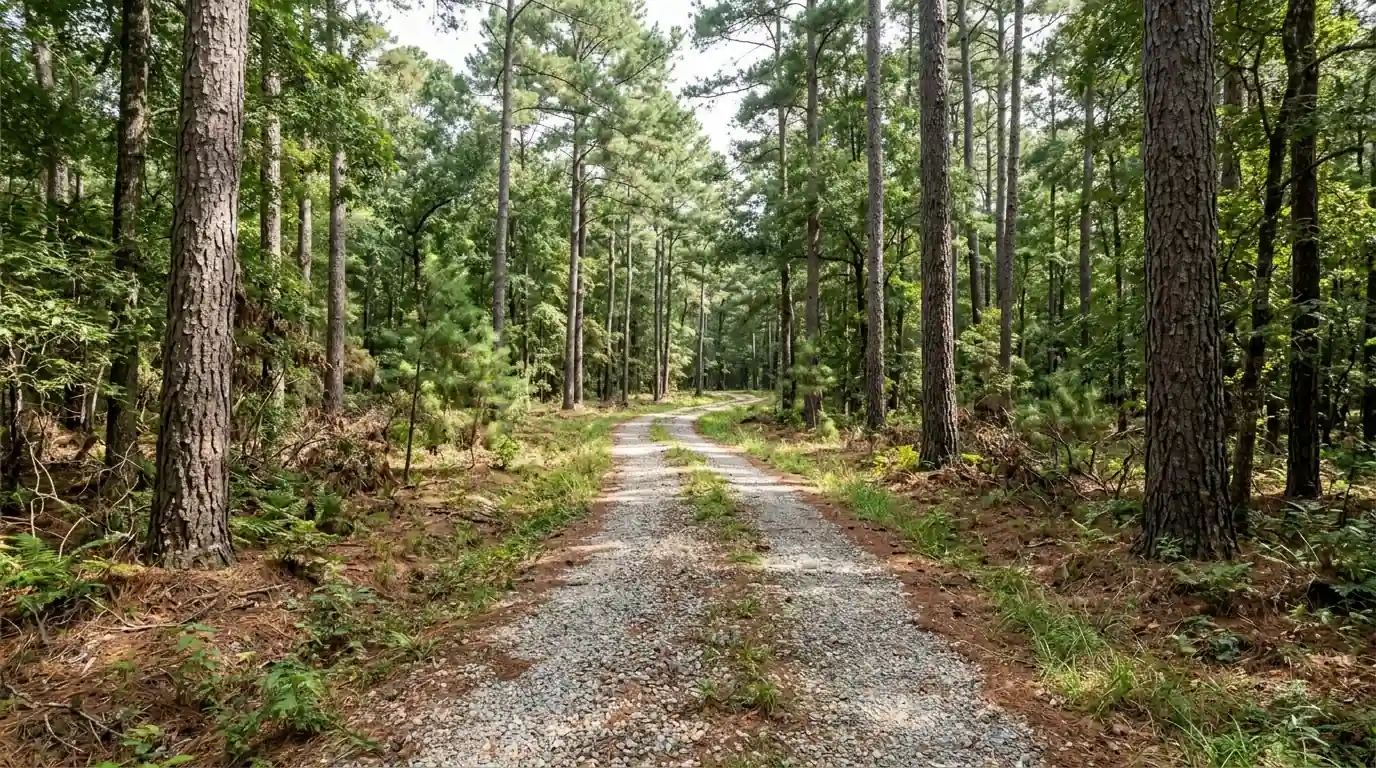
Waller County, whose seat at Hempstead sits twenty-five miles northwest of Houston, runs from rolling timber in the north to coastal prairie in the south. Pines lead in the northeast and pecans grow on the Brazos River bottom. So the work swings between acreage and pine jobs up north and big pecan and oak trimming near the river.
Local conditions
Brazos bottoms, prairie homesites and pine timber in Waller County
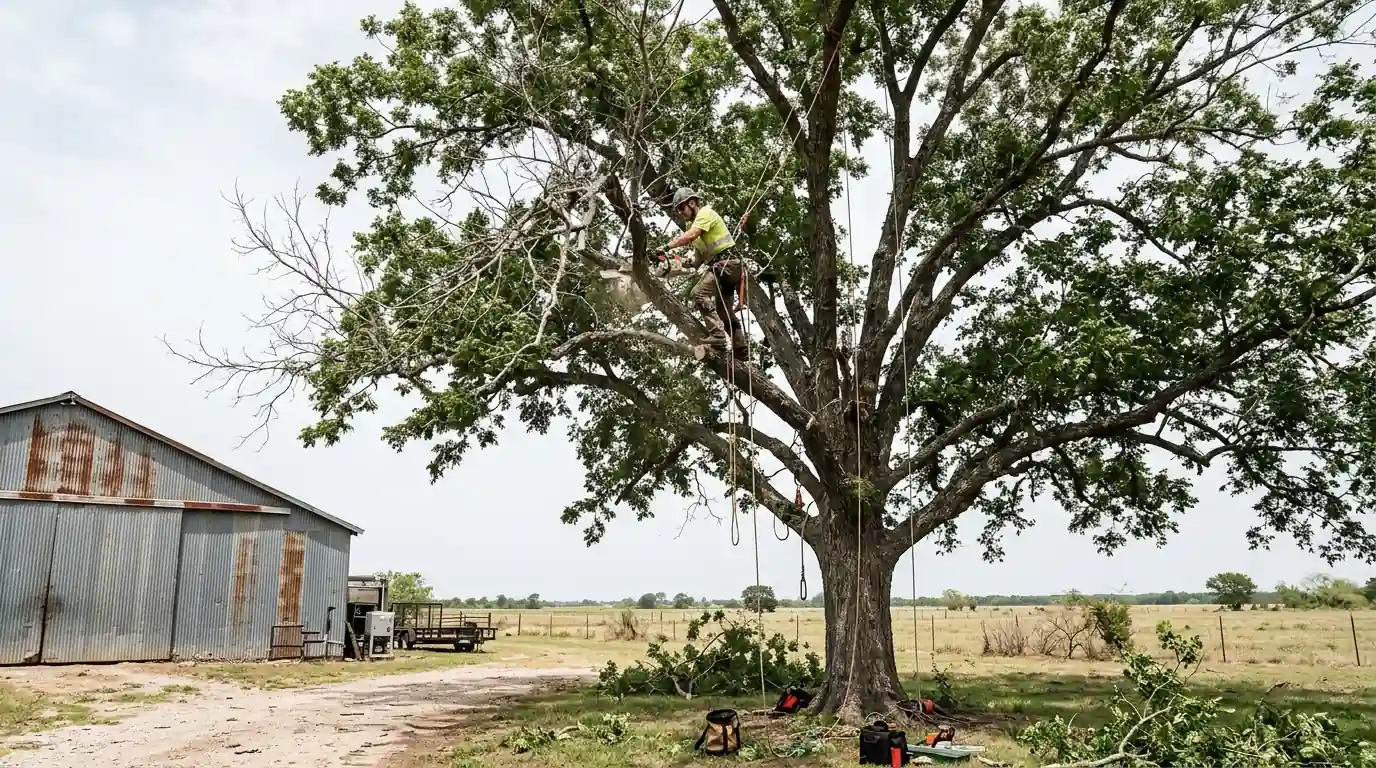
The Brazos River forms the county's western boundary, and its bottoms hold fertile alluvial soil where pecans grow. A mature pecan carries long, heavy limbs, and deadwood high in a crown that size is usually the first thing a storm brings down onto a drive or a barn roof. A deadwood and thinning trim takes that weight out before it falls.
Head north and the land rises into rolling timber, with pines taking over in the northeast part of the county. Sandy loam covers the prairie region and black waxy soil holds a small southern area. When a tall pine starts leaning toward a house after a wet spell, taking it down in sections keeps the drop zone off the roof.
Across the southern prairie, the trees on a property are often a handful of live oaks, elms or cottonwoods planted around the house. They are the only shade for a long way, so we look hard at trimming before anyone talks about removal.
Sources: tshaonline.org
Most called-for work
Waller County tree jobs, from river pecans to timber acreage
- Tree trimming in north HoustonPecans on the Brazos bottom grow long, heavy limbs; thinning and deadwood cuts keep them off barns, fences and drives.
- Removing a loblollyPines dominate the northeast of the county, and a tall one within reach of a roof is worth a look after heavy rain.
- Clearing a wooded lotTimbered tracts in the north often need a building pad, a fence line or a driveway cut opened up first.
- Forestry mulchingBrush and small trees on rural acreage can be ground in place, leaving a mulch layer and nothing to haul.
- Cleaning up after a stormPrairie yard trees stand exposed to the wind, so a storm usually means broken limbs across drives and pens.
Close by, see tree care around Katy, crews working in Cypress and Tomball tree removal and trimming, or the whole coverage map.
Yes. We climb or rig the crown, take out deadwood and thin crowded limbs so wind passes through. Long limbs over barns, fences or drives get shortened back to sound wood rather than stubbed off.
We do. We walk the tract first to mark the trees worth keeping, then open the pad, drive or fence line. Brush can be mulched in place or chipped and hauled, depending on how the land will be used.
That is your call. On acreage, many owners keep the logs for firewood and want the brush mulched or chipped on site. On a homesite, we usually chip the brush and haul the wood so the yard is clear.
Start with anything tall within reach of the house: pines in the northeast, big pecans near barns and drives, and lone prairie oaks over the roof. Deadwood and cracked forks are the first things to fail in wind.
Trees to deal with in Waller County?
Call any hour. Tell us whether it is pecans by the barn, pines on the back acreage or a storm limb across the drive, and we will set a visit.