Costs and permits
Removing a tree in The Woodlands: the permit steps, in order
The Woodlands covenants put an application ahead of almost every living-tree removal. This is the order that keeps a project moving: measure, photograph, apply, wait for the inspection, then cut and clean up.
Phone answered 24/7 · office in Spring, TX
By Ursula Lusk, Tree Guides EditorUpdated
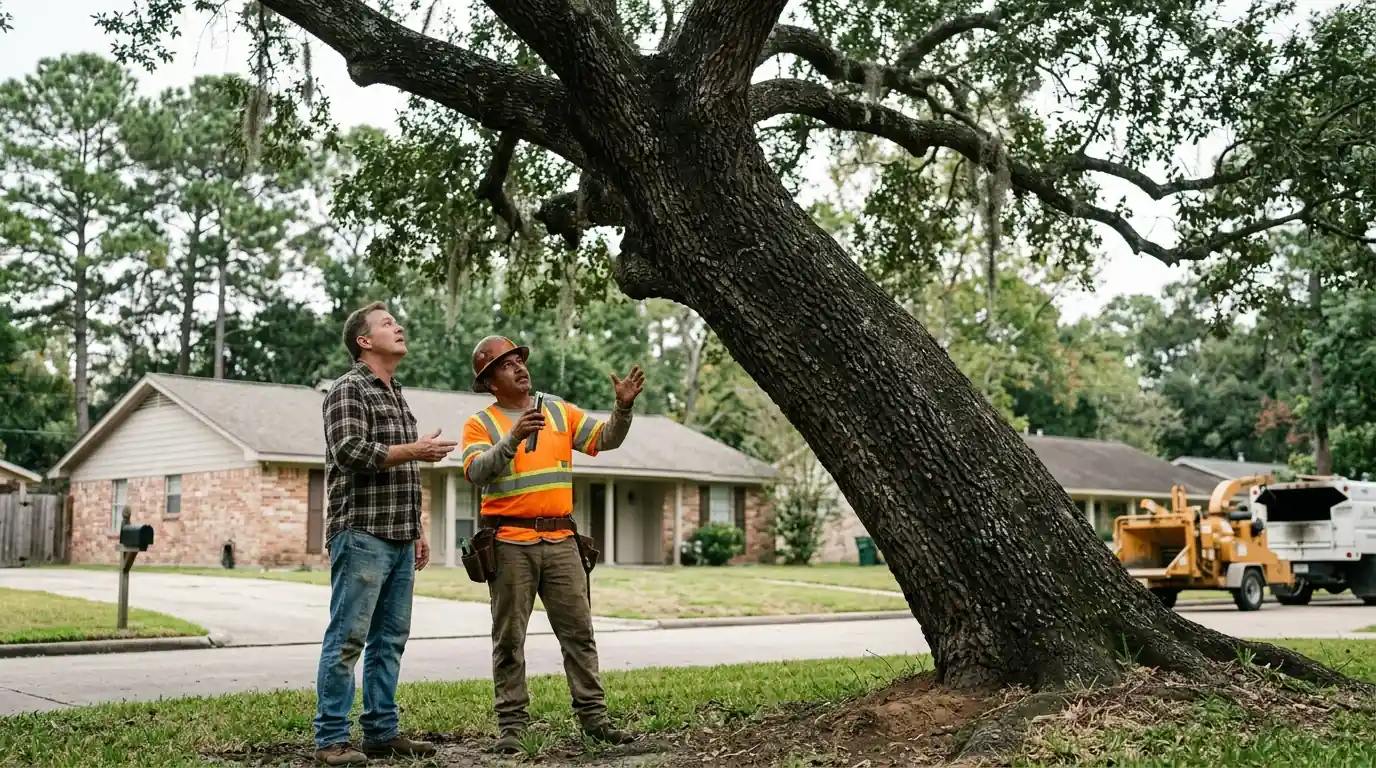 Tree advice
Short answer
In The Woodlands, you apply to the township before removing any living tree larger than six inches in diameter. The tree is then inspected for its effect on surface water flow before a permit is approved. Measure the trunk, photograph the tree and its place on the lot, apply, and book the crew once approval arrives.
Step 1: the six-inch test for living trees
The covenant line is simple. A living tree larger than six inches in diameter needs an application before it comes down. Six inches across is not a big tree. A young sweetgum or a volunteer pine along the back fence often passes it, so most trees a homeowner wants gone will need a permit.
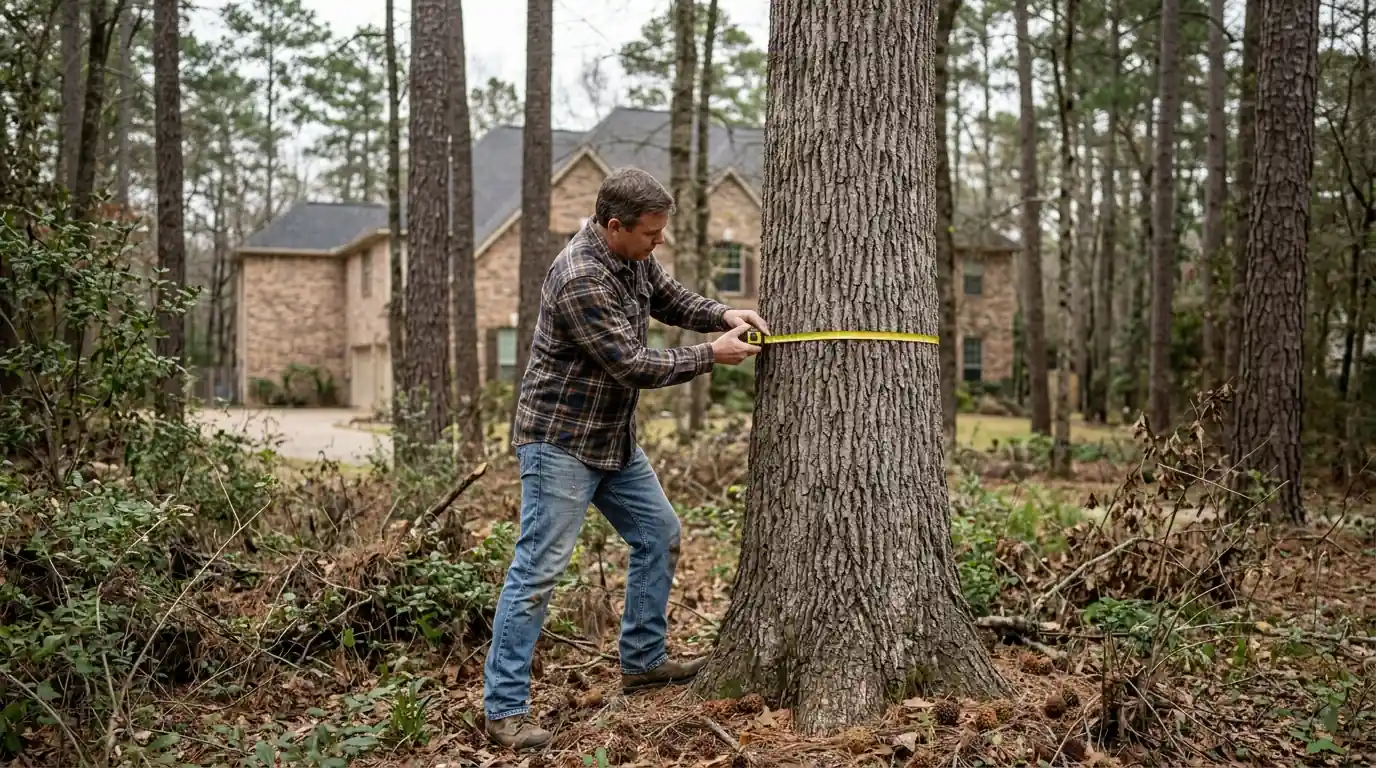
Measure diameter, not the distance around. Wrap a tape around the trunk and divide that number by 3.14. If the trunk forks low, or the result lands close to six inches, write down where you measured and ask the township how it wants the tree measured. If the trunk straddles the property line, your neighbor has a stake in it too, so talk to them before you apply.
The word that matters is living. A tree that is already dead is a different case, so ask the township how your situation is handled before assuming no paperwork applies.
Step 2: gather photos and measurements before you apply
The township issues permits for tree removal along with other exterior projects, to keep work in line with the covenants and standards. A clear packet answers the obvious questions up front and saves a round of back and forth.
If the reason is health or hazard, a short written finding from a tree risk assessment gives the township something specific to weigh. Our Woodlands permit help covers the measuring and photos.
- Trunk diameter, and the height where you measured it
- Photos of the whole tree, the base and any damage
- A sketch or plat showing where the tree stands on the lot
- Distance to the house, fences and the nearest drain or swale
- The reason: decay, lean, roots, construction or storm damage
- Any replacement tree you plan, and where it would go
Step 3: why surface water flow gets checked
The covenants tie removal to drainage. Before a permit is approved, the tree is inspected for its effect on surface water flow across the lot. That check is the reason a Woodlands application is not a rubber stamp.
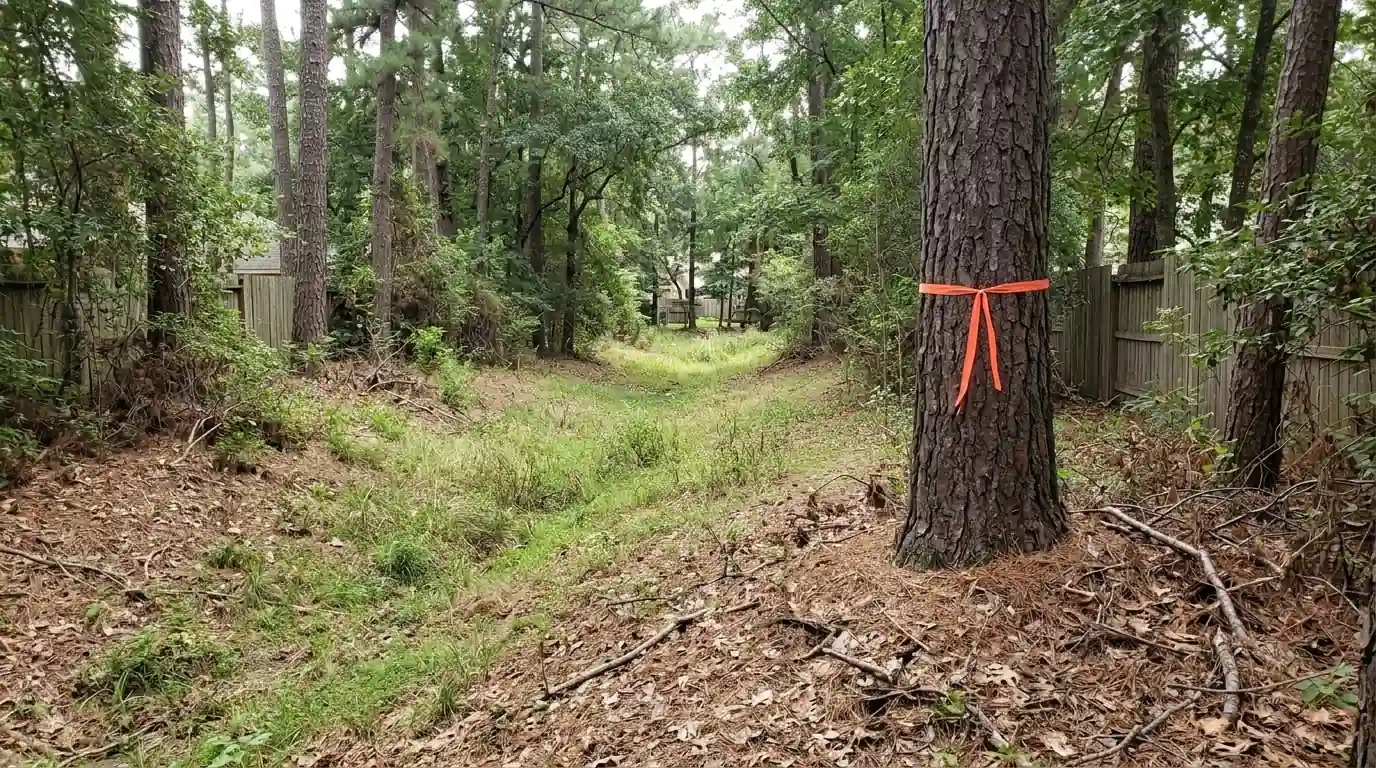
Roots, leaf litter and the canopy all slow rain on its way across a yard. Take out a large tree at the low edge of a lot, or beside a swale, and runoff can move faster or shift toward a neighbor. Photos that show the slope, the downspouts and the nearest drain help the inspector see the setting quickly. If water already pools near the tree after a hard rain, say so on the application.
Need the measurements and photos done?
A crew lead can measure the trunk, photograph the tree and its drainage setting, and note the reason for removal.Beetle-hit, storm-broken and leaning trees
The Woodlands lost about 7,000 trees to Beryl, beetle infestations and other weather, and Beryl alone destroyed about 860 trees on township land. On residential lots, the same causes show up as pines hit by Ips engraver beetles, oaks split by wind and trunks hollowed by decay.
Two cautions apply. A pine with pitch tubes on the bark but green needles is still a living tree in plain terms. Treat it as needing an application until the township says otherwise. Our guide to reading pine beetle damage explains what those tubes mean. And a tree failing over a roof is a safety problem first. Keep people out of the drop zone, tell the township about the hazard, and get a crew lead out to make it safe.
If the tree stands on township land behind your lot rather than on your lot, contact the township before anyone touches it.
Step 4: after approval, plan the cut around the trees you keep
Once approval arrives, book the work and keep a copy of the permit for the crew lead. On a wooded Woodlands lot, the drop zone is usually crowded by trees you plan to keep. Taking the tree down in sections on ropes protects their bark and limbs, and keeping heavy equipment off the root zones protects what you cannot see.
Decide about the stump at the same time. If a replacement tree will go in the same spot, the grindings have to come out of the hole before planting.
Timing matters most for pines near the house. Hurricane season runs June through November, so start the application in winter or early spring if you want the tree down before storms. A permit in hand by late spring leaves room to schedule the crew without a rush.
Step 5: replanting in a township that is replanting too
The township itself began reforestation work after its losses, so a replacement tree fits the direction the community is already going. Whether a replacement is required on your lot depends on the approval, so read any conditions that come with the permit and ask the township if they are unclear.
If you replant, choose a native shade tree with room to reach full size away from the house and lines. Fall and winter planting gives roots time to settle before summer heat. Set it a few feet to one side of the old stump, where the soil has not been churned by grinding. Our tree planting work includes siting the new tree for drainage as well as shade.
Sources
- Community Impact, Woodlands Township board members oppose tree legislation (six-inch rule and surface water inspection)
- The Woodlands Township, Community (permits for tree removal under the covenants and standards)
- NOAA National Hurricane Center, Atlantic hurricane season dates
- Houston Chronicle, The Woodlands launches reforestation efforts
- KETK, Texas A&M Forest Service on Ips engraver beetles
Larger than six inches in diameter, if the tree is living. That covers most trees past the sapling stage. Measure around the trunk and divide by 3.14 to get diameter, and ask the township if the number is close.
Not a living tree over six inches. The covenants put the application and the surface water inspection ahead of the permit, so the cut waits for approval. If the tree is failing now, say so when you contact the township.
Ask the township how it wants the tree measured. Foresters usually measure at chest height, above the swollen root flare. Note the height you used on the application, and mention it if the trunk forks low.
Ask the township before cutting. The six-inch rule is written for living trees, and a pine with beetle damage may still hold green needles. Photos of the bark, the crown and the trunk base make that conversation short.
That depends on the approval for your lot, so read the conditions that come with the permit. If you do replant, a native shade tree set well away from the house and lines is the usual choice.