Tree health
Reading pine beetle damage on a Houston pine, and knowing when to let it go
Ips engraver beetles move into pines already weakened by drought, freezes or storms. Here is what an attack looks like on the bark, what Texas A&M Forest Service advises, and how to decide quickly.
Phone answered 24/7 · office in Spring, TX
By Ursula Lusk, Tree Guides EditorUpdated
 Tree advice
Short answer
Around Houston, a pine is usually past saving once beetles are established under the bark and the crown starts to fade. Texas A&M Forest Service says Ips attacks show as white to reddish-brown pitch tubes about the size of a wad of gum. Salvage cutting is the most practical control, and high-value trees can be sprayed.
Pitch tubes, boring dust and a fading crown: what to look for
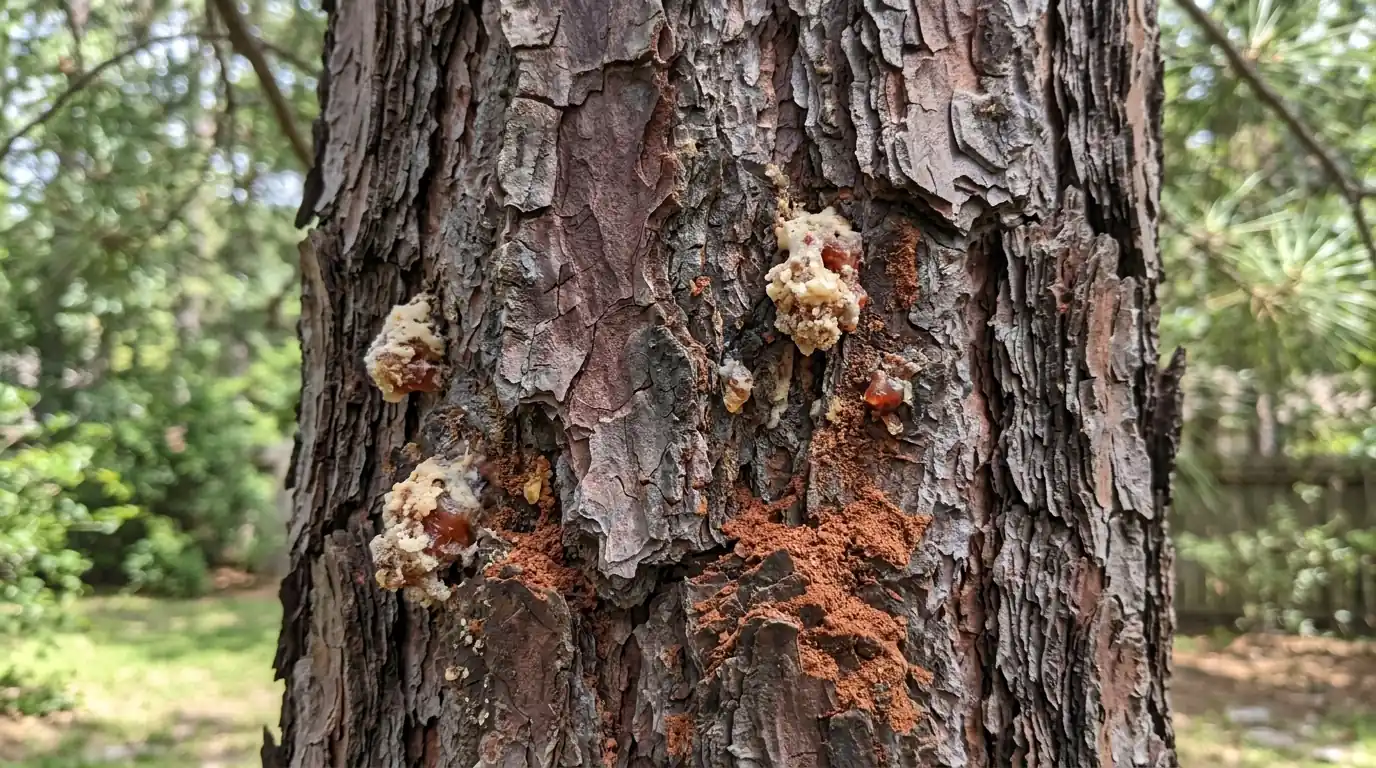
Texas A&M Forest Service describes Ips engraver beetle attacks on drought-weakened pines as white to reddish-brown pitch tubes about the size of a wad of gum. Each tube marks a spot where a beetle bored in and the tree pushed resin out to stop it. One tube on its own tells you little. What matters is how many there are, how high they run, and what the crown is doing.
Binoculars help on tall loblollies, because the upper trunk is out of easy view from the patio.
- Pitch tubes scattered on the bark, sometimes well up the trunk
- Reddish boring dust in bark crevices and at the base
- Needles fading from green to yellow, then red-brown
- Woodpeckers flaking off bark to reach larvae underneath
- Small round exit holes in the bark of a browning pine
Why north Houston pines are open to beetles now
Bark beetles mostly finish trees that something else weakened. After three straight years of hard freezes and drought, Texas A&M Forest Service warned in 2024 that East Texas trees were open to Ips beetles and hypoxylon canker. CenterPoint saw the same stress during Beryl, describing trees weakened by freezes, drought and heavy spring rain.
The Woodlands lost about 7,000 trees to Beryl, beetle infestations and other weather. Around Spring, Conroe and The Woodlands, the pines to watch hardest are the ones with a recent injury: a lightning strike, roots cut by a new driveway or pool, fill soil piled over the root zone, or a top cracked in a storm.
Ips beetle or southern pine beetle? Watch the trend first
Texas A&M Forest Service publishes guidance on both Ips engraver beetles and southern pine beetle, and AgriLife Extension has its own pine bark beetle publication. Telling the species apart takes a look under the bark at the galleries the adults carve. Your county Extension office is the place to ask about identifying a sample.
For a homeowner, the decision rarely waits on the species name. What matters is whether the attack is moving: new pitch tubes that were not there last week, a second pine showing tubes, or a crown changing color. Any of those means the beetles are winning on that tree.
Seeing pitch tubes on a pine?
A crew lead can check the whole trunk and the pines around it, then tell you plainly whether the tree is worth protecting.Can this pine be saved? A quick field triage
This is a field sorting, not a diagnosis. A pine beetle inspection puts eyes on the whole trunk and on the pines around it, which is where the real decision gets made.
| What you see | What it usually means | Reasonable next step |
|---|---|---|
| A few tubes low on a green, vigorous pine | The tree may be pitching the beetles out | Watch it closely; ask whether spraying fits |
| Many tubes up the trunk, dust in the bark | Beetles established under the bark | Plan removal and check nearby pines |
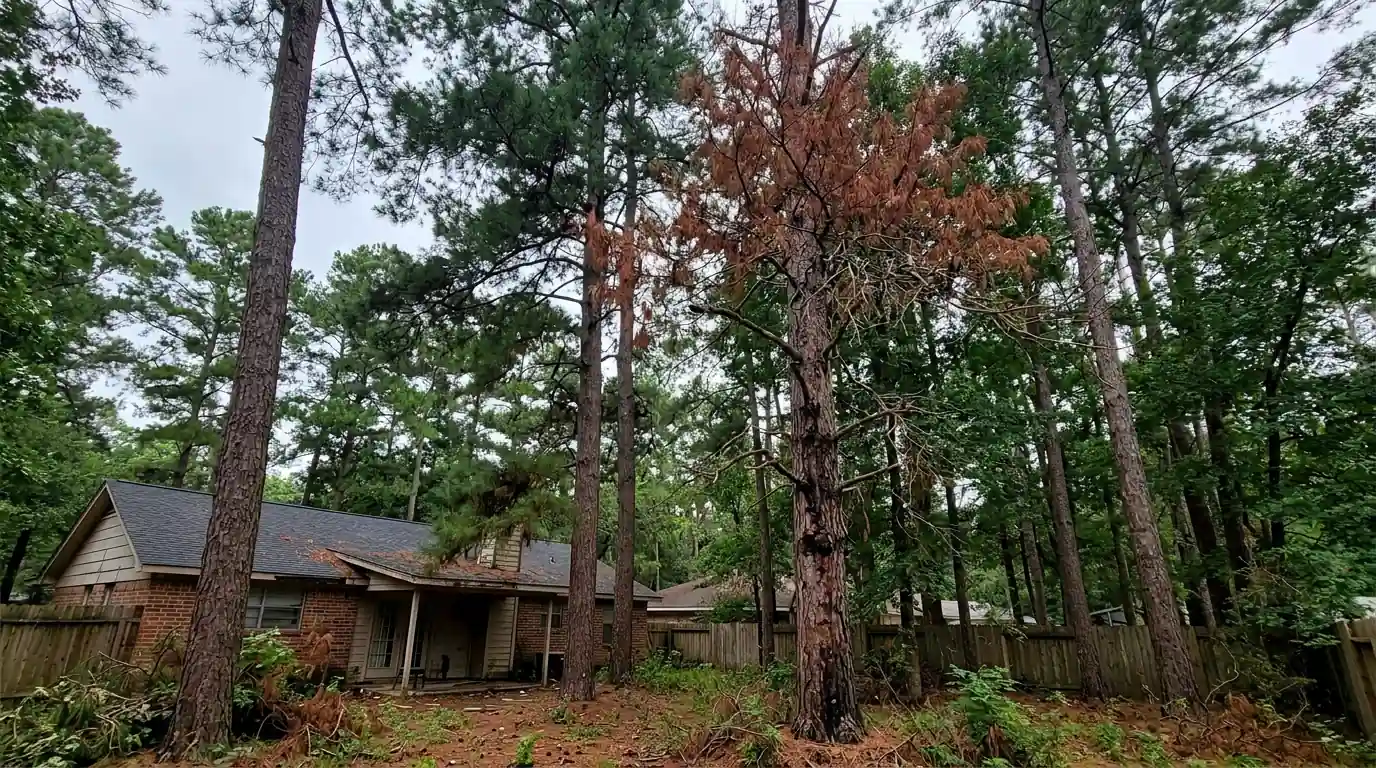
| Crown yellow or red-brown | The pine is dying or already dead | Remove it before the wood turns brittle |
| Bark sloughing off, needles mostly gone | The beetles have left a dead tree | Treat it as a dead tree removal |
Salvage, spraying and the pines next door
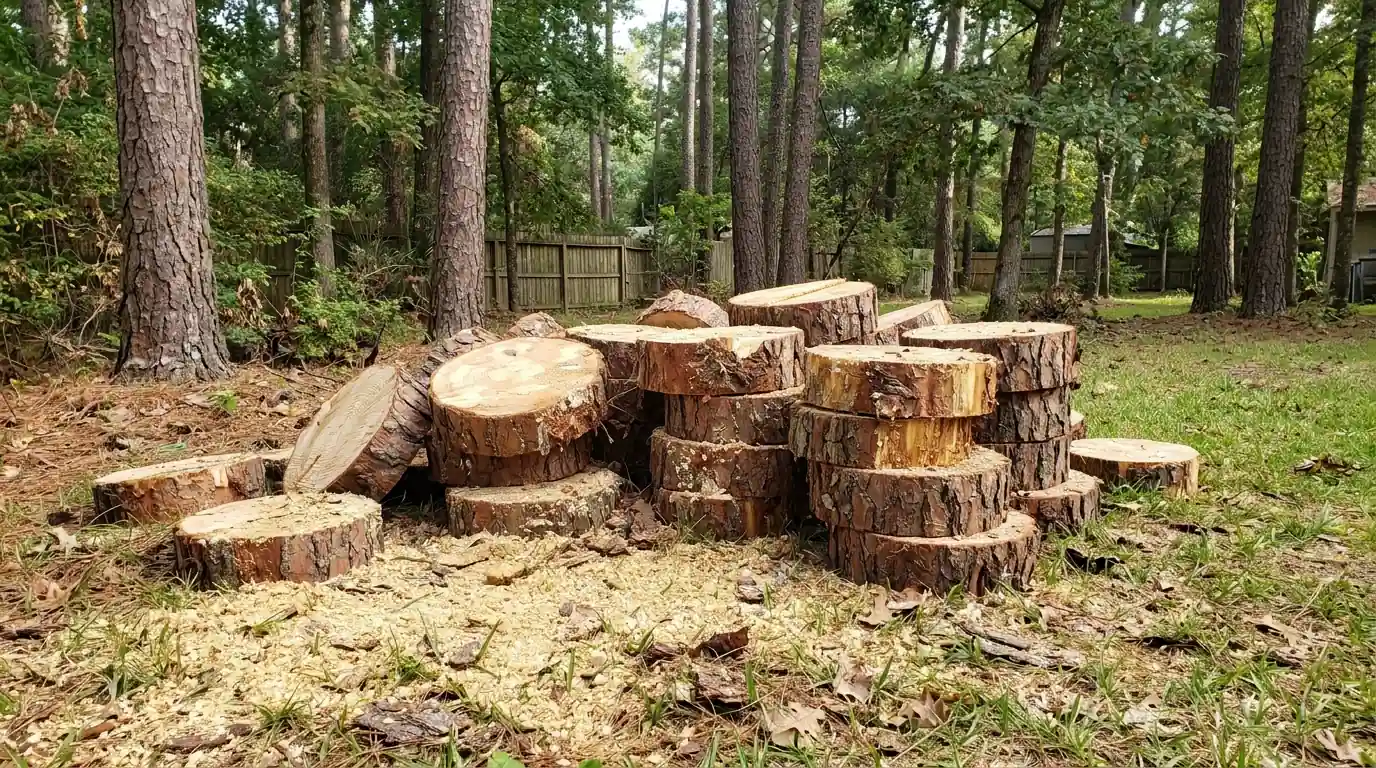
Texas A&M Forest Service calls salvage cutting the most practical control, and says high-value trees can be sprayed. Salvage means taking infested pines down promptly instead of waiting to see what happens, so the trees still standing have better odds. That is the logic behind removing infested pines early.
Spraying fits a narrow case: a valuable pine near the house, still green, with attacks close by. It is about protecting a tree the beetles have not overwhelmed. A pine with a fading crown is past that point, and spraying it only adds cost.
If oaks in the same yard show bark peeling away over dusty, discolored patches, that is a different problem, possibly hypoxylon canker. It gets its own tree disease care plan.
Found pitch tubes this week? Five calm first steps
Pitch tubes found early leave you options. Found late, they mostly leave you a removal date. These steps keep the choice open while you line up a closer look.
- Photograph the tubes with a coin for scale, and note the date.
- Check every pine within reach of the house for the same signs.
- In a dry spell, give stressed pines a slow, deep soak across the root zone.
- Keep trenching, parked vehicles and fill soil off pine roots.
- Book the inspection before the crown changes color, not after.
A dead pine over the roof only gets harder to remove
A beetle-killed pine dries out and turns brittle, and the clock works against you. Early on, a climber can still tie in and lower the top in sections on a rope. Later, dead limbs snap under rigging loads and the stem itself can be too weak to climb. That is when a crane removal becomes the safe method, and the price follows.
In The Woodlands, remember the paperwork. The covenants require an application before removing a living tree larger than six inches in diameter, and a beetle-hit pine with green needles may still count. Our guide to The Woodlands permit steps covers how to ask.
Sources
- KETK, Texas A&M Forest Service on Ips engraver beetles (pitch tubes, salvage, spraying)
- Texas A&M Forest Service 2024 warning on Ips beetles and hypoxylon canker
- Houston Chronicle, The Woodlands launches reforestation efforts
- T&D World, CenterPoint restores power after Hurricane Beryl
- Texas A&M Forest Service, Southern Pine Beetle or Pine Engraver (Ips) Bark Beetle
- Texas A&M Forest Service, Pine Engraver Beetles (Ips)
- Texas A&M AgriLife Extension, Pine Bark Beetles
- Community Impact, Woodlands Township board members oppose tree legislation (six-inch rule)
No. A tube marks a beetle boring in, and a vigorous pine can push it out with resin. Many tubes up the trunk, boring dust in the bark or a fading crown are the signs that the beetles are winning.
Usually not. Texas A&M Forest Service says high-value trees can be sprayed, which in practice means a pine worth the cost, close to an active attack. Prompt removal of the infested tree remains the most practical control.
Not long if it can reach anything. The wood dries and turns brittle, which makes climbing riskier and can push the job to a crane. One with nothing in reach can wait while you plan.
They can move to other stressed pines nearby, which is why prompt removal of infested trees is the usual advice. Tell your neighbor if a tree near the line shows pitch tubes, so both yards get checked.
Texas A&M Forest Service and AgriLife Extension both publish pine bark beetle guidance, and your county Extension office is the place to ask about a sample. Peeling a small bark patch also shows the galleries.