Tree health
Is a Tree Cracking Your Slab? Roots, Clay and Foundations in Houston
Much of Houston builds on clay that swells when wet and shrinks when dry. Big trees change how much water it holds. Here is how slabs really move, and what each fix costs the tree.
Phone answered 24/7 · office in Spring, TX
By Ursula Lusk, Tree Guides EditorUpdated
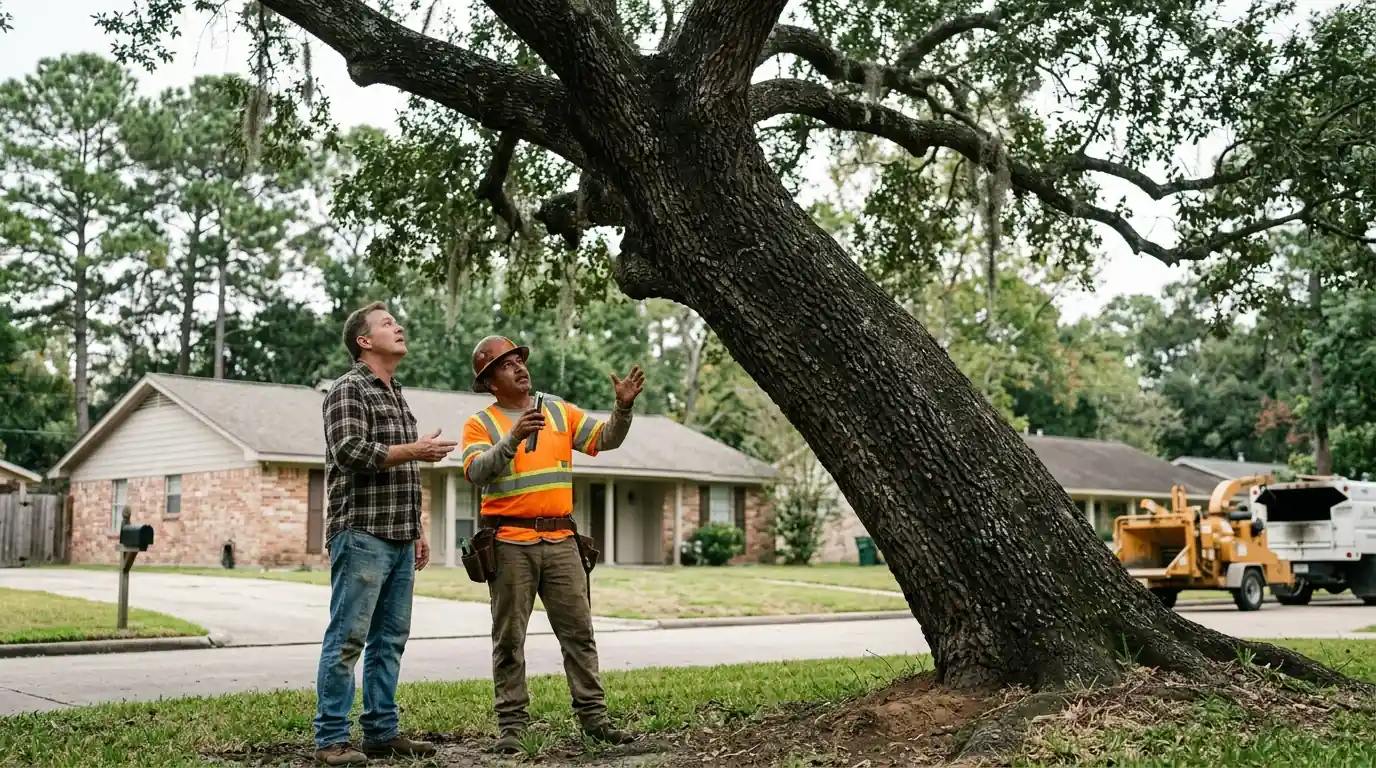 Tree advice
Short answer
In Houston, tree roots rarely crack a slab by pushing on it; they dry the expansive Beaumont clay under one edge, and that edge settles. A southeast Houston case study found tree moisture demand reached about 28 feet deep, against roughly 6 feet of normal seasonal change. Confirm the cause with an engineer before anyone cuts.
How a tree moves a slab on Beaumont clay
Much of Houston sits on the Beaumont Formation, and its clays are highly expansive: they swell when wet and shrink as they dry. Neighborhoods such as the Heights, Oak Forest and Garden Oaks are built on it. A slab on grade rides on that soil, so when one edge dries faster than the rest, that edge drops and the concrete bends over the low spot.
A big tree works like a pump. Through a Houston summer a mature water oak or pecan pulls water from the clay faster than rain replaces it. The roots never need to touch the concrete, only the soil the slab bears on. That is why tree damage usually shows as settlement on the side facing the tree.
One Houston case study: a dry zone 28 feet deep
Engineers call the layer of clay that wets and dries with the seasons the active zone. In a southeast Houston case study in the ASCE Library, tree moisture demand pushed that zone to about 28 feet deep, against the usual 6 feet or so. Clay dried that deep does not take water back in one wet spring.
Two practical lessons follow. A soaker hose along the slab helps the shallow soil, but it cannot refill clay a tree dried far below. And removal is not instant relief. Soil the tree dried can slowly regain water and swell, so a slab that settled toward a tree may move again after it comes out. Your engineer weighs that before recommending a big removal.
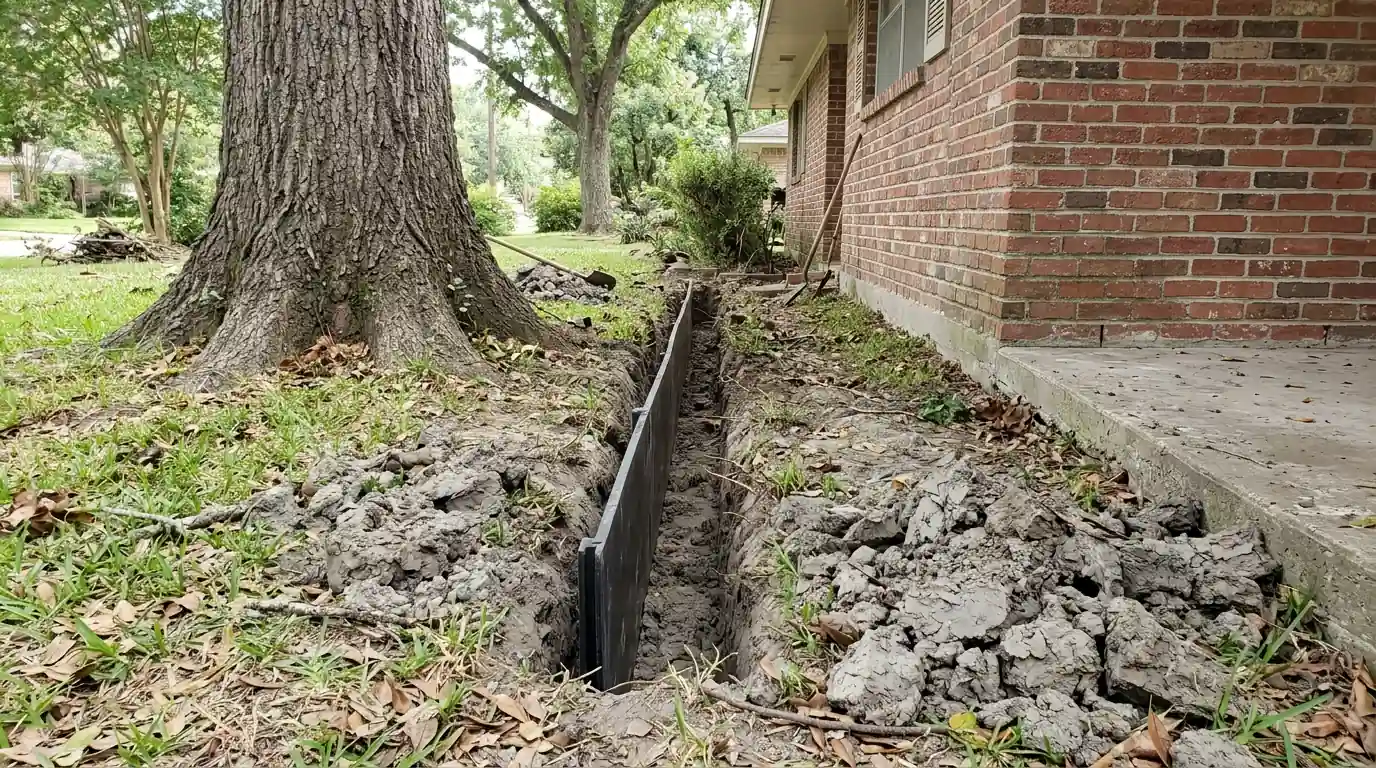
Cracks that point to a tree, and cracks that point elsewhere
Cracks alone do not convict a tree. Houston slabs also move with plumbing leaks, ponding at a corner and the ordinary wet and dry swing of clay. What implicates a tree is a pattern tied to the side of the house it stands on, worst after a long dry stretch.
- Doors that stick or drift open on the side nearest a large tree.
- Diagonal drywall cracks rising from door and window corners on that side.
- Stair-step cracks in brick near the corner closest to the canopy.
- Gaps under baseboards that widen in late summer and close after rain.
- A low corner under the canopy edge rather than under a downspout.
Big tree near the slab?
Ring us and a crew lead will walk the tree, its lean and a safe root cut line.Who decides: the foundation engineer first, the tree crew second
The call on the slab belongs to a structural or geotechnical engineer, ideally one who does not also sell repairs. They map the floor levels, check drainage and plumbing, and say whether the tree is a likely cause. Some ask for soil borings or moisture tests near the tree before they put that in writing.
Our part starts there. We look at the tree: species, size, health, lean and how much of its root plate faces the house. Then we explain what each fix would do to it. An engineer can tell you the slab needs relief; a crew can tell you a given root cut would leave the tree unstable. Get both answers before anyone digs.
Root barrier, root pruning or removal: what each fix trades
There are three tree-side fixes and one holding pattern. Which fits depends on trunk distance, the tree's value to you, and the engineer's findings.
If the engineer and the tree both allow it, a root barrier trench keeps a healthy tree in place. When the trunk sits too close for a safe cut line, taking the tree down and pulling the stump and root ball is the cleaner path for the slab.
| Option | What the work involves | The tradeoff |
|---|---|---|
| Root barrier | Trench between tree and slab, roots cut, panels set upright | Shields the slab zone; tree loses every root on that side |
| Root pruning only | Roots cut along a line with a trencher or saw, no panels | Lower cost, but roots grow back toward the moist soil |
| Tree removal | Tree taken down, stump ground or pulled | Ends the drying; dried clay may swell back over time |
| Water and monitor | Steady watering along the slab in dry spells, levels rechecked | Keeps the tree; reaches shallow soil only |
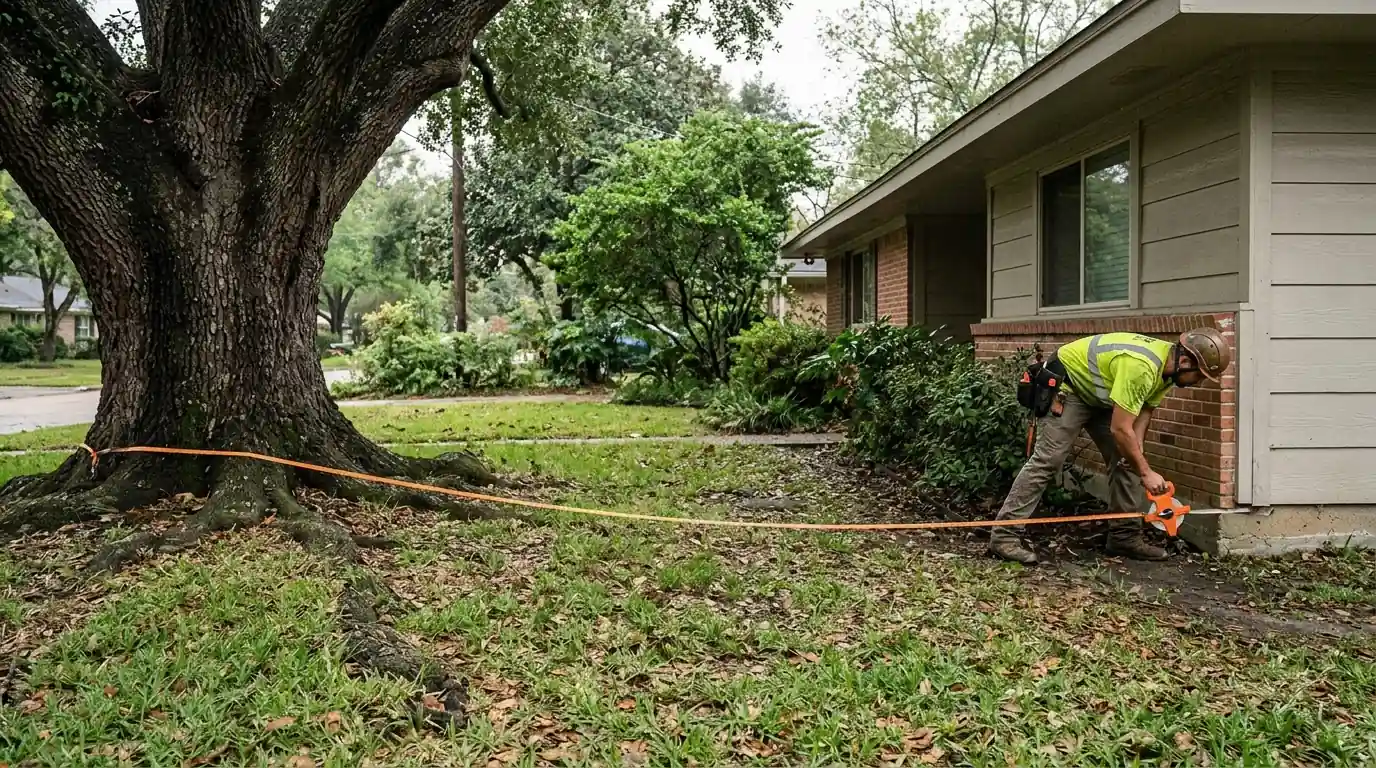
How a root cut can topple the oak you meant to save
Roots on the house side are often the ones holding the tree against wind from that direction. Cut them too close to the trunk and you take away water supply and anchorage in one pass. With hurricane season running from June to November, a tree standing on half a root plate is a storm risk over a roof.
A crew should set the cut line by trunk size and species, and say plainly when the only safe line is too far out to protect the slab. That answer is often removal. If you keep the tree, mulch and root zone care afterward help it grow new feeder roots on the far side.
Planting near a Houston slab without starting over
Most of these problems begin with a large shade tree planted close to the foundation. Give big species room to spread away from the house. Keep a mulch ring instead of bare clay around the trunk, and water deeply in droughts so roots are not forced to mine the soil under your slab. Ask for planting help before the hole is dug, while moving the spot still costs nothing.
Not on its own, and not right away. Removal ends new drying, but clay the tree already dried may take on water and swell for months. Your engineer decides whether the slab then needs repair, monitoring or nothing.
No single distance suits every lot. The engineer sets a line and depth from soil and slab data, and we check it against the tree's size and stability. When the two conflict, removal is usually the safer choice.
Roots seldom break an intact slab. They do work into cracked joints in old sewer pipe, and a leak can soften the clay under part of the house. A plumber's camera inspection answers that faster than a tree visit.
Steady watering along the perimeter keeps shallow clay from shrinking unevenly, and the tree benefits too. It will not rewet soil a large tree dried many feet down, so treat it as upkeep, not a repair.
Start with an independent structural engineer if you see new cracks or sticking doors. They decide whether the tree is a factor. Then a crew assesses the tree itself and carries out the removal, barrier or pruning the report supports.