Storms and safety
Your Neighbor's Tree Landed on Your House. Whose Policy Pays in Texas?
After a Gulf storm, the tree on your roof may well have grown next door. In Texas the claim usually starts with your own policy. Here is how that works, where negligence changes it, and when to get help.
Phone answered 24/7 · office in Spring, TX
By Ursula Lusk, Tree Guides EditorUpdated
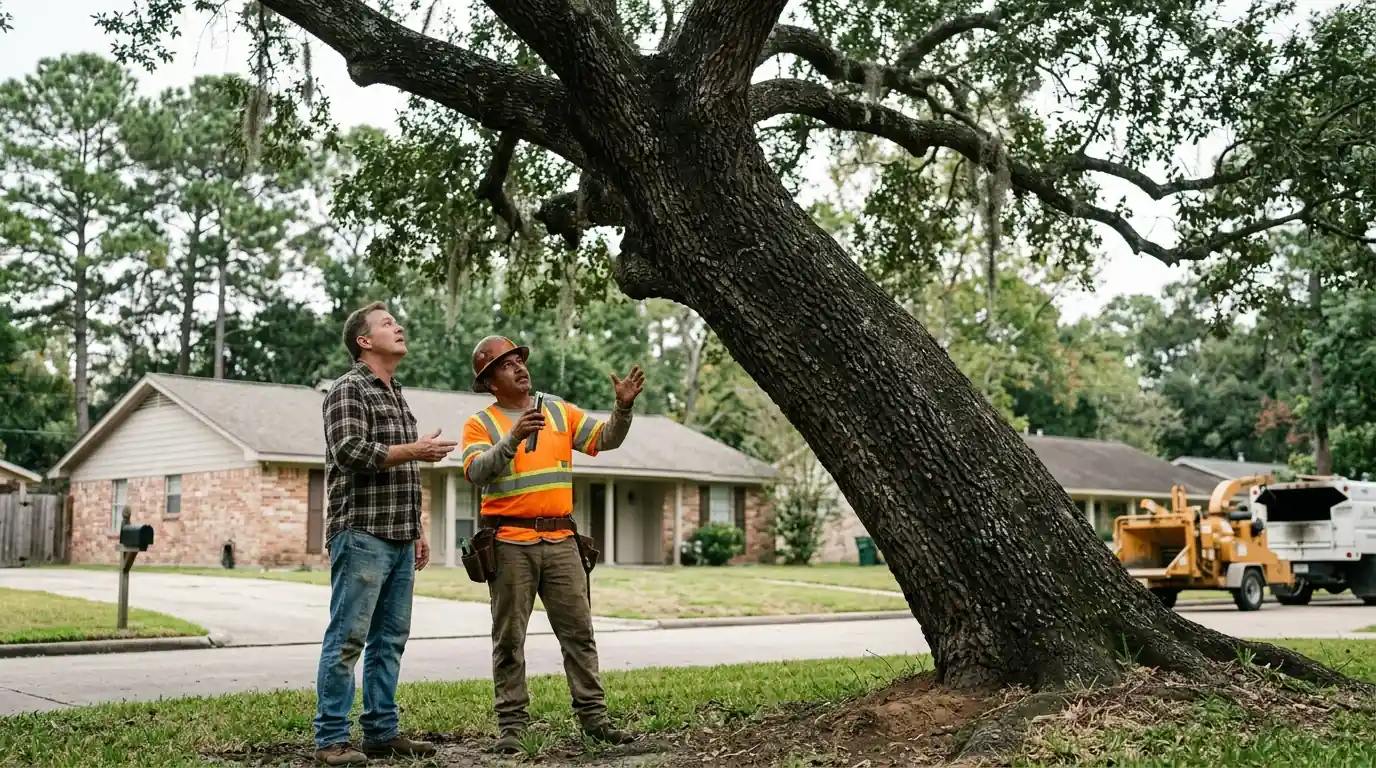 Tree advice
Short answer
In Houston, as across Texas, a neighbor's tree that falls on your house is usually covered by your own homeowners policy, minus your deductible. The neighbor's side generally pays only when negligence is shown, such as a dead tree they knew about. Tree and debris removal often carries a separate, smaller limit, so check that clause before cleanup starts.
Why your own policy is the first call, whoever owned the tree
A homeowners policy covers your house against the event that damaged it, usually wind or lightning, and does not ask whose tree did the damage. So the claim for your roof, siding or fence starts with your insurer, under your deductible. That surprises people, because the tree was not theirs.
Your neighbor's policy mostly covers their own house and their legal liability. If a healthy tree came down in a storm, there is usually no one at fault and no liability claim to make. Many Texas policies also carry a separate wind and hail deductible, which can be larger. Your declarations page shows both.
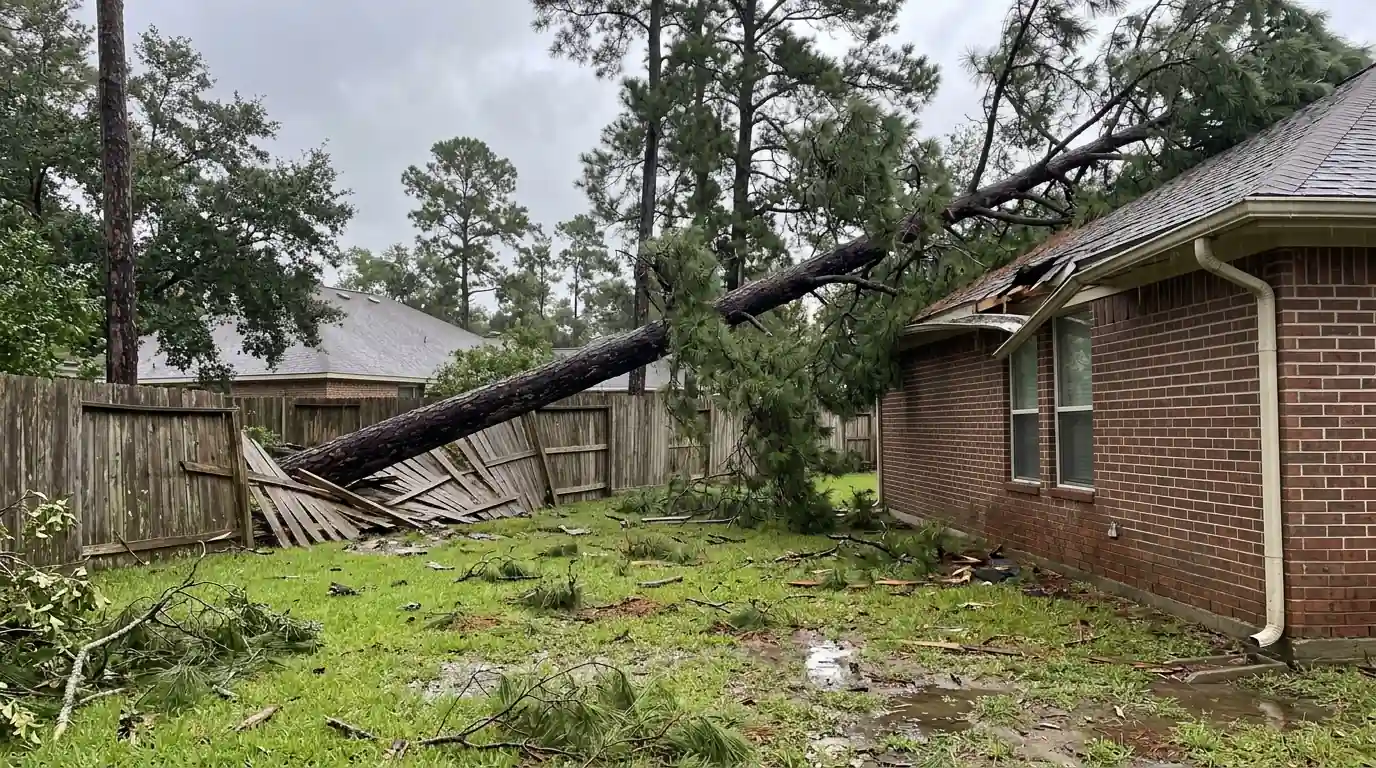
When a dead or leaning tree shifts the bill next door
Negligence is what moves the cost. If a tree was visibly dead, rotted or leaning, and the owner knew or reasonably should have known, the owner may be responsible for the damage it causes. Your insurer still pays you first, then may pursue the neighbor's insurer to get its money back. When that recovery succeeds, part or all of your deductible may come back to you.
Whether a tree was obviously dangerous is a question of fact, and a dispute over it belongs with your insurer or an attorney. The evidence that tends to matter is plain: dated photos, written notice to the owner, and an inspection report describing the defect. This guide is general information, not legal advice.
Debris removal: the limit most Houston claims run into
Paying to fix your roof is one coverage. Paying to cut up and haul away the tree is often another, with its own cap per tree and per storm. If the tree hit a covered structure, removal is typically paid up to that cap. If it fell in the yard and hit nothing, many policies pay little or nothing to remove it, though some make exceptions, such as a tree blocking a driveway.
For scale, Angi's Houston figures put an average tree removal at about $800, with most projects between $197 and $1,972. A large oak across a roof can pass a small debris limit quickly, so find the number in your policy before you approve work.
Tree on the roof right now?
Ring us any hour. A crew lead will talk you through make-safe work and photos before the first cut.The first day after a neighbor's tree hits your house
Most policies expect you to limit further damage, so make-safe work does not have to wait for the adjuster. Our crew can handle tree on house removal in stages and photograph the tree before the first cut, then leave the rest of the storm debris until your insurer has seen it.
- Get everyone out of rooms under the tree and away from any downed wires.
- Photograph the tree, its broken base or roots, and the damage before anything moves.
- Open the claim with your insurer and note the claim number and adjuster.
- Stop further damage with tarps or a make-safe removal, and keep every receipt.
- Tell your neighbor in writing what happened, and attach a few photos.
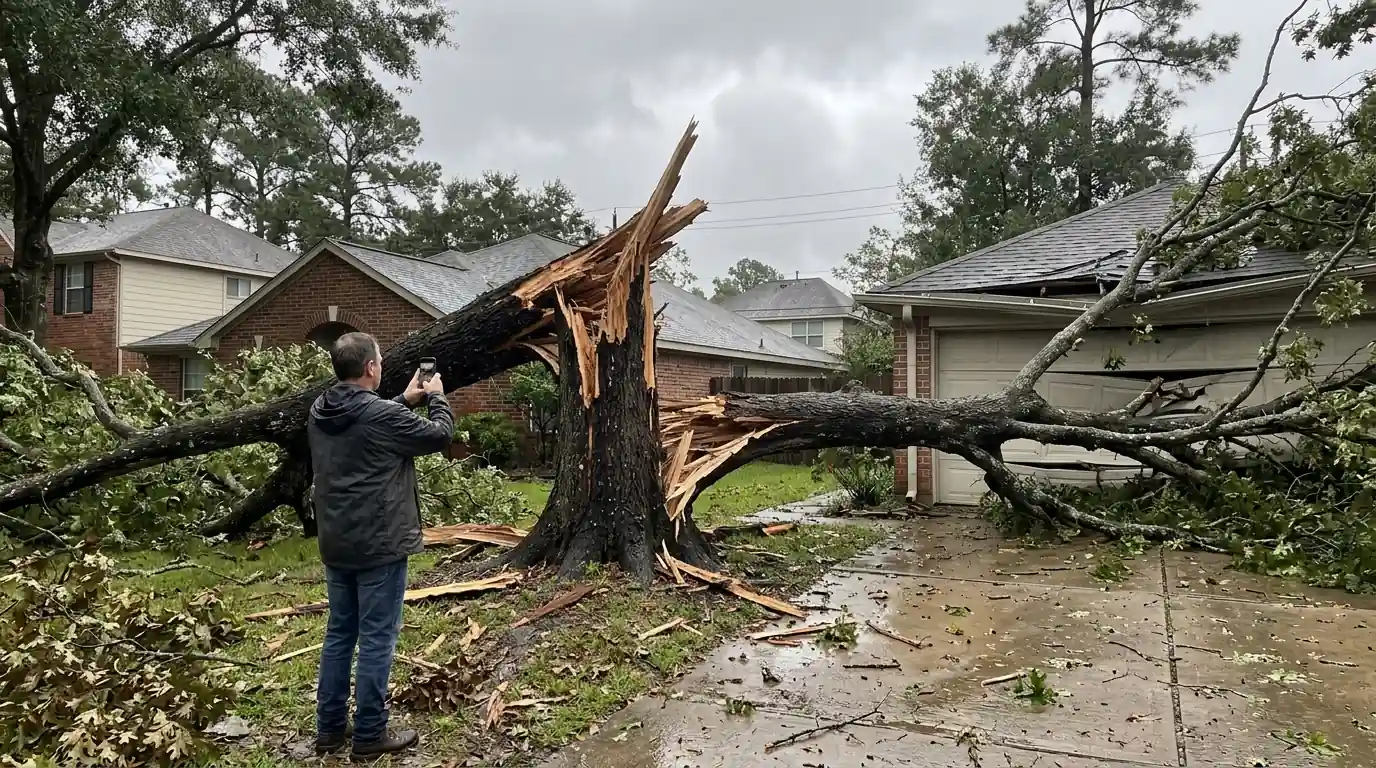
Who usually pays: five common storm scenarios
Policies differ, so treat this as a map of where claims usually start, not a ruling on yours.
| What happened | Policy that usually responds | What can change it |
|---|---|---|
| Neighbor's healthy tree falls on your house | Your homeowners policy, minus your deductible | Little, unless the tree had a known defect |
| Neighbor's dead tree falls on your house | Your policy pays you first | Your insurer may recover from the neighbor's side |
| Your tree falls on the neighbor's house | Their homeowners policy | Your liability coverage, if you were negligent |
| Any tree falls in the yard and hits nothing | Often no policy pays removal | A debris exception in your policy wording |
| A tree falls on your parked car | Comprehensive coverage on your auto policy, if carried | Whether you carry that coverage at all |
Putting a neighbor on notice before hurricane season
If a tree next door is dead or hanging over your roof, act before the storms do. Talk first, then follow up in writing with dated photos, and keep a copy. A written tree risk assessment that describes the defect gives both households something concrete to act on.
Rights over limbs that cross the fence, and over trees whose trunks sit on a shared line, are questions of Texas property law. Ask an attorney before you cut into a tree you do not own, and get the owner's consent before anyone works from their side.
When to call your insurer, and when to call an attorney
Call your insurer whenever a tree damages a structure, even if you think the neighbor should pay, and let the insurers sort out recovery. Follow up in writing if the adjuster's figure leaves out tree removal you were told was covered. If you believe a claim was handled unfairly, the Texas Department of Insurance takes consumer complaints and publishes tree claim guidance on its website.
Call an attorney if someone was hurt, if the loss is large and the neighbor's insurer denies it, or if you are being blamed for a tree you believed was healthy. Deadlines apply to claims, appeals and lawsuits, and an attorney can tell you which ones fit your case.
Not automatically. If the tree was healthy and a storm brought it down, usually no one is at fault and the deductible stays with you. If negligence is shown, your insurer may recover it from the neighbor's insurer along with its own payment.
Yes for make-safe work, such as lifting weight off the roof so rain stops coming in. Photograph everything first and keep receipts. Leave non-urgent cleanup until the adjuster has seen it or your insurer says to go ahead.
Often no policy does, unless your wording includes a debris exception such as a blocked driveway. The owner may agree to share the cost. If the tree was dead and they knew it, ask your insurer or an attorney about recovery.
Tell the owner in writing, attach dated photos, and keep a copy. That notice can matter if the tree fails later. If it is still standing as storm season nears, an attorney can explain the options Texas law gives you.
Usually yes. Fences generally fall under the other structures part of a homeowners policy, with their own limit. Your policy responds first, and negligence can shift the cost later. A shared fence line can complicate it.